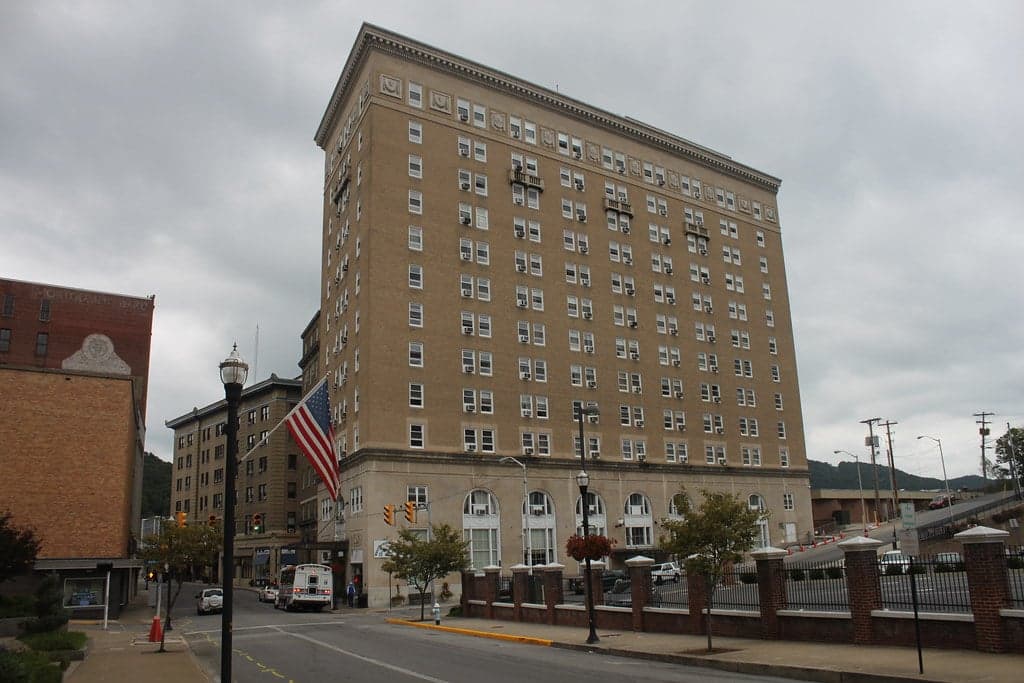
Photo: Wikipedia
Strategic Assessment of Bluefield, WV
Meaningful friction. Expect exposure to either population pressure, blast zones, or natural disaster risk. Consider buying a retreat property.
What does the Strategic Assessment tell us?
Our Strategic Assessment grades tactical survivability of an area. Major population centers, military targets, fallout zones, natural disasters, and border exposure all drive risk — lower exposure means a more defensible position in a crisis.
This is heavily inspired by Joel Skousen's Strategic Relocation book. Highly recommended you checkout the book ($)What does this tell us?
Our Strategic Assessment grades tactical survivability of an area. Major population centers, military targets, fallout zones, natural disasters, and border exposure all drive risk — lower exposure means a more defensible position in a crisis.
This is heavily inspired by Joel Skousen's Strategic Relocation book. Highly recommended you checkout the book ($)Strategic Pillars

Key Distances
Regional Safe Places
Below is our recommended "safe zones" in West Virginia and the surrounding area based on our strategic heuristics. For most people, it's unrealistic to live in a “safe zone” full-time due to work, family or other personal reasons. They tend to be more rural. However, many of these areas are perfect for second homes and retreat properties that double as a vacation home or even a short-term rental.
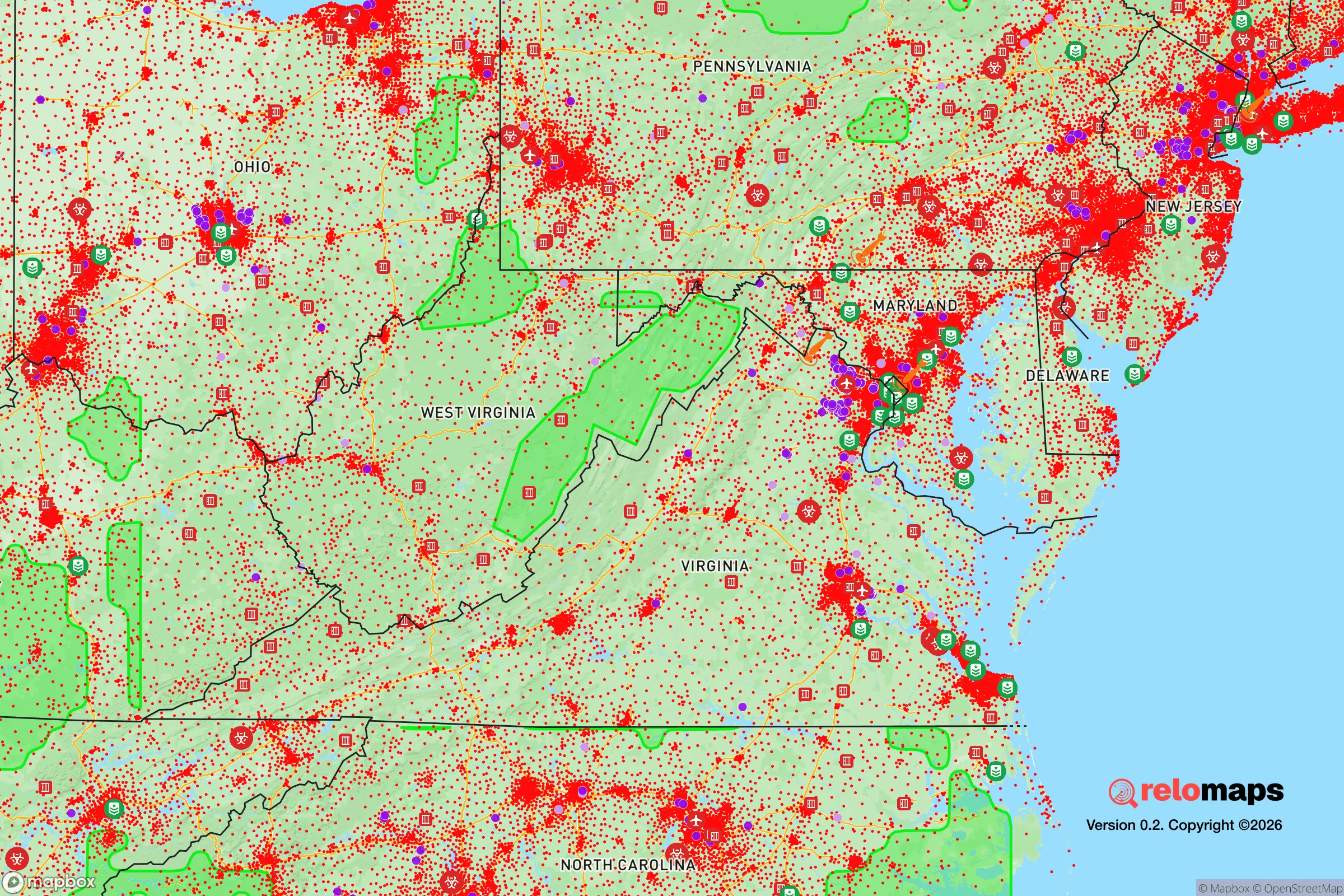
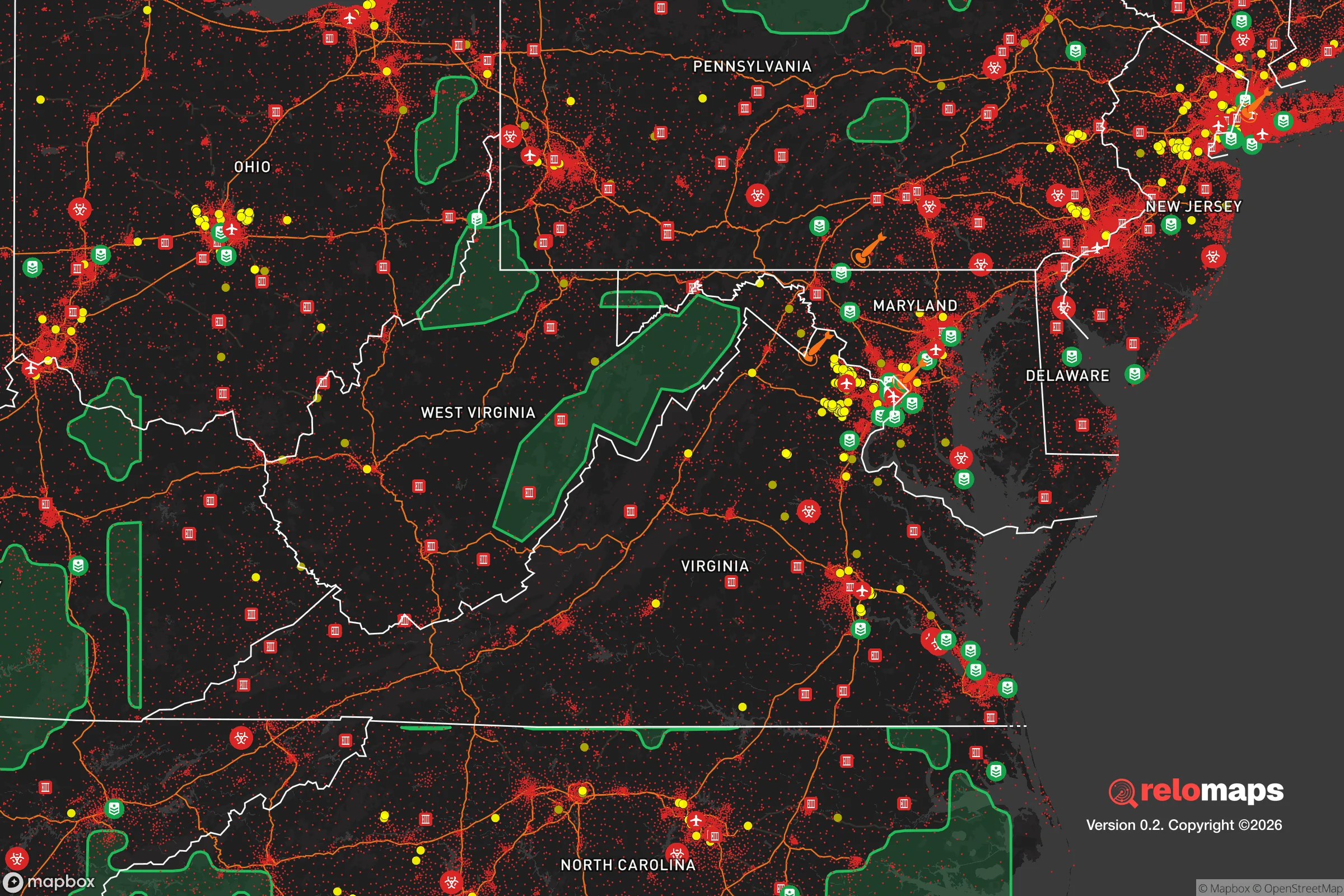


Important Note: For informational purposes only. This does not mean nothing bad ever happens in the green zones. Please use common sense. This is based on public data and modeled with AI. We tried to take a conservative approach but mistakes happen. We update this regularly as new information becomes available.
Solar Generator Recommendations
Backup power matters more here than in safer locations. We've picked three solar generators across budgets and capacity tiers — start with the budget unit if you only need a few essentials, or step up if you want to run a fridge and HVAC for days at a time.

Jackery Portable Power Station Explorer 300
Budget OptionPower on the Go: Weighing only 11 lbs, it's convenient to set up and store with book-sized foldable solar panels

BLUETTI Portable Power Station AC180
Designed for both indoor and outdoor scenarios, AC180 is highly capable as it has a robost capacity and continuous output power.

EF ECOFLOW DELTA Pro Ultra Power Station
Upgraded PickEcoFlow DELTA Pro Ultra is a whole-home energy system designed to grow with your family. Integrated with the Smart Home Panel 2, it scales to meet your evolving energy needs — keeping your home powered, intelligent, and secure through every stage of life.
We earn a commission, at no additional cost to you.
Strategic Assessment Analysis
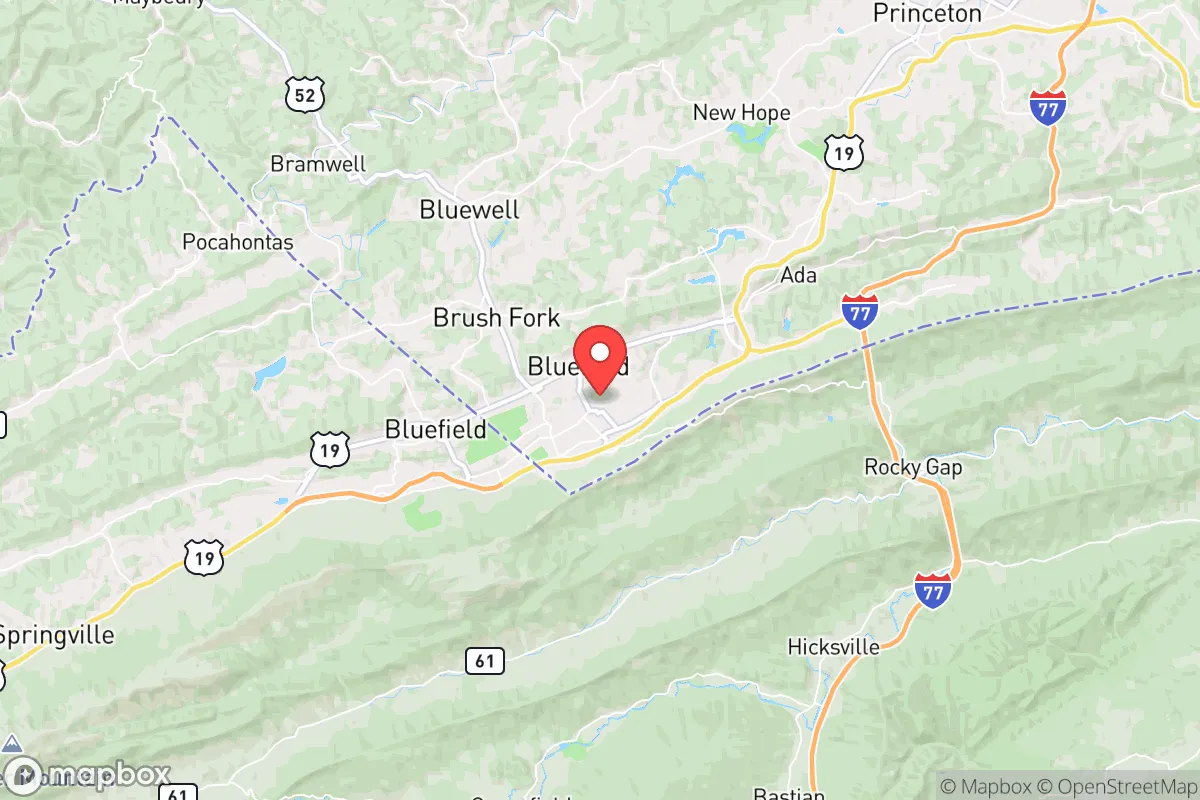
Bluefield, West Virginia, sits as a strategic outlier in the Appalachian coalfields, offering a resilience profile that is hard to match east of the Mississippi. Its location—straddling the Virginia line in a narrow valley of the East River Mountain—provides natural isolation from the chaos of the Eastern Seaboard while still being within a day’s drive of major population centers. For a relocator thinking in terms of decades, not years, Bluefield’s combination of rugged terrain, low population density, and a historically self-reliant culture makes it a serious candidate for a long-term base of operations.
Geographic position and natural advantages for long-term security
Bluefield sits at roughly 2,600 feet elevation in the Ridge-and-Valley Appalachians, which gives it a distinct climatic and tactical edge over lower-lying areas. The surrounding mountains create natural chokepoints—only a handful of two-lane roads lead into the valley, and the primary rail line through the area (the Norfolk Southern mainline) is a single-track corridor that can be easily monitored or, if necessary, blocked. The terrain itself is a defensive asset: steep slopes, dense hardwood forest, and limited line-of-sight mean that any large-scale movement through the region would be slow and channeled. The area’s water resources are abundant—the Bluestone River and its tributaries run year-round, and the underlying geology holds significant groundwater in fractured sandstone aquifers. For a prepper, this means you’re not dependent on a single reservoir or municipal system that could be compromised. The local growing season is short (roughly 140 days), but the soils in the bottomlands are workable for subsistence gardening, and the surrounding national forest (Jefferson National Forest to the east, with over 700,000 acres) provides a buffer against suburban sprawl and a source of game, timber, and forage.
Risks, exposures, and proximity to fallout-relevant landmarks
No location is a fortress, and Bluefield has its exposures. The most obvious is the nuclear power plant at Surry, Virginia, about 180 miles east—within the 200-mile fallout zone for a major release, though prevailing westerlies would push contamination away from the valley in most scenarios. More concerning is the chemical corridor along the Kanawha River Valley (Charleston area, about 100 miles north), which hosts multiple chlorine, ammonia, and petrochemical facilities. A catastrophic release or sabotage event there could send a toxic plume down the New River drainage, though Bluefield’s elevation and the intervening mountain ridges would provide significant dilution. The area’s own industrial legacy—abandoned coal mines and unreclaimed strip mines—presents a localized hazard: subsidence, acid mine drainage, and the occasional coal-waste fire. These are manageable with site-specific due diligence. On the human threat side, Bluefield’s isolation is a double-edged sword. The local economy is weak (median household income around $35,000), and the opioid crisis has left scars. Property crime rates are above the national average, driven largely by theft and burglary, but violent crime is low and concentrated in known rental districts. For a relocator, the real risk isn’t the locals—it’s the fact that the area is a natural funnel for refugees from the I-81 and I-77 corridors during a collapse scenario. The two main highways (US 460 and US 52) are the only paved egress routes, and both would clog quickly. A prepared household needs to plan for self-sufficiency during a multi-week grid-down event, not just a weekend storm.
Practical resilience for a relocator: food, water, energy, and defensibility
Bluefield’s practical resilience comes down to four pillars: water, energy, food, and community. Water is the strongest asset. The municipal supply comes from the Bluestone River, but most homes in the outlying areas (Bluewell, Brushfork, Montcalm) are on private wells drawing from the Pocono sandstone formation—reliable and deep. A hand pump or solar-powered well pump gives you independent water security. Energy is more complicated. The local grid is Appalachian Power (AEP), and outages are common during winter ice storms. Solar potential is moderate (the area gets about 200 sunny days per year, less than the Southwest but more than the Pacific Northwest), and the steep south-facing slopes offer good panel placement. Wood heat is the traditional backup—hardwoods are abundant and cheap, with permits available for cutting on national forest land. Propane delivery is reliable in the valley but gets spotty on the higher ridges. Food production is limited by the short season and rocky soil, but the region has a strong tradition of hunting (deer, turkey, bear) and fishing (smallmouth bass in the Bluestone). Local farmers’ markets operate in Bluefield and Princeton, and there are several Amish-run bulk food stores within a 30-minute drive. For long-term storage, the cool, dry climate in basements and root cellars is ideal. Defensibility is the wild card. The ideal property is on a dead-end road off a secondary county route, with a clear view of the approach and a water source on-site. The hollows and ridges offer natural cover, but they also mean that a single roadblock can cut you off from supplies or medical care. The nearest trauma center is in Roanoke (90 minutes), and the local hospital (Bluefield Regional) has struggled financially. A medical kit and training are non-negotiable.
The overall strategic picture for Bluefield is one of trade-offs. You get genuine geographic isolation, abundant water, and a culture that still values self-reliance and neighborly mutual aid—the kind of place where a chainsaw and a full pantry earn respect, not suspicion. You also get a weak local economy, limited medical infrastructure, and the reality that you are in a natural bottleneck that could become a chokepoint during a regional crisis. For a single individual or a family willing to invest in off-grid systems, build local relationships, and maintain a low profile, Bluefield offers a defensible position with room to maneuver. It is not a retreat for those seeking comfort—it is a base for those who understand that preparation is a continuous process, not a one-time purchase. The mountains will not protect you from every threat, but they will slow down the chaos long enough for you to make a decision. That alone is worth the price of admission.

* Values derived from national, state, county, city and local statistics and may differ in a specific area. Last updated: 2026-05-01T13:45:23.000Z
Narrative content on this page is AI-generated and may contain mistakes. Verify any details that matter before acting on them.
ReloMaps may earn a commission from affiliate links at no extra cost to you.

