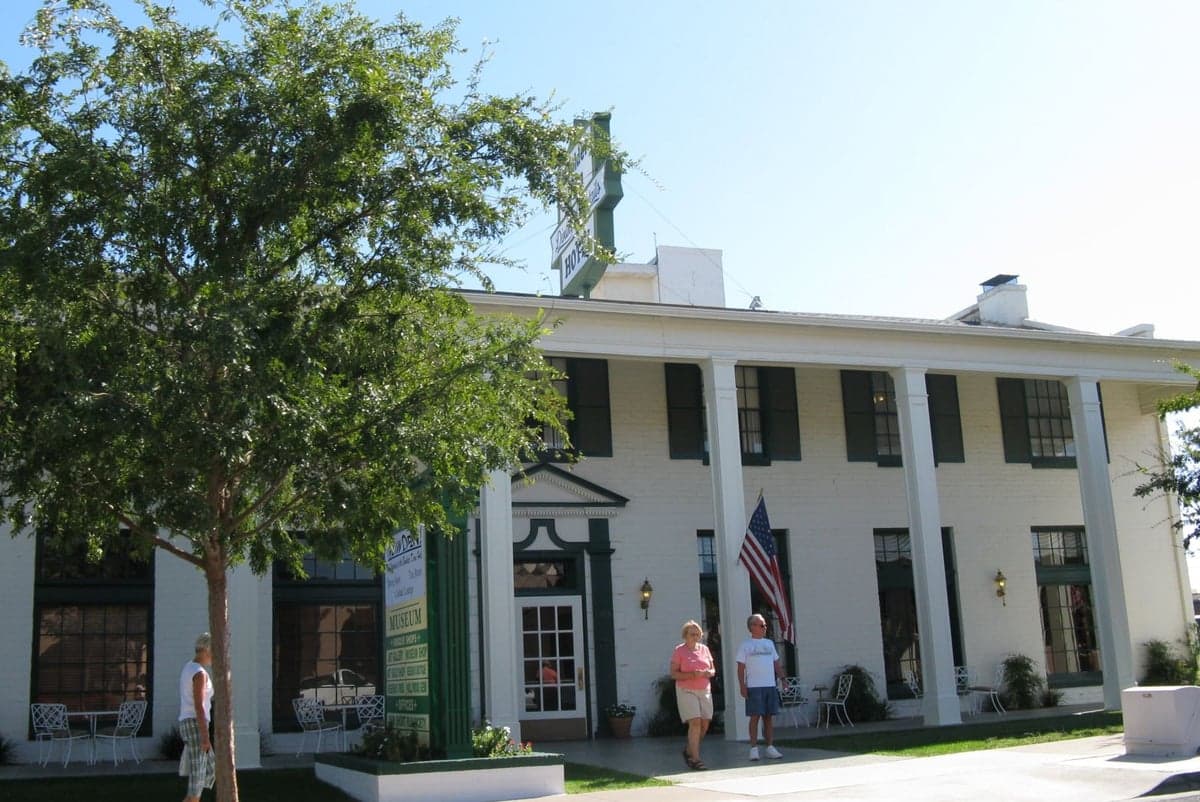
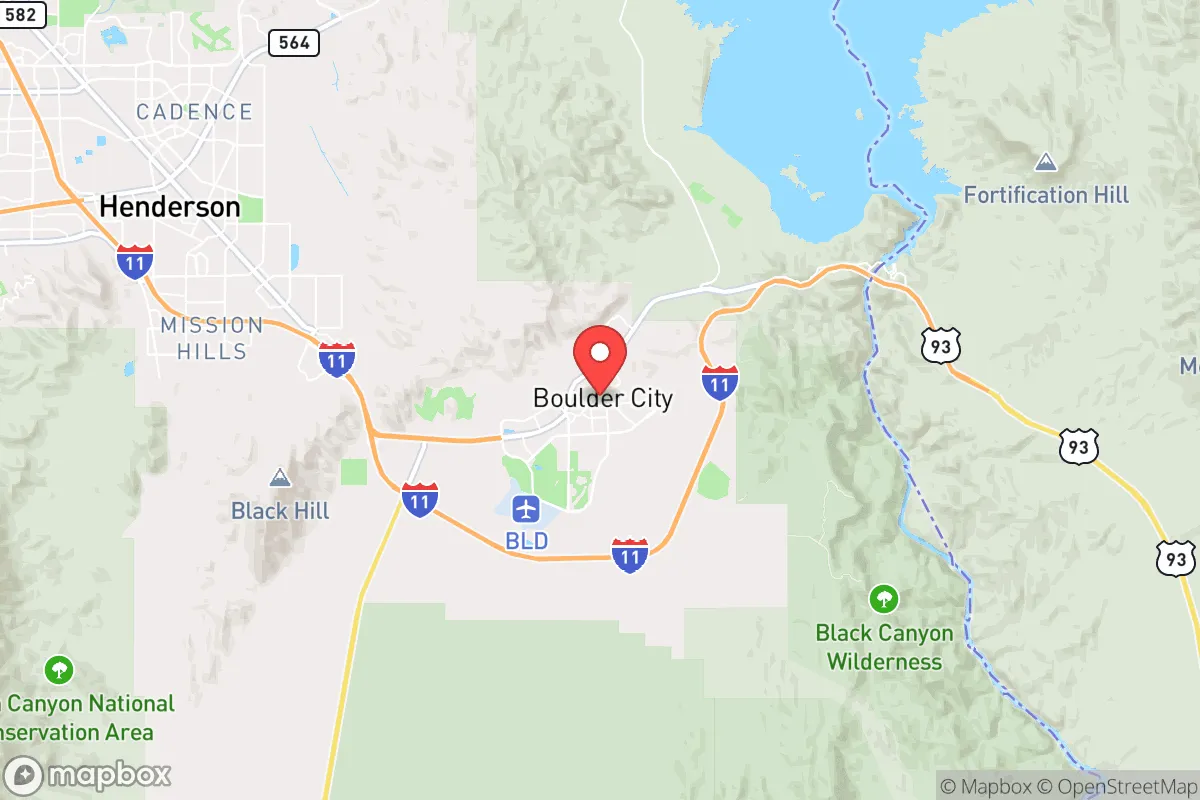
Photo: Wikipedia
Political ClimatePolitical Climate in Boulder City, NV
District shown is the primary district for this city’s centroid. Cities may span multiple districts.
Local Political AnalysisPolitical Analysis of Boulder City, NV
Boulder City, Nevada, has long been a unique outlier in Southern Nevada, a place where the old-school values of self-reliance and limited government once felt baked into the very soil. For decades, this was a town where you knew your neighbors, the local cops, and the general sense was that folks could live their lives without a lot of fuss from the county or state. But the political winds have shifted. While the Cook PVI for the area sits at D+2—technically a toss-up leaning slightly Democratic—that number doesn't tell the full story of a community that's feeling the squeeze from a progressive agenda that's been creeping in from Las Vegas and Clark County. The trajectory here is concerning for anyone who values personal freedoms and a government that stays out of your business.
How it compares
To understand Boulder City's political climate, you have to look at its neighbors. Head west into the sprawl of Henderson or north into Las Vegas, and you're in deep-blue territory—places where the county commission and state legislature have pushed through mandates on everything from water usage to business regulations that feel like they're written by people who've never run a lawnmower or a small shop. Boulder City, by contrast, has historically been a conservative holdout, a place where the city council still debates things like property rights and local control with a straight face. But the D+2 rating shows the pressure is real. The influx of new residents from California and other high-tax states has brought a voting bloc that sees government expansion as a solution, not a problem. Compare that to rural towns like Mesquite or Pahrump, which lean heavily red, and you see Boulder City caught in the middle—a once-reliable conservative community now fighting to hold the line against a tide of progressive policy.
What this means for residents
For the folks who've been here since before the Hoover Dam construction crews left, this shift means a daily grind of watching your freedoms get nibbled away. You see it in the local school board meetings, where curriculum debates are getting heated, and in the city council chambers, where zoning and business license fees are creeping up under the guise of "sustainability." The D+2 rating isn't just a number; it's a warning that the next election could tip the balance toward candidates who see government as a tool for social engineering rather than a protector of your rights. If you're a small business owner, a gun owner, or just someone who doesn't want a bureaucrat telling you how to landscape your front yard, this is the front line. The long-term outlook is grim if the trend continues—expect more regulations on water use, tighter controls on short-term rentals, and a general erosion of the live-and-let-live ethos that made this town special.
One of the biggest cultural distinctions here is the town's historic ban on gambling—a holdover from its founding days that still gives Boulder City a different feel than the neon chaos of Vegas. But even that unique identity is under threat as progressive voices argue it's "outdated" and "limits economic growth." The real red flag is the creeping acceptance of a bigger, more intrusive government. If you're considering a move here, know that the old Boulder City—the one where you could count on common sense and local control—is still fighting for its life. But the fight is getting harder every year, and the D+2 rating is a clear sign that the battle for the soul of this town is far from over.

State Political ClimatePolitical Climate in Nevada
State Political AnalysisPolitical Environment in the State
Nevada has long been the ultimate political swing state, but over the past decade, it has shifted from a purple battleground to a light blue state that leans Democratic in statewide elections, driven almost entirely by the massive Clark County (Las Vegas) population. While the state still retains a strong libertarian streak rooted in its "live and let live" gaming and mining history, the influx of out-of-state transplants, particularly from California, has steadily pushed the political center of gravity leftward. The 2024 presidential race saw Democrats carry the state by roughly 2.5 points, a narrower margin than 2020, but the underlying trend is clear: Nevada is becoming less competitive for conservatives at the state level, even as rural counties remain deeply red.
Urban vs. rural divide
The political map of Nevada is a tale of two worlds. Clark County (Las Vegas, Henderson, North Las Vegas) contains nearly three-quarters of the state's population and votes reliably Democratic — it delivered over 53% of its votes to Biden in 2020 and a similar share to Harris in 2024. Washoe County (Reno, Sparks) is the true bellwether, having flipped from red to purple to light blue over the last two cycles; Reno's tech and logistics growth has brought in younger, more progressive voters. Meanwhile, the vast rural expanse — Elko, Nye, Lander, and White Pine counties — votes 70-80% Republican, but their combined population is smaller than the city of Henderson alone. The political tension is stark: a rancher in Elko and a casino worker in Las Vegas live under the same state government but have almost nothing in common politically. The suburbs of Henderson and Sparks are the key battlegrounds — they still have conservative-leaning pockets, but are trending left as families move in from California and the Pacific Northwest.
Policy environment
Nevada's policy environment is a mixed bag for conservatives. On the plus side, there is no state income tax, which remains a major draw for high-earners and retirees. Property taxes are capped at 3% annual growth, providing stability. However, the state has aggressively expanded government in other areas. AB 116 (2021) mandated paid sick leave for nearly all private-sector workers, and SB 386 (2023) created a state-run retirement savings program for workers without employer plans — both seen as creeping mandates. Education policy is a flashpoint: Nevada ranks near the bottom nationally in K-12 outcomes, and the state's school choice options are limited compared to Arizona or Florida. The legislature passed AB 195 (2023) to expand access to abortion and shield providers from out-of-state lawsuits, and SB 163 (2023) banned "conversion therapy" for minors. Election laws have tightened slightly — AB 321 (2021) requires voter ID for mail ballots, but same-day registration and automatic mail-in ballots remain, which many conservatives view as a vulnerability. The regulatory climate is generally business-friendly for gaming and mining, but new businesses face higher fees and more red tape than a decade ago.
Trajectory & freedom
On the freedom front, Nevada is a study in contradictions. Gun rights are relatively strong: the state has permitless carry for concealed weapons (passed in 2021 via SB 142), and no universal background checks for private sales. However, the 2023 legislature passed SB 171, which raised the age to purchase semiautomatic rifles to 21 and created a 3-day waiting period — a clear infringement that gun owners in Elko and rural counties are fighting in court. Parental rights took a hit with AB 261 (2023), which removed the requirement for schools to notify parents if a child changes their gender identity or pronouns — a law that has sparked outrage among conservative families in Henderson and Reno suburbs. Medical freedom saw a setback with the state's aggressive COVID-19 mandates in 2020-2021, including a strict mask mandate and vaccine requirements for state employees, though those have since been rescinded. Property rights remain strong in rural areas, but Clark County's zoning and land-use regulations are notoriously complex. The overall trajectory is concerning: the state is becoming less libertarian and more interventionist, particularly on social issues and healthcare mandates.
Civil unrest & political movements
Nevada has seen its share of political flashpoints. The 2020 election integrity controversy was intense, with the Clark County election department facing lawsuits over ballot signature verification and processing. The Nevada Republican Party remains deeply divided between establishment and populist factions, with the state party chair being a prominent election integrity activist. Immigration politics are a constant issue: Nevada has a large undocumented population, and the state legislature passed AB 176 (2021) to prohibit local law enforcement from cooperating with federal immigration authorities in most cases — a de facto sanctuary policy that frustrates conservatives in Elko and Pahrump. Protest activity has been relatively muted compared to Portland or Seattle, but the 2020 Black Lives Matter protests in Las Vegas turned violent, with looting on the Strip. The Nevada State Education Association (teachers union) is one of the most powerful political forces in the state, consistently opposing school choice and parental notification bills. There is a growing rural secession movement in counties like Nye and Lander, where residents feel completely ignored by the Las Vegas-dominated legislature — though it remains a fringe idea for now.
Projection
Looking ahead 5-10 years, the demographic trends are not favorable for conservatives. Clark County continues to grow, driven by migration from California and international immigration, both of which lean Democratic. Washoe County is becoming more progressive as Tesla's Gigafactory and the tech sector bring in younger, college-educated workers. The rural counties are losing population, further diluting their political influence. The state's independent voter bloc (the largest registration group) is trending younger and more libertarian-leaning, but on social issues, they tend to side with Democrats. The 2025-2026 legislative session is expected to see pushes for rent control, a state public option for healthcare, and further restrictions on firearm purchases. The one wild card is the 2026 gubernatorial election — if a conservative wins, they could slow the leftward march, but the legislature's Democratic majority is likely to hold. For a conservative moving in now, expect the state to be solidly blue in statewide races within a decade, with pockets of red in the rural areas and some suburban resistance in Henderson and Sparks.
For a new resident, the bottom line is this: Nevada still offers no income tax and a relatively low regulatory burden compared to California, but the cultural and political winds are blowing left. If you're moving to Elko or Pahrump, you'll find a conservative community that feels like the Old West. If you're moving to Las Vegas or Reno, expect to live under a Democratic state government that is increasingly active on social issues, education, and healthcare. The state's libertarian DNA is fading, replaced by a more conventional progressive agenda. Choose your county carefully, and get involved in local politics if you want to preserve what's left of Nevada's independent spirit.
* Values derived from national, state, county, city and local statistics and may differ in a specific area. Last updated: 2026-04-16T13:10:17.000Z
Narrative content on this page is AI-generated and may contain mistakes. Verify any details that matter before acting on them.
ReloMaps may earn a commission from affiliate links at no extra cost to you.

