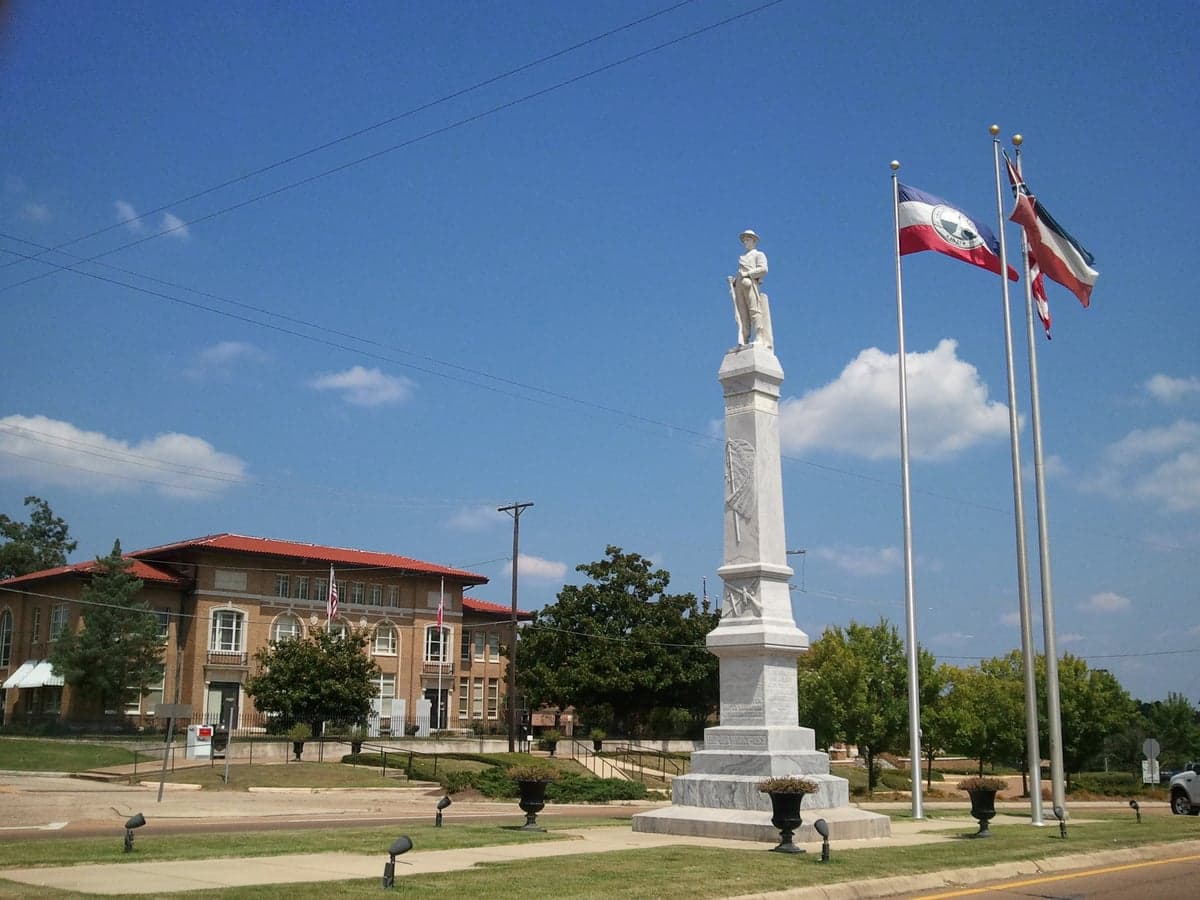
Photo: Wikipedia
Political ClimatePolitical Climate in Brandon, MS
District shown is the primary district for this city’s centroid. Cities may span multiple districts.
Local Political AnalysisPolitical Analysis of Brandon, MS
Brandon, Mississippi, is about as solidly conservative as it gets in the Magnolia State, and that’s not changing anytime soon. The Cook PVI of R+14 tells you the math, but the real story is the culture—this is a place where folks still believe in local control, the Second Amendment, and keeping government out of your backyard. Rankin County, where Brandon sits, has been a Republican stronghold for decades, and while Jackson to the west has swung hard left, Brandon has held the line and even tightened its conservative grip in recent years.
How it compares
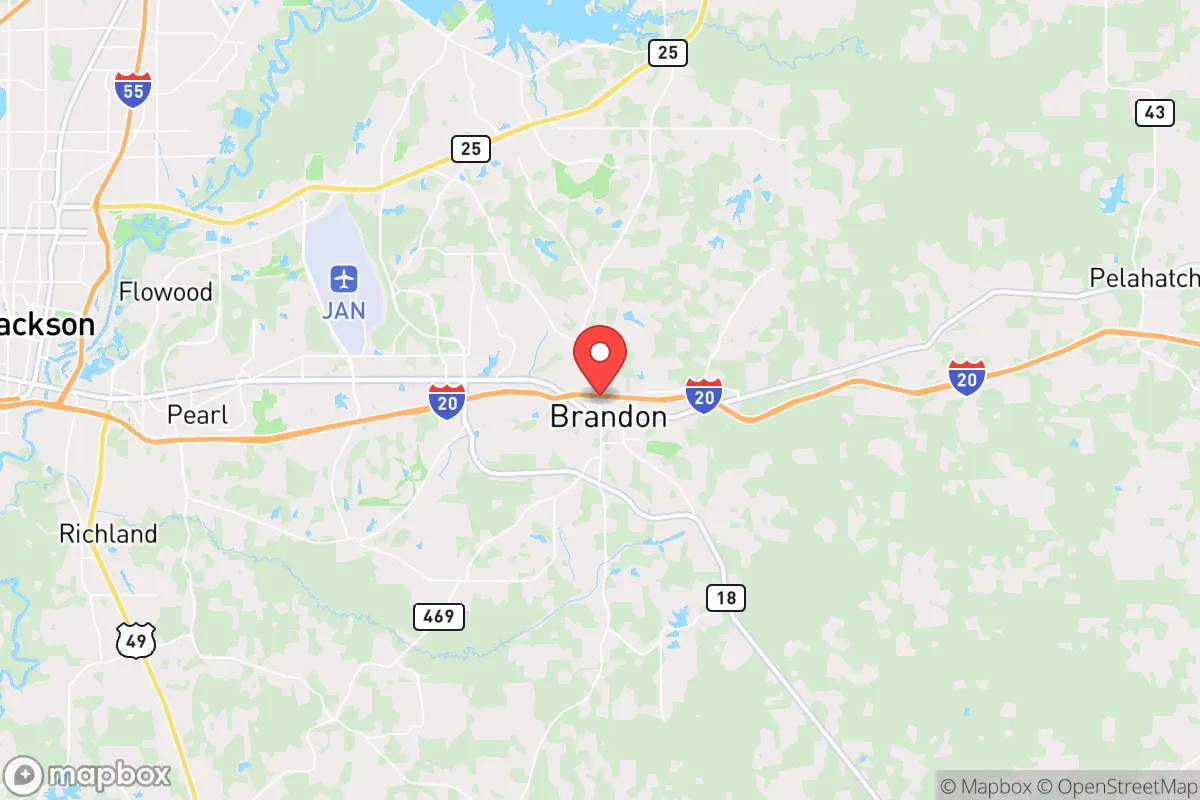
Drive ten minutes west into Jackson, and you’re in a completely different world—politically, culturally, and economically. Jackson’s city council and mayor have pushed progressive policies on everything from policing to tax incentives, and the results have been a steady exodus of families and businesses east into Rankin County. Brandon, by contrast, has kept its tax rates low, its schools among the best in the state, and its zoning laws friendly to homeowners and small businesses. Surrounding towns like Florence and Pearl lean conservative too, but Brandon is the anchor—it’s where the county’s political energy concentrates. You won’t find a single Democrat holding a countywide office here, and the local GOP is active and organized, not just in name only.
What this means for residents
For someone who values personal freedom and limited government, Brandon is a breath of fresh air. The city council isn’t interested in telling you what you can do with your property or how to raise your kids. There’s no talk of defunding the police—in fact, the sheriff’s department and local PD are well-funded and respected. Property taxes are among the lowest in the metro area, and there’s no city income tax. The school board has resisted the kind of curriculum overhauls you see in more progressive districts, sticking to basics and parental involvement. That said, you do need to keep an eye on the state legislature in Jackson—every session brings new attempts to centralize power or chip away at local control, and Brandon’s representatives have to fight to keep the state from meddling in things like zoning and school funding.
There’s a quiet concern among long-time residents that the growth Brandon is experiencing—new subdivisions, more retail, more traffic—could eventually bring the kind of political pressure that changes the character of the place. Some of the newcomers are coming from out of state, and not all of them share the same values about limited government and personal responsibility. So far, the local elections have held steady, but it’s something to watch. The next few city council races will tell you a lot about whether Brandon stays the course or starts drifting toward the kind of progressive overreach that’s hollowed out so many other Southern towns. For now, though, if you want a place where your rights are respected and the government stays out of your way, Brandon is still one of the best bets in Mississippi.

State Political ClimatePolitical Climate in Mississippi
State Political AnalysisPolitical Environment in the State
Mississippi is one of the most reliably conservative states in the country, with a deep-rooted Republican lean that has only solidified over the past two decades. The state hasn’t voted for a Democratic presidential candidate since 1976, and in 2024, Donald Trump carried it by over 17 points. The dominant coalition is a mix of rural and suburban voters, evangelical Christians, and a growing number of fiscally conservative transplants from other Southern states. Over the last 10-20 years, the shift has been steady: Democrats once held most local offices and a few congressional seats, but now Republicans control every statewide office, both chambers of the legislature, and three of four U.S. House seats. The only real Democratic stronghold left is the Mississippi Delta, anchored by places like Greenville and Clarksdale, but even there, turnout is low and the influence is shrinking.
Urban vs. rural divide
The political map of Mississippi is a textbook study in urban-rural polarization. The state’s largest metro, Jackson, is a Democratic island in a sea of red — Hinds County went 80% for Joe Biden in 2020, driven by a majority-Black population and a strong union presence. But drive 20 minutes outside the city limits into Madison or Ridgeland, and you’re in solidly Republican suburbs where Trump won by 30 points or more. The Gulf Coast, including Biloxi and Gulfport, leans conservative but has a libertarian streak — military retirees and casino workers tend to vote Republican but oppose heavy-handed regulation. The northeastern corner, around Tupelo and Oxford, is a mix: Tupelo is reliably red, while Oxford (home to Ole Miss) has a younger, more moderate vibe that occasionally flips local races. The rural counties in the central and southern parts of the state — places like Laurel and Hattiesburg — are deeply conservative, with Trump winning some precincts by 50 points. The Delta remains the only region where Democrats can still win, but it’s shrinking fast as population declines and the remaining voters age out.
Policy environment
Mississippi’s policy environment is aggressively conservative, with a strong emphasis on low taxes, limited regulation, and traditional values. The state has a flat income tax of 4.7% (phasing down to 4% by 2026), no estate tax, and a sales tax that averages around 7%. Property taxes are among the lowest in the nation, which is a major draw for families and retirees. The regulatory posture is business-friendly — Mississippi is a right-to-work state, and the legislature has repeatedly blocked Medicaid expansion under the Affordable Care Act, keeping government involvement in healthcare minimal. On education, the state passed the Mississippi Charter Schools Act in 2013, and there’s a growing school choice movement, though it’s still limited compared to states like Florida. Election laws are strict: voter ID is required, early voting is limited, and absentee voting requires an excuse. The state also passed a 2021 law banning ballot drop boxes and limiting mail-in voting, which conservatives view as protecting election integrity. On social issues, Mississippi is one of the most pro-life states in the country, with a near-total abortion ban in effect since the Dobbs decision, and it has a strong parental rights law (HB 1129, passed in 2023) that requires schools to notify parents of any changes to a child’s health or well-being.
Trajectory & freedom
Over the past five years, Mississippi has been moving in a direction that most conservatives would call freer, but with some caveats. On the plus side, the state passed a constitutional carry law in 2016 (SB 2394), allowing permitless concealed carry, and in 2024 expanded that to include open carry without a permit. The legislature also passed a religious freedom law (HB 1523) in 2016 that protects individuals and businesses from being forced to participate in same-sex weddings, though it was later struck down in court. On the tax front, the 2022 income tax cut was a major win for personal liberty — it’s phasing out the state income tax entirely for most filers by 2028. However, there are areas where freedom is being restricted. The state’s medical marijuana program, passed by voters in 2020, was heavily gutted by the legislature in 2021 (SB 2095), limiting qualifying conditions and capping dispensaries. And while Mississippi has no sanctuary cities, the state passed a 2023 law (HB 1631) that requires local law enforcement to cooperate with ICE, which some see as an overreach into local autonomy. Overall, the trajectory is toward more economic and gun freedom, but with a heavy hand on social and immigration enforcement.
Civil unrest & political movements
Mississippi has a relatively low level of visible civil unrest compared to states like Oregon or New York, but there are flashpoints. The most notable in recent years was the 2020 protests in Jackson following the George Floyd killing, which led to some property damage and a heavy police presence, but nothing on the scale of Portland or Seattle. The state has a small but vocal progressive activist scene centered around the Mississippi Poor People’s Campaign and the NAACP, which have pushed for Medicaid expansion and criminal justice reform. On the right, the Mississippi Republican Party is dominated by the conservative wing, with groups like the Mississippi Tea Party and the Mississippi Family Council holding significant sway. Immigration politics are relatively quiet — Mississippi has a small foreign-born population (about 2.5%), and there are no sanctuary cities. However, there was a controversy in 2023 when the city of Jackson considered a resolution to limit cooperation with ICE, which was quickly shot down by the state legislature. Election integrity is a hot topic: the 2020 election saw no major fraud scandals in Mississippi, but the legislature passed a 2021 law banning private funding of election administration (SB 2588), which was a response to concerns about Zuckerberg-style grants. There’s also a simmering nullification movement — in 2023, a bill was introduced (but not passed) to declare federal gun laws unenforceable in Mississippi, reflecting a growing distrust of federal overreach.
Projection
Looking ahead 5-10 years, Mississippi is likely to stay deeply conservative, but with some demographic shifts that could create subtle changes. The state’s population is aging and slowly declining, with young people leaving for jobs in Texas, Tennessee, and Florida. The Delta will continue to lose population, further weakening the Democratic base. In-migration is modest but growing — retirees from the Midwest and Gulf Coast are moving to places like Ocean Springs and Madison, and they tend to be conservative but more libertarian on issues like marijuana and taxes. The biggest wildcard is the state’s Black population, which is about 38% of the total. If turnout among Black voters increases — which is possible given national trends — it could make some statewide races closer, but it’s unlikely to flip the state. The legislature will probably continue to push school choice, tax cuts, and gun rights, while resisting Medicaid expansion and any form of carbon regulation. A new resident moving in now should expect to find a state that is stable, predictable, and resistant to progressive change — for better or worse, Mississippi is not going to become Georgia or Arizona anytime soon.
For someone relocating here, the bottom line is this: Mississippi offers a low-cost, low-regulation environment where conservative values are the norm, not the exception. You won’t find the culture wars of California or the political chaos of Illinois. The trade-off is that the state is slower to change, with less economic dynamism and fewer amenities than fast-growing Sun Belt states. If you want a place where your gun rights are protected, your taxes are low, and your kids won’t be exposed to progressive ideology in schools, Mississippi is a solid bet. Just know that the pace of life is slower, the job market is narrower, and the political debate is mostly settled — you’re moving to a place that already is what it is.
* Values derived from national, state, county, city and local statistics and may differ in a specific area. Last updated: 2026-04-30T21:52:56.000Z
Narrative content on this page is AI-generated and may contain mistakes. Verify any details that matter before acting on them.
ReloMaps may earn a commission from affiliate links at no extra cost to you.

