Photo: Wikipedia
Personal Sovereignty in Bridgehampton, NY
Moderate friction. Expect trade-offs in some aspect of personal liberty and independence.
What does Personal Sovereignty tell us?
Personal Sovereignty measures your capacity for self-reliance and independence with minimal government friction. Higher scores mean fewer barriers between you and the way you want to live... but it assumes you have the space you need and good neighbors.
What does this tell us?
Personal Sovereignty measures your capacity for self-reliance and independence with minimal government friction. Higher scores mean fewer barriers between you and the way you want to live... but it assumes you have the space you need and good neighbors.
State Policy
Energy independence: Importer (12% of energy produced in-state)
Personal Liberty
Homesteading

Personal Liberty Analysis
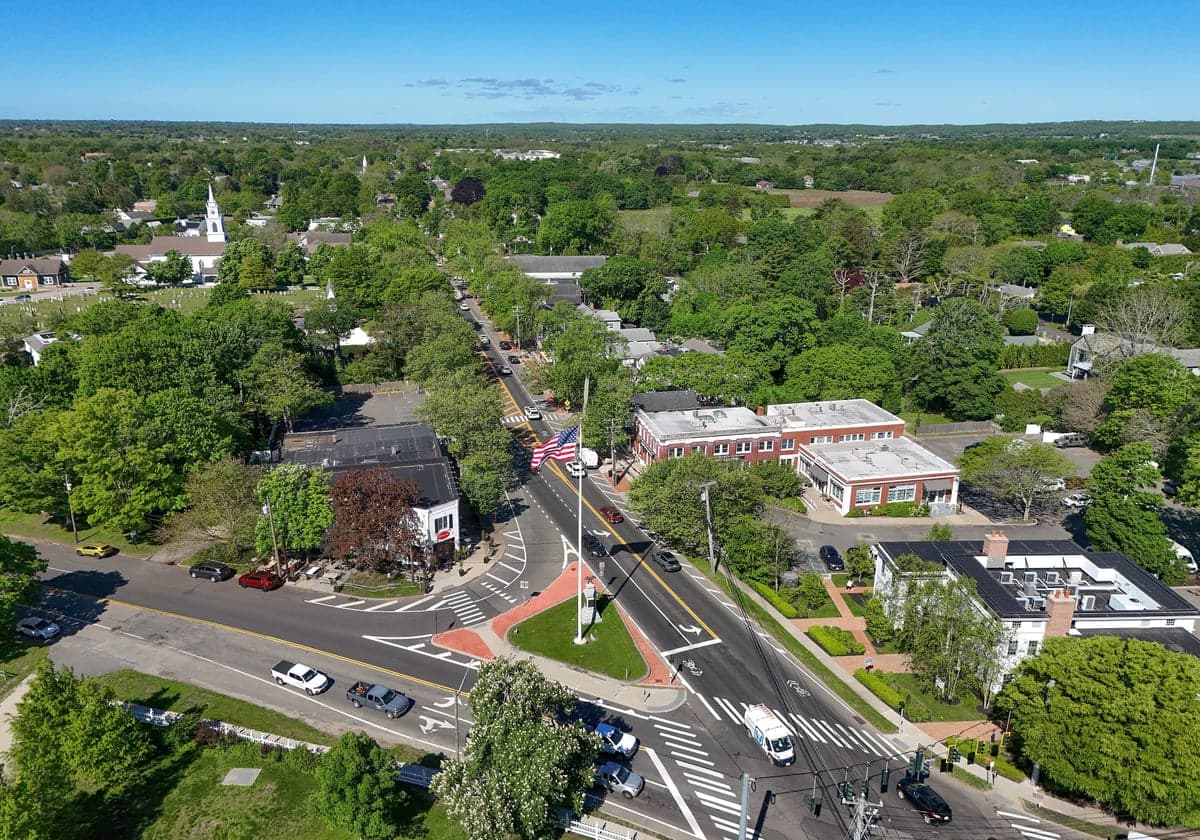
Bridgehampton, New York, presents a paradox for the liberty-minded individual: it sits within a state with some of the nation's most aggressive tax, gun, and regulatory policies, yet its local character—defined by large agricultural lots, a sparse year-round population, and a culture of wealthy privacy—offers a degree of personal sovereignty that is rare in the downstate region. For the prepper or survivalist, this is not a sanctuary; it is a high-cost, high-surveillance environment where autonomy must be carved out within the constraints of New York State's heavy-handed governance. The key question is whether the area's physical isolation and property rights can outweigh the constant pressure of Albany's overreach.
Tax burden and regulatory posture: the cost of living under Albany's thumb
New York State imposes one of the heaviest tax burdens in the country, and Bridgehampton is no exception. The combined state and local income tax rate can exceed 10% for high earners, and property taxes on a typical home—often valued above $2 million—can run $20,000 to $40,000 annually. This is not a place to hide from the taxman; the county assessor knows exactly what your land is worth. The regulatory posture is equally suffocating. New York's strict environmental conservation laws, administered by the Department of Environmental Conservation (DEC), heavily restrict what you can do with your land—wetlands buffers, tree removal permits, and septic system upgrades are all subject to state oversight. For the prepper, this means that building a bunker, installing a large solar array, or even clearing brush for a food plot can trigger a bureaucratic nightmare. The town of Southampton, which governs Bridgehampton, also enforces strict zoning codes that limit accessory structures and home-based businesses, further constraining self-reliance. If you value low taxes and minimal red tape, Bridgehampton is a hostile environment.
Self-defense and gun law specifics: navigating the SAFE Act's chokehold
New York's gun laws are among the most restrictive in the nation, and Bridgehampton offers no refuge. The SAFE Act of 2013 banned "assault weapons" (defined by cosmetic features), limited magazine capacity to ten rounds, and required universal background checks for all firearm transfers, including private sales. In 2022, the state passed the Concealed Carry Improvement Act (CCIA), which effectively ended permitless carry and required "proper cause" for a concealed carry license—a standard that, while loosened by the Supreme Court's Bruen decision, still requires a lengthy application process, character references, and a 16-hour training course. Open carry is illegal in New York, period. For the survivalist, this means that defending your home or property with a firearm is legally fraught. While New York does have a "castle doctrine" that removes the duty to retreat in your home, the burden of proof in a self-defense shooting remains high, and prosecutors in Suffolk County are not known for being gun-friendly. The nearest gun shops and ranges are in Riverhead or further east, and ammunition purchases are subject to background checks and record-keeping. If self-defense is a priority, Bridgehampton is a legal minefield.
Self-reliance and homesteading viability: lot sizes, zoning, and off-grid feasibility
Bridgehampton's agricultural zoning is a double-edged sword. Minimum lot sizes in the Agricultural Reserve area are typically 10 to 20 acres, which provides the physical space for a serious homestead—gardens, livestock, orchards, and even small-scale farming are permitted. The area's rich soil and moderate climate (USDA Zone 7a) allow for a long growing season, and many properties have existing wells and septic systems. However, off-grid living is nearly impossible. New York law requires all dwellings to be connected to the electrical grid or have a state-approved alternative energy system, and the DEC strictly regulates rainwater collection and graywater reuse. Solar panels are allowed but must be permitted, and battery storage systems face fire code restrictions. Raising livestock for meat is legal but subject to animal welfare laws and slaughterhouse regulations—home slaughter for personal consumption is technically allowed but must be done humanely and without sale. The town also enforces noise ordinances that can limit generators or power tools after dark. For the prepper, the land itself is viable, but the regulatory overhead is constant. You can grow your own food, but you cannot fully disconnect from the system.
Personal liberties: parental rights, medical autonomy, speech, and property
New York State has aggressively expanded its reach into personal liberties in recent years. Parental rights in education have been eroded by laws that allow schools to withhold information about a child's gender identity from parents, and the state's vaccine mandate for schoolchildren (including COVID-19 for healthcare workers) remains in effect. Medical autonomy is similarly constrained: New York has some of the strictest telemedicine and prescription drug monitoring laws, and the state's health department has broad authority to mandate treatments during public health emergencies. Free speech is protected under the First Amendment, but New York's hate speech laws and social media regulations create a chilling effect for those who express dissenting views on hot-button issues. Property rights are perhaps the most concerning for the liberty-minded. New York's rent stabilization laws and eviction moratoriums have given tenants significant power over landlords, and the state's "good cause" eviction bill (proposed but not yet law) would further restrict a property owner's ability to remove a tenant. For the survivalist who values the right to control their own property, these trends are alarming. Bridgehampton's wealthy, privacy-conscious residents often avoid these issues by simply not engaging with the system—hiring private lawyers, using trusts, and keeping a low profile—but the legal framework remains hostile to individual sovereignty.
In the broader context of the United States, Bridgehampton ranks very low for personal sovereignty. It is a place where the state's reach is long and the cost of defiance is high. Compared to a place like rural Texas or Montana, where property taxes are lower, gun laws are permissive, and zoning is minimal, Bridgehampton feels like a velvet cage—comfortable, beautiful, but ultimately restrictive. For the prepper or survivalist who values autonomy above all else, this is not a destination; it is a compromise. The land is good, the isolation is real, and the privacy is valuable, but the price—both financial and legal—is steep. If you are willing to work within the system and pay for the privilege of space, Bridgehampton offers a fragile, expensive form of freedom. If you want true sovereignty, look west.

* Values derived from national, state, county, city and local statistics and may differ in a specific area. Last updated: 2026-04-24T01:49:11.000Z
Narrative content on this page is AI-generated and may contain mistakes. Verify any details that matter before acting on them.
ReloMaps may earn a commission from affiliate links at no extra cost to you.

