
Photo: Wikipedia
Find The Best Places To Live in Suffolk County
PRO TIP! You can paste a Zillow or Redfin link to get info on that property.
Best Places to Live in Suffolk County



Cities & Towns in Suffolk County
Cities in Suffolk County
What It's Like Living in Suffolk County, NY
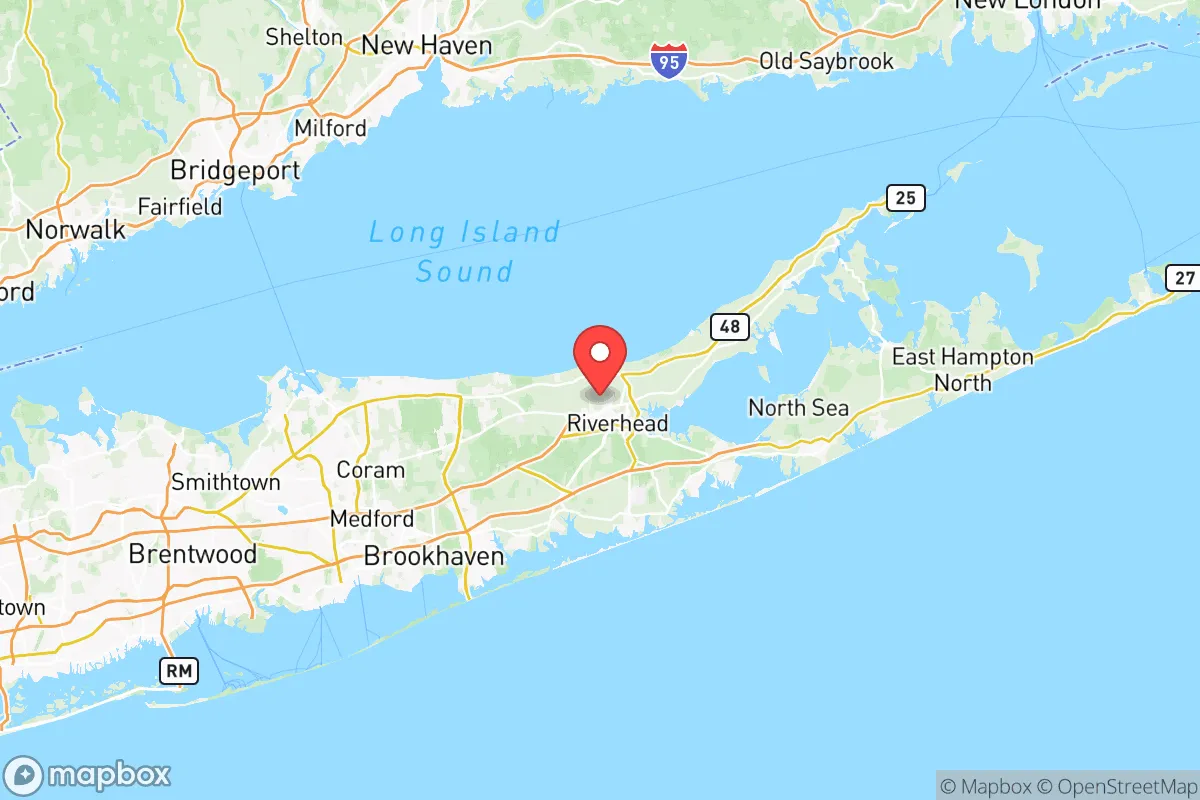
Suffolk County is a place of stark contrasts, where the dense, fast-paced energy of towns like Huntington and Patchogue gives way to the sprawling farm fields and pine barrens of the North and South Forks. It’s the kind of place where you can spend your morning on a traffic-clogged expressway and your afternoon kayaking through a tidal creek, all without leaving the same county. With a population of over 1.5 million, it’s not a quiet suburb—it’s a region with its own distinct identity, shaped by the Atlantic Ocean, the Long Island Rail Road, and a fierce local pride that can feel both welcoming and insular.
Daily Rhythm: The Commute, the Coast, and the Coffee
For most people living here, the day starts early. The average commute of about 32 minutes is a reality for the thousands who head west toward Nassau County or New York City, but it’s also a reality for those driving between towns like Riverhead and Ronkonkoma. The Long Island Expressway (I-495) is the main artery, and it’s notorious. Locals know to avoid it between 7:30 and 9:00 AM, and again from 4:30 to 7:00 PM. If you live in a town like Smithtown or Stony Brook, you might take the LIRR instead—a reliable, if expensive, option that gets you to Penn Station in about an hour and fifteen minutes.
Weekends are a different story. The rhythm shifts to the water. In Port Jefferson, families pack the ferry to Bridgeport, Connecticut, or just grab a slice at the waterfront pizza joints. In Patchogue, the Main Street scene is a genuine nightlife hub, with breweries like Blue Point Brewing Company and live music at the Patchogue Theatre. The median age of 41.7 reflects a population that’s settled—many are raising kids, paying mortgages, and spending their Saturdays at soccer games or the local diner. The median household income of $128,329 supports a comfortable, if expensive, lifestyle. That cost of living index of 190 (nearly double the national average) hits hardest at the grocery store and the gas pump, but locals will tell you it’s worth it for the beaches and the schools.
Sports, Schools, and the Social Fabric
High school sports are a big deal here. In towns like Lindenhurst and Sachem, Friday-night football games draw crowds that rival small college games. The Suffolk County public school system is a major draw for families—many of the districts (like Half Hollow Hills, Commack, and Ward Melville) are consistently ranked among the best in the state. The 39.9% college-educated population is a direct result of that focus. But it’s not just academics. The local identity is wrapped up in the Long Island Ducks minor league baseball team in Central Islip—a cheap, fun night out—and the New York Islanders practice facility in East Meadow (though the team plays in Nassau). For college sports, Stony Brook University is the local powerhouse, especially in lacrosse and baseball.
There’s a cultural quirk here: the “us vs. them” mentality. Long Islanders, especially Suffolk residents, feel distinct from New York City. They’ll tell you they’re “from Long Island” before they say “New York.” This pride shows up in local traditions like the Riverhead Country Fair and the Hampton Classic Horse Show in Bridgehampton. But it also shows up in a certain wariness of outsiders. If you move here, expect to be asked, “What high school did you go to?”—a question that’s less about your education and more about placing you in the social map.
What’s There to Do: From the Hamptons to the Pine Barrens
The biggest draw is the coastline. The South Fork (the Hamptons) and the North Fork (wine country) are world-famous, but they’re also expensive and crowded in summer. Locals know the real gems: Sunken Meadow State Park in Kings Park, the Pine Barrens for hiking and mountain biking, and the Fire Island National Seashore (accessible by ferry from Patchogue or Bay Shore). The median home value of $539,500 puts a lot of these coastal towns out of reach for first-time buyers, but renting is common in areas like Medford and Coram, where you can still find a three-bedroom for under $3,000 a month.
Entertainment is a mix of the high-end and the down-to-earth. The Paramount Theater in Huntington books national acts. The Argyle Theatre in Babylon does Broadway-style shows. For a more local flavor, hit the Montauk Point Lighthouse or the Vanderbilt Museum in Centerport. The violent crime rate of 331.5 per 100,000 is higher than the national average, but it’s concentrated in a few areas—most of the county feels safe, especially in the more affluent North Shore towns like Cold Spring Harbor and Lloyd Harbor.
Pros and Cons of Living Here
What residents love:
- The beaches and parks. You’re never more than 20 minutes from saltwater. The Jones Beach and Robert Moses state parks are iconic.
- The schools. For parents, the quality of public education is a top reason to stay.
- The food. Bagels, pizza, delis, and diners are a religion here. The Little Italy in Port Jefferson Station and the Polish delis in Riverhead are local staples.
What frustrates them:
- The traffic. It’s not just the commute—it’s the fact that a trip to the grocery store can take 20 minutes each way.
- The cost. Property taxes are among the highest in the nation. That $128K income doesn’t go as far as it would in Texas or Florida.
- The seasonal crowds. From Memorial Day to Labor Day, the East End is a traffic nightmare. Locals avoid the South Fork entirely in August.
In the end, Suffolk County is for people who value space, nature, and community over convenience and low costs. It’s not for everyone—but for those who grew up here or move here for a job at Brookhaven National Laboratory or Stony Brook Medicine, it’s hard to imagine living anywhere else.

* Values derived from national, state, county, city and local statistics and may differ in a specific area. Last updated: 2026-05-12T09:32:40.000Z
Narrative content on this page is AI-generated and may contain mistakes. Verify any details that matter before acting on them.
ReloMaps may earn a commission from affiliate links at no extra cost to you.

