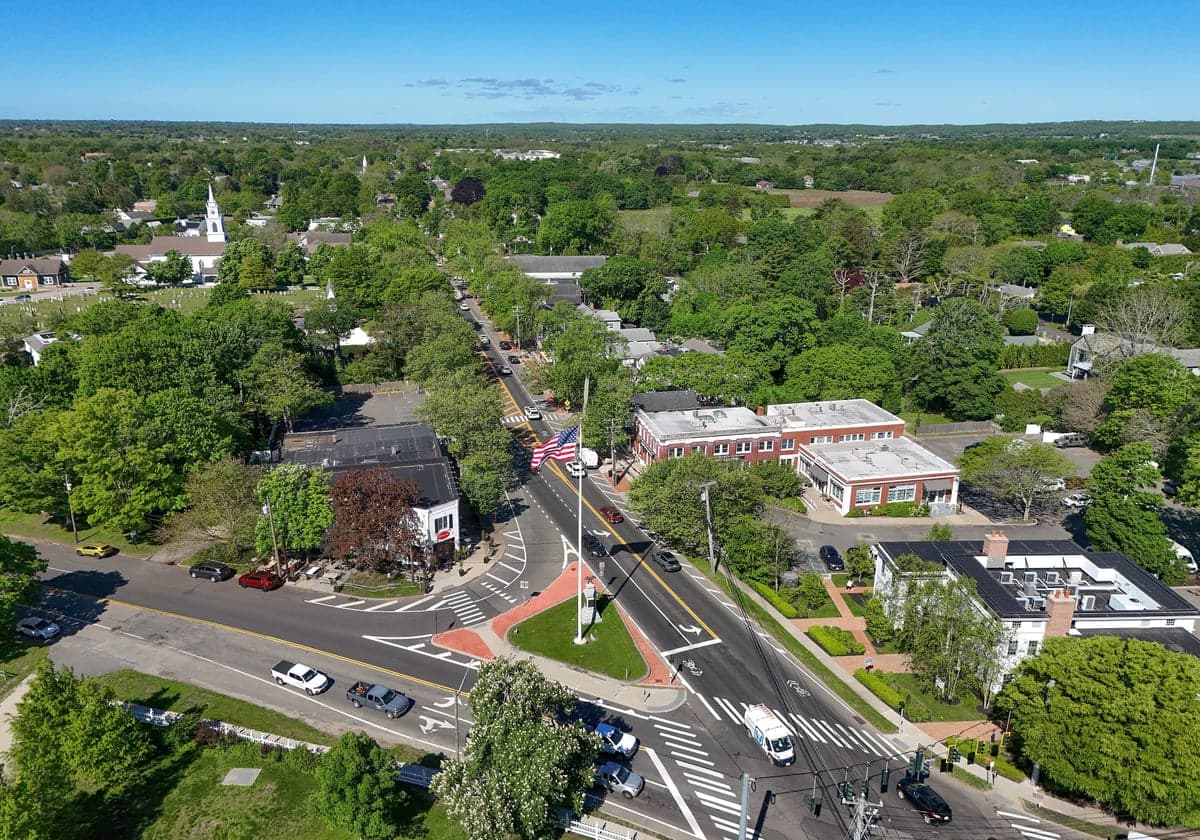
Photo: Wikipedia
Political ClimatePolitical Climate in Bridgehampton, NY
District shown is the primary district for this city’s centroid. Cities may span multiple districts.
Local Political AnalysisPolitical Analysis of Bridgehampton, NY
Bridgehampton, New York, sits in a unique political pocket. While the Hamptons as a whole have drifted leftward in recent years, this area still leans reliably conservative, with a Cook PVI of R+4. That means it’s about four points more Republican than the national average, but don’t let that number fool you—the trajectory here is concerning. I’ve lived here long enough to remember when this was a solid red stronghold, and the slow creep of progressive policies from places like Sag Harbor and East Hampton is starting to spill over. The 2024 election results showed a tighter margin than we’d have seen a decade ago, and that shift is something folks who value personal freedoms should keep a close eye on.
How it compares
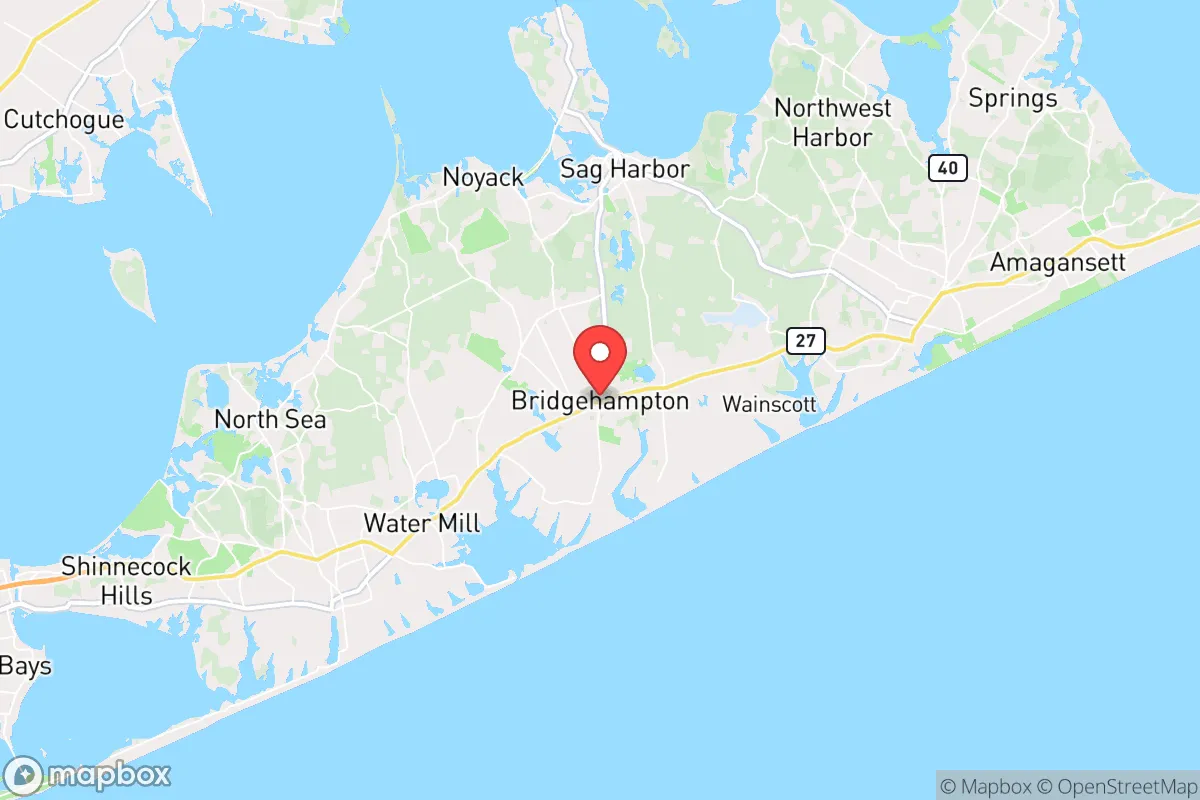
Bridgehampton is a bit of an island politically. Head west into Riverhead or Southold, and you’ll find communities that are still deeply conservative, with local governments that push back hard on state mandates. But drive east to East Hampton Village or Montauk, and you’re in territory that votes overwhelmingly blue, often by 20-point margins or more. Sag Harbor, just a few miles away, has become a hub for second-home owners from New York City who bring their progressive voting habits with them. Bridgehampton sits right in the middle—still red-leaning, but increasingly surrounded by blue. The contrast is stark: you can go from a town board meeting here where property rights are taken seriously to one in East Hampton where they’re debating banning gas leaf blowers and imposing strict rental caps. That kind of government overreach is exactly what we’re trying to keep out.
What this means for residents
For those of us who live here year-round, the political climate directly affects daily life. The local school board and town council races are where the real battles happen. In recent years, we’ve seen attempts to push critical race theory into the curriculum and impose vaccine mandates on small businesses—both of which were met with fierce resistance from the conservative majority. But the margins are shrinking. If you value the right to make your own healthcare choices, run your business without endless red tape, or send your kids to a school that focuses on academics over activism, Bridgehampton is still a decent bet. Just know that the fight to keep it that way is getting harder every election cycle. The influx of wealthy transplants from Manhattan and California has brought more progressive money and influence, and they’re not shy about trying to change the local culture.
One thing that sets Bridgehampton apart is its strong agricultural roots. The farmland here is protected by some of the strictest zoning laws in the state, which has kept development in check and preserved a way of life that’s increasingly rare on Long Island. That’s a double-edged sword, though—those same zoning laws can feel like government overreach when they limit what you can do with your own property. Still, compared to the chaos in places like New York City or even Albany, Bridgehampton offers a slower pace where common sense still matters. The local Republican club is active, and the annual town hall meetings draw a crowd that isn’t afraid to speak up. If the trend toward progressive policies continues, I expect more longtime residents will start looking west to places like Calverton or even out of state. For now, though, Bridgehampton remains a place where you can still have a conversation about personal freedom without being shouted down.

State Political ClimatePolitical Climate in New York
State Political AnalysisPolitical Environment in the State
New York State has long been a Democratic stronghold, but its political landscape is far more complex than the national narrative suggests. The state has voted for the Democratic presidential candidate in every election since 1988, with margins widening from a 12-point win for Bill Clinton in 1992 to a 23-point blowout for Joe Biden in 2020. However, this blue veneer masks a deep and growing urban-rural chasm, with New York City and its immediate suburbs driving the statewide lean while vast swaths of upstate remain reliably red. Over the past two decades, the state has shifted leftward on social and economic policy, but a counter-movement of conservative voters in places like Erie County and the Hudson Valley has made some races surprisingly competitive.
Urban vs. rural divide
The political map of New York is a tale of two states. New York City’s five boroughs—Manhattan, Brooklyn, Queens, the Bronx, and Staten Island—cast roughly 40% of the state’s total votes, and they are overwhelmingly Democratic. In 2020, Joe Biden won Manhattan with 86% of the vote, while Donald Trump barely cracked 12%. The city’s influence is magnified by its population density and media dominance, but it’s not monolithic: Staten Island, the most conservative borough, voted for Trump in 2020 by a 57-42 margin, a reminder that even within the city, pockets of red exist. The immediate suburbs—Nassau, Suffolk, and Westchester counties—have trended blue over the past decade, driven by professional-class voters and changing demographics. But drive an hour north or west, and the picture flips. Upstate New York, from the Capital Region to the Finger Lakes to the Southern Tier, is a patchwork of red and purple. Erie County, home to Buffalo, is a Democratic stronghold, but the surrounding rural counties—like Wyoming, Livingston, and Orleans—vote Republican by 2-to-1 margins. The Hudson Valley is a political battleground: Dutchess and Ulster counties lean blue, but Orange and Putnam counties are increasingly red, with Trump winning Orange by 10 points in 2020. The North Country, including counties like St. Lawrence and Jefferson, is reliably Republican, while the Adirondack region is a mix of libertarian-leaning independents and conservative voters. The divide isn’t just about geography—it’s about lifestyle, economics, and culture. Urban voters prioritize transit, public services, and social programs, while rural voters focus on property taxes, gun rights, and local control.
Policy environment
New York’s policy environment is a cautionary tale for conservatives. The state has one of the highest tax burdens in the nation, with a progressive income tax that tops out at 10.9% for earners over $25 million, and property taxes that are among the highest in the country—averaging over $5,000 annually per household. The regulatory posture is aggressive: New York was the first state to enact a statewide ban on plastic bags, and it has some of the strictest environmental regulations in the nation, including a 2024 law requiring all new buildings to be zero-emission by 2027. Education policy is dominated by the teachers’ unions, with per-pupil spending exceeding $28,000 annually—the highest in the nation—yet student outcomes remain middling. Healthcare is heavily regulated, with the state expanding Medicaid under the Affordable Care Act and implementing a public option in 2021. Election laws have been liberalized significantly: no-excuse absentee voting was passed in 2020, and early voting was expanded to 10 days. The state also enacted automatic voter registration and same-day registration in 2023. For conservatives, the policy environment feels like a one-way ratchet toward bigger government, higher costs, and less local control.
Trajectory & freedom
Over the past five years, New York has become demonstrably less free, particularly in areas that matter most to conservatives. The SAFE Act of 2013, which banned assault weapons and high-capacity magazines, was a precursor to even stricter gun laws: in 2022, the state passed the Concealed Carry Improvement Act, which effectively ended permitless carry and created “sensitive locations” where guns are banned entirely, including places of worship and private businesses unless the owner explicitly allows them. Parental rights have been eroded by the state’s 2019 Reproductive Health Act, which codified abortion up to birth, and by a 2023 law that allows minors to consent to gender-affirming care without parental notification. Medical autonomy took a hit during COVID-19, when New York imposed some of the nation’s strictest lockdowns and vaccine mandates, including a 2021 mandate for healthcare workers that led to thousands of resignations. Property rights are under pressure from rent control laws in New York City and the 2019 Housing Stability and Tenant Protection Act, which limited rent increases and made evictions harder for landlords. On the tax front, the state’s progressive income tax and estate tax (which kicks in at $6.1 million) push high earners and business owners to consider relocating to Florida or Texas. The trajectory is clear: New York is moving toward a European-style social democracy, with less room for individual choice, religious liberty, or economic freedom.
Civil unrest & political movements
New York has been a flashpoint for political activism on both sides. The 2020 Black Lives Matter protests in New York City were among the largest in the nation, with tens of thousands taking to the streets after the death of George Floyd. The city’s progressive district attorneys, including Alvin Bragg in Manhattan, have faced criticism for soft-on-crime policies, leading to a rise in retail theft and a perception of lawlessness that has driven some residents to the suburbs. On the right, the “Walk Away” movement and the “New York City GOP” have seen a resurgence, with Republican candidates winning competitive races in Staten Island and parts of Long Island. The state’s sanctuary policies—New York was one of the first to limit cooperation with ICE—have made it a magnet for immigration-related activism, with pro-immigrant groups clashing with border-security advocates. Election integrity has been a hot-button issue: the 2020 election saw widespread use of mail-in ballots, and the state’s 2023 law allowing non-citizens to vote in local elections (in New York City) has sparked legal challenges and a grassroots movement to repeal it. The “New York State of Mind” secession movement, which advocates for upstate counties to break away from the downstate liberal majority, has gained traction in places like Wyoming County and the Southern Tier, though it remains a fringe idea. A new resident would notice the constant political tension—protests in Albany, rallies in Buffalo, and a general sense that the state is being pulled in two directions.
Projection
Looking ahead 5-10 years, New York’s political trajectory is likely to continue leftward, but with significant pushback. Demographic shifts are working against conservatives: New York City’s population has grown more diverse and progressive, while upstate counties are aging and losing population. In-migration from blue states like California and New Jersey has reinforced the Democratic lean in the Hudson Valley and the Capital Region. However, the exodus of high-earners and businesses to low-tax states like Florida and Texas is accelerating, which could eventually force a reckoning on taxes and regulation. The 2024 election saw Trump improve his margins in Erie County and the North Country, suggesting that the rural backlash is real and may grow. The state’s Republican Party is trying to rebuild, focusing on suburban voters in Nassau and Suffolk counties and on the “exurban” ring around New York City. But the structural advantages of the Democratic Party—control of the legislature, the governor’s mansion, and the courts—make a major shift unlikely. A new resident moving in now should expect a state that continues to expand government services, raise taxes, and restrict individual freedoms, but with a vocal and growing minority fighting back. The practical takeaway: if you value low taxes, gun rights, and local control, you’ll need to be strategic about where you live—places like Orange County or the Southern Tier offer a more conservative lifestyle, but you’ll still be subject to state-level policies that may chafe.
For a conservative considering a move to New York, the bottom line is this: you can find like-minded communities in places like Staten Island, Orange County, and the North Country, but you’ll be swimming against a strong statewide current. The state’s tax burden, regulatory environment, and cultural trajectory are all moving in a direction that many conservatives find concerning. If you’re willing to fight for your values at the local level—school boards, town councils, and county governments—you can make a difference. But if you’re looking for a state that aligns with your principles on freedom, property rights, and limited government, New York is a tough sell. The best advice from a longtime resident: know your county, know your town, and be prepared to engage politically if you want to preserve the lifestyle you’re moving for.
* Values derived from national, state, county, city and local statistics and may differ in a specific area. Last updated: 2026-04-24T01:49:11.000Z
Narrative content on this page is AI-generated and may contain mistakes. Verify any details that matter before acting on them.
ReloMaps may earn a commission from affiliate links at no extra cost to you.

