 Popular
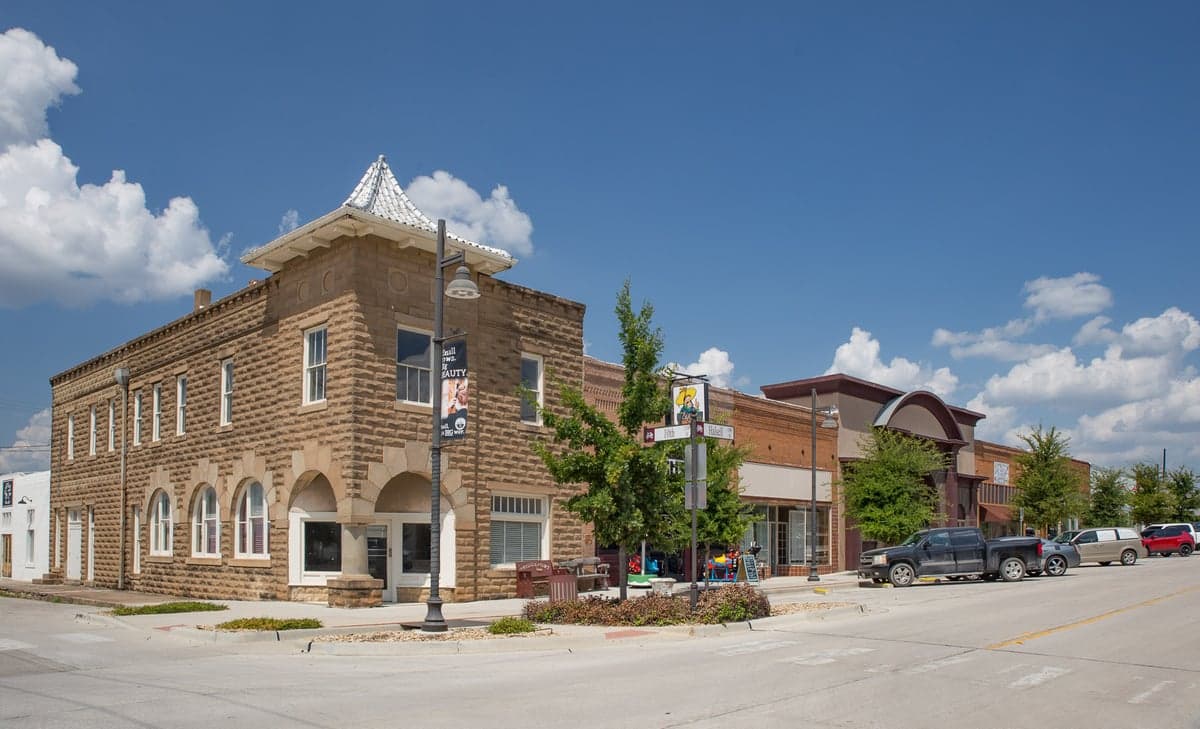
Photo: Wikipedia
Demographics of Bridgeport, TX
Affluence Level in Bridgeport, TX
A middle-class area roughly in line with national averages across income, home values, education, and employment.
People of Bridgeport, TX
Bridgeport, Texas, is a small city of 6,174 residents that has transformed from a predominantly white, rural railroad town into a nearly evenly split community between white (44.3%) and Hispanic (45.8%) populations. The city retains a tight-knit, family-oriented character with a strong sense of local pride, reflected in its annual events like the Bridgeport Rodeo and its historic downtown square. With a foreign-born population of 11.4% and a college attainment rate of 21.9%, Bridgeport is a working-class community where manufacturing, oil and gas, and regional commuting to the Dallas-Fort Worth metroplex shape daily life. The city’s identity is increasingly defined by its Hispanic majority among younger residents, while older white families remain deeply rooted in the city’s historic core.
How the city was settled and grew
Bridgeport was founded in 1860 as a stop on the Butterfield Overland Mail route, but its real growth began with the arrival of the Chicago, Rock Island and Pacific Railroad in 1893. The original settlers were primarily Anglo-American farmers and ranchers drawn by the fertile Trinity River bottomlands and the promise of rail access to markets. The discovery of oil in the nearby West Texas fields in the 1910s and 1920s brought a second wave of white migrants, many of whom settled in the Historic Downtown district and the North Side neighborhoods near the railroad depot. These early residents built the city’s first churches, schools, and the iconic Bridgeport Opera House. A small number of African American families arrived during the same period, primarily as domestic workers and laborers, and established a community in the South Side area near the railroad tracks, though their numbers remained modest. By 1950, Bridgeport’s population was nearly 100% white, with a handful of Black families and virtually no Hispanic residents.
Modern era (post-1965)
The post-1965 era brought the first significant Hispanic migration to Bridgeport, driven by agricultural labor demands in the surrounding Wise County farmlands and later by construction and service jobs tied to the Dallas-Fort Worth suburban sprawl. Hispanic families initially settled in the West Side neighborhoods near Highway 380, an area that became the city’s primary Hispanic enclave. By 2000, the Hispanic share had risen to roughly 25%, and it accelerated sharply after 2010 as affordable housing drew young families from the Dallas metro area. Today, the West Side and parts of the South Side are predominantly Hispanic, while the Historic Downtown and North Side remain majority white. The Black population (4.2%) is small but stable, concentrated in the South Side and a few scattered blocks near the city limits. East and Southeast Asian residents (1.0%) are a tiny but growing presence, primarily professionals commuting to DFW Airport-area jobs. The Indian subcontinent population is effectively zero. The white population has declined from 70% in 2000 to 44.3% today, while the Hispanic share has risen from 25% to 45.8% in the same period, making Bridgeport one of the most rapidly diversifying small cities in North Texas.
The future
Bridgeport’s population is trending toward a Hispanic majority within the next decade, driven by younger Hispanic families having children at higher rates and continued in-migration from the Dallas-Fort Worth area. The white population is aging and declining in absolute numbers, with many younger white adults leaving for larger cities or suburban job centers. The city is not tribalizing into hostile enclaves; instead, neighborhoods like the West Side and Historic Downtown are seeing gradual integration, though the North Side remains predominantly white and the West Side predominantly Hispanic. The foreign-born share (11.4%) is likely to plateau as second-generation Hispanic families assimilate and English proficiency rises. The Black and Asian populations are expected to remain small, as Bridgeport lacks the job base or housing stock to attract significant numbers of those groups. The college-educated share (21.9%) is low but may rise slightly as remote workers from the metroplex seek lower-cost housing, though the city’s distance from major employment centers limits this trend.
Bridgeport is becoming a majority-Hispanic, working-class community with a stable white minority and a strong family-oriented culture. For a conservative-leaning mover, this means a place where traditional values like church attendance, local sports, and community events remain central, but where the demographic and cultural landscape is shifting noticeably. The city offers affordable housing and a slower pace of life, but those seeking a predominantly white or highly educated environment may find the changes jarring. The bottom line: Bridgeport is a small city in transition, where the future is Hispanic and working-class, and where the past is still visible in its historic core and older neighborhoods.

* Values derived from national, state, county, city and local statistics and may differ in a specific area. Last updated: 2026-05-08T21:12:31.000Z
Narrative content on this page is AI-generated and may contain mistakes. Verify any details that matter before acting on them.
ReloMaps may earn a commission from affiliate links at no extra cost to you.

