 Popular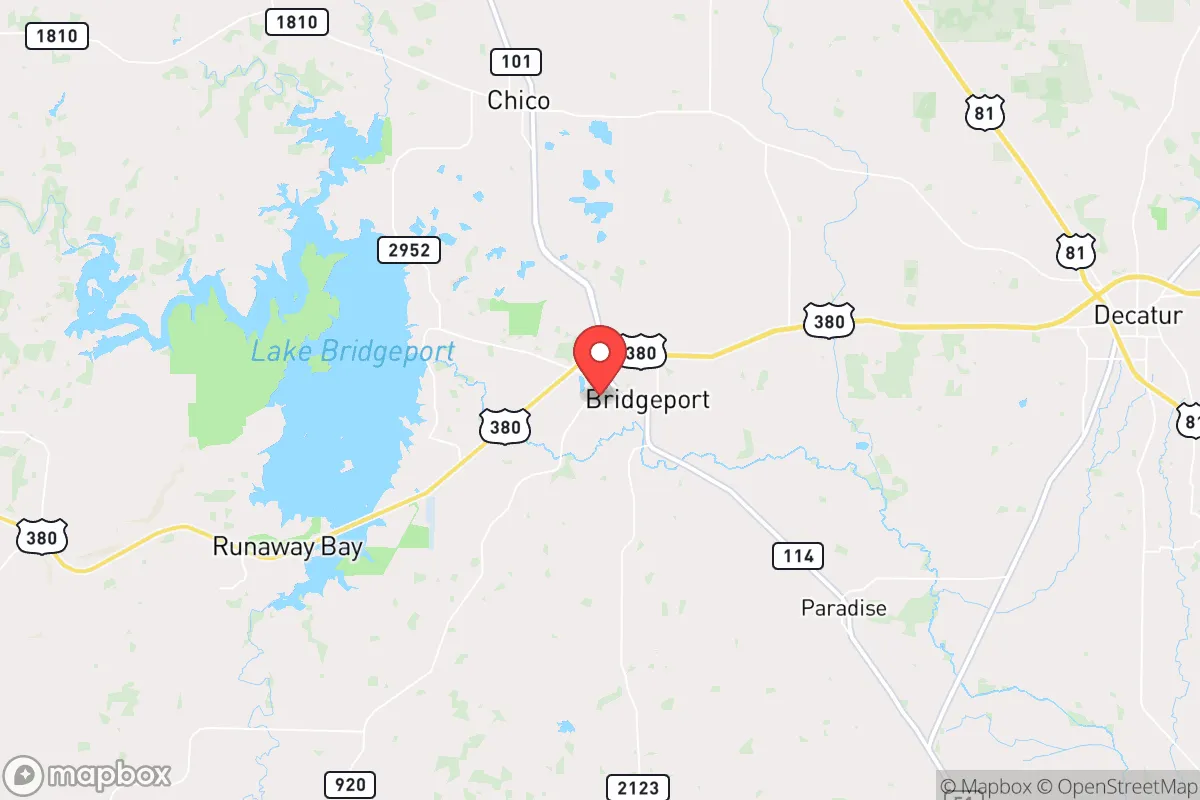
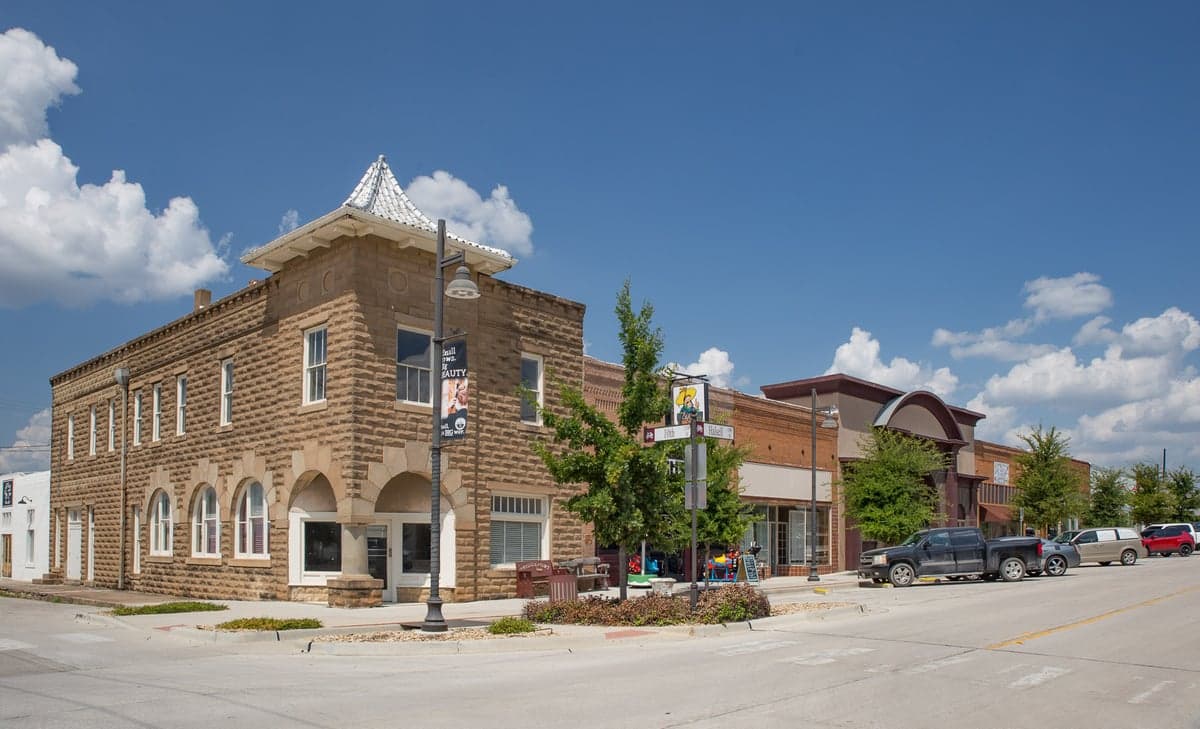
Photo: Wikipedia
Political ClimatePolitical Climate in Bridgeport, TX
District shown is the primary district for this city’s centroid. Cities may span multiple districts.
Local Political AnalysisPolitical Analysis of Bridgeport, TX
Bridgeport, Texas, sits deep in the heart of Wise County, and politically, it’s about as solidly conservative as you’ll find in the state. The Cook PVI of R+24 tells the story bluntly: this isn’t a purple area or a swing district—it’s a place where Republican candidates routinely win by double-digit margins, and where the local culture reflects that. That R+24 rating is a full 20 points more conservative than the state of Texas as a whole, which sits at R+4. What that means on the ground is that in Bridgeport, you’re not just in a red county; you’re in one of the reddest parts of an already red state. The political trajectory here has been stable for decades, with no real signs of shifting leftward. If anything, as the Dallas-Fort Worth metroplex creeps closer, some folks worry about an influx of suburban voters bringing more moderate or even progressive ideas, but so far, the local elections and voter registration trends show Bridgeport holding firm.
How it compares
Compared to the state of Texas as a whole, Bridgeport is a political outlier in its intensity. Texas at R+4 is a reliably red state, but it has major urban centers like Houston, Dallas, Austin, and San Antonio that pull the average toward the center. Bridgeport, by contrast, is surrounded by smaller towns like Decatur, Chico, and Runaway Bay—all of which share a similar conservative bent. The contrast is stark when you drive just 45 minutes southeast to Denton, which has a Cook PVI of R+2 and a much younger, more diverse population that has started to lean more purple in recent years. In Bridgeport, you don’t see the same kind of political tension. The local school board, city council, and county commission are all dominated by candidates who run on platforms of limited government, low taxes, and traditional values. There’s no real organized progressive presence here, and that’s by design—people moved to Bridgeport to get away from the kind of government overreach they see in larger cities.
What this means for residents
For someone living in Bridgeport, the political climate translates into a daily life that feels freer from the kind of top-down mandates you hear about in places like Austin or Portland. During the COVID-19 pandemic, for instance, Wise County largely resisted strict lockdowns and mask mandates, and local businesses stayed open while cities to the south shut down. That’s the kind of local control that residents here value deeply. Property taxes are a perennial concern, but the county government tends to keep them lower than in nearby Tarrant or Dallas counties. The biggest worry among long-time residents isn’t about losing elections—it’s about the slow creep of state or federal regulations that could override local decisions. There’s a real sense that as the metroplex expands, outside money and outside ideas could threaten the way of life here. People keep a close eye on school curriculum battles and land-use regulations, because those are the fronts where government overreach tends to show up first.
Culturally, Bridgeport stands apart from the rest of Texas in its stubborn resistance to change. While the state has seen a noticeable shift toward more progressive policies in its largest cities—things like sanctuary city ordinances, higher minimum wages, and expanded LGBTQ+ protections—Bridgeport has gone the other direction. The local gun culture is strong, with open carry and constitutional carry widely supported. The churches are full, and the civic organizations like the Lions Club and the Chamber of Commerce are still the backbone of community life. If you’re looking for a place where the government stays out of your business and your neighbors share your values, Bridgeport is about as close as it gets in modern Texas. The challenge ahead will be keeping it that way as the world changes around it.

State Political ClimatePolitical Climate in Texas
State Political AnalysisPolitical Environment in the State
Texas has been a reliably Republican state for decades, with a Cook Partisan Voting Index of R+4, but the political landscape is far more complex than a single number suggests. The dominant coalition remains conservative, rooted in the state’s strong economic freedom, low taxes, and traditional values, but the last 10-20 years have seen a slow, steady shift as massive in-migration from blue states and rapid urbanization have begun to chip away at the GOP’s once-unassailable margins. While statewide races still lean red—often by 8-12 points—the trajectory is narrowing, and the internal battle between the party’s establishment and its more populist, liberty-minded wings is increasingly visible.
Urban vs. rural divide
The political map of Texas is a study in stark contrasts. The vast rural and exurban areas—places like Lubbock, Amarillo, and the sprawling Hill Country around Kerrville—vote overwhelmingly Republican, often by 70-80% margins. These regions are the engine of the state’s conservative majority, driven by gun culture, oil and gas, and a deep distrust of federal overreach. In contrast, the major metros are the Democratic strongholds. Austin (Travis County) is the state’s most liberal city, voting +50 points for Biden in 2020, while El Paso and the Rio Grande Valley have long been Democratic bastions, though the Valley has shown surprising rightward movement in recent cycles. Dallas and Houston are more purple, with suburban counties like Collin and Fort Bend flipping from solid red to competitive or even blue in presidential years. The real battleground is the fast-growing suburban ring around San Antonio and Fort Worth, where transplants from California and Illinois are reshaping precinct-level results. The 2022 midterms saw Bexar County (San Antonio) shift left, while rural counties like Deaf Smith and Hemphill held firm, deepening the urban-rural chasm.
Policy environment
Texas’s policy environment is defined by a low-tax, low-regulation posture that has attracted businesses and residents for decades. There is no state income tax, and property taxes are high but capped by the 2019 and 2023 tax compression laws (SB 2 and HB 2). The regulatory climate is business-friendly, with minimal red tape for energy, construction, and tech. On education, the state has leaned into school choice, with the 2023 passage of a universal education savings account (ESA) program that lets parents use state funds for private or homeschool expenses—a major win for parental rights. Healthcare policy is mixed: Texas refused Medicaid expansion under Obamacare, keeping the system lean, but this has left rural hospitals struggling. Election laws tightened after 2020 with SB 1, which banned drive-through voting and added ID requirements for mail ballots—a move that drew fire from the left but was praised by conservatives for election integrity. The state’s abortion ban (trigger law from 2021) and permitless carry law (HB 1927, 2021) reflect a commitment to life and Second Amendment rights, though local governments in blue cities have tried to resist these policies, creating a patchwork of enforcement.
Trajectory & freedom
On balance, Texas has been expanding personal freedom in key areas, but the picture is not uniform. The 2021 permitless carry law (HB 1927) was a landmark: any law-abiding adult can now carry a handgun without a license, a clear expansion of Second Amendment rights. The 2023 parental rights bill (HB 900) restricted sexually explicit content in school libraries and gave parents more power to challenge curricula, a direct response to progressive overreach in districts like Austin ISD. Property rights were strengthened by the 2021 ban on COVID-19 vaccine mandates for private employers (SB 51) and the 2023 law prohibiting local governments from banning gas stoves or natural gas hookups (HB 17). However, there are concerning trends. The state’s heavy-handed approach to local control—preempting city ordinances on everything from plastic bags to tree preservation—can feel like government overreach to those who value local autonomy. The 2023 law targeting “gender-affirming care” for minors (SB 14) was popular with conservatives but has drawn legal challenges and media scrutiny, creating a climate of uncertainty for families. The biggest red flag is the growing influence of corporate interests in Austin and Dallas, which are pushing for more progressive policies on diversity and climate, often clashing with the state’s conservative base.
Civil unrest & political movements
Texas has seen its share of political flashpoints. The 2020 Black Lives Matter protests in Austin and Houston were large and sometimes violent, leading to property damage and a lasting distrust of urban governance. The border crisis has been a constant source of tension, with Governor Abbott’s Operation Lone Star deploying state troopers and National Guard to the border, and busing migrants to blue cities like New York and Chicago. This has created a visible, ongoing political movement among conservatives who feel the federal government has abandoned border security. On the left, activist groups like the Texas Organizing Project and MOVE Texas have been aggressively registering voters in Harris County and Dallas County, aiming to flip the state. Election integrity remains a hot-button issue: the 2020 and 2022 cycles saw lawsuits over mail ballots and voter roll purges, with conservatives pointing to irregularities in Tarrant County and Collin County. Secession talk (Texit) is a fringe but persistent movement, with the Texas Nationalist Movement holding annual conventions, though it has no real political power. A new resident will notice the strong presence of “Don’t Tread on Me” flags and pro-police signage in rural areas, contrasted with “Defund the Police” graffiti in Austin’s more radical neighborhoods.
Projection
Over the next 5-10 years, Texas is likely to become more competitive at the statewide level, but not necessarily more liberal. The in-migration from California, New York, and Illinois is slowing as those states’ policies worsen, and many newcomers are actually conservatives fleeing blue-state governance. The 2024 election showed that Hidalgo County (McAllen) and Starr County in the Rio Grande Valley shifted right by double digits, suggesting that Hispanic voters are moving toward the GOP on cultural and economic issues. The suburban counties around Dallas and Houston will continue to be the key battlegrounds, with Collin County likely staying red but Fort Bend becoming a permanent swing county. The biggest wildcard is the state’s growing urban population: if Austin and San Antonio continue to attract tech workers from blue states, they could turn the state purple by 2032. However, the state legislature is gerrymandered to favor rural and exurban districts, so the policy environment—low taxes, school choice, gun rights—is likely to remain conservative for the next decade. A new resident should expect a state that is politically vibrant, with constant grassroots activism on both sides, but where the default setting is still freedom-oriented, especially outside the major cities.
For someone moving to Texas, the bottom line is this: you will find a state that largely respects your right to live as you see fit, with low taxes, strong gun rights, and a government that stays out of your business—provided you don’t live in a deep-blue city like Austin or El Paso. The political climate is shifting, but it’s shifting in a way that rewards engaged conservatives who are willing to vote and get involved at the local level. If you value personal liberty, parental control over your kids’ education, and a government that doesn’t overreach, Texas is still one of the best bets in the country. Just keep an eye on the suburbs—that’s where the future of the state will be decided.
* Values derived from national, state, county, city and local statistics and may differ in a specific area. Last updated: 2026-05-08T21:12:31.000Z
Narrative content on this page is AI-generated and may contain mistakes. Verify any details that matter before acting on them.
ReloMaps may earn a commission from affiliate links at no extra cost to you.

