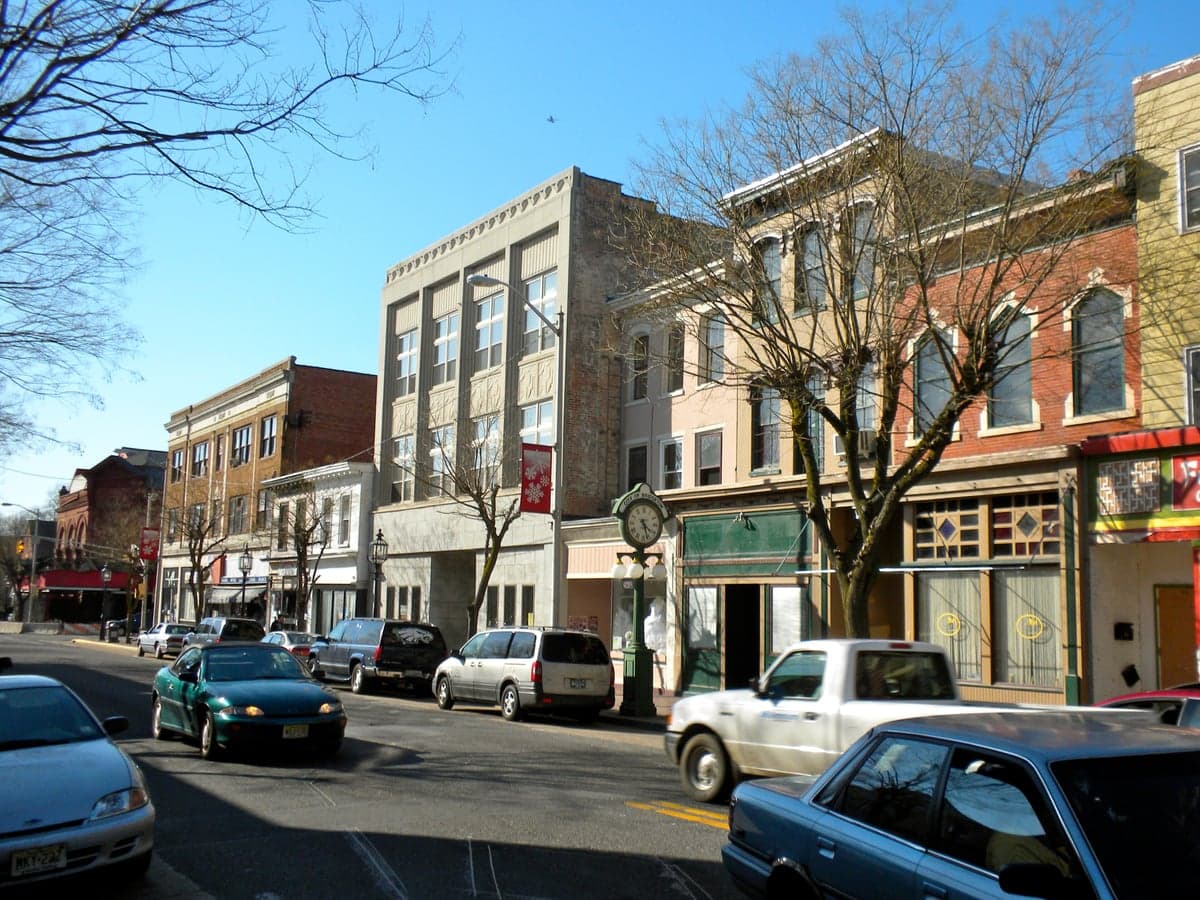
Photo: Wikipedia
Strategic Assessment of Bridgeton, NJ
Multiple tactical vulnerabilities. Population density, target proximity, or disaster risk are likely compounding. A retreat property and exit planning is required.
What does the Strategic Assessment tell us?
Our Strategic Assessment grades tactical survivability of an area. Major population centers, military targets, fallout zones, natural disasters, and border exposure all drive risk — lower exposure means a more defensible position in a crisis.
This is heavily inspired by Joel Skousen's Strategic Relocation book. Highly recommended you checkout the book ($)What does this tell us?
Our Strategic Assessment grades tactical survivability of an area. Major population centers, military targets, fallout zones, natural disasters, and border exposure all drive risk — lower exposure means a more defensible position in a crisis.
This is heavily inspired by Joel Skousen's Strategic Relocation book. Highly recommended you checkout the book ($)Strategic Pillars

Key Distances
Regional Safe Places
Below is our recommended "safe zones" in New Jersey and the surrounding area based on our strategic heuristics. For most people, it's unrealistic to live in a “safe zone” full-time due to work, family or other personal reasons. They tend to be more rural. However, many of these areas are perfect for second homes and retreat properties that double as a vacation home or even a short-term rental.
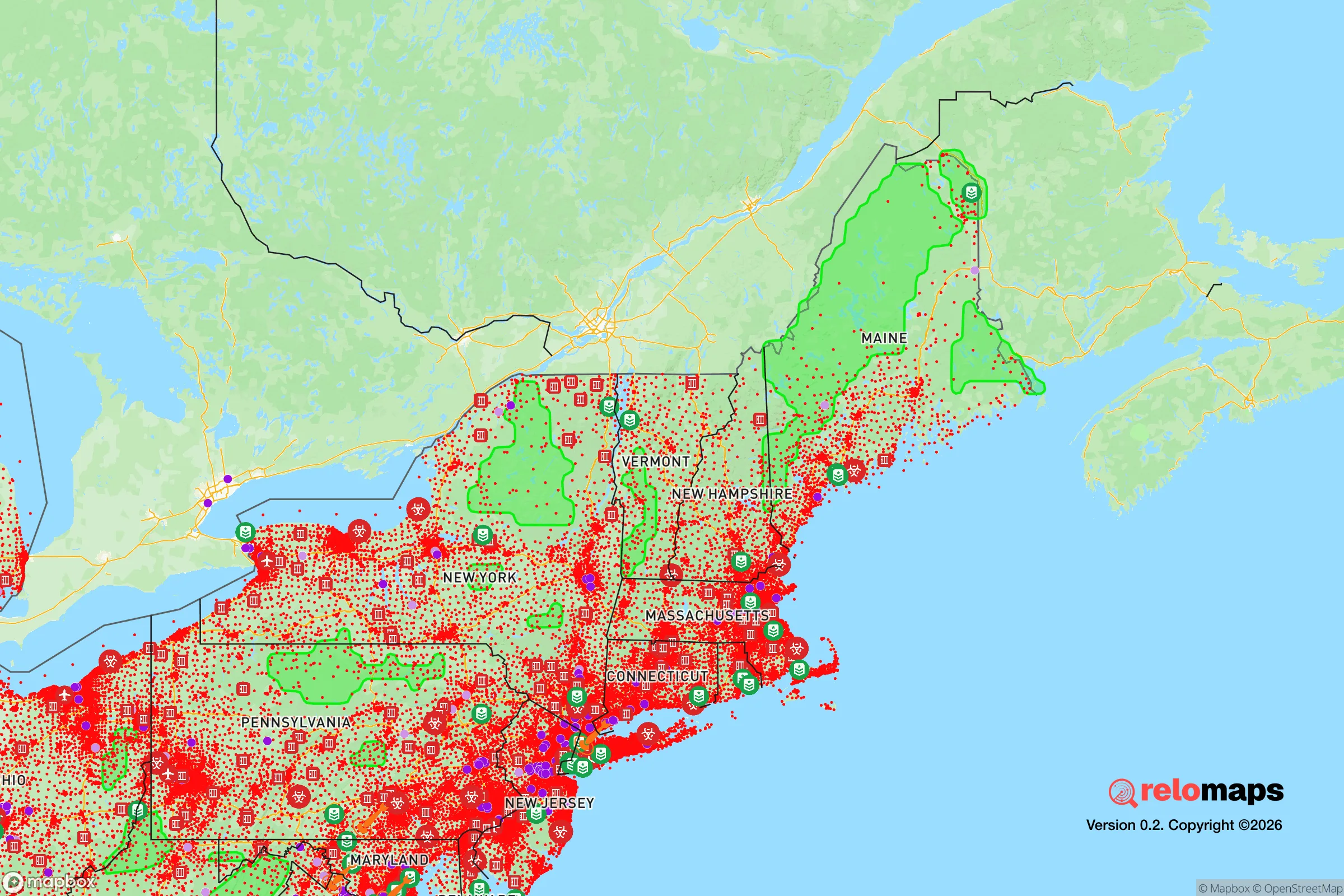
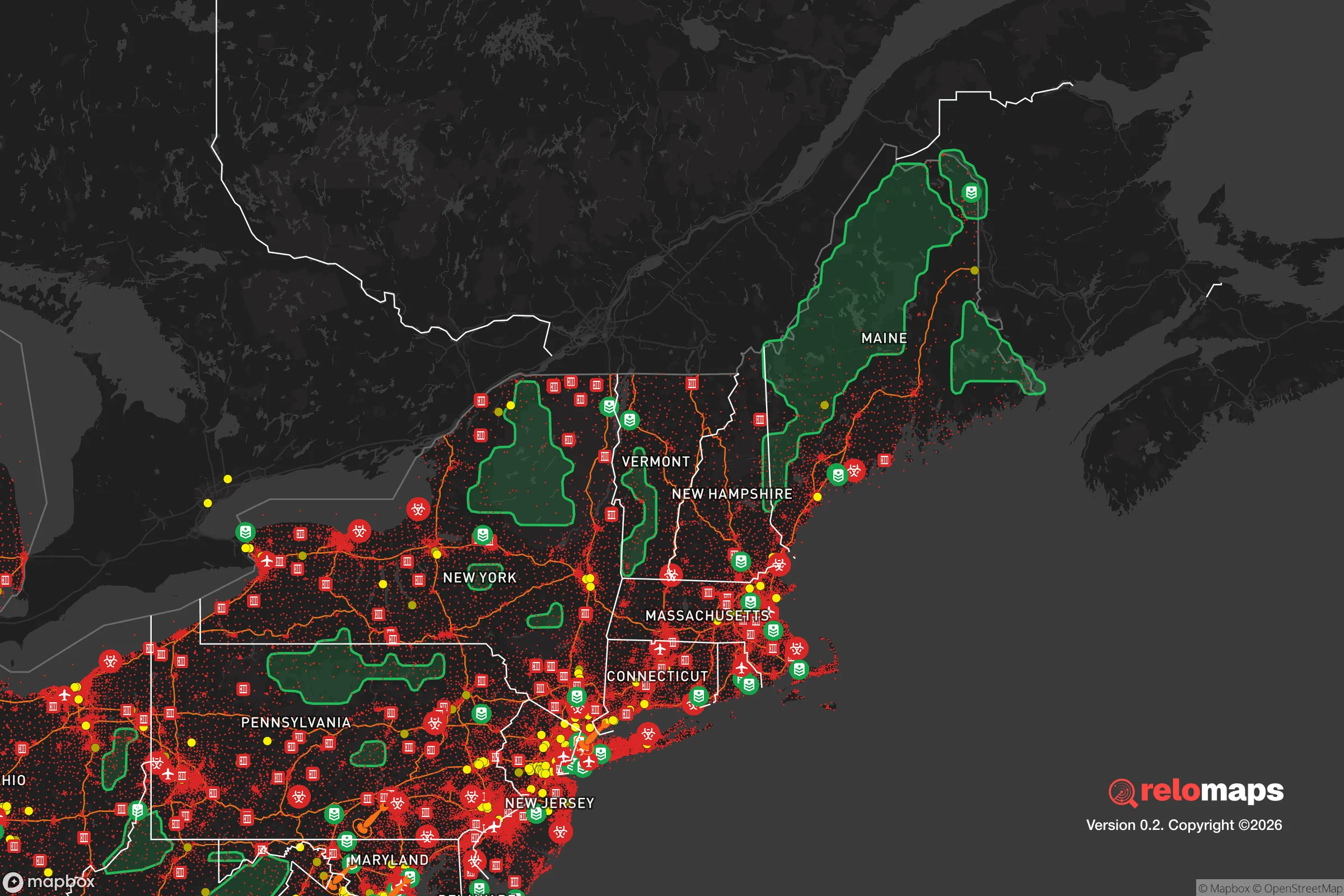


Important Note: For informational purposes only. This does not mean nothing bad ever happens in the green zones. Please use common sense. This is based on public data and modeled with AI. We tried to take a conservative approach but mistakes happen. We update this regularly as new information becomes available.
Solar Generator Recommendations
Backup power matters more here than in safer locations. We've picked three solar generators across budgets and capacity tiers — start with the budget unit if you only need a few essentials, or step up if you want to run a fridge and HVAC for days at a time.

Jackery Portable Power Station Explorer 300
Budget OptionPower on the Go: Weighing only 11 lbs, it's convenient to set up and store with book-sized foldable solar panels

BLUETTI Portable Power Station AC180
Designed for both indoor and outdoor scenarios, AC180 is highly capable as it has a robost capacity and continuous output power.

EF ECOFLOW DELTA Pro Ultra Power Station
Upgraded PickEcoFlow DELTA Pro Ultra is a whole-home energy system designed to grow with your family. Integrated with the Smart Home Panel 2, it scales to meet your evolving energy needs — keeping your home powered, intelligent, and secure through every stage of life.
We earn a commission, at no additional cost to you.
Strategic Assessment Analysis
Bridgeton, New Jersey, sits in a position that demands a hard look from anyone serious about strategic relocation. On paper, it offers a mix of advantages and liabilities that could make or break a prepper’s plan. The city itself has seen economic decline and population loss, but its location in Cumberland County—far from the immediate blast zones of Philadelphia, New York, or Washington D.C.—gives it a buffer that many East Coast locations lack. The real question is whether that buffer is enough to offset the risks of being in a densely populated corridor, and whether the area’s natural resources and community structure can support a long-term resilience strategy.
Geographic position and natural advantages for long-term survival
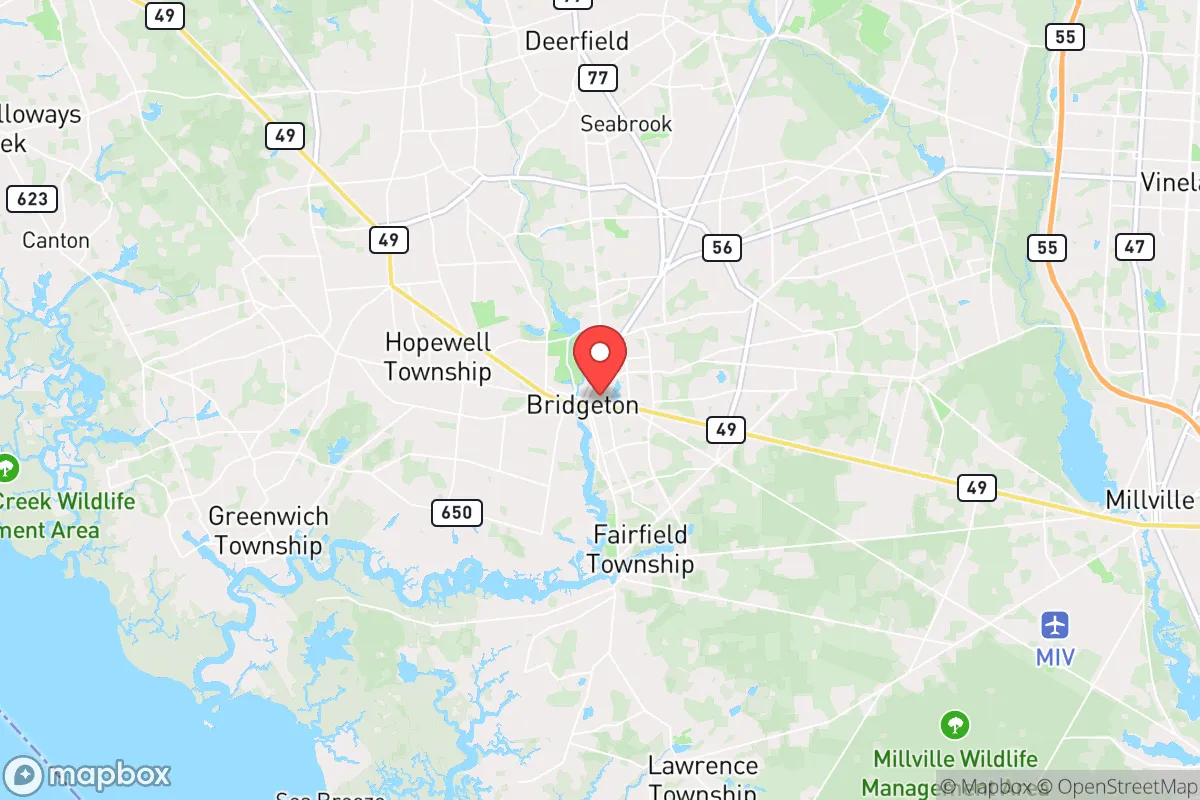
Bridgeton’s location in the Delaware Valley region places it roughly 40 miles south of Philadelphia and 35 miles west of Atlantic City. That distance is significant: in a major event—whether a nuclear detonation, a coordinated attack on infrastructure, or widespread civil unrest—the immediate fallout and chaos would likely concentrate in those urban cores. Bridgeton sits far enough out to avoid the worst of the blast and radiation zones, but close enough that you could still be affected by secondary effects like refugee flows, supply chain disruptions, or power grid failures. The area’s geography is flat and agricultural, part of the New Jersey Pine Barrens to the east and the Delaware Bay to the west. That means abundant freshwater from the Cohansey River, which runs through the city, and access to the Delaware River for larger-scale water transport. The soil is fertile, and the region has a long history of farming—corn, soybeans, and vegetables are common. For a relocator, that translates into a realistic opportunity for local food production, especially if you secure land outside the city limits. The Pine Barrens also offer a vast, sparsely populated wilderness area for hunting, foraging, and retreat, though you’ll need to know the terrain and deal with state regulations on firearms and land use.
Risks, exposures, and proximity to fallout-relevant landmarks
No strategic assessment of Bridgeton can ignore the elephant in the room: New Jersey is a high-density state, and the corridor between New York and Washington D.C. is one of the most target-rich environments on the planet. Bridgeton itself is not a primary target—no major military bases, no nuclear power plants within 20 miles (the nearest is Salem Nuclear Generating Station, about 25 miles northwest), and no major government or financial hubs. But the state’s infrastructure is fragile. The New Jersey Turnpike and I-95 run through the region, and a disruption there would choke supply lines. The Port of Philadelphia and the Delaware River shipping channel are critical economic arteries; a major incident could halt commerce for weeks. Additionally, the Salem and Hope Creek nuclear plants are close enough that a catastrophic failure—whether from accident or attack—could force a large-scale evacuation or contaminate the water table. The Delaware Bay coastline is also vulnerable to storm surge from hurricanes, which have historically hit the region (Superstorm Sandy in 2012 caused flooding in Cumberland County). For a prepper, the key takeaway is that Bridgeton is not a safe haven from all threats, but it is a zone where you can mitigate risk through preparation. The biggest danger is not a direct hit but the secondary effects: refugees fleeing the cities, supply shortages, and potential civil unrest as resources become scarce. The city’s own population is around 25,000, with a high poverty rate and limited local to the area—that could mean either a tight-knit community or a source of instability, depending on how events unfold.
Practical resilience for a relocator: food, water, energy, and defensibility
For a single individual or a family looking to set up a resilient homestead, Bridgeton offers a mixed bag. Water is a strong point: the Cohansey River and numerous aquifers provide reliable freshwater, but you’ll need to test for agricultural runoff and industrial contaminants. Well water is common in rural parts of Cumberland County, and drilling a private well is feasible if you own land. Food production is viable—the area’s growing season runs from April to October, and you can raise chickens, goats, or even small livestock on a few acres. Local farmers’ markets and co-ops exist, but they’re not robust; you’ll want to establish your own garden and seed bank. Energy is a weak spot. New Jersey’s grid is aging and vulnerable to storms and cyberattacks. Solar is a good option—the state has net metering policies, but you’ll need to navigate local permitting and HOA restrictions if you’re in a subdivision. Off-grid solar with battery storage is legal but requires upfront investment. Natural gas is available in town, but rural properties may rely on propane or heating oil, which are subject to supply disruptions. Defensibility is where Bridgeton gets tricky. The city itself is not a fortress—it’s a small, spread-out town with open access from multiple roads. For a prepper, the ideal is to buy land outside the city limits, preferably in the Pine Barrens or along the Cohansey River, where you can control access and have natural barriers. The area’s flat terrain means you won’t have the defensive advantage of hills or mountains, but dense forest can provide cover. Crime in Bridgeton is higher than the national average, with property crime being a particular concern—so if you’re in town, you’ll need robust security measures. For a family, the local school system is underfunded and has low ratings, which may push you toward homeschooling or private options. The community is diverse and working-class, with a strong Hispanic and African American presence; for a conservative-leaning relocator, you’ll find a mix of political views, but the area leans Democratic overall, so you may need to keep a low profile on certain topics.
The overall strategic picture for Bridgeton is one of cautious opportunity. It’s not a prepper paradise—you won’t find remote mountains, a self-sufficient community, or a low-tax haven. What you will find is a location that balances proximity to resources (water, farmland, wilderness) with a manageable distance from major threats. The key is to treat Bridgeton as a base of operations, not a final redoubt. Secure land outside the city, invest in off-grid infrastructure, and build relationships with local farmers and hunters. The area’s biggest advantage is its agricultural potential and water access; its biggest liability is its position in a densely populated state with fragile infrastructure and a history of economic struggle. For a relocator willing to put in the work—and who understands that no location is perfect—Bridgeton offers a realistic, if imperfect, option for weathering the storms ahead. Just don’t expect it to be easy, and don’t assume the government will be there to help when things go sideways. Prepare accordingly.

* Values derived from national, state, county, city and local statistics and may differ in a specific area. Last updated: 2026-05-18T07:43:26.000Z
Narrative content on this page is AI-generated and may contain mistakes. Verify any details that matter before acting on them.
ReloMaps may earn a commission from affiliate links at no extra cost to you.

