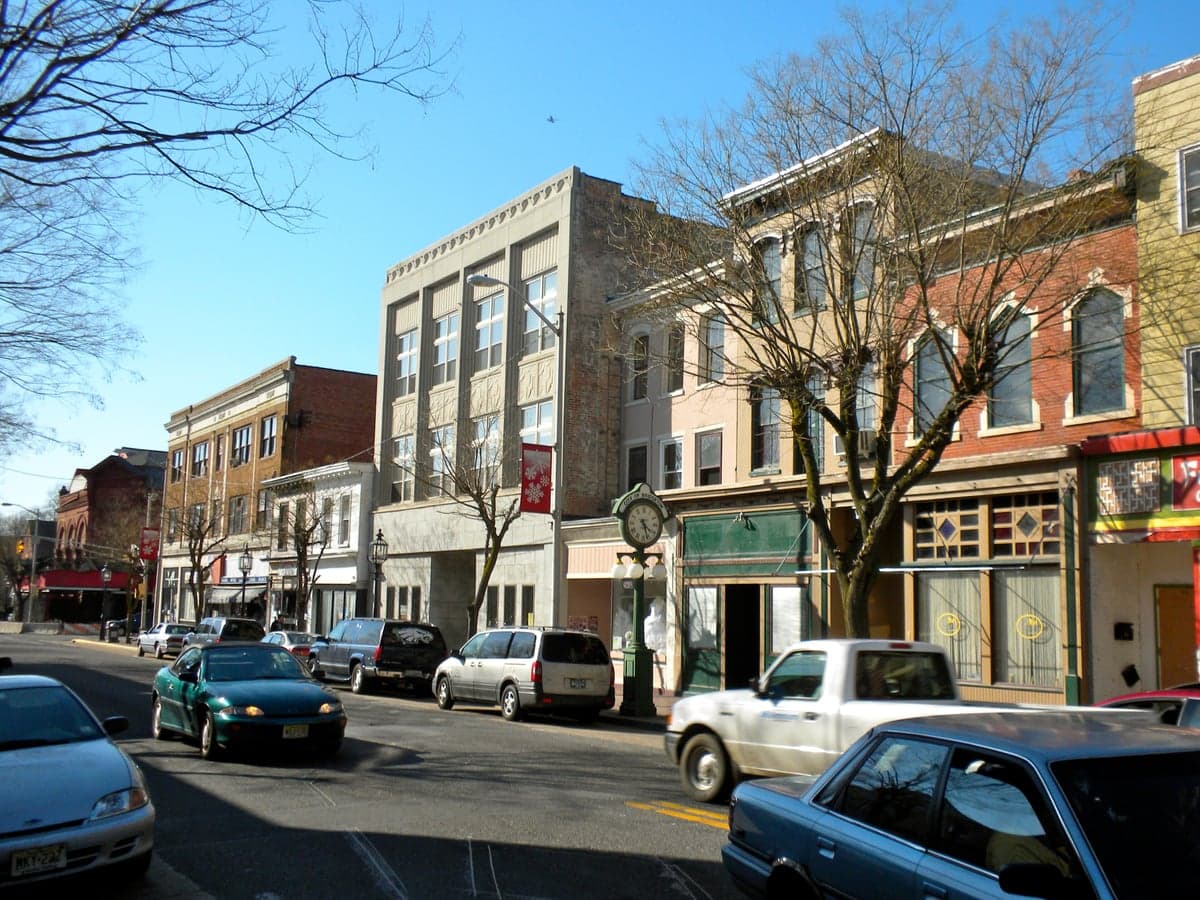
Photo: Wikipedia
Political ClimatePolitical Climate in Bridgeton, NJ
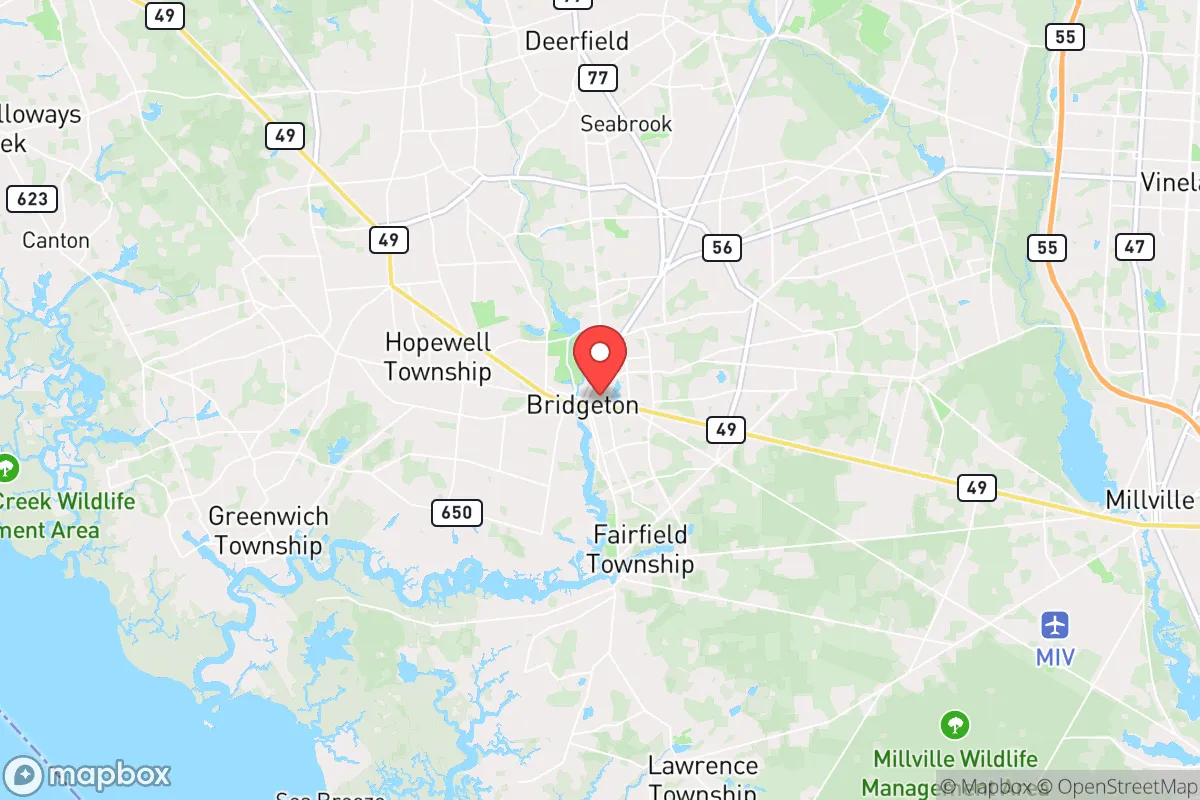
District shown is the primary district for this city’s centroid. Cities may span multiple districts.
Local Political AnalysisPolitical Analysis of Bridgeton, NJ
Bridgeton, New Jersey, has long been a place where folks value their independence and aren't too keen on being told how to live their lives. The political climate here leans conservative, with a Cook PVI of R+5, meaning the area consistently votes Republican by a solid margin. That's a stark contrast to the rest of New Jersey, which has a D+5 PVI, showing just how much of an outlier Bridgeton is in a state that's been drifting leftward for years. If you've been around here for a while, you've seen the shift—where once the county was reliably red, now there's a growing unease as progressive policies from Trenton start to creep into local life.
How it compares
When you look at Bridgeton compared to the rest of New Jersey, the difference is night and day. The state as a whole has embraced a progressive agenda, with higher taxes, stricter regulations, and a government that seems to think it knows best for everyone. In Bridgeton, folks are more skeptical of that approach. We've seen what happens when the state gets too involved—like with the recent push for more restrictive gun laws and energy mandates that hit rural areas harder than the suburbs. Nearby cities like Vineland and Millville lean more moderate, but they're still not as conservative as Bridgeton. Even in Cumberland County, Bridgeton stands out as a pocket of resistance against the tide of progressive ideology that's washing over the rest of the state. It's a place where people still believe in personal responsibility and limited government, even as the state government tries to expand its reach.
What this means for residents
For those living in Bridgeton, the political climate means you're constantly fighting to keep your freedoms intact. The state's overreach into things like property rights, school curriculum, and even how you heat your home is a real concern. You see it in the push for electric vehicle mandates and the rising cost of living driven by state taxes. Locals here are more likely to push back against these policies, whether it's at town hall meetings or through local elections. The long-term trajectory is worrying, though—as the state gets bluer, there's a real risk that Bridgeton's conservative values will be drowned out by Trenton's one-size-fits-all approach. But for now, it's still a place where you can have a conversation about personal freedoms without being labeled an extremist, and that's something worth holding onto.
Culturally, Bridgeton has a distinct feel compared to the rest of New Jersey. There's a stronger sense of community and self-reliance here, with less of the hustle and bustle you find in the northern part of the state. Policy-wise, you'll see more support for local control over schools and zoning, and a general distrust of state-level mandates. It's not uncommon to hear folks grumble about how the state government is out of touch with rural life. While the progressive wave hasn't fully hit Bridgeton yet, the warning signs are there—rising property taxes, more regulations on small businesses, and a growing push for diversity initiatives that feel more like political correctness than common sense. For now, it's still a bastion of conservative values in a state that's increasingly hostile to them, but keeping it that way will take constant vigilance.

State Political ClimatePolitical Climate in New Jersey
State Political AnalysisPolitical Environment in the State
New Jersey has long been a reliably blue state, but its Democratic lean is more nuanced than the raw numbers suggest. With a Cook Partisan Voting Index of D+5, the state hasn't voted for a Republican for president since 1988, but that top-line stat masks a deeply divided electorate. Over the last 10-20 years, the state has shifted leftward on cultural and economic issues, driven largely by the massive, vote-rich suburbs of New York City and Philadelphia, while rural and exurban areas have grown more conservative and resentful of Trenton's one-party rule. If you're a conservative considering a move here, you need to understand that the state's politics are a tale of two New Jerseys: the dense, wealthy, progressive corridor and the rest of the state that feels increasingly ignored.
Urban vs. rural divide
The political map of New Jersey is a classic urban-rural split, but with a twist: the suburbs are overwhelmingly blue. The state's Democratic dominance is powered by the northeastern counties within commuting distance of Manhattan—Bergen, Essex, Hudson, and Union—which together deliver hundreds of thousands of votes for Democrats every cycle. Newark and Jersey City are deep-blue strongholds, with the latter seeing a surge of young, progressive transplants. Meanwhile, the Philadelphia suburbs in Camden County and Burlington County have flipped from purple to solid blue over the past decade, driven by professional-class voters who prioritize social issues and transit access. On the flip side, the state's rural and exurban areas—Sussex County in the northwest, Hunterdon County in the west, and Ocean County along the shore—vote reliably Republican. Ocean County is the GOP's strongest bastion, regularly delivering 60%+ margins for Republican candidates. The divide isn't just geographic; it's cultural. In places like Middlesex County, you'll find a mix of blue-collar union Democrats and growing immigrant communities that lean left, while Morris County remains a competitive swing county where Republicans can win local races but lose the statewide vote.
Policy environment
New Jersey's policy environment is a textbook example of progressive governance that many conservatives find overbearing. The state has the highest property taxes in the nation, averaging over $9,500 annually, and a progressive income tax that tops out at 10.75% for income over $1 million. The regulatory posture is aggressive: the state has some of the strictest environmental rules in the country, a robust public-sector union presence, and a school funding formula that heavily favors urban districts over suburban and rural ones. On education, the state's school choice options are limited; there are no private school vouchers, and charter schools are capped and concentrated in a few cities like Newark and Camden. Healthcare is heavily regulated, with the state expanding Medicaid under the Affordable Care Act and implementing a state-based health insurance exchange. Election laws lean Democratic: the state has no-excuse mail-in voting, automatic voter registration, and same-day registration, which critics argue reduces election integrity. The governor, currently Democrat Phil Murphy, has veto power and has used it to block Republican-backed bills on tax relief and parental rights. For a conservative, the policy environment feels like a one-way ratchet toward higher taxes, more regulation, and less local control.
Trajectory & freedom
Over the past five years, New Jersey has become less free by almost any measure a conservative would care about. On gun rights, the state passed some of the nation's strictest laws, including a 2022 law requiring a permit to purchase a handgun and a 2023 law banning concealed carry in "sensitive places" like parks and libraries—a direct response to the Bruen Supreme Court decision. On parental rights, the state has moved in the opposite direction of places like Florida: in 2024, the legislature passed a bill requiring schools to adopt policies that affirm a student's gender identity without parental notification, though it was vetoed by Murphy. On speech, the state's Division on Civil Rights has aggressively pursued complaints under the Law Against Discrimination, which some argue chills free expression on campus and in workplaces. On medical autonomy, New Jersey legalized recreational marijuana in 2021, but the regulatory framework is so burdensome that the black market still thrives. Property rights are under constant pressure from the state's Mount Laurel Doctrine, which forces towns to zone for affordable housing, often overriding local zoning decisions. The trajectory is clear: Trenton is expanding its reach into every aspect of life, and the state's high cost of living is driving out middle-class families and small businesses.
Civil unrest & political movements
New Jersey has seen its share of political flashpoints. During the summer of 2020, Newark and Paterson experienced significant protests and some property damage following the George Floyd killing, though the state avoided the worst of the violence seen in other cities. The state's sanctuary policies are a major point of contention: New Jersey is a "sanctuary state" under a 2018 executive order by then-Governor Chris Christie's successor, Phil Murphy, which limits local law enforcement cooperation with federal immigration authorities. This has led to friction between state officials and some suburban and rural police departments. On the right, the New Jersey Firearms Coalition and local Second Amendment groups have been active in lawsuits and protests against the state's gun laws, with some success in federal court. Election integrity remains a hot-button issue: the state's widespread use of mail-in ballots in 2020 and 2021 led to lawsuits and allegations of irregularities, particularly in close legislative races in Middlesex County and Atlantic County. A new resident would notice that political activism is highly localized—you'll see "Don't Tread on Me" flags in Sussex County and "Defund the Police" signs in Montclair, but the two sides rarely interact.
Projection
Over the next 5-10 years, New Jersey is likely to become more Democratic and more progressive, driven by demographic trends. The state's population is aging, but the growth is concentrated in the urban and inner-suburban areas that vote blue. The exurbs and rural areas that vote red are losing population as young people leave for lower-cost states. In-migration from New York City and other blue metros is accelerating this shift, as new arrivals tend to be younger, more diverse, and more left-leaning. The state's high taxes and regulatory burden will continue to drive out middle-class families and small businesses, but the wealthy professionals who can afford the cost of living will keep the Democratic coalition intact. A conservative moving in now should expect that the political environment will become even more hostile to their values over time, with likely expansions of gun control, higher taxes, and more progressive education policies. The only wildcard is a potential federal shift: if Republicans win the White House and Congress, they could use federal preemption to roll back some of New Jersey's sanctuary policies or gun laws, but that's a temporary fix, not a long-term solution.
For a conservative considering New Jersey, the bottom line is this: you can find like-minded communities in the state's rural northwest and along the shore, but you will be fighting a losing battle at the state level. The state's political trajectory is set, and it's moving away from the values of limited government, personal responsibility, and local control. If you're moving here for a job or family reasons, be prepared to pay high taxes, navigate a thicket of regulations, and watch your children's education be shaped by progressive mandates from Trenton. It's not impossible to live here as a conservative—many do—but it requires a constant vigilance and a willingness to engage in local focus that can be exhausting. If you value freedom above all else, you might want to look at the other side of the Delaware River.
* Values derived from national, state, county, city and local statistics and may differ in a specific area. Last updated: 2026-05-18T07:43:26.000Z
Narrative content on this page is AI-generated and may contain mistakes. Verify any details that matter before acting on them.
ReloMaps may earn a commission from affiliate links at no extra cost to you.

