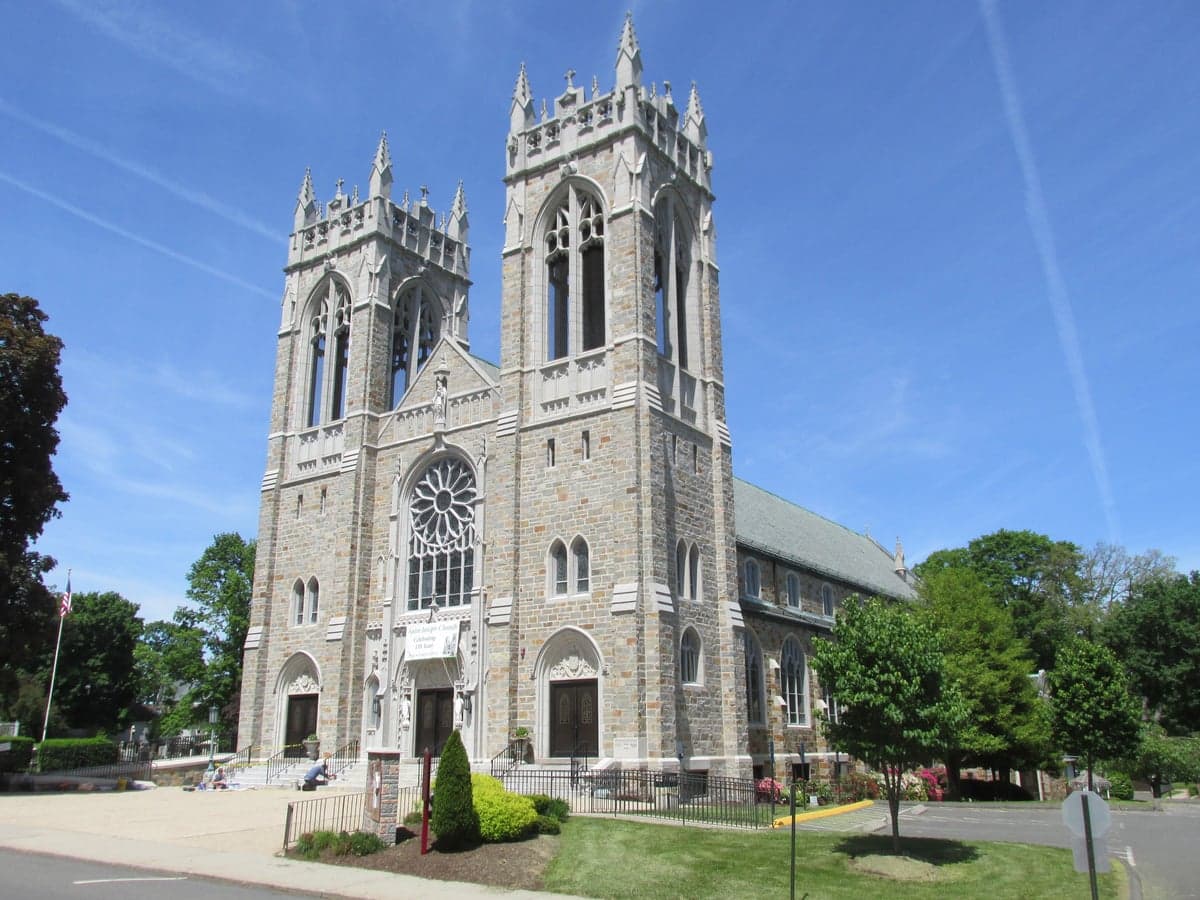
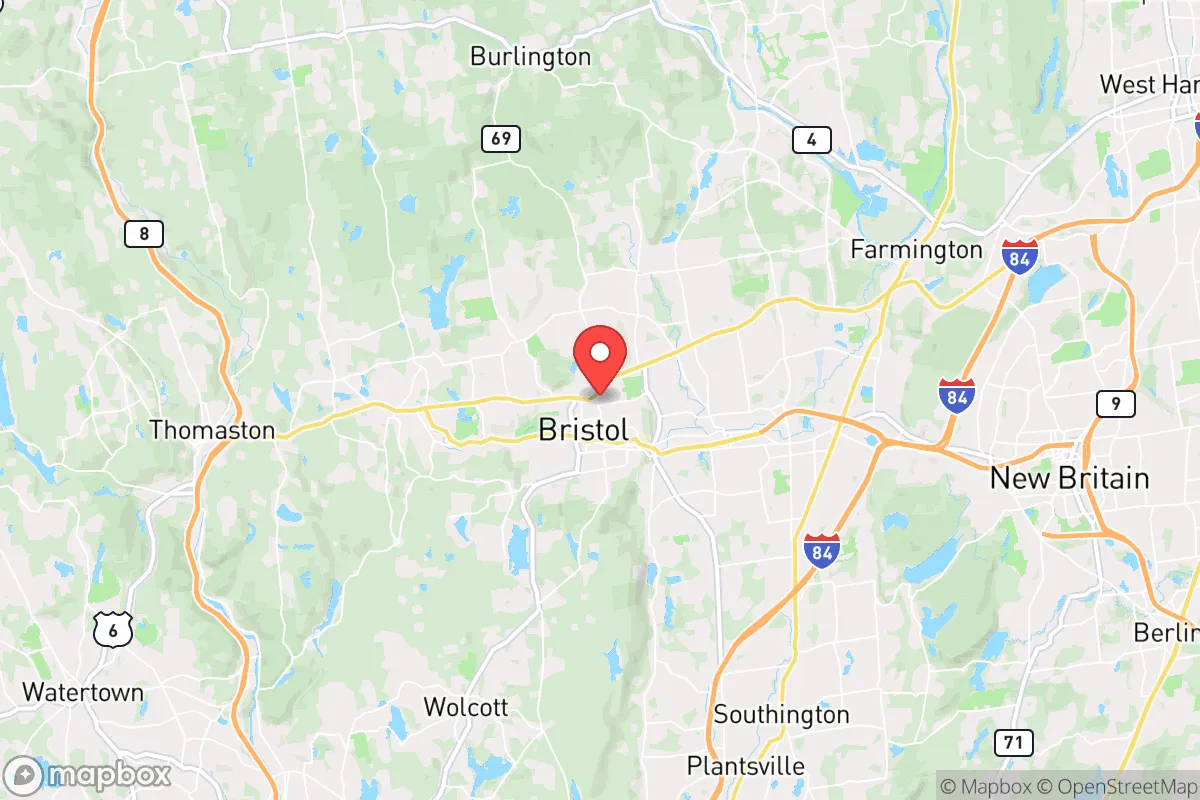
Photo: Wikipedia
Demographics of Bristol, CT
Affluence Level in Bristol, CT
A middle-class area roughly in line with national averages across income, home values, education, and employment.
People of Bristol, CT
The people of Bristol, Connecticut today form a dense, historically rooted community of 61,129 residents, characterized by a strong working-class identity and a notably lower foreign-born share (3.9%) than the state average. The city is predominantly white (64.9%) with a substantial and growing Hispanic population (18.6%), alongside smaller Black (6.6%), East/Southeast Asian (2.9%), and Indian-subcontinent (1.7%) communities. Bristol retains a distinct small-city feel, with a population density of roughly 2,500 people per square mile, and its residents are known for a pragmatic, family-oriented culture shaped by generations of factory work and local manufacturing.
How the city was settled and grew
Bristol’s population history begins with English colonists from Plymouth Colony and the Massachusetts Bay Colony, who purchased land from the Tunxis tribe in the 1720s. The original settlement, known as the Chippens Hill area, was a scattering of subsistence farms. The city’s real growth engine arrived in the 19th century with the clock-making industry, which drew skilled artisans and later immigrant laborers. By the 1850s, the Federal Hill neighborhood became the heart of German and Irish immigrant settlement, as these groups filled jobs in the burgeoning brass and clock factories. The late 1800s saw a wave of French-Canadian and Italian immigrants, who established tight-knit enclaves in Forestville and the West End, building churches and social clubs that remain community anchors today. Polish and Lithuanian families followed in the early 1900s, settling near the factories along the Pequabuck River in the Downtown and South End districts. By 1950, Bristol was a heavily white, ethnic, working-class city of about 30,000, with its population nearly doubling by 1970 as suburbanization and post-war manufacturing booms drew additional families.
Modern era (post-1965)
The 1965 Hart-Cellar Act had a modest immediate effect on Bristol compared to larger cities, but it set the stage for gradual diversification. The city’s foreign-born population peaked at around 5% in the 1970s and has since declined to 3.9%, reflecting an aging, native-born population and limited new immigration. The most significant demographic shift since the 1990s has been the growth of the Hispanic population, which rose from roughly 5% in 1990 to 18.6% today. This wave, primarily of Puerto Rican and Dominican origin, concentrated in the Downtown and South End neighborhoods, where older housing stock and lower rents offered entry points. The Black population, at 6.6%, is largely native-born and has grown modestly, with clusters in the West End and Forestville areas. East/Southeast Asian communities (2.9%) are a more recent addition, with small but visible Vietnamese and Filipino families settling in the Chippens Hill and Lake Compounce corridor, often drawn by employment at ESPN and local healthcare facilities. The Indian-subcontinent population (1.7%) is similarly small and professional, with many families living in newer subdivisions on the city’s northern edge. Notably, the white population has declined from over 90% in 1980 to 64.9% today, driven by both out-migration to surrounding towns and an aging demographic.
The future
Bristol’s population is trending toward greater ethnic diversity, but at a slower pace than Connecticut’s larger cities. The Hispanic share is projected to approach 25% by 2040, driven by higher birth rates and continued in-migration from other parts of the state, while the white population will continue its gradual decline. The East/Southeast Asian and Indian-subcontinent communities are likely to grow modestly, but will remain small enclaves rather than forming large ethnic neighborhoods. The city is not tribalizing into distinct, isolated enclaves; rather, neighborhoods like Federal Hill and the South End are becoming more mixed, with Hispanic families moving into areas once dominated by Polish and Italian households. The foreign-born share is expected to remain low (under 5%), as Bristol lacks the large immigrant job networks found in Hartford or New Britain. The biggest demographic wildcard is the potential for redevelopment of the former mall and industrial sites along Route 72, which could attract younger, college-educated residents—currently only 30.5% of adults hold a bachelor’s degree—and slow the city’s aging trend.
For someone moving to Bristol now, the city offers a stable, family-oriented environment with a shrinking but still dominant white working-class base, a growing Hispanic community, and small but stable Asian and Black populations. It is becoming more diverse, but gradually and without the rapid ethnic turnover seen in nearby cities. The practical takeaway: Bristol is a place where long-established ethnic traditions (Polish festivals, Italian social clubs) coexist with a newer Hispanic cultural presence, and where newcomers will find a community that values continuity over rapid change.

* Values derived from national, state, county, city and local statistics and may differ in a specific area. Last updated: 2026-04-22T22:40:32.000Z
Narrative content on this page is AI-generated and may contain mistakes. Verify any details that matter before acting on them.
ReloMaps may earn a commission from affiliate links at no extra cost to you.

