
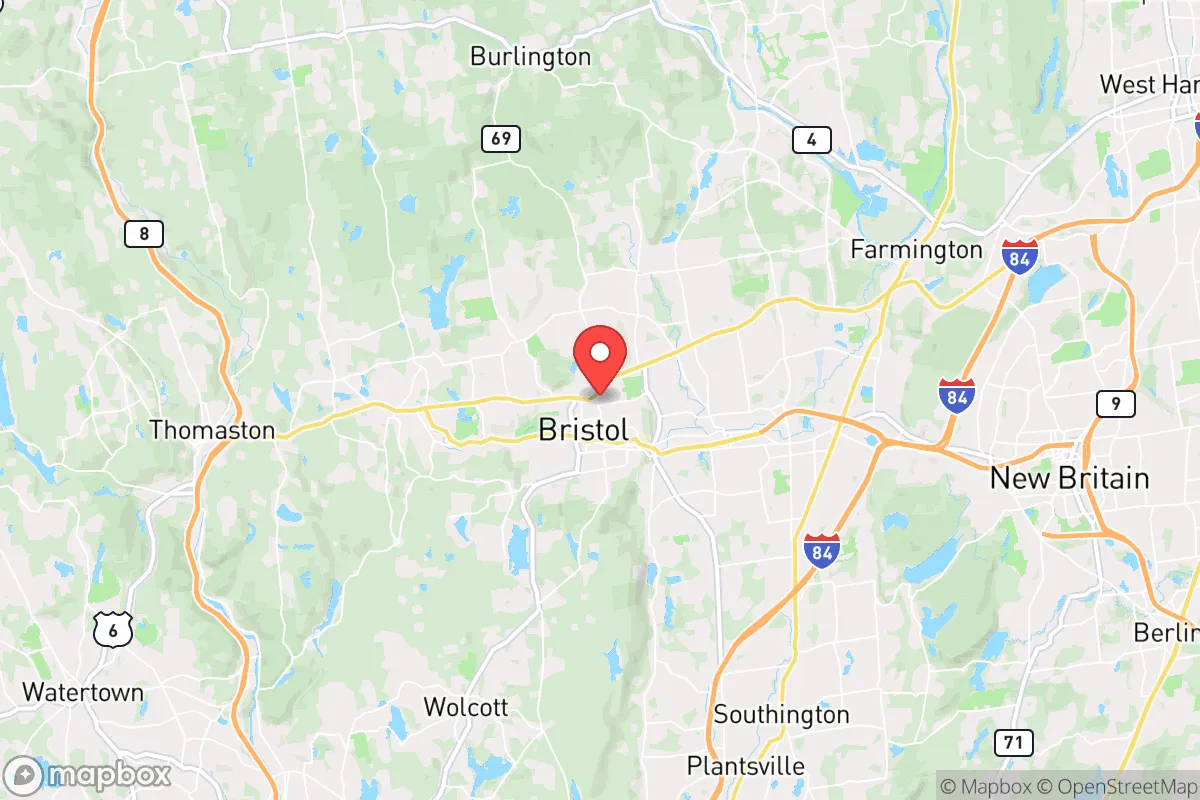
Photo: Wikipedia
Personal Sovereignty in Bristol, CT
Viable for self-reliance. Generally workable, though some barriers may limit total independence.
What does Personal Sovereignty tell us?
Personal Sovereignty measures your capacity for self-reliance and independence with minimal government friction. Higher scores mean fewer barriers between you and the way you want to live... but it assumes you have the space you need and good neighbors.
What does this tell us?
Personal Sovereignty measures your capacity for self-reliance and independence with minimal government friction. Higher scores mean fewer barriers between you and the way you want to live... but it assumes you have the space you need and good neighbors.
State Policy
Energy independence: Importer (5% of energy produced in-state)
Personal Liberty
Homesteading

Personal Liberty Analysis
Bristol, Connecticut, sits in a state where personal sovereignty is heavily constrained by one of the densest regulatory environments in the Northeast, making it a challenging location for those prioritizing autonomy. For a survivalist or prepper mindset, the core tension here is between a relatively affordable, blue-collar community and a state government that actively limits self-reliance through tax policy, gun control, and land-use restrictions. While Bristol offers some practical advantages over pricier Fairfield County towns, anyone serious about personal freedom must weigh whether the local community’s resilience can offset Hartford’s reach.
Tax burden and regulatory posture: How Connecticut’s fiscal grip affects Bristol
Connecticut’s tax burden is among the highest in the nation, and Bristol residents feel it directly. The state imposes a progressive income tax with rates topping at 6.99%, a 6.35% sales tax, and some of the highest property taxes in the country—Bristol’s mill rate hovers around 30 mills, meaning a $250,000 home carries roughly $7,500 in annual property tax. This fiscal posture is a form of government overreach that reduces disposable income and savings, critical for preppers building supplies or land reserves. The state also mandates strict building codes, environmental regulations, and business licensing that can stifle side hustles like small-scale manufacturing or home-based food production. For a conservative-leaning individual, this regulatory density feels like a constant tax on initiative, with little room to opt out of state programs or keep more of what you earn.
Self-defense and gun law specifics: Navigating Connecticut’s restrictive firearms environment
Connecticut’s gun laws are among the most restrictive in the country, directly impacting personal sovereignty for self-defense. The state requires a permit to purchase any firearm, a background check for all sales (including private transfers), and a 14-day waiting period for long guns. Magazine capacity is capped at 10 rounds, and “assault weapons” as defined by state law are effectively banned for new purchases. Bristol residents must also register any handgun they own, and open carry is heavily restricted. For a prepper, this means building a defensive arsenal is legally cumbersome and expensive—you’ll need to budget for permit fees, training classes, and limited options for high-capacity firearms. The state’s “red flag” law allows courts to temporarily seize firearms based on complaints, which raises concerns about due process and government overreach. If self-reliance in home defense is a priority, Bristol’s legal landscape is a significant obstacle compared to states like New Hampshire or Pennsylvania.
Self-reliance and homesteading viability: Lot sizes, zoning, and off-grid feasibility in Bristol
Bristol is a densely developed suburban city, not a rural homesteading haven. Most residential lots are under a quarter-acre, and zoning laws restrict livestock, large gardens, and accessory structures like workshops or greenhouses. The city’s zoning code prohibits chickens, goats, or bees on standard lots, and any “farm” use requires special permits that are rarely granted. Off-grid living is essentially illegal—Connecticut mandates grid connection for new construction, and solar panels require utility approval. Rainwater collection is allowed but limited to 50 gallons per property, and composting toilets face strict health code hurdles. For a prepper seeking land for food production or energy independence, Bristol’s suburban density means you’ll likely need to look 20–30 minutes north toward Plymouth or Harwinton, where lot sizes increase to 1–2 acres and zoning loosens. Even then, Connecticut’s state-level building codes and environmental regulations make true off-grid living a legal gray area, not a viable option.
Personal liberties: Parental rights, medical autonomy, speech, and property
Connecticut’s approach to personal liberties is mixed, with strong protections for some rights but significant government overreach in others. Parental rights are relatively strong—the state does not have a universal vaccine mandate for schoolchildren, though COVID-era policies showed a willingness to impose temporary restrictions. Medical autonomy is more constrained: Connecticut has a strict certificate-of-need process for healthcare facilities, limiting competition, and the state’s vaccine mandates for healthcare workers remain in place. Free speech is protected under the First Amendment, but local ordinances in Bristol can restrict signage, noise, and public gatherings, which could affect political expression or community organizing. Property rights are heavily regulated—eminent domain is used for redevelopment, and the state’s “fair share” housing laws push for denser zoning, which can override local control. For a conservative concerned about government overreach, the cumulative effect is a state that respects individual choice only when it aligns with Hartford’s policy goals, leaving little room for dissent or alternative lifestyles.
Overall, Bristol offers a mixed sovereignty profile: the local community is more working-class and self-reliant than wealthier Connecticut suburbs, but the state-level constraints on taxes, guns, land use, and personal liberties create a ceiling on autonomy. For a survivalist or prepper, the area might work as a base if you’re willing to navigate high costs and legal hurdles, but it’s far from a freedom-friendly haven. Compared to states like New Hampshire, Texas, or Idaho, Bristol’s personal sovereignty is significantly lower—you’ll spend more time and money complying with regulations than building resilience. If your priority is maximum self-reliance, look elsewhere; if you’re tied to the region for family or work, focus on rural towns in Litchfield County and accept that Connecticut’s government will remain a persistent constraint on your independence.

* Values derived from national, state, county, city and local statistics and may differ in a specific area. Last updated: 2026-04-22T22:40:32.000Z
Narrative content on this page is AI-generated and may contain mistakes. Verify any details that matter before acting on them.
ReloMaps may earn a commission from affiliate links at no extra cost to you.

