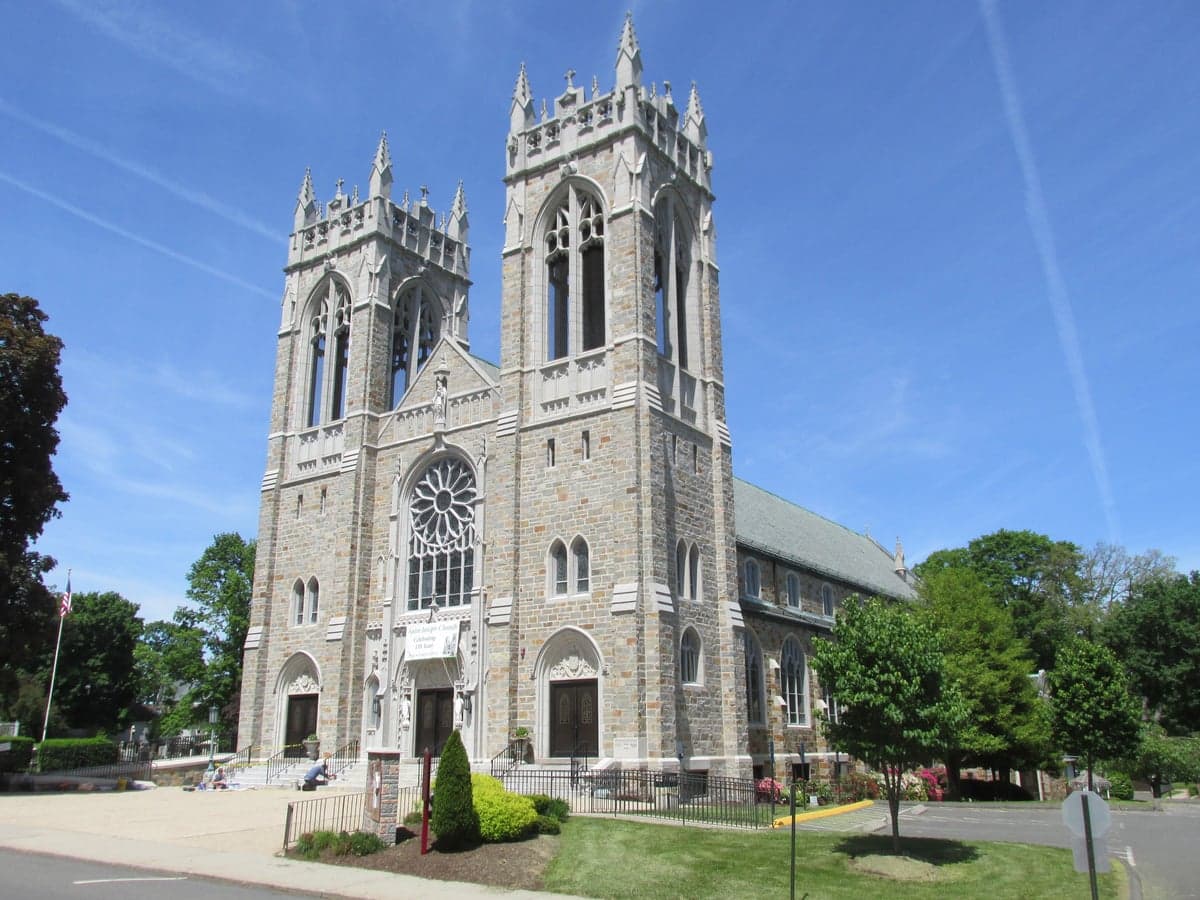
Photo: Wikipedia
Political ClimatePolitical Climate in Bristol, CT
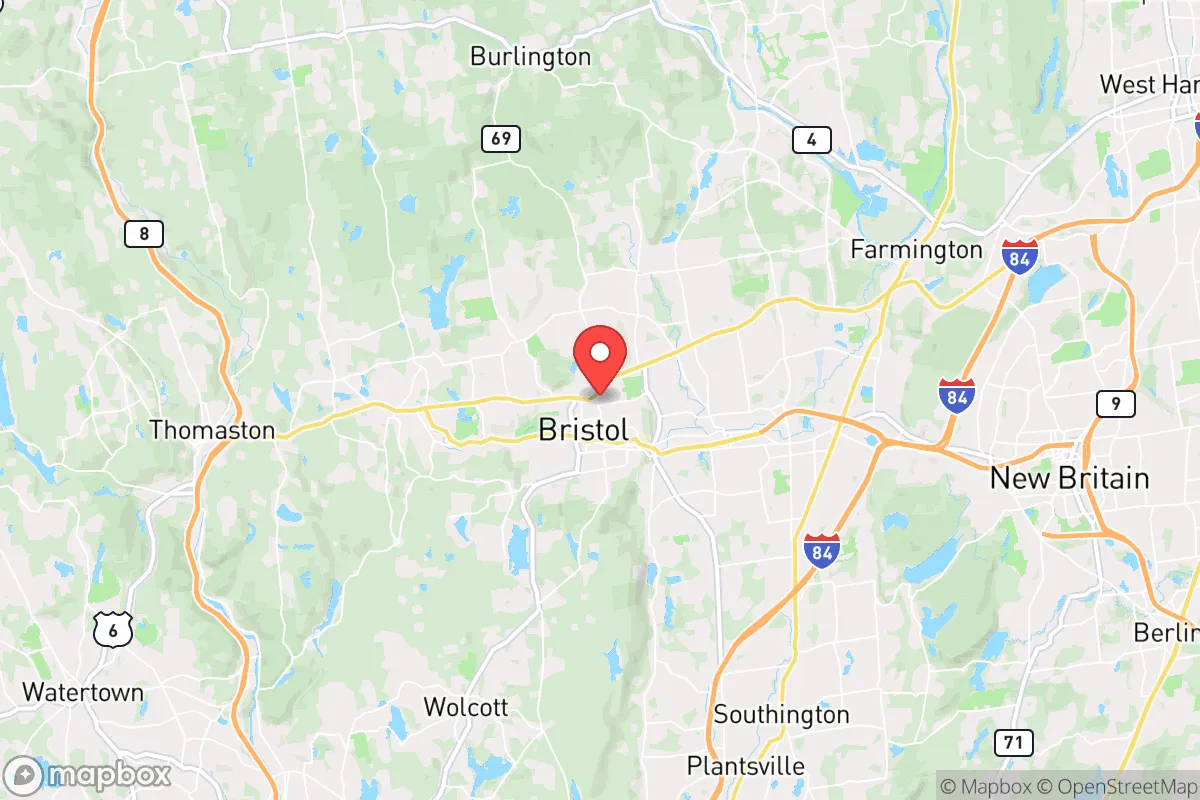
District shown is the primary district for this city’s centroid. Cities may span multiple districts.
Local Political AnalysisPolitical Analysis of Bristol, CT
Bristol, Connecticut, has historically been a blue-collar, Democratic stronghold, but the political winds have shifted in ways that should give any freedom-loving resident pause. The Cook PVI of D+12 tells you the basics—it's a heavily Democratic district on paper—but that number hides a more complicated reality. For decades, this was a place where the local Democratic machine was more about patronage and keeping things stable than pushing a radical social agenda. But over the last ten years, especially since 2020, you've seen a real change. The old-school, union-friendly Democrats are being replaced by a younger, more progressive crowd that's far more comfortable with government overreach into your personal life, from how you heat your home to what your kids learn in school. The trajectory is concerning: Bristol is drifting away from its common-sense roots and toward a one-party rule that feels less about representing everyone and more about enforcing a specific worldview.
How it compares
To really understand Bristol, you have to look at the towns around it. Drive ten minutes west to Plymouth or north to Burlington, and you're in a completely different world—places where the local government still remembers that its job is to stay out of your way. Those towns lean conservative, and they vote like it. Even nearby Southington, which is more of a mix, has a much stronger Republican presence than Bristol. The contrast is stark: in Bristol, you've got a city council that's almost entirely Democratic, and they're not shy about using that power. They've pushed through zoning changes that make it harder to run a small business out of your home, and they've been quick to adopt state mandates on energy and education without much pushback. It's a classic case of a city that used to be the manufacturing heart of the region, full of independent-minded people, now being run by folks who seem to think the government should have a say in every decision you make. The surrounding towns are a reminder of what Bristol used to be—and what it could still be if people wake up.
What this means for residents
For the average person living here, the political climate translates into a slow, steady erosion of personal freedoms. You feel it in the little things: higher property taxes that keep climbing because the city keeps adding programs you never asked for, stricter regulations on everything from lawn care to home renovations, and a school system that's increasingly focused on social engineering rather than reading, writing, and arithmetic. The local government has been quick to adopt state-level progressive policies, like the push for electric vehicles and net-zero energy mandates, which sound nice in theory but hit your wallet hard in practice. If you're a small business owner, you're dealing with more red tape every year. If you're a parent, you're watching your kids get indoctrinated with ideas that go against your values. The one-party control means there's little real debate—just a rubber stamp for whatever Hartford sends down. It's not a place that's hostile to conservatives, but it's a place where conservative voices are increasingly drowned out. You can still live here and be fine, but you have to be vigilant. You have to show up to town meetings, vote in every primary, and hold these people accountable, because they won't do it themselves.
Culturally, Bristol still has some of its old character—the Mum Festival, the strong Polish and Italian communities, the pride in being the "Mum City." But that's being papered over by a new, more homogenized progressive culture that looks the same in Bristol as it does in Hartford or New Haven. The city council has been quick to pass symbolic resolutions on national issues, which is a waste of time and energy that should be spent on fixing potholes and keeping the police department staffed. The real distinction is that Bristol is a place where the old, live-and-let-live attitude is being replaced by a "we know what's best for you" mentality. If you value your rights—your right to run your life, your business, and your family without a bureaucrat's permission—you need to keep a close eye on this town. It's not lost yet, but it's heading in the wrong direction, and the only thing that can turn it around is people who still remember what real freedom looks like.

State Political ClimatePolitical Climate in Connecticut
State Political AnalysisPolitical Environment in the State
Connecticut has shifted from a classic swing state to a reliably blue stronghold over the past two decades, with Democrats now holding every statewide office and supermajorities in both legislative chambers. The state voted for Hillary Clinton by 14 points in 2016 and Joe Biden by 20 points in 2020, a leftward drift that accelerated after 2008. For a conservative considering relocation, the key takeaway is that the state’s political center of gravity is firmly in the progressive camp, driven by wealthy Fairfield County suburbs and the urban cores of Hartford and New Haven, while the eastern and northwestern corners still hold some red ground.
Urban vs. rural divide
The political map of Connecticut is a tale of three regions. The southwestern corner, anchored by Stamford, Greenwich, and Darien, is the engine of Democratic dominance—these affluent commuter towns vote 60-70% Democratic, powered by New York City transplants and corporate professionals. The old industrial cities—Hartford, New Haven, and Bridgeport—are deep blue, with Democratic margins exceeding 80% in many precincts. The rural and exurban areas tell a different story: Litchfield County in the northwest and Windham County in the east lean Republican, with towns like Litchfield, Kent, and Woodstock regularly voting 55-60% for GOP candidates. The 2020 presidential race saw Fairfield County deliver a net 120,000-vote margin for Biden, effectively deciding the state before the rest of the votes were counted. The Middlesex County shoreline, including Old Saybrook and Essex, is a classic purple zone—moderate, fiscally conservative, but socially liberal on issues like abortion and environmental regulation.
Policy environment
Connecticut’s policy posture is aggressively progressive, with a tax burden that ranks among the highest in the nation. The state income tax tops out at 6.99%, but the real sting comes from property taxes—the effective rate averages 2.1% of home value, the third-highest in the U.S. In 2023, the legislature passed a paid family and medical leave program funded by a 0.5% payroll tax on all workers, and a clean slate law that automatically erases certain criminal records after seven years. On education, the state has a universal school choice program for low-income families, but it’s limited in scope and heavily regulated. The 2023 “Safe Harbor” law shields providers who perform gender-affirming care for minors from out-of-state legal actions, a flashpoint for parental rights advocates. Election laws are among the most liberal: no-excuse absentee voting was made permanent in 2023, and a 2024 bill allowed same-day voter registration at all polling places. The state also has a sanctuary state law (2013) that limits cooperation between local police and federal immigration authorities, though enforcement varies by town—Danbury and Milford have pushed back with local ordinances.
Trajectory & freedom
On the freedom index, Connecticut is trending downward, particularly on Second Amendment and parental rights. The 2023 “Ghost Gun” ban criminalized possession of unserialized firearm frames and receivers, and a 2024 law raised the minimum age to purchase a long gun from 18 to 21. The state also has a red flag law (enacted 1999, expanded 2023) that allows family members or police to petition a court to temporarily seize firearms. On medical freedom, the 2021 vaccine mandate for healthcare workers remains in effect, and the state’s 2023 “Right to Health” bill (which would have allowed minors to consent to vaccines without parental knowledge) was defeated after heavy opposition. Property rights took a hit with the 2022 “Fair Share” housing law, which requires towns to zone for affordable housing or face state-imposed development plans—Greenwich and Westport have fought this aggressively. The 2024 “Parental Bill of Rights” failed in committee, meaning schools can still adopt policies on gender identity and curriculum without notifying parents. The overall trajectory is one of expanding state authority into areas traditionally left to families and local communities.
Civil unrest & political movements
Connecticut has seen relatively low levels of civil unrest compared to other blue states, but flashpoints exist. The 2020 Black Lives Matter protests in Hartford and New Haven were large but mostly peaceful, though a statue of Christopher Columbus was toppled in New Haven’s Wooster Square. The “CT 2A” movement is active, with regular rallies at the state capitol—the 2023 “Gun Owners Day” drew over 2,000 people. Immigration politics are a live wire: the 2023 “Trust Act” expanded the sanctuary policy, but Enfield and Southington passed resolutions opposing it. The “CT for Parental Rights” group has organized school board protests in Glastonbury and Simsbury over LGBTQ curriculum and library books. Election integrity concerns flared after the 2020 election, when the state allowed universal absentee voting via executive order—a 2023 audit found no widespread fraud, but the permanent expansion of mail-in voting remains controversial among conservatives. The “CT Freedom Alliance” is a growing libertarian-leaning group pushing for school choice expansion and tax reform, but they remain a fringe voice in a state where Democrats hold a 97-54 advantage in the House.
Projection
Over the next 5-10 years, Connecticut is likely to become more progressive, not less. In-migration from New York City—which accelerated during COVID—is bringing more Democratic voters to Fairfield County, while the state’s natural population decline (it lost 0.4% of its population from 2020-2024) is concentrated in the rural, red-leaning towns. The 2024 election saw Trump improve his margin in Litchfield County by 3 points, but that was offset by a 5-point shift left in Hartford County. The state’s fiscal situation is precarious—the 2023 budget relied on $3 billion in one-time federal funds to close a structural deficit, and the pension system is only 42% funded. This could force tax increases or service cuts, which may accelerate the exodus of higher-income earners to Florida or Texas. For a conservative moving in now, expect a decade of continued progressive legislation on guns, taxes, and social policy, with the only real check being the state’s budget constraints and the possibility of a federal shift in immigration or education policy.
For a conservative considering Connecticut, the bottom line is this: you’ll find your people in the Litchfield Hills or the Quiet Corner, but you’ll be fighting uphill on every policy front. The state’s tax burden is punishing, its gun laws are among the strictest in the nation, and the cultural momentum is firmly progressive. If you value low taxes, strong property rights, and local control, Connecticut is a tough sell—but if you need to be near New York City for work or family, towns like Litchfield, Kent, or Woodstock offer a conservative-friendly enclave with good schools and beautiful countryside, provided you can stomach the state-level politics.
* Values derived from national, state, county, city and local statistics and may differ in a specific area. Last updated: 2026-04-22T22:40:32.000Z
Narrative content on this page is AI-generated and may contain mistakes. Verify any details that matter before acting on them.
ReloMaps may earn a commission from affiliate links at no extra cost to you.

