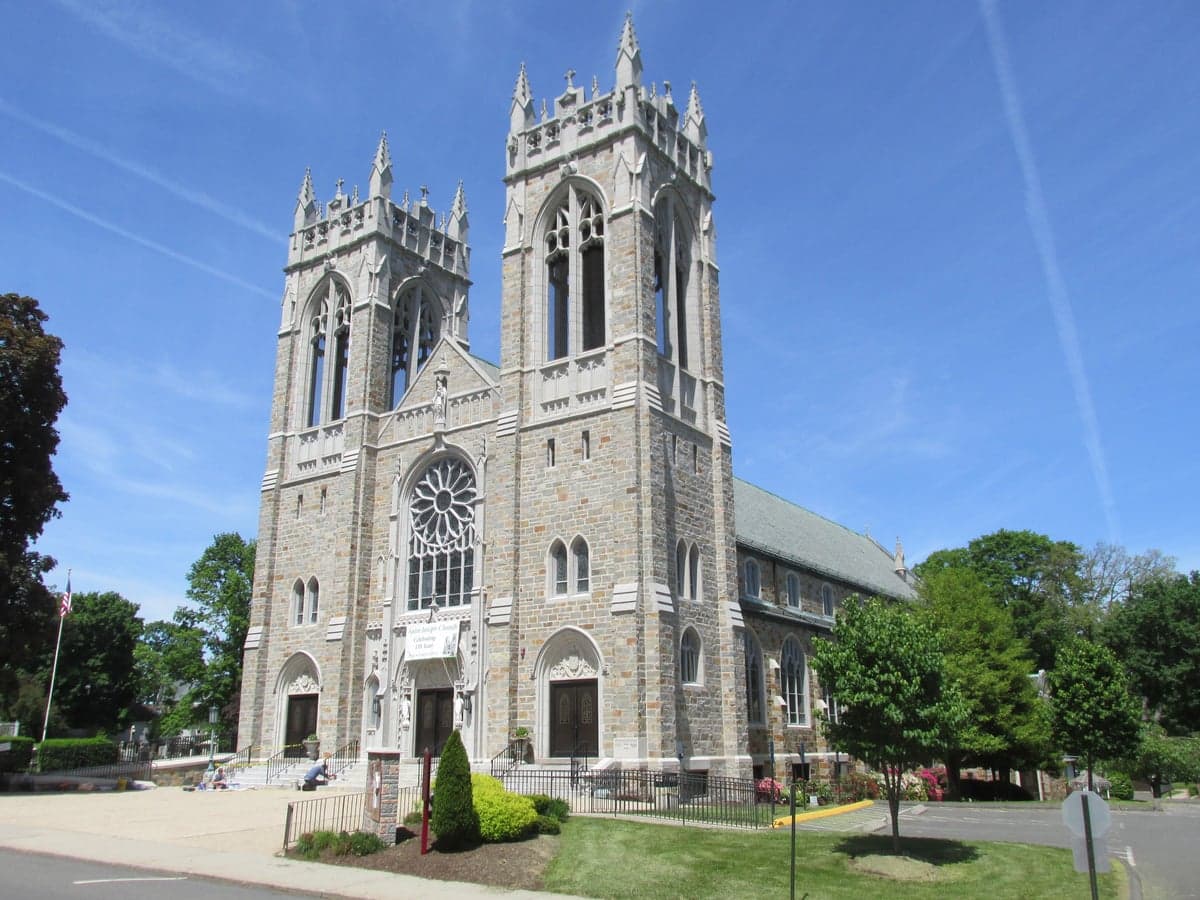
Photo: Wikipedia
Strategic Assessment of Bristol, CT
Multiple tactical vulnerabilities. Population density, target proximity, or disaster risk are likely compounding. A retreat property and exit planning is required.
What does the Strategic Assessment tell us?
Our Strategic Assessment grades tactical survivability of an area. Major population centers, military targets, fallout zones, natural disasters, and border exposure all drive risk — lower exposure means a more defensible position in a crisis.
This is heavily inspired by Joel Skousen's Strategic Relocation book. Highly recommended you checkout the book ($)What does this tell us?
Our Strategic Assessment grades tactical survivability of an area. Major population centers, military targets, fallout zones, natural disasters, and border exposure all drive risk — lower exposure means a more defensible position in a crisis.
This is heavily inspired by Joel Skousen's Strategic Relocation book. Highly recommended you checkout the book ($)Strategic Pillars

Key Distances
Regional Safe Places
Below is our recommended "safe zones" in Connecticut and the surrounding area based on our strategic heuristics. For most people, it's unrealistic to live in a “safe zone” full-time due to work, family or other personal reasons. They tend to be more rural. However, many of these areas are perfect for second homes and retreat properties that double as a vacation home or even a short-term rental.
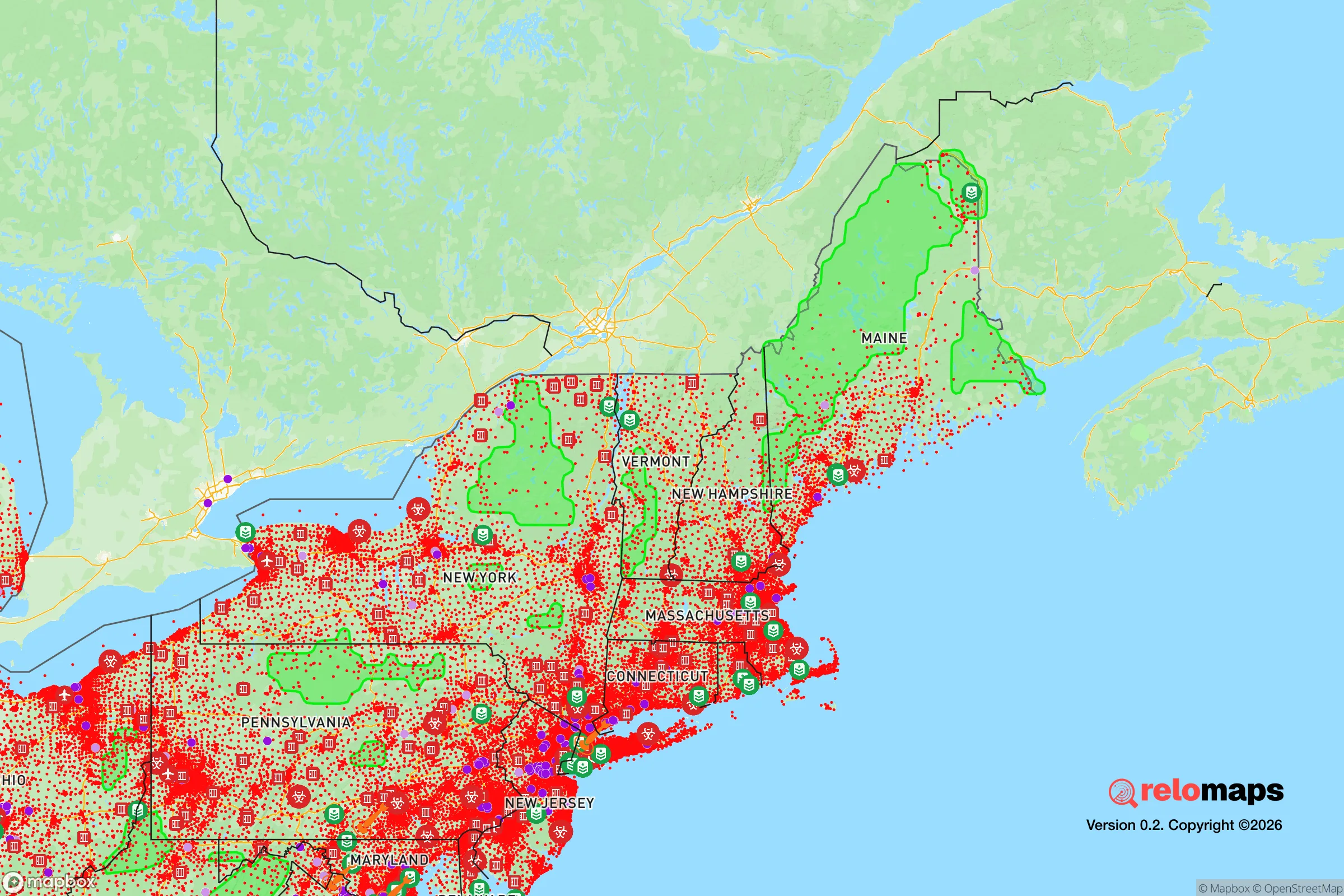
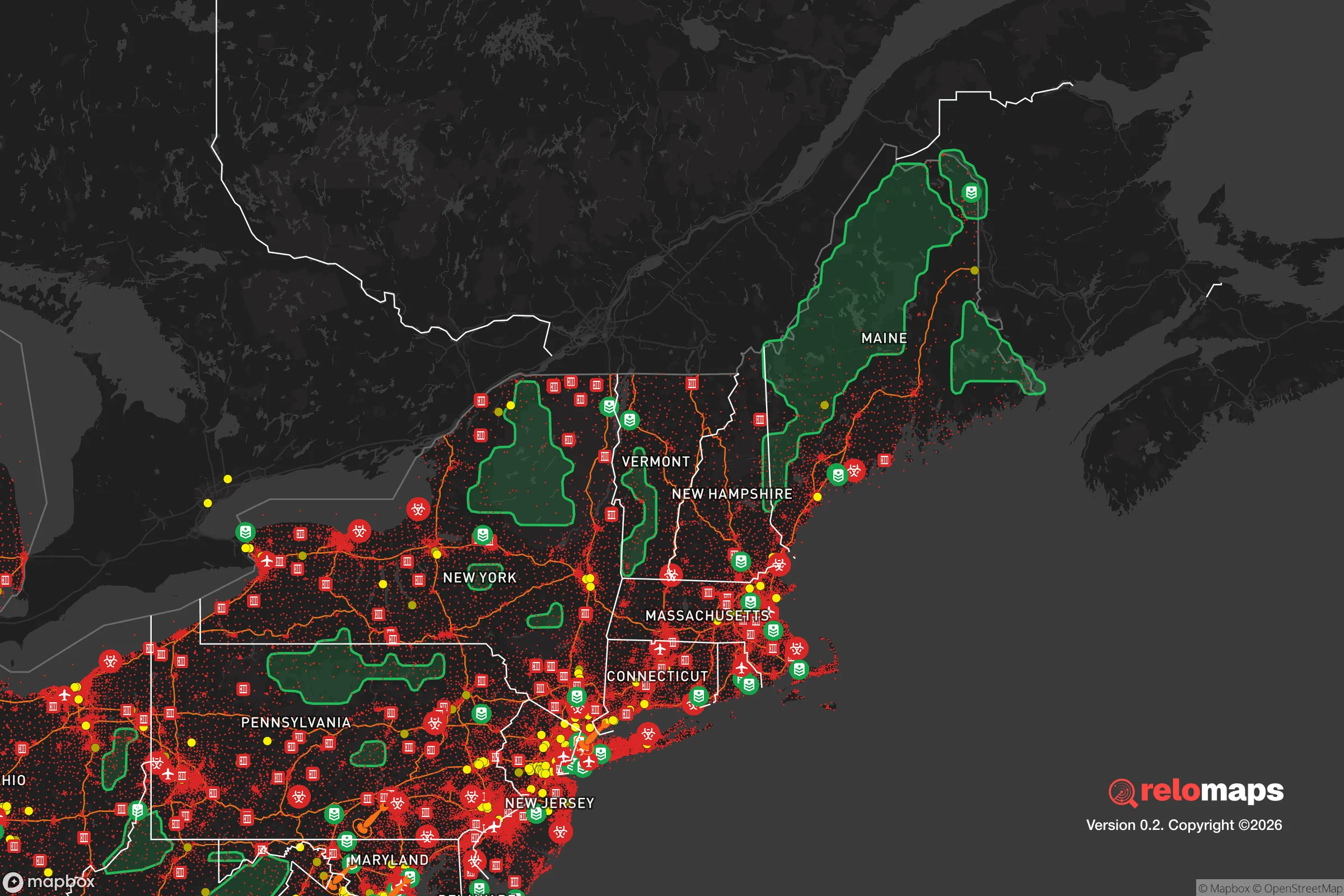


Important Note: For informational purposes only. This does not mean nothing bad ever happens in the green zones. Please use common sense. This is based on public data and modeled with AI. We tried to take a conservative approach but mistakes happen. We update this regularly as new information becomes available.
Solar Generator Recommendations
Backup power matters more here than in safer locations. We've picked three solar generators across budgets and capacity tiers — start with the budget unit if you only need a few essentials, or step up if you want to run a fridge and HVAC for days at a time.

Jackery Portable Power Station Explorer 300
Budget OptionPower on the Go: Weighing only 11 lbs, it's convenient to set up and store with book-sized foldable solar panels

BLUETTI Portable Power Station AC180
Designed for both indoor and outdoor scenarios, AC180 is highly capable as it has a robost capacity and continuous output power.

EF ECOFLOW DELTA Pro Ultra Power Station
Upgraded PickEcoFlow DELTA Pro Ultra is a whole-home energy system designed to grow with your family. Integrated with the Smart Home Panel 2, it scales to meet your evolving energy needs — keeping your home powered, intelligent, and secure through every stage of life.
We earn a commission, at no additional cost to you.
Strategic Assessment Analysis
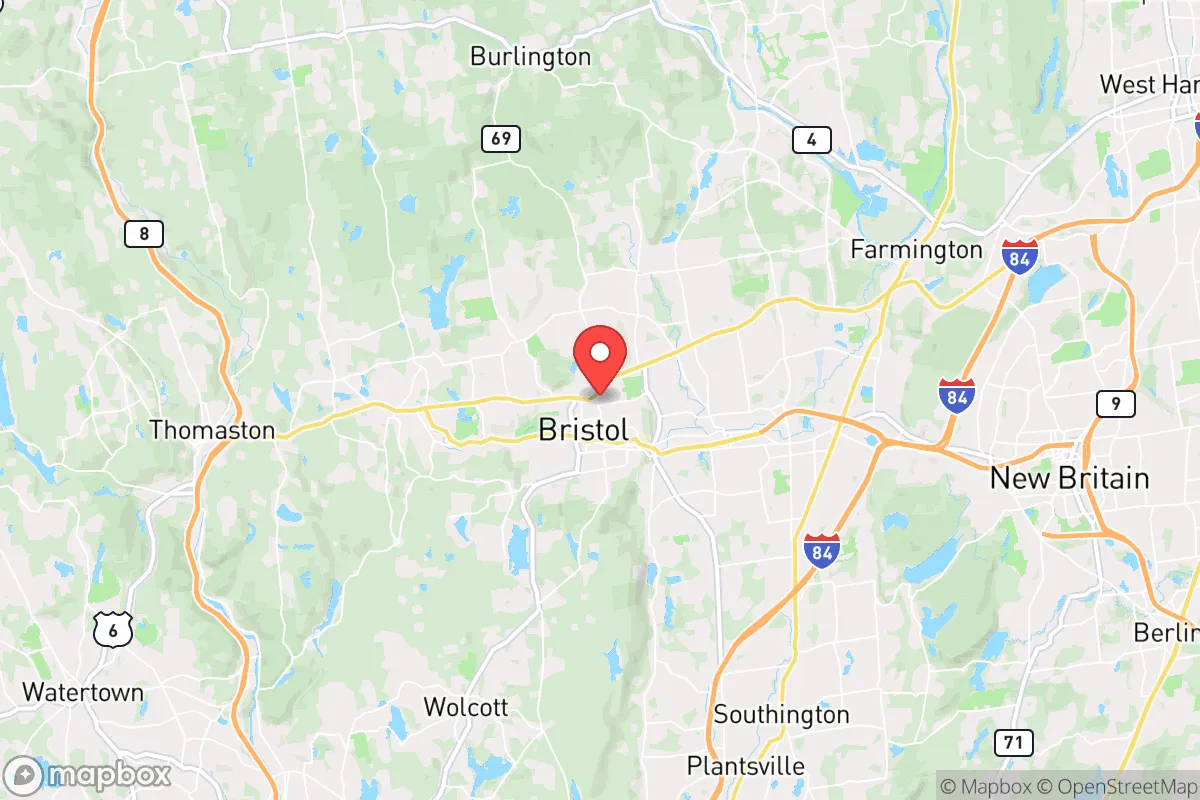
Bristol, Connecticut, sits in a precarious but potentially workable position for the conservative-minded prepper or survivalist looking at the Northeast. Its location in central Connecticut, roughly 20 miles southwest of Hartford and 100 miles from New York City, offers a mix of industrial resilience and suburban buffer, but the proximity to major population centers is a double-edged sword. For a relocator prioritizing self-sufficiency and strategic depth, Bristol’s advantages lie in its local manufacturing base, access to water, and a community that still retains a blue-collar, independent streak—but the risks from urban fallout, state-level policy, and geographic chokepoints demand serious scrutiny.
Geographic position and natural advantages for long-term self-sufficiency
Bristol’s geography is defined by its position in the Connecticut River Valley, with the Housatonic River system to the west and the Farmington River to the north. The area sits on a mix of rolling hills and flatlands, with the Metacomet Ridge providing some natural elevation and defensible terrain to the east. The city itself is not a major agricultural hub, but the surrounding Litchfield County offers fertile soil and a growing network of small farms, farmers’ markets, and homesteading operations. The Pequabuck River runs through the city, and the nearby Bristol Reservoir and Lake Compounce provide surface water sources, though treatment and access would be a concern in a grid-down scenario. The region’s four-season climate—cold winters, humid summers—means a relocator must plan for heating fuel storage, snow removal, and a shorter growing season (roughly 150 days). The elevation averages 300 to 600 feet, which offers some protection against storm surge but not against the nor’easters that can dump two feet of snow and knock out power for days. For a prepper, the key natural advantage is the proximity to state forests and wildlife management areas—Sessions Woods, Nassahegon State Forest, and the Tunxis State Forest are within a 20-minute drive, offering hunting, foraging, and a potential bug-out buffer. However, the land is not remote; you are never more than a few miles from a paved road or a suburban subdivision.
Risks, exposures, and proximity to fallout-relevant landmarks
The single biggest strategic liability for Bristol is its proximity to Hartford (20 miles) and New York City (100 miles). In a mass casualty event, civil unrest, or a nuclear incident, these urban centers would generate a massive refugee flow, and Bristol sits directly along the I-84 corridor—a primary evacuation route. The city itself has a population of roughly 60,000, but the greater Hartford metro area pushes 1.2 million. Bristol is also within 50 miles of the Millstone Nuclear Power Station in Waterford, CT, a boiling water reactor that, in a worst-case scenario, could create a fallout plume affecting the central part of the state depending on wind direction. Additionally, the Bradley International Airport in Windsor Locks is a major cargo and passenger hub, and the Port of New Haven handles petroleum and chemicals—both are potential targets or choke points. On the policy side, Connecticut is a deep-blue state with strict gun laws, high taxes, and a regulatory environment that makes stockpiling, off-grid construction, and self-defense legally complicated. The state’s assault weapons ban and magazine capacity limits are among the strictest in the country, and a relocator must factor in the difficulty of maintaining a robust personal armory. The risk of civil unrest is moderate; Bristol has a lower crime rate than Hartford or New Britain, but the city has seen protests and has a significant population that may not share a prepper’s worldview. The I-84 and Route 72 corridors are the primary egress routes, and both are vulnerable to gridlock, bridge failures, or intentional blockades.
Practical resilience for a relocator: food, water, energy, and defensibility
For a single individual or family looking to establish a resilient base in Bristol, the practical picture is mixed. Food security is achievable but requires effort. The city has a handful of grocery stores—Stop & Shop, Big Y, and Walmart—but in a crisis, these would be stripped within hours. The Bristol Farmers Market operates seasonally, and local CSAs (community-supported agriculture) from farms in Burlington and Plymouth can provide fresh produce, but a serious prepper should plan for a home garden, canning, and a three-month minimum of stored dry goods. Water security is a concern: the city’s water comes from the Bristol Reservoir system, which is treated and pressurized, but a prolonged power outage would stop pumps. A well is not common in the city limits; most homes are on municipal water. A backup generator, rainwater catchment, and a Berkey or similar filter are non-negotiable. Energy resilience is weak for most homes. The grid is above-ground and vulnerable to storms, and solar adoption is moderate but often tied to net metering, which requires grid connectivity. A whole-house propane generator or a solar array with battery storage would be a major investment but is feasible. Defensibility is the hardest factor. Bristol is a dense, suburban environment with small lots, close neighbors, and a street grid that offers limited standoff. A home on the outskirts—near the Chippens Hill area or along the Plymouth line—would provide better sightlines and fewer approach vectors. The local police department is responsive but small (about 100 officers), and in a widespread event, you would be on your own. The community culture is a mixed bag: there is a strong sense of local identity, with a history of manufacturing (ESPN is headquartered here, and the city was a clock-making hub), but the political lean is moderate to liberal, and overt prepper activity is not common. You would need to keep a low profile.
The overall strategic picture for Bristol is that of a compromise location. It offers better access to water, forest, and local food than a dense urban core, and its industrial base means hardware, tools, and mechanical skills are available. But the proximity to Hartford, the nuclear plant, and the I-84 corridor creates a high-risk exposure to refugee flows and fallout. The state’s political and legal environment is hostile to the prepper mindset—high taxes, restrictive gun laws, and a regulatory burden on off-grid living. For a relocator who values community, has the resources to harden a suburban home, and is willing to accept the risks of being within a two-hour drive of New York City, Bristol can work as a staging ground. But for someone seeking true strategic depth—remote, defensible, low-profile—the rural towns further north in Litchfield County or across the border in Vermont or New Hampshire offer a better risk-to-reward ratio. Bristol is a place to hunker down and wait out a short-term crisis, not a long-term survival redoubt. If you are serious about resilience, treat it as a base camp, not a fortress.

* Values derived from national, state, county, city and local statistics and may differ in a specific area. Last updated: 2026-04-22T22:40:32.000Z
Narrative content on this page is AI-generated and may contain mistakes. Verify any details that matter before acting on them.
ReloMaps may earn a commission from affiliate links at no extra cost to you.

