Photo: Wikipedia
Quality of Life in Bristol, CT
Above-average quality of iife. The area offers a reasonable cost of living, decent mobility, and a mix of neighborhood amenities.
What does Quality of Life tell us?
Quality of Life blends cost of living, nearby amenities, socioeconomic signals, and neighborhood character. City-level scores represent the whole municipality; individual neighborhoods can differ.
What does this tell us?
Quality of Life blends cost of living, nearby amenities, socioeconomic signals, and neighborhood character. City-level scores represent the whole municipality; individual neighborhoods can differ.
Cost of Living
3% above national average
The Real Cost of Living in Bristol, CT for 2026
| Tier | Individual | Family (4) |
|---|---|---|
| Survival | $21k | $39k |
| Comfortable | $49k | $72k |
| Luxury | $119k+ | $185k+ |
| Elite (Top 5%) | $140k+ | $217k+ |
116%
The Area Signal
A metric tracking the socioeconomic signals of the area.
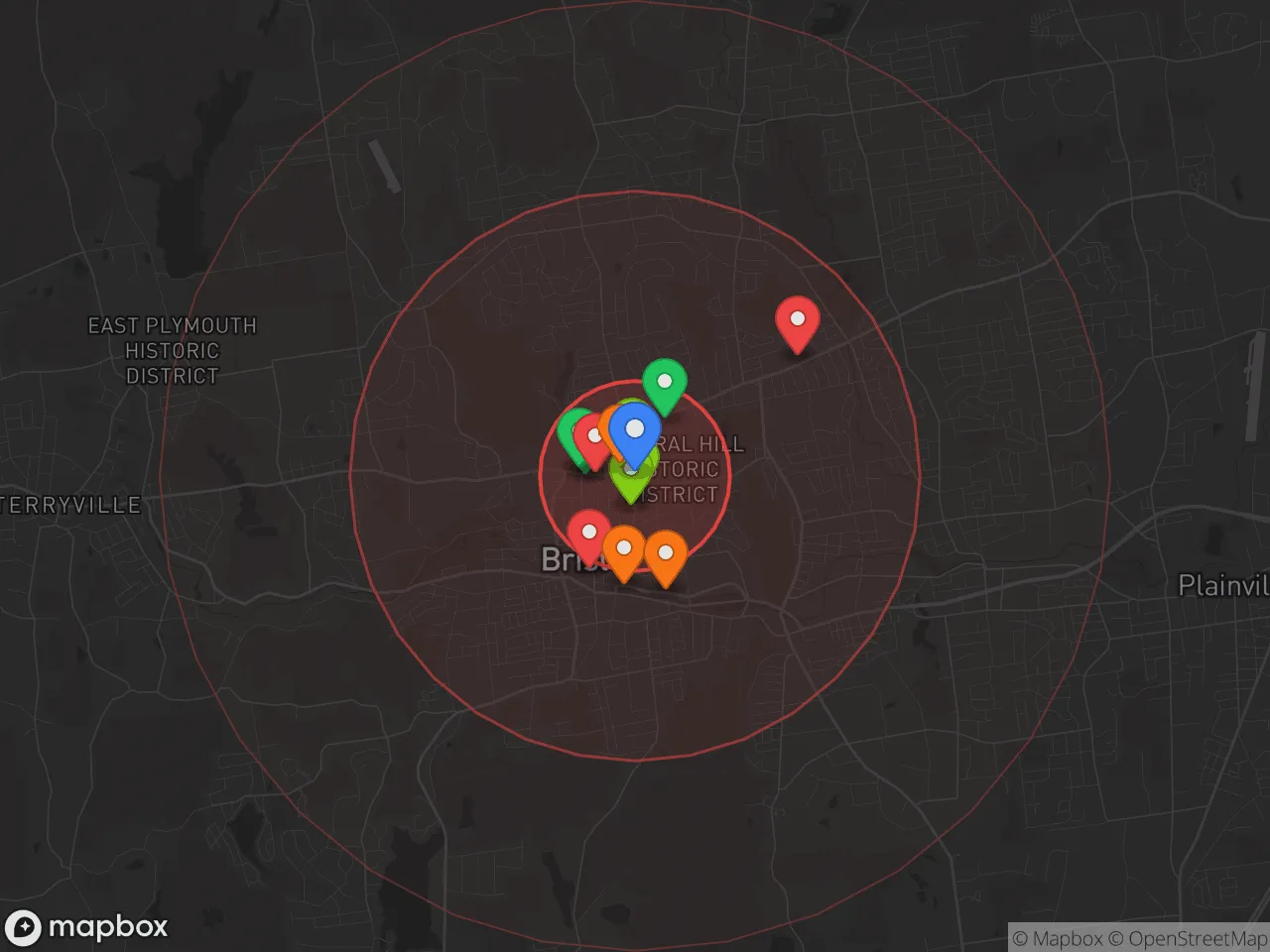
Hobbies
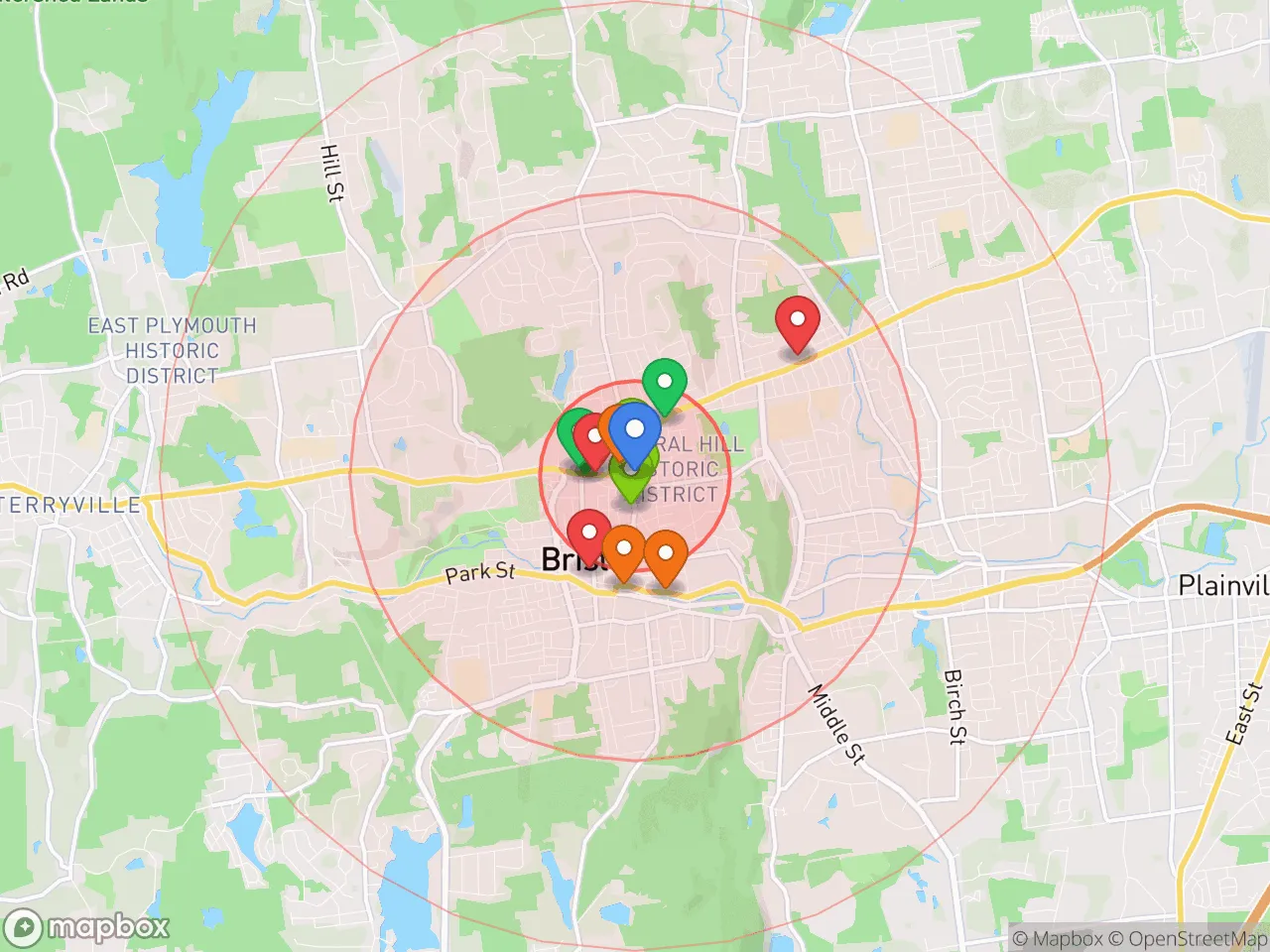
Explore the areaGroceries
6 within 10 miles
Gas
20 within 10 miles
Hospital
20 within 20 miles
Airport
JFK — John F. Kennedy International
Post Office
USPS — Bristol, CT
Critical Amenities
Quality-of-Life Analysis
Bristol, Connecticut, presents a middle-to-upper-middle-class quality of life with a cost of living index of 103—just 3% above the national average—making it one of the more affordable options in Hartford County. The city’s 60,000 residents are a mix of longtime manufacturing families, young professionals commuting to Hartford or New Haven, and retirees drawn to its walkable downtown and lakefront recreation. With a median household income around $68,000, Bristol attracts people who value suburban stability and community ties over the higher costs and faster pace of nearby cities.
Cost of living, housing costs, and how Bristol compares to Hartford and New Haven
Bristol’s housing market is a key draw: the median home value sits at $252,300, roughly $30,000 below the Connecticut state median, while the median rent of $1,305 is about 15% cheaper than comparable rentals in Hartford. For context, a similar three-bedroom home in West Hartford or Farmington would cost 20–30% more, pushing many buyers toward Bristol’s older colonial and ranch-style homes. The average commute of 24.5 minutes is shorter than the state average of 28 minutes, with most residents driving I-84 or Route 72 to reach jobs in Hartford (20 minutes), Waterbury (15 minutes), or New Haven (35 minutes). Property taxes in Bristol run about 33.5 mills, which is moderate for Connecticut—higher than Southington but lower than Plainville—so homeowners should factor in roughly $8,400 annually on a median-priced home. Overall, the cost-of-living index of 103 means a family earning $70,000 can live comfortably here, whereas the same income would feel tight in Fairfield County or even central Hartford’s pricier suburbs.
What daily life is like for families: schools, parks, and local amenities
Daily life in Bristol centers on its compact downtown, anchored by the Bristol Historical Society and the Bristol Central and Bristol Eastern high schools, both of which offer strong athletic and vocational programs. The city’s school system serves about 8,500 students, with Greene-Hills School and Ivy Drive School consistently rated above state averages in math and reading. For recreation, the 70-acre Rockwell Park provides a pool, tennis courts, and summer concerts, while Lake Compounce—the nation’s oldest continuously operating amusement park—draws families from across the region. The Bristol Public Library hosts weekly story times and teen coding workshops, and the Bristol Farmers Market runs Saturdays from June through October on North Main Street. Commuters appreciate the direct CTfastrak bus service to Hartford, which cuts the drive time to 30 minutes during peak hours. The overall rhythm is quiet but connected: residents can walk to a coffee shop or pizza place downtown, but most errands require a car, with big-box shopping at the Bristol Commons plaza off Route 6.
Bristol is best suited for families and professionals who want a lower cost of entry into Connecticut’s housing market without sacrificing access to jobs and recreation. The city’s blend of affordable homes, a 24-minute average commute, and solid public schools makes it a practical choice for first-time buyers or those relocating from pricier states like New York or Massachusetts. Retirees on a fixed income will also find the rent and tax burden manageable, especially compared to shoreline towns. However, those seeking a vibrant nightlife or top-tier dining may find Bristol too quiet—its strength lies in stability, not excitement. For anyone prioritizing budget, commute time, and a close-knit community feel, Bristol delivers a reliable, middle-class quality of life that is increasingly rare in southern New England.

Crime in Bristol, CT
Lower crime rates than 86% of comparable U.S. locations.
Violent CrimeViolent Crime Analysis
Property CrimeProperty Crime Analysis
Crime Analysis
Bristol, Connecticut, reports a violent crime rate of 52.7 incidents per 100,000 residents and a property crime rate of 645.7 per 100,000, placing it below national averages for both categories. However, these figures must be weighed against the broader context of Connecticut’s large metro area, where progressive judicial policies and district attorney practices have raised concerns about public safety. While Bristol itself is not a high-crime city, its location within a region where lenient sentencing and reduced prosecution of certain offenses are common means residents face a heightened risk of recidivism and property crime cycles.
Crime in context
Bristol’s violent crime rate of 52.7 per 100,000 is roughly one-third the national average of 173 per 100,000, and its property crime rate of 645.7 per 100,000 is about half the U.S. average of 1,316 per 100,000. These numbers suggest a relatively safe city on paper. Yet Connecticut’s statewide property crime rate has risen 8% since 2020, driven largely by auto theft and larceny in metro Hartford and New Haven. Bristol, as a satellite city within the Hartford metro area, is not immune to spillover from these trends. The state’s progressive bail reform laws, which eliminated cash bail for most nonviolent offenses, have been linked to higher rates of repeat property crime in suburban communities like Bristol.
What residents experience
Daily life in Bristol reflects a split reality. Most violent crime is concentrated in domestic disputes or isolated incidents, meaning random street violence is rare. However, property crime—particularly motor vehicle theft and package theft—is a persistent annoyance. Bristol police report that roughly 60% of property crimes are committed by repeat offenders, a pattern consistent with Connecticut’s broader recidivism problem. The city’s location along Interstate 84 makes it a convenient target for transient criminals from Hartford and Waterbury. Residents often note that while they feel safe walking downtown during the day, car break-ins and porch piracy are common complaints in neighborhoods near Route 72 and the Forestville section.
Neighborhood-level variation
Safety varies significantly by neighborhood. The West End and Chippens Hill areas, with their higher home values and lower rental density, see property crime rates roughly 30% below the city average. In contrast, the Federal Hill and downtown zones, which have more multi-family housing and transient populations, report property crime rates 15–20% above the city norm. Violent crime is rare citywide, but the few incidents that occur—typically aggravated assaults—are concentrated in the downtown corridor near Memorial Boulevard. For families, the safest choice is the West End or the wooded subdivisions off Route 69, where neighborhood watch programs are active and police response times average under 5 minutes.
* Values derived from national, state, county, city and local statistics and may differ in a specific area. Last updated: 2026-04-22T22:40:32.000Z
Narrative content on this page is AI-generated and may contain mistakes. Verify any details that matter before acting on them.
ReloMaps may earn a commission from affiliate links at no extra cost to you.

