 Popular
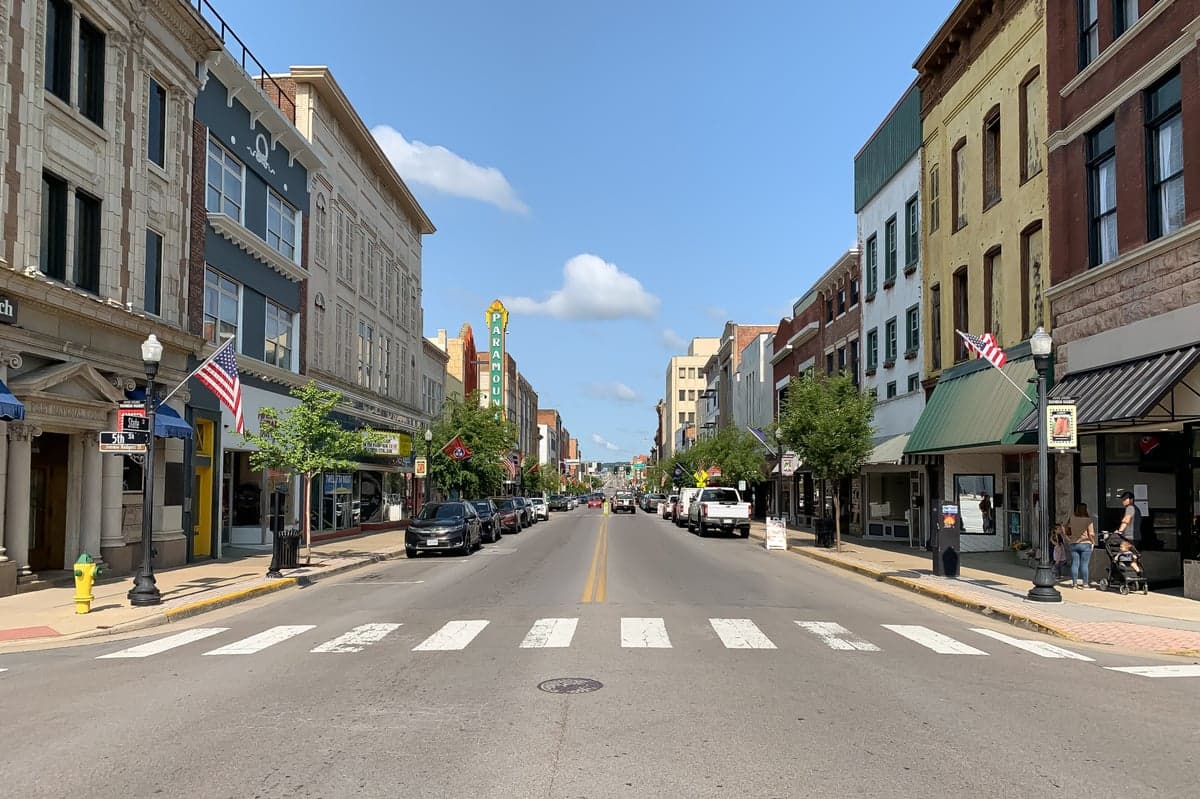
Photo: Wikipedia
Personal Sovereignty in Bristol, TN
Viable for self-reliance. Generally workable, though some barriers may limit total independence.
What does Personal Sovereignty tell us?
Personal Sovereignty measures your capacity for self-reliance and independence with minimal government friction. Higher scores mean fewer barriers between you and the way you want to live... but it assumes you have the space you need and good neighbors.
What does this tell us?
Personal Sovereignty measures your capacity for self-reliance and independence with minimal government friction. Higher scores mean fewer barriers between you and the way you want to live... but it assumes you have the space you need and good neighbors.
State Policy
Energy independence: Importer (25% of energy produced in-state)
Personal Liberty
Homesteading

Personal Liberty Analysis
Bristol, Tennessee, offers a notably high degree of personal sovereignty, particularly when viewed through a survivalist or prepper lens. The city sits in a state that consistently ranks among the most liberty-respecting in the nation, with a political culture that views government overreach as a primary threat to freedom. For individuals and families seeking to insulate themselves from federal overreach, economic instability, or social unrest, Bristol provides a legal and cultural environment where self-reliance is not just tolerated but actively encouraged. The key question for the strategic relocator is whether this autonomy is deep enough to withstand the pressures of a rapidly changing country.
Tax burden and regulatory posture: How Tennessee’s fiscal policies protect your resources
Tennessee’s tax structure is a major pillar of its sovereignty appeal. The state has no state income tax on wages, meaning every dollar you earn stays in your pocket, not funneled to a distant state capital. This is a direct check on government’s ability to extract wealth from your labor. Property taxes in Bristol are among the lowest in the nation, with effective rates typically around 0.6% to 0.8% of assessed value, depending on the specific county (Sullivan County). This low burden allows you to hold land and assets without the state slowly bleeding you dry. Sales tax is higher—around 9.75% combined state and local—but this is a consumption tax you can partially control by buying strategically. From a regulatory standpoint, Tennessee is a right-to-work state with minimal business licensing hurdles, and it has no state-level gun or magazine bans. The state’s regulatory climate is designed to let you operate a small farm, home business, or workshop without drowning in permits. For the prepper, this means less government interference in stockpiling, bartering, and building self-sufficient systems.
Self-defense and gun law specifics: Stand your ground, permitless carry, and castle doctrine
Tennessee’s firearm laws are among the most protective of individual sovereignty in the United States. Since 2021, the state has allowed permitless carry (constitutional carry) for any law-abiding adult 21 or older, meaning you can carry a concealed or open firearm without a government-issued permission slip. This is a direct rejection of the idea that the state must grant you a right that is inherent. The state also has a strong Stand Your Ground law, with no duty to retreat in any place you are lawfully present. The Castle Doctrine is equally robust, creating a legal presumption that a person who uses deadly force against an unlawful intruder in their home, vehicle, or business acted reasonably. For the survivalist, this legal framework means you are not required to flee from a threat in your own home or on your own property. Additionally, Tennessee preempts local governments from enacting stricter gun laws than the state, so Bristol’s city council cannot suddenly ban certain firearms or magazines. This is critical for those who view firearms as the ultimate guarantor of personal liberty against both criminal threats and potential government overreach.
Self-reliance and homesteading viability: Lot sizes, zoning, and off-grid feasibility in Bristol
Bristol’s position in the Appalachian foothills makes it a strong candidate for a self-reliant lifestyle, but the specifics depend heavily on whether you choose city limits or the surrounding county. Inside Bristol proper, zoning is more restrictive—standard residential lots are often 0.25 to 0.5 acres, and keeping livestock (chickens, goats) is typically limited or requires a permit. However, just outside city limits in Sullivan County or across the state line in Washington County, VA, you can find 1- to 5-acre parcels with minimal zoning. These areas allow for gardens, small orchards, and even a few head of livestock without bureaucratic hassle. Off-grid feasibility is high: Tennessee has no state-level ban on rainwater collection, and solar panel installation is straightforward. The region’s moderate climate (average 45 inches of rain per year) means you can rely on well water and septic systems. The biggest regulatory hurdle is building permits—Sullivan County requires them for new structures, but enforcement is generally lax for small sheds, greenhouses, or workshops. For the prepper, the key is to buy land in the unincorporated county, where you can build a secure, self-sufficient compound with far less government oversight than in most suburban or urban areas.
Personal liberties: Parental rights, medical autonomy, speech, and property rights
Tennessee has become a battleground for personal liberties, and the state’s current trajectory is strongly pro-sovereignty. Parental rights are explicitly protected under state law, with a 2023 law affirming that parents have the fundamental right to direct the upbringing, education, and healthcare of their children. This means no government-mandated medical procedures or curricula that override parental authority. Medical autonomy is more mixed—Tennessee has no state-level vaccine mandate for adults, but it does require certain childhood vaccinations for school attendance (with religious exemptions available). The state has also banned nearly all abortions, which aligns with a conservative view of life but also limits medical choice in a way some may see as government overreach. On speech, Tennessee has no hate speech laws that criminalize political or religious expression, and the state has passed laws protecting free speech on college campuses. Property rights are strong: Tennessee is a “private property rights” state with no statewide rent control, no forced inclusionary zoning, and a relatively low risk of eminent domain abuse. For the survivalist, this means you can post your land, build a fence, and keep out anyone you don’t want without the government forcing you to accommodate public access or “affordable housing” mandates.
In the broader context of American sovereignty, Bristol, TN, stands out as a place where the state government has largely chosen to stay out of your life. Compared to states like California, New York, or Illinois, where taxes, gun control, and zoning make self-reliance nearly impossible, Bristol offers a legal environment that respects your right to prepare, defend, and provide for your family. The biggest risks are local—city zoning can be a nuisance, and the proximity to Virginia means you need to be aware of different laws if you cross the state line. But for the strategic relocator who values autonomy over convenience, Bristol represents one of the better bets in the eastern U.S. for building a life that answers to you, not to a distant bureaucracy.

* Values derived from national, state, county, city and local statistics and may differ in a specific area. Last updated: 2026-05-01T18:33:56.000Z
Narrative content on this page is AI-generated and may contain mistakes. Verify any details that matter before acting on them.
ReloMaps may earn a commission from affiliate links at no extra cost to you.

