 Popular
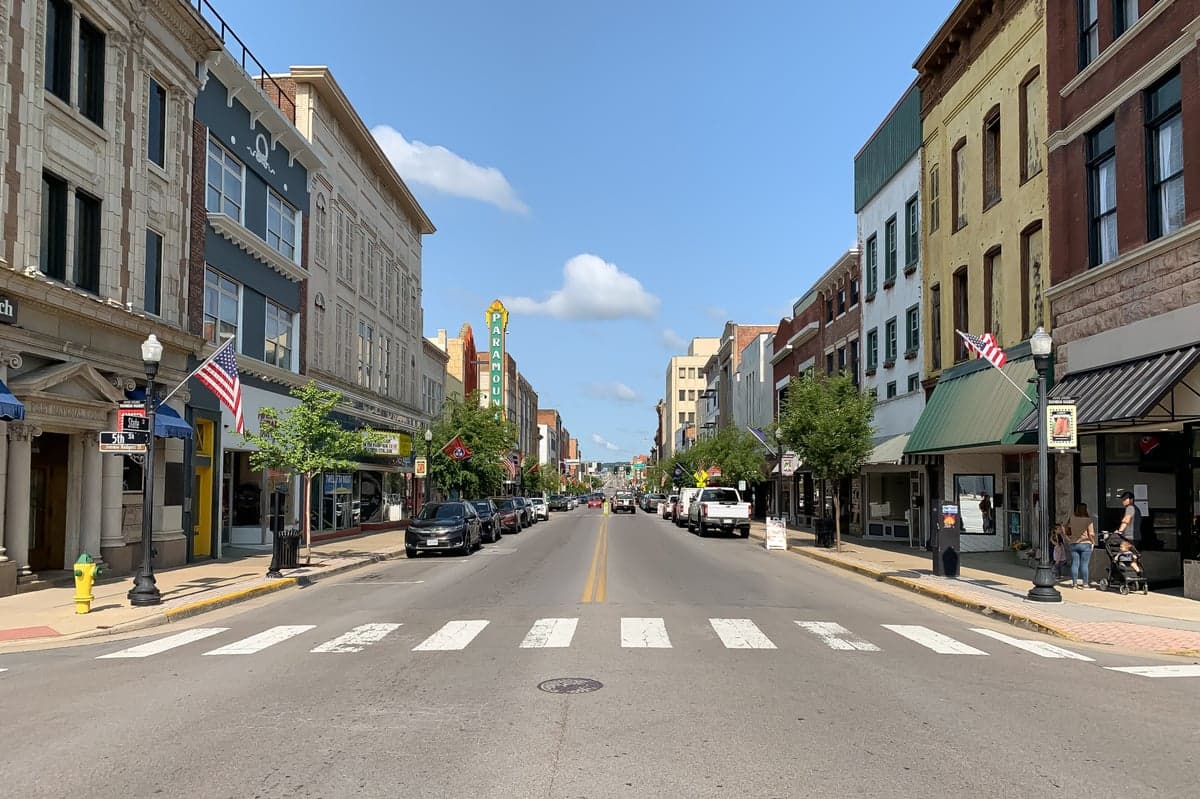
Photo: Wikipedia
Strategic Assessment of Bristol, TN
Meaningful friction. Expect exposure to either population pressure, blast zones, or natural disaster risk. Consider buying a retreat property.
What does the Strategic Assessment tell us?
Our Strategic Assessment grades tactical survivability of an area. Major population centers, military targets, fallout zones, natural disasters, and border exposure all drive risk — lower exposure means a more defensible position in a crisis.
This is heavily inspired by Joel Skousen's Strategic Relocation book. Highly recommended you checkout the book ($)What does this tell us?
Our Strategic Assessment grades tactical survivability of an area. Major population centers, military targets, fallout zones, natural disasters, and border exposure all drive risk — lower exposure means a more defensible position in a crisis.
This is heavily inspired by Joel Skousen's Strategic Relocation book. Highly recommended you checkout the book ($)Strategic Pillars

Key Distances
Regional Safe Places
Below is our recommended "safe zones" in Tennessee and the surrounding area based on our strategic heuristics. For most people, it's unrealistic to live in a “safe zone” full-time due to work, family or other personal reasons. They tend to be more rural. However, many of these areas are perfect for second homes and retreat properties that double as a vacation home or even a short-term rental.
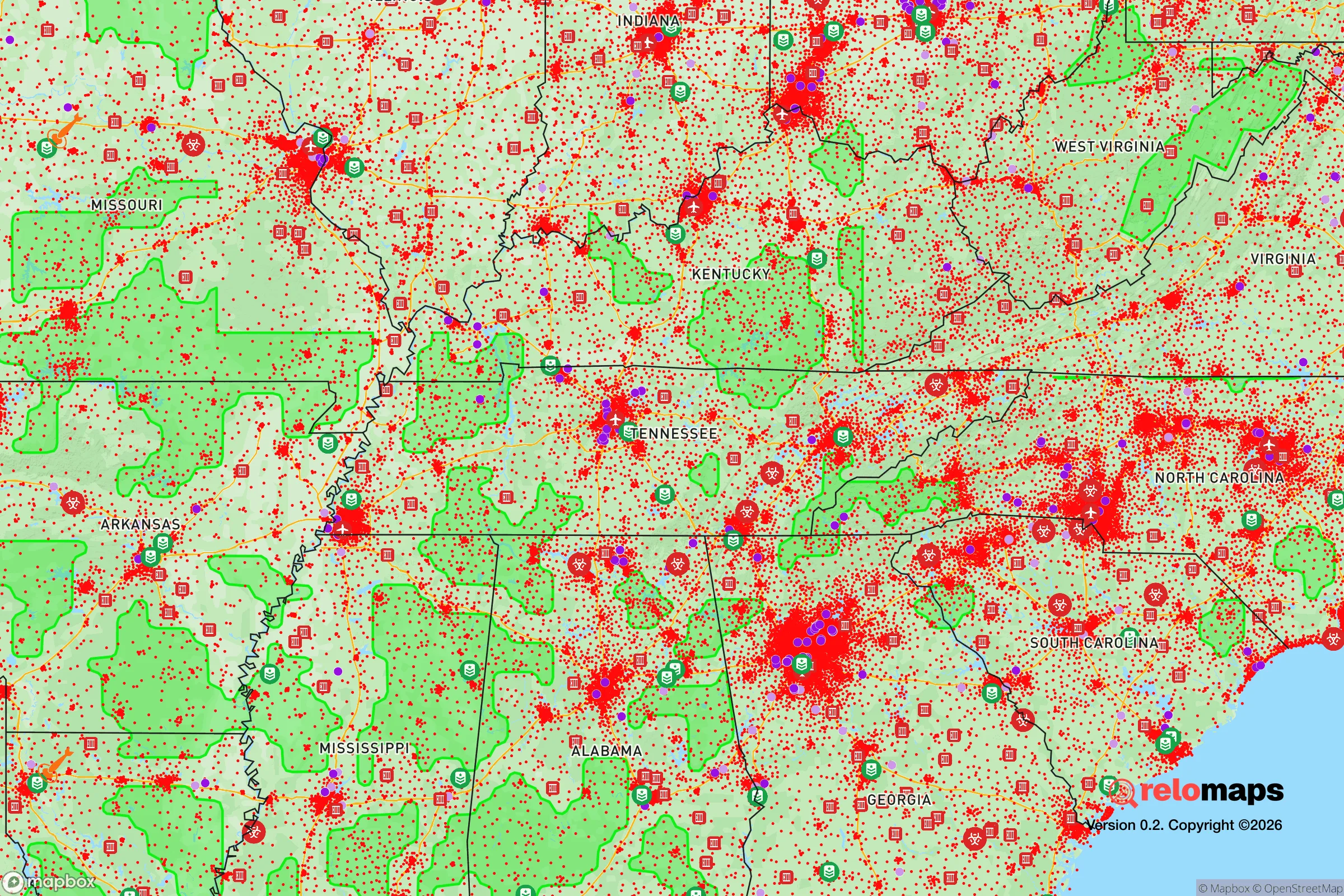
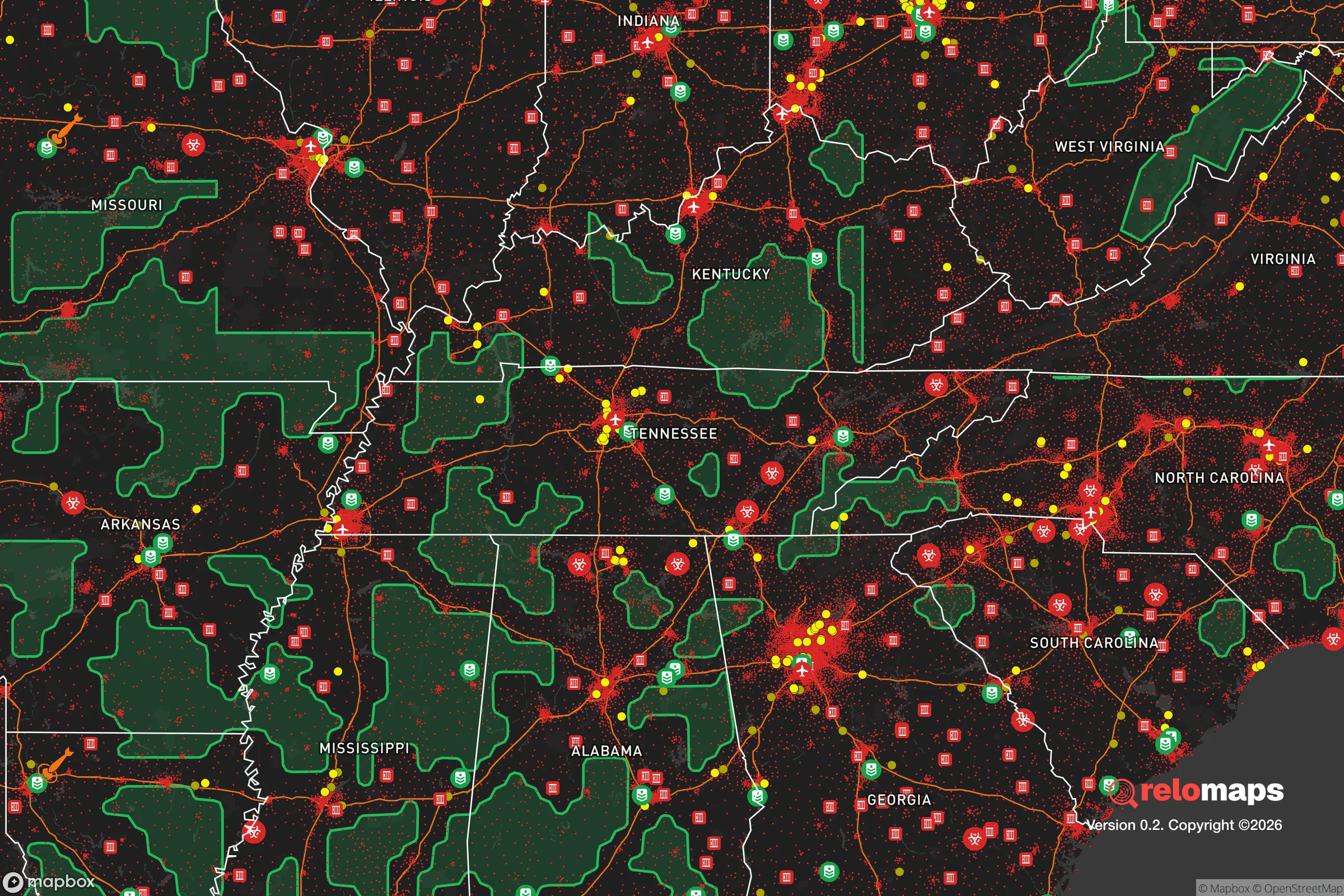


Important Note: For informational purposes only. This does not mean nothing bad ever happens in the green zones. Please use common sense. This is based on public data and modeled with AI. We tried to take a conservative approach but mistakes happen. We update this regularly as new information becomes available.
Solar Generator Recommendations
Backup power matters more here than in safer locations. We've picked three solar generators across budgets and capacity tiers — start with the budget unit if you only need a few essentials, or step up if you want to run a fridge and HVAC for days at a time.

Jackery Portable Power Station Explorer 300
Budget OptionPower on the Go: Weighing only 11 lbs, it's convenient to set up and store with book-sized foldable solar panels

BLUETTI Portable Power Station AC180
Designed for both indoor and outdoor scenarios, AC180 is highly capable as it has a robost capacity and continuous output power.

EF ECOFLOW DELTA Pro Ultra Power Station
Upgraded PickEcoFlow DELTA Pro Ultra is a whole-home energy system designed to grow with your family. Integrated with the Smart Home Panel 2, it scales to meet your evolving energy needs — keeping your home powered, intelligent, and secure through every stage of life.
We earn a commission, at no additional cost to you.
Strategic Assessment Analysis
Bristol, Tennessee, straddling the Virginia line, offers a strategic relocation option for those prioritizing resilience and self-sufficiency in an increasingly uncertain national landscape. Its position in the Appalachian highlands provides natural defensive advantages, while its distance from major metropolitan centers reduces exposure to the cascading failures that often follow civic unrest or mass casualty events. The city’s historical identity as a border town and manufacturing hub gives it a practical, no-nonsense character that aligns well with a prepper mindset, though its proximity to Interstate 81 and the Tennessee Valley Authority (TVA) grid introduces specific vulnerabilities that require careful consideration.
Geographic position and natural advantages for long-term security
Bristol sits at the intersection of Tennessee and Virginia, roughly 110 miles northeast of Knoxville and 120 miles west of Roanoke, placing it outside the immediate blast radius or fallout zones of any major population center. The surrounding Appalachian Mountains create a natural buffer against large-scale movement, with the Blue Ridge and Great Smoky Mountains to the south and east providing rugged terrain that would slow any uncontrolled migration from urban areas during a crisis. The region’s elevation—around 1,500 feet—offers cooler summers and reduced risk of flooding compared to lower-lying areas, though the Tennessee Valley is no stranger to severe storms. The South Holston River and Watauga Lake, both within a 30-minute drive, provide reliable freshwater sources, and the area’s agricultural history means fertile valleys for small-scale farming. For a relocator, this geography translates into a defensible position with multiple escape routes into the national forests of Cherokee and Jefferson, should the need arise to bug out further into the wilderness.
Risks, exposures, and proximity to fallout-relevant landmarks
No location is without risk, and Bristol’s strategic value is tempered by several exposures. The most immediate concern is Interstate 81, which runs directly through the city and serves as a major north-south corridor for freight and travel. In a scenario involving mass evacuation from the Northeast or Mid-Atlantic, I-81 could become a chokepoint for displaced populations, potentially overwhelming local resources. Additionally, the TVA’s John Sevier Fossil Plant, located just 15 miles south in Rogersville, and the nearby Surry Nuclear Power Station in Virginia (about 90 miles east) represent industrial and radiological hazards. A catastrophic event at either facility could render large swaths of the region uninhabitable for extended periods. Bristol is also within 200 miles of the Oak Ridge National Laboratory, a high-value target for any adversary seeking to disrupt U.S. energy or nuclear capabilities. While the city itself is not a primary target, its position along critical infrastructure corridors means it could face secondary effects—such as power grid instability or supply chain interruptions—during a national emergency. The local economy’s reliance on manufacturing and healthcare (Bristol Regional Medical Center is a major employer) means that a prolonged crisis would strain these systems quickly.
Practical resilience for a relocator: food, water, energy, and defensibility
For the individual or family looking to establish a resilient homestead, Bristol offers a mixed bag. The region’s climate supports a growing season of roughly 180 days, allowing for substantial vegetable gardens and small livestock operations. Local farmers’ markets and co-ops, such as the Bristol Farmers Market, provide access to heirloom seeds and locally adapted breeds, which are critical for long-term food independence. Water is abundant from the South Holston River and numerous springs in the surrounding hills, but a relocator should plan for well drilling or rainwater catchment, as municipal water systems are vulnerable to contamination or pressure loss during grid failures. Energy resilience is a challenge: the TVA grid is reliable under normal conditions but is a centralized system that could fail regionally during an EMP or cyberattack. Solar panels with battery storage are a viable investment here, given the area’s average of 200 sunny days per year, though winter cloud cover can reduce output. Defensibility is strong for a rural property in the surrounding counties (Sullivan and Washington in Tennessee, or Washington County in Virginia), where dense forest and steep terrain provide natural cover and limited road access. However, within Bristol city limits, the density of housing and proximity to major roads reduce the ability to secure a perimeter. A relocator should prioritize acreage outside the city core, ideally with a southern or eastern exposure for solar gain and a reliable water source on-site.
The overall strategic picture for Bristol is one of cautious optimism for the prepared relocator. Its geographic isolation from major urban centers and natural defensive features make it a strong candidate for those seeking to weather societal disruptions, but the risks tied to transportation corridors and industrial infrastructure cannot be ignored. The city’s conservative lean—reflected in its voting patterns and local governance—aligns with a culture of self-reliance and community cooperation, which is invaluable during crises. For a single individual or family willing to invest in off-grid capabilities and maintain a low profile, Bristol offers a balanced mix of accessibility to resources (healthcare, hardware stores, and trade networks) and the potential for long-term sustainability. The key is to treat it as a base of operations rather than a fortress: build relationships with neighbors, stockpile supplies for at least 90 days, and have a secondary bug-out location in the nearby national forests. In a world where the next disruption could come from any direction, Bristol provides a solid foundation—but only for those who approach it with eyes wide open to its vulnerabilities.

* Values derived from national, state, county, city and local statistics and may differ in a specific area. Last updated: 2026-05-01T18:33:56.000Z
Narrative content on this page is AI-generated and may contain mistakes. Verify any details that matter before acting on them.
ReloMaps may earn a commission from affiliate links at no extra cost to you.

