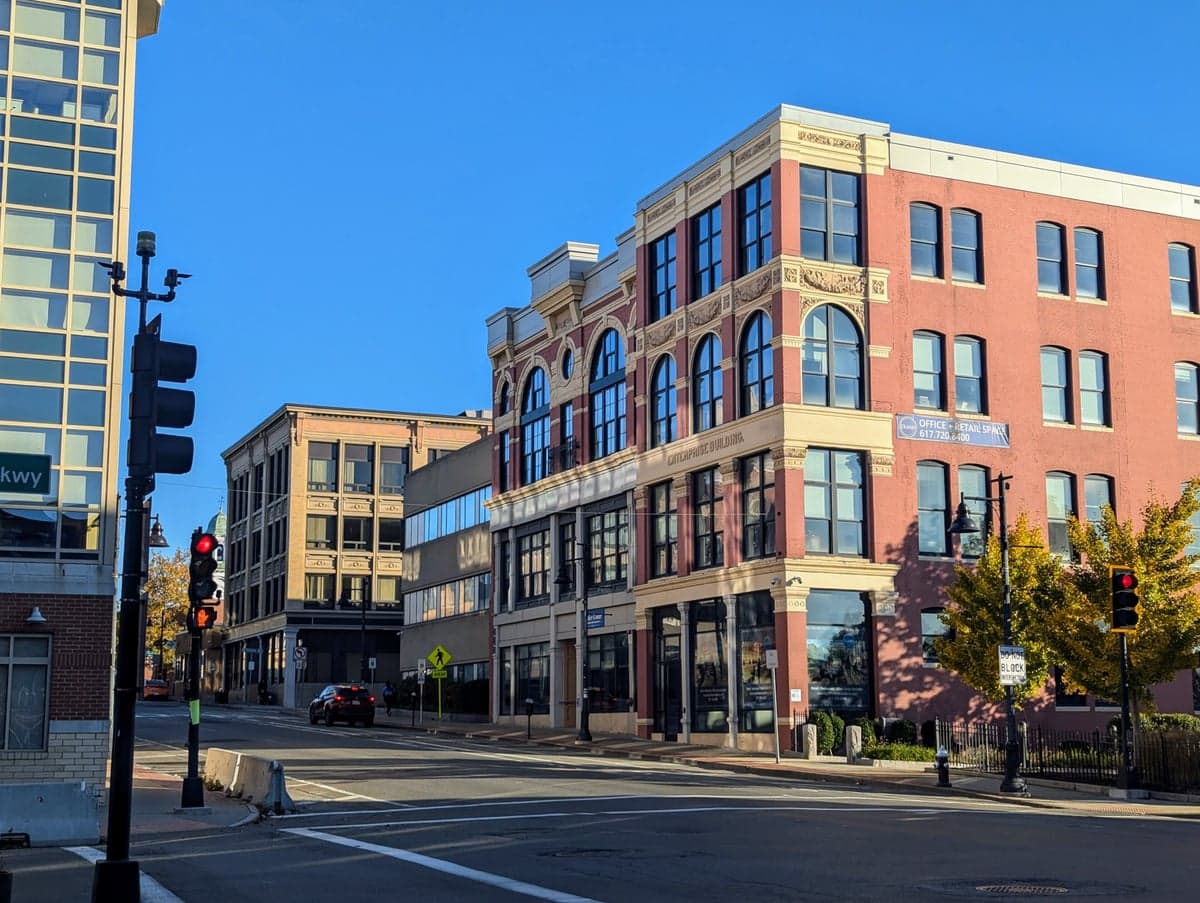
Photo: Wikipedia
Personal Sovereignty in Brockton, MA
Viable for self-reliance. Generally workable, though some barriers may limit total independence.
What does Personal Sovereignty tell us?
Personal Sovereignty measures your capacity for self-reliance and independence with minimal government friction. Higher scores mean fewer barriers between you and the way you want to live... but it assumes you have the space you need and good neighbors.
What does this tell us?
Personal Sovereignty measures your capacity for self-reliance and independence with minimal government friction. Higher scores mean fewer barriers between you and the way you want to live... but it assumes you have the space you need and good neighbors.
State Policy
Energy independence: Importer (5% of energy produced in-state)
Personal Liberty
Homesteading

Personal Liberty Analysis
For a conservative-leaning individual or family evaluating Brockton, MA, through a survivalist or prepper lens, the personal sovereignty environment is severely constrained by the state's aggressive regulatory apparatus and high tax burden. While the city itself offers a dense, working-class urban core with some potential for community resilience, it operates entirely under Massachusetts state law, which systematically erodes individual autonomy in favor of centralized government control. The bottom line: Brockton is a poor fit for anyone prioritizing self-reliance, gun rights, or freedom from government overreach, though it may be a strategic temporary base for those who must remain in the region for employment or family reasons.
Tax burden and regulatory posture: How Massachusetts squeezes your autonomy
Massachusetts imposes one of the heaviest tax and regulatory burdens in the nation, and Brockton residents feel it directly. The state's income tax is a flat 5.0% on all earned income, with no standard deduction for most filers, meaning every dollar you earn is taxed from the first dollar. Property taxes in Brockton run approximately $14.50 per $1,000 of assessed value, which on a median home value of roughly $420,000 translates to an annual bill near $6,100 — a significant drain on any prepper budget. There is no state-level homestead exemption that shields equity from property taxes, unlike some other states. Sales tax is 6.25%, and it applies to most goods, including preparedness supplies like generators, tools, and bulk food storage items. The regulatory posture is equally hostile to self-reliance: building permits are expensive and slow, zoning is restrictive, and the state's energy code mandates expensive efficiency upgrades for any home renovation. For a prepper, this means that even basic improvements — adding a wood stove, installing solar panels, or building a root cellar — require navigating a bureaucratic maze that can take months and cost thousands in permits and fees. The state also mandates that all vehicles pass an annual safety and emissions inspection, adding another layer of government control over your transportation independence.
Self-defense and gun law specifics: What you can and cannot own in Brockton
Massachusetts has some of the strictest gun laws in the United States, and Brockton residents are subject to them without exception. The state requires a License to Carry (LTC) for any handgun, and the issuing authority — in Brockton, the police chief — has significant discretion to deny or restrict licenses. The process includes a background check, fingerprinting, a firearms safety course, and a fee of around $100, and renewal is required every five years. There is no constitutional carry; open carry is effectively illegal. Magazine capacity is capped at 10 rounds, and the state maintains a "Firearms Roster" of approved handguns, banning many popular models like the Glock 19 Gen 5 or Sig Sauer P320. "Assault weapons" are banned by name and feature, including AR-15s and AK-pattern rifles, though pre-ban (pre-1994) versions are legal but extremely expensive. Suppressors are illegal for civilian ownership. For a prepper, this means your defensive options are limited to low-capacity handguns and manual-action long guns, and you cannot legally own the kind of semi-automatic rifle that is standard for home defense and community security in less restrictive states. The state also has a "red flag" law (ERPO) that allows police to seize firearms based on a complaint without a criminal conviction, and a duty to report lost or stolen firearms within 24 hours. Self-defense in the home is legally protected under the "Castle Doctrine," but there is no "Stand Your Ground" law — you have a duty to retreat in public if safely possible. For anyone serious about personal defense, Brockton is a legally hostile environment.
Self-reliance and homesteading viability: Lot sizes, zoning, and off-grid feasibility
Brockton is a densely developed urban city of about 105,000 people, with a median lot size of roughly 0.15 acres — typical of older New England mill towns. Zoning is predominantly residential with strict codes: raising chickens is allowed with a permit and up to six hens (no roosters), but goats, pigs, or larger livestock are prohibited in most districts. Beekeeping is permitted with registration. Off-grid living is effectively impossible within city limits. The city requires connection to municipal water and sewer, and any attempt to install a private well or septic system would require variances that are rarely granted. Solar panels are allowed but must be grid-tied; battery storage is permitted but expensive and subject to building code. Rainwater collection is legal but limited to 250 gallons per property without a permit, and any system must not create a nuisance. Composting toilets are not recognized as a primary sanitation method. For a prepper seeking true self-reliance, Brockton offers almost no viable path. The best option for homesteading within commuting distance would be to look at towns like Bridgewater or Middleborough, where lot sizes of 1-5 acres are common and zoning is more permissive. Within Brockton, the most realistic self-reliance strategies are limited to container gardening, small-scale food preservation, and building a neighborhood mutual-aid network — valuable but far from the independent homestead ideal.
Personal liberties: Parental rights, medical autonomy, speech, and property
Massachusetts is a state where government authority routinely overrides individual and parental rights. On parental rights, the state mandates that public schools provide comprehensive sex education, including LGBTQ+ content, without a parental opt-out for specific lessons — only a general opt-out for the entire health curriculum. The state also requires that schools allow students to use their chosen name and pronouns without notifying parents, a direct infringement on parental authority. Medical autonomy is similarly constrained: Massachusetts has a universal healthcare mandate requiring all residents to carry health insurance or face a tax penalty, and the state's Medicaid program (MassHealth) covers gender-affirming care for minors without parental consent in some circumstances. Vaccine mandates are strict — all schoolchildren must be fully vaccinated, with only narrow medical exemptions, and religious exemptions were effectively eliminated in 2023. For a prepper concerned about medical freedom, this means you cannot opt out of state-mandated treatments without leaving the state. Free speech is protected under the First Amendment, but Massachusetts has a "hate speech" law that criminalizes certain speech directed at protected classes, and the state's anti-SLAPP law is strong, protecting citizens from frivolous lawsuits over public participation. Property rights are weak: the state has broad eminent domain powers, and the city of Brockton has used them for redevelopment projects. There is no state-level property rights protection like Oregon's Measure 37. Overall, personal liberties in Brockton are subordinate to state authority in nearly every domain that matters to a conservative prepper.
In summary, Brockton, MA, ranks very low on personal sovereignty compared to other regions in the United States. The combination of high taxes, restrictive gun laws, prohibitive zoning, and aggressive state mandates on healthcare and education makes it a poor choice for anyone seeking to maximize individual autonomy. For a prepper or survivalist, the city offers only the bare minimum of community resilience potential, and even that is undercut by the state's legal framework. If you must be in Massachusetts for work or family, Brockton is a functional but compromised base — but for anyone with the ability to relocate, states like New Hampshire, Maine (north of Bangor), or even western Massachusetts (Berkshire County) offer significantly more freedom. The strategic advice is clear: Brockton is a place to pass through, not to dig in.

* Values derived from national, state, county, city and local statistics and may differ in a specific area. Last updated: 2026-05-01T19:04:48.000Z
Narrative content on this page is AI-generated and may contain mistakes. Verify any details that matter before acting on them.
ReloMaps may earn a commission from affiliate links at no extra cost to you.

