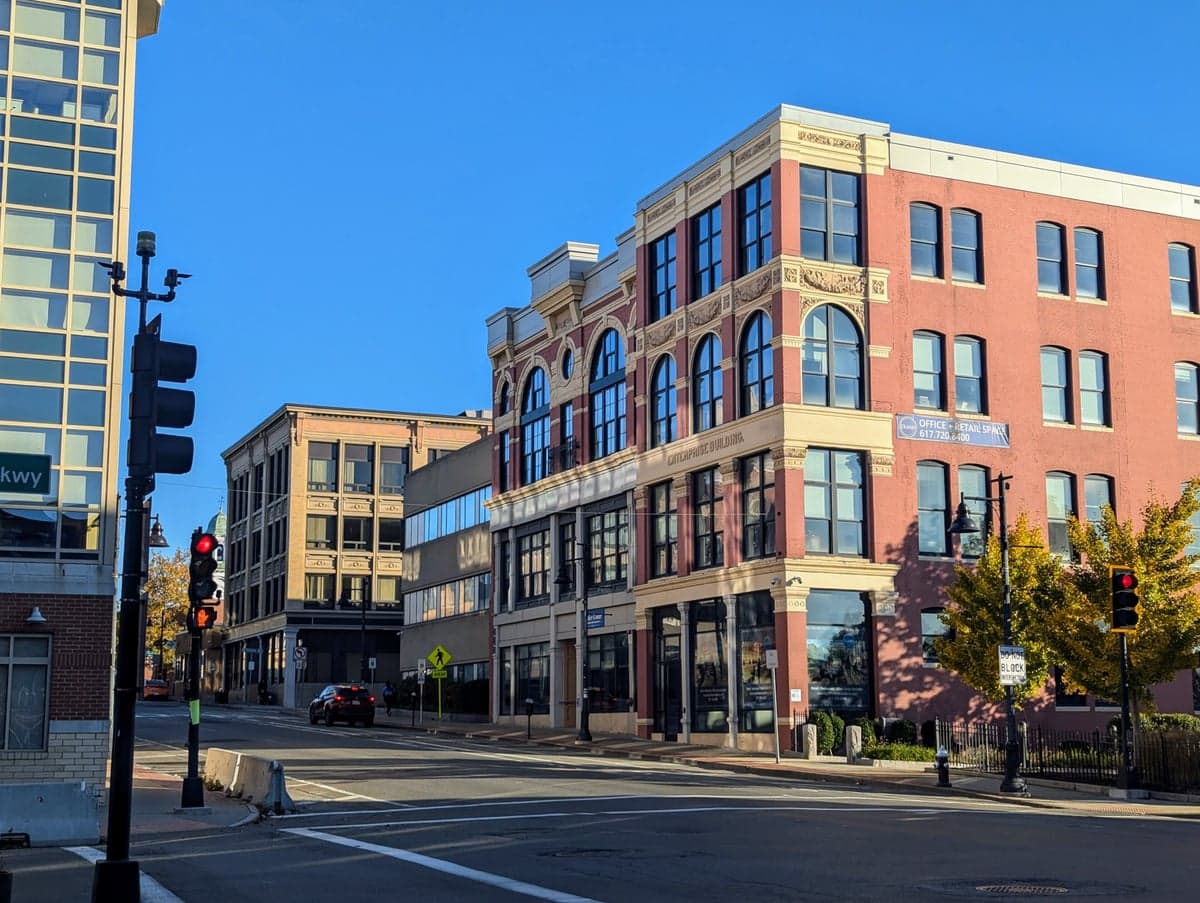
Photo: Wikipedia
Political ClimatePolitical Climate in Brockton, MA
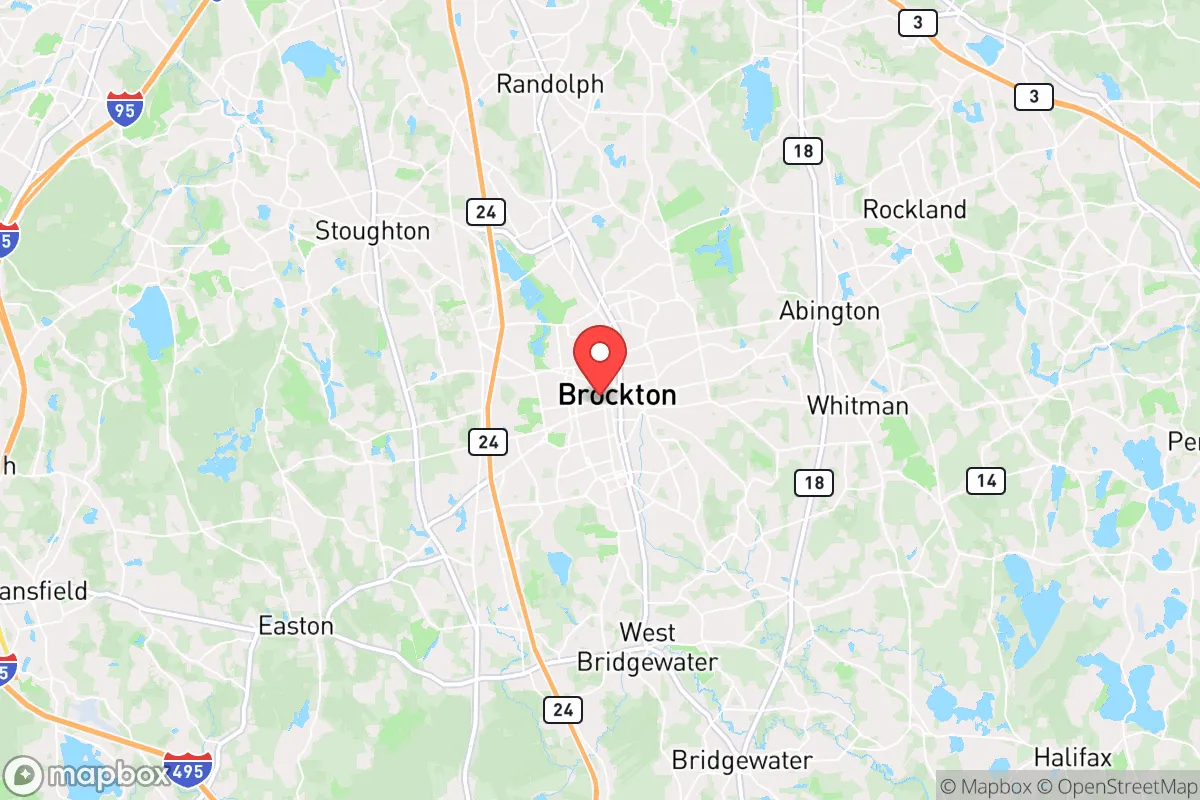
District shown is the primary district for this city’s centroid. Cities may span multiple districts.
Local Political AnalysisPolitical Analysis of Brockton, MA
Brockton, Massachusetts, has long been a Democratic stronghold, and if you’ve lived here as long as I have, you’ve watched that tilt get steeper and steeper. The Cook PVI of D+15 isn’t just a number—it’s a reflection of a city that has shifted hard left over the past two decades. In the 2020 presidential election, Joe Biden carried Brockton with over 70% of the vote, a margin that would have been unthinkable in the 1980s when the city was still a working-class, union-heavy swing area. The trajectory is clear: each election cycle, the progressive wing tightens its grip, and the old-school, live-and-let-live Brockton I remember is fading fast.
How it compares
Drive ten miles west to Bridgewater or fifteen miles south to Taunton, and you’ll feel the political temperature drop noticeably. Those towns still have a healthy Republican presence, with precincts that regularly vote 45-50% for GOP candidates. Even closer in, the contrast is stark: Brockton’s immediate neighbor, Avon, is a small town that leans more moderate, while Easton to the north has a vocal conservative minority that can actually win local races. Brockton itself, though, is an island of deep-blue politics in a region that’s otherwise a patchwork of purples and light reds. The city’s large Cape Verdean and Haitian communities, combined with a strong public-sector union base, have created a voting bloc that reliably backs progressive candidates—and those candidates, once in office, tend to push policies that feel less like common-sense governance and more like social engineering.
What this means for residents
For a conservative-leaning resident, living in Brockton means watching your tax dollars fund programs you didn’t vote for and seeing local government expand into areas that used to be left to families and churches. The city council has passed ordinances on everything from rental inspection fees to “sanctuary city” policies that limit cooperation with federal immigration enforcement. School board meetings have become battlegrounds over curriculum content and library books, with progressive majorities consistently voting to keep materials that many parents find inappropriate. Property taxes have climbed steadily—the average single-family tax bill hit $5,200 in 2025—and yet the schools still struggle with basic proficiency rates. You get the sense that the political machine here cares more about signaling virtue than delivering results. If you value personal freedom—the right to keep what you earn, to speak your mind without being called a bigot, to raise your kids without government interference—Brockton is becoming an increasingly uncomfortable place to call home.
Culturally, Brockton has always prided itself on being a “city of champions,” but the championship these days seems to be in progressive one-upmanship. The mayor’s office has pushed for racial equity audits, police reform commissions, and a community choice aggregation program that forces all residents into a green-energy contract unless they opt out. These aren’t neutral policies—they’re active interventions into how you live your life. The long-term outlook, frankly, is more of the same: as the city’s population diversifies and younger, college-educated transplants move in from Boston (just 25 minutes up Route 24), the political center of gravity will keep shifting left. If you’re a conservative, you’ll either adapt, keep your head down, or start looking at those towns to the west where the government still remembers its place.

State Political ClimatePolitical Climate in Massachusetts
State Political AnalysisPolitical Environment in the State
Massachusetts has long been one of the most reliably Democratic states in the nation, with a partisan lean that has only deepened over the past two decades. In 2024, Kamala Harris carried the state by over 25 points, and no Republican presidential candidate has won here since Ronald Reagan in 1984. The dominant coalition is a powerful blend of urban progressives from Boston and its inner suburbs, combined with well-funded academic and tech enclaves in Cambridge and Somerville. Over the last 10-20 years, the state has shifted further left, driven by rapid demographic change in the Boston metro area and the exodus of moderate Republicans from the suburbs. For a conservative considering relocation, the political climate here is a challenge — but not without pockets of resistance and opportunity.
Urban vs. rural divide
The political map of Massachusetts is a stark tale of two worlds. The Boston metro area, including Cambridge, Somerville, and Brookline, is among the most progressive regions in the country, routinely voting 80-90% Democratic. These areas drive the state’s overall lean, fueled by a dense population of academics, tech workers, and young professionals. In contrast, the western and central parts of the state — places like Pittsfield, North Adams, and the Berkshires — are more mixed, with some rural towns voting Republican but often outweighed by liberal-leaning college towns like Amherst and Williamstown. The southeastern corner, including Fall River and New Bedford, has historically been more moderate, but even these areas have shifted left in recent cycles. The only reliably red strongholds are small, rural towns in the central and western hills — Sturbridge, Spencer, and parts of Worcester County — where conservative values still hold sway, but their numbers are too small to swing statewide elections.
Policy environment
Massachusetts’ policy environment is a textbook example of progressive governance, with high taxes, heavy regulation, and expansive government programs. The state has a flat income tax rate of 5%, but a 2022 ballot question added a 4% surtax on income over $1 million, effectively creating a progressive income tax. Property taxes are moderate by national standards but vary wildly by town — expect $10,000+ annually on a median home in the Boston suburbs. The regulatory posture is among the most burdensome in the country, particularly for housing and small business. Education policy is dominated by powerful teachers’ unions and a state board that has embraced critical race theory and gender ideology in curriculum. Healthcare is heavily regulated, with the state’s own version of Romneycare still in place, and a new law in 2025 expanded taxpayer-funded coverage for illegal immigrants. Election laws are among the most permissive: no voter ID required, universal mail-in voting, and same-day registration. For a conservative, this environment feels like a slow erosion of personal agency and fiscal responsibility.
Trajectory & freedom
Over the past five years, Massachusetts has become less free by nearly any measure. The 2022 gun law, known as the H.4885 package, banned the sale of many semi-automatic rifles, imposed a “ghost gun” registry, and restricted magazine capacity — one of the strictest in the nation. Parental rights took a hit in 2023 when the state passed a law allowing minors to receive gender-affirming care without parental consent, overriding local school board decisions. Medical autonomy was further constrained by a 2024 law that mandated COVID-19 vaccine boosters for healthcare workers, despite waning public support. Property rights are under constant pressure from the state’s Chapter 40B law, which allows developers to override local zoning for affordable housing projects, often in conservative-leaning towns. On the positive side, the state has not imposed a statewide mask or vaccine mandate since 2022, and the 2023 repeal of the “right to shelter” law for homeless families was a rare win for fiscal sanity. Still, the trend is clear: more government control, less individual liberty.
Civil unrest & political movements
Massachusetts has a long history of organized activism, but the balance has shifted heavily left. The 2020 Black Lives Matter protests in Boston were among the largest in the country, leading to the defunding of the Boston Police School Program and the removal of a statue of Christopher Columbus. The state’s sanctuary state status, codified in 2017, has made it a magnet for illegal immigration, with towns like Springfield and Lawrence seeing significant population growth from new arrivals. On the right, the Massachusetts Fiscal Alliance and local gun rights groups like GOAL (Gun Owners’ Action League) remain active but struggle to gain traction. Election integrity is a flashpoint: the 2020 election saw widespread use of mail-in ballots with no signature verification, and a 2024 audit in Worcester County found discrepancies in voter rolls that were never fully investigated. The most visible flashpoint for a new resident would be the constant political signage — you’ll see far more “Hate Has No Home Here” lawn signs than “Trump 2024” ones, even in the suburbs.
Projection
Over the next 5-10 years, Massachusetts is likely to become even more progressive, driven by two key trends. First, the Boston metro area continues to attract young, highly educated, left-leaning migrants from across the country and the world, while conservative-leaning families are moving to New Hampshire or Florida for lower taxes and more freedom. Second, the state’s high cost of living is pushing out middle-class families, leaving behind a population that is wealthier, older, and more dependent on government services. The 2025 passage of a statewide rent control law and a carbon tax on gasoline are likely harbingers of more interventionist policies. For a conservative moving in now, expect to see a state where your vote for statewide office will be increasingly irrelevant, but where local politics — school boards, town councils, and zoning boards — remain the last battleground. The rural towns in the west and central hills may hold the line, but they’ll be fighting an uphill battle against Boston’s demographic and financial dominance.
For a new resident, the bottom line is this: Massachusetts offers world-class education, healthcare, and infrastructure, but at the cost of high taxes, heavy regulation, and a political culture that is openly hostile to conservative values. If you’re a single professional or parent who values personal freedom, low taxes, and limited government, this state will feel like a constant headwind. Your best bet is to target the few remaining red-leaning towns — Sturbridge, Spencer, or the hill towns of the Berkshires — and engage in local politics to protect your rights. But if you’re looking for a state where your vote and your values will be respected, Massachusetts is not that place, and it’s only getting worse.
* Values derived from national, state, county, city and local statistics and may differ in a specific area. Last updated: 2026-05-01T19:04:48.000Z
Narrative content on this page is AI-generated and may contain mistakes. Verify any details that matter before acting on them.
ReloMaps may earn a commission from affiliate links at no extra cost to you.

