 Popular
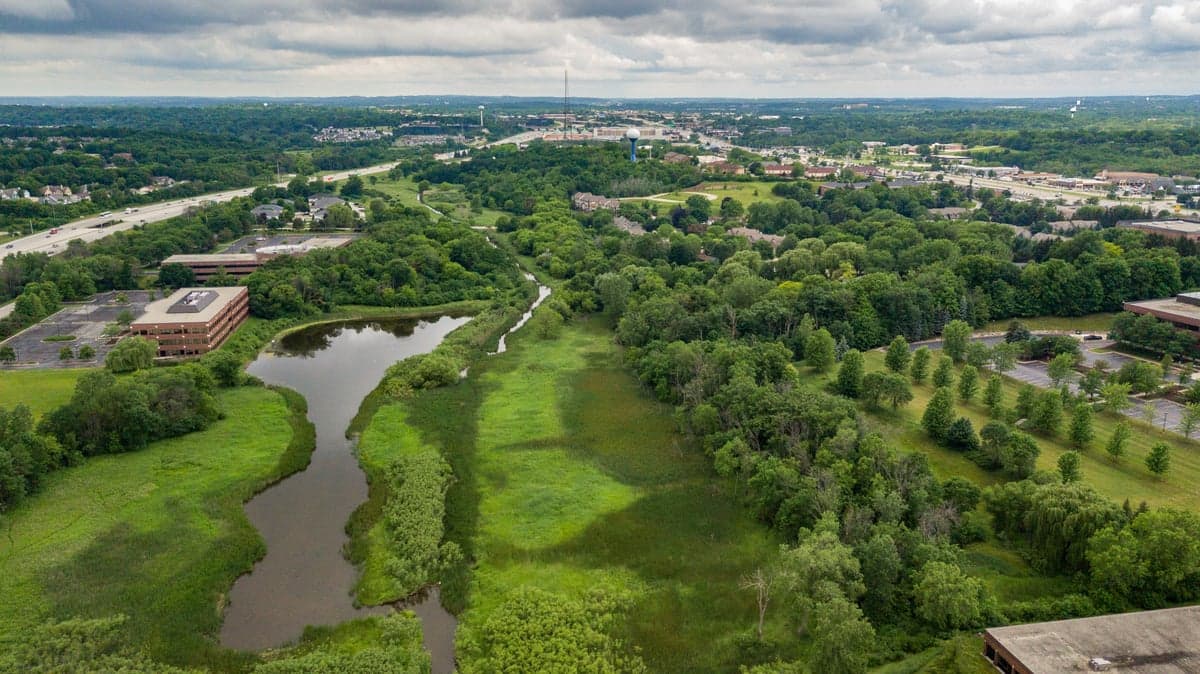
Photo: Wikipedia
Demographics of Brookfield, WI
Affluence Level in Brookfield, WI
An upper-middle-class area. Household wealth, education levels, and homeownership run ahead of national benchmarks.
People of Brookfield, WI
Brookfield, Wisconsin, is a predominantly white, highly educated suburban city of 41,592 residents, where 62.8% of adults hold a college degree. The city is characterized by its low density, large-lot single-family homes, and a notably diverse Asian and Indian population that together make up 11.4% of residents, a concentration unusual for a Milwaukee suburb. Its identity is that of an affluent, family-oriented enclave with a strong tax base and a population that is stable in size but shifting in ethnic composition.
How the city was settled and grew
Brookfield was originally part of the Town of Brookfield, a farming community settled in the 1830s and 1840s by Yankee and German immigrants drawn by cheap land and the fertile glacial soils of the Kettle Moraine region. The arrival of the Milwaukee & Mississippi Railroad in the 1850s spurred a small village center around what is now the Brookfield Corners historic district, where German and Irish farmers built grain elevators, blacksmith shops, and churches. The city did not incorporate until 1954, and its early population was overwhelmingly white, native-born, and Protestant, with a significant German Lutheran minority centered in the Brookfield Center area near the original town hall. The first major growth wave came after World War II, when returning GIs and their families moved into new subdivisions like Greenfield Acres and Hillside Estates, built on former dairy farms. These neighborhoods were almost entirely white, reflecting the racial covenants and lending practices of the era.
Modern era (post-1965)
The 1965 Hart-Cellar Act had little immediate effect on Brookfield, which remained over 98% white through the 1980s. The city's modern demographic shift began in the 1990s, driven by two forces: corporate relocations and the expansion of the Milwaukee-area medical and engineering sectors. Major employers like Quad/Graphics and GE Healthcare began recruiting skilled professionals from India and East Asia, many of whom settled in newer, higher-density subdivisions near the I-94 corridor. The Bishop's Woods and Brookfield Lakes neighborhoods, built in the 1990s and 2000s, absorbed the bulk of this influx, offering large homes near the Brookfield Square Mall and the city's top-rated school district. Today, the Indian-subcontinent population stands at 6.8% (roughly 2,830 people), while East/Southeast Asian communities account for 4.6% (about 1,910 people). These groups are heavily concentrated in the southeast quadrant of the city, particularly around Bishop's Woods and the Brookfield Lakes area, where many homes were built with the open floor plans and home-office spaces that appeal to dual-income professional families. The Hispanic population, at 4.2%, is smaller and more dispersed, with a visible presence in the Brookfield Corners area, where older, more affordable housing stock exists. The Black population remains negligible at 0.7%, reflecting the city's historical lack of affordable housing stock and its distance from Milwaukee's urban core.
The future
Brookfield's population is projected to remain stable in total size, as the city is nearly built out with little undeveloped land left. The demographic trajectory is one of gradual diversification through professional-class immigration rather than through large-scale refugee or low-wage labor migration. The Indian and East/Southeast Asian populations are likely to continue growing slowly, as second-generation children of the 1990s arrivals remain in the area and new hires at Waukesha County's biomedical and manufacturing firms fill existing homes. The white population, while still dominant at 78.7%, is aging in place, and the city's school district has seen a steady increase in Asian and Indian student enrollment, now approaching 15% in some elementary schools. There is no evidence of tribalization into distinct ethnic enclaves; rather, the newer immigrant groups are assimilating into the existing suburban fabric, attending the same schools, shopping at the same stores, and participating in the same civic organizations. The main risk to future growth is housing affordability: the median home value exceeds $400,000, which limits in-migration by younger families of any background.
For a conservative-leaning individual or family moving to Brookfield today, the city offers a stable, low-crime, high-amenity environment with a population that is becoming moderately more diverse through professional-class immigration, not through rapid demographic disruption. The city is not homogenizing, nor is it fragmenting into enclaves; it is slowly absorbing a skilled, family-oriented Asian and Indian minority into a predominantly white, college-educated majority. The bottom line: Brookfield is a prosperous, well-managed suburb where the population is stable in size, aging slightly, and diversifying at a measured pace through the same professional channels that built its modern economy.

* Values derived from national, state, county, city and local statistics and may differ in a specific area. Last updated: 2026-04-21T10:12:09.000Z
Narrative content on this page is AI-generated and may contain mistakes. Verify any details that matter before acting on them.
ReloMaps may earn a commission from affiliate links at no extra cost to you.

