 Popular
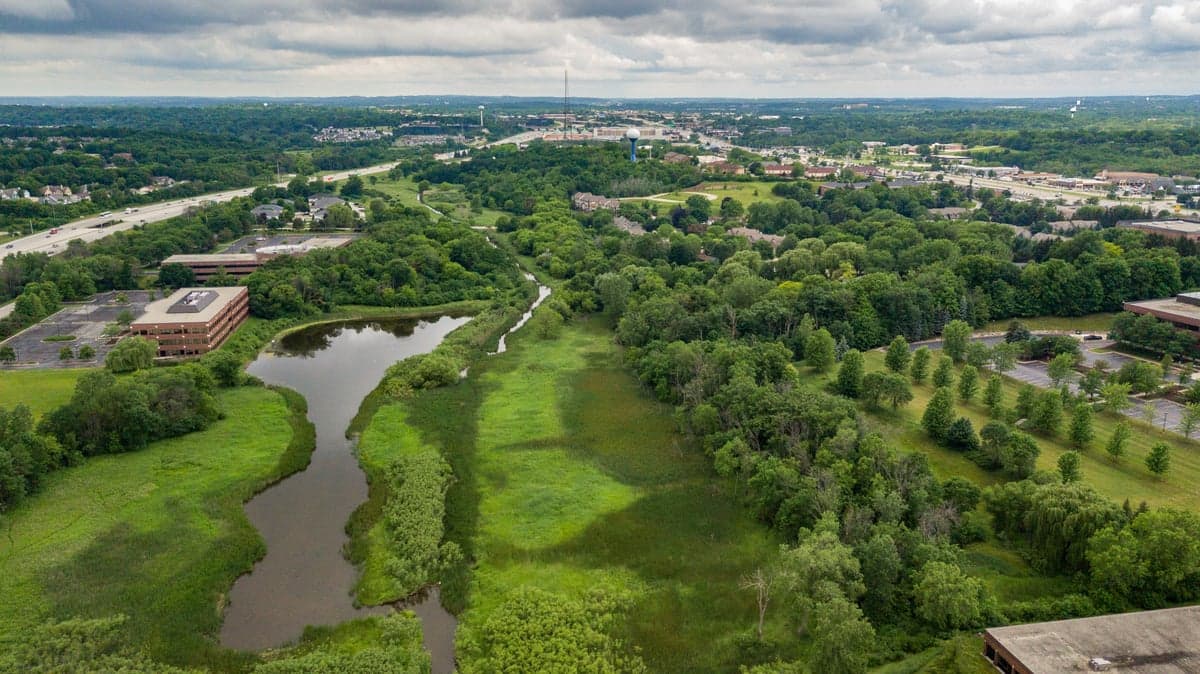
Photo: Wikipedia
Strategic Assessment of Brookfield, WI
Meaningful friction. Expect exposure to either population pressure, blast zones, or natural disaster risk. Consider buying a retreat property.
What does the Strategic Assessment tell us?
Our Strategic Assessment grades tactical survivability of an area. Major population centers, military targets, fallout zones, natural disasters, and border exposure all drive risk — lower exposure means a more defensible position in a crisis.
This is heavily inspired by Joel Skousen's Strategic Relocation book. Highly recommended you checkout the book ($)What does this tell us?
Our Strategic Assessment grades tactical survivability of an area. Major population centers, military targets, fallout zones, natural disasters, and border exposure all drive risk — lower exposure means a more defensible position in a crisis.
This is heavily inspired by Joel Skousen's Strategic Relocation book. Highly recommended you checkout the book ($)Strategic Pillars

Key Distances
Regional Safe Places
Below is our recommended "safe zones" in Wisconsin and the surrounding area based on our strategic heuristics. For most people, it's unrealistic to live in a “safe zone” full-time due to work, family or other personal reasons. They tend to be more rural. However, many of these areas are perfect for second homes and retreat properties that double as a vacation home or even a short-term rental.
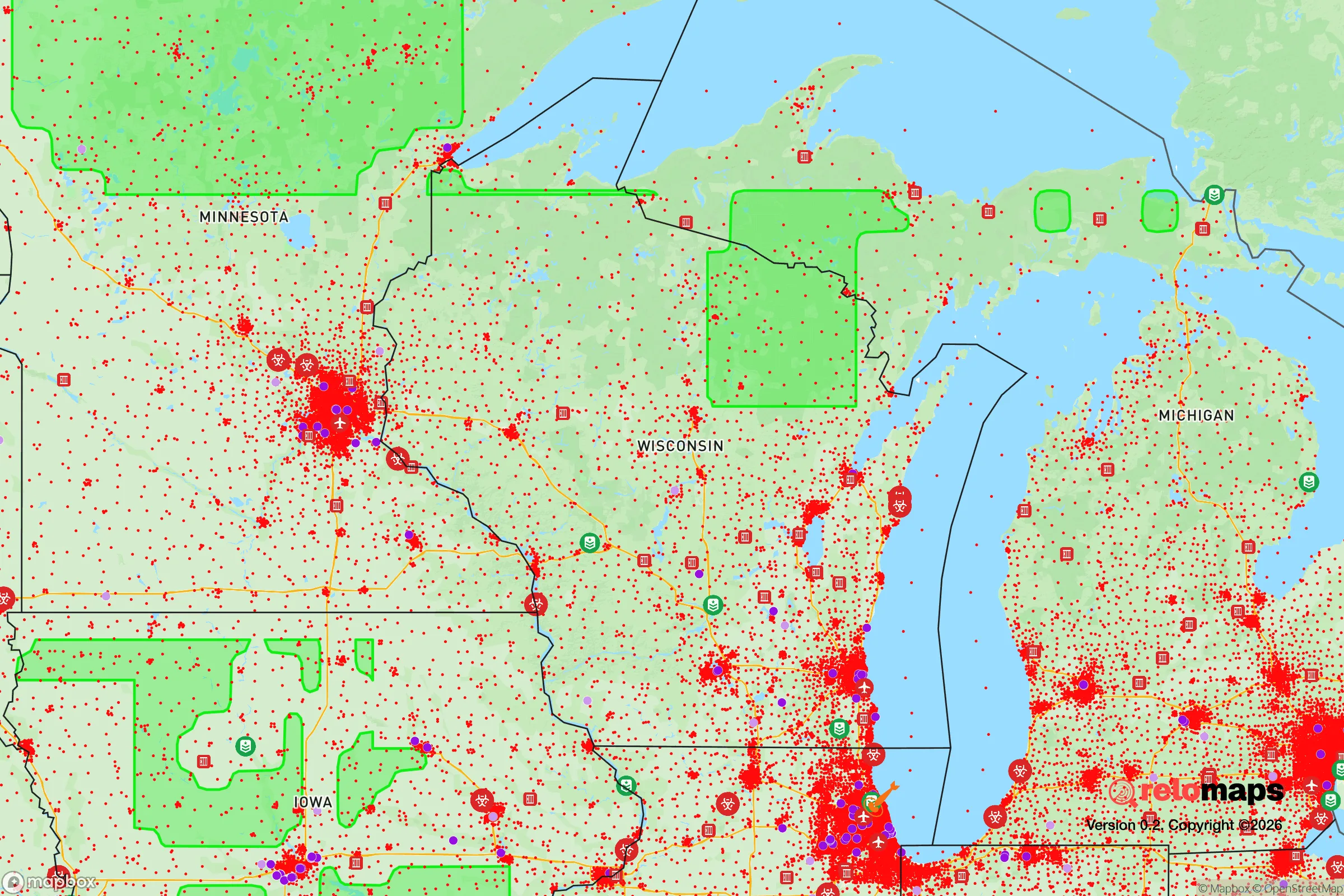
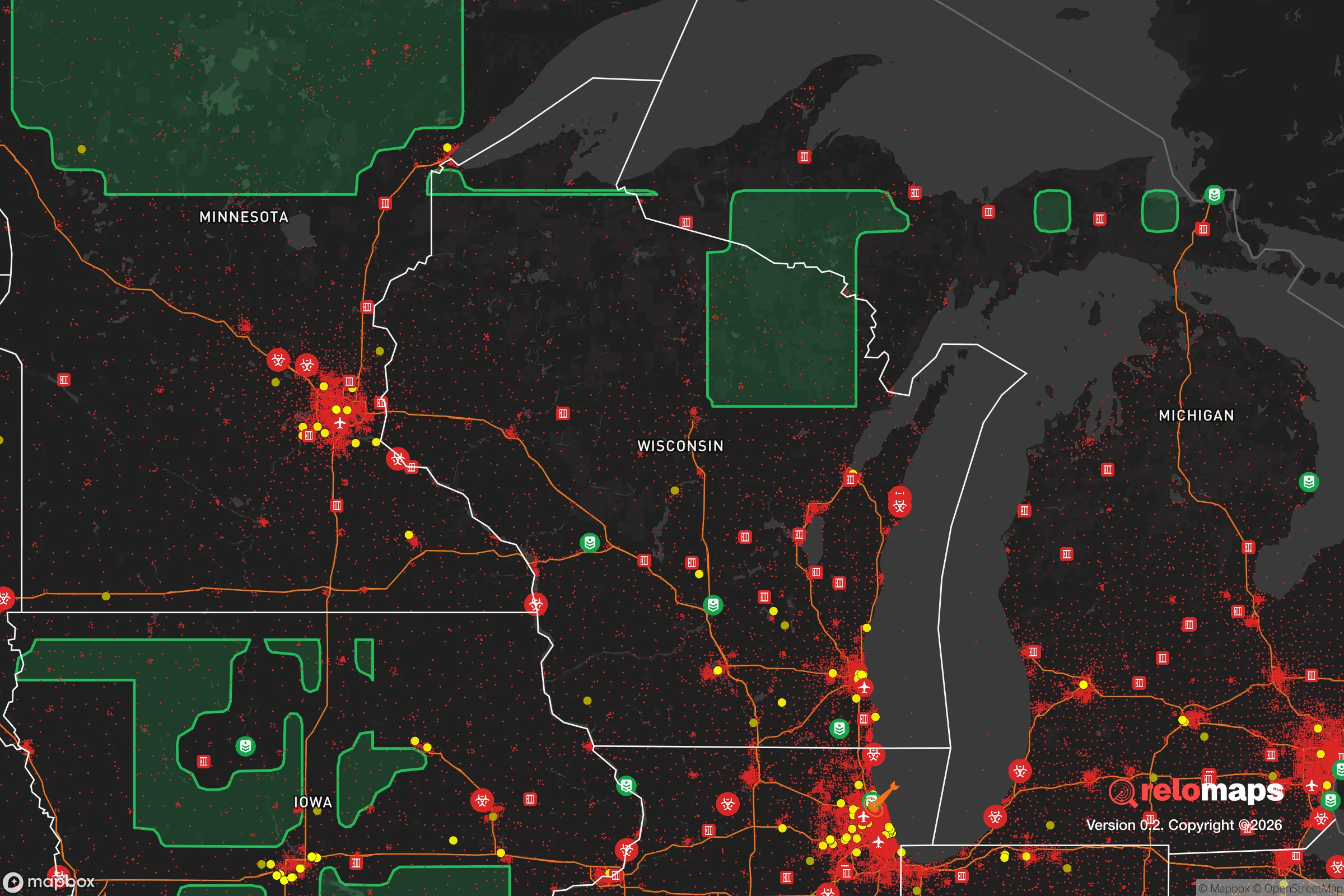


Important Note: For informational purposes only. This does not mean nothing bad ever happens in the green zones. Please use common sense. This is based on public data and modeled with AI. We tried to take a conservative approach but mistakes happen. We update this regularly as new information becomes available.
Solar Generator Recommendations
Backup power matters more here than in safer locations. We've picked three solar generators across budgets and capacity tiers — start with the budget unit if you only need a few essentials, or step up if you want to run a fridge and HVAC for days at a time.

Jackery Portable Power Station Explorer 300
Budget OptionPower on the Go: Weighing only 11 lbs, it's convenient to set up and store with book-sized foldable solar panels

BLUETTI Portable Power Station AC180
Designed for both indoor and outdoor scenarios, AC180 is highly capable as it has a robost capacity and continuous output power.

EF ECOFLOW DELTA Pro Ultra Power Station
Upgraded PickEcoFlow DELTA Pro Ultra is a whole-home energy system designed to grow with your family. Integrated with the Smart Home Panel 2, it scales to meet your evolving energy needs — keeping your home powered, intelligent, and secure through every stage of life.
We earn a commission, at no additional cost to you.
Strategic Assessment Analysis
Brookfield, Wisconsin, offers a surprisingly solid strategic position for those prioritizing resilience, but it comes with the inherent tension of being a wealthy suburb of a major metropolitan area. Located about 15 miles west of downtown Milwaukee, the city sits on the I-94 corridor, providing rapid access to both urban resources and, crucially, the more rural and defensible terrain of Waukesha and Washington counties to the west and north. For a relocator with a prepper mindset, Brookfield’s primary advantage is its economic stability and high median household income—consistently among the highest in Wisconsin—which translates into well-maintained infrastructure, low crime rates, and a population that is generally invested in community order. However, the same proximity that offers convenience also introduces significant vulnerabilities, making this a location that requires careful, layered planning rather than a simple "bug-out" destination.
Geographic position and natural advantages for long-term stability
Brookfield’s geography is its strongest card. Situated on the western edge of the Milwaukee metro area, it sits atop the Niagara Escarpment, a geological feature that provides slightly higher elevation and better drainage than the lakefront communities to the east. This reduces flood risk from the Milwaukee River and its tributaries, which can be a concern in lower-lying areas. The city is also positioned near the Kettle Moraine State Forest—specifically the Southern Unit, about 20 minutes west—offering a natural buffer zone and a potential retreat area with dense woods, hills, and limited road access. The Fox River, which runs through the western part of Waukesha County, provides a secondary water source, though it’s not directly in Brookfield. The area’s four-season climate means you’ll deal with harsh winters, but that also acts as a natural deterrent to large-scale, sustained unrest during the coldest months. The local soil is generally good for small-scale gardening, and the region’s agricultural history means that even suburban lots can support a modest vegetable patch or fruit trees.
Risks, exposures, and proximity to fallout-relevant landmarks
The most glaring vulnerability is Brookfield’s proximity to Milwaukee, a city with a history of civil unrest, high crime rates, and a significant population density. In the event of a major economic collapse, supply chain disruption, or mass casualty event, the I-94 corridor would become a chokepoint. The city is also within the blast radius of the General Mitchell International Airport (about 20 miles east) and the Port of Milwaukee, both of which are potential targets for a coordinated attack or a secondary disaster. More concerning is the We Energies power plant in Oak Creek (coal and natural gas) and the Pleasant Prairie nuclear plant (Zion Nuclear Power Station, decommissioned but still storing spent fuel) about 40 miles south. While not a direct fallout zone, a catastrophic failure at either could affect wind patterns and water supplies. Additionally, Brookfield is crisscrossed by major rail lines carrying hazardous materials, including crude oil and chemicals, through the heart of the city. The Canadian Pacific Kansas City (CPKC) rail line runs right through the downtown area, and a derailment or intentional sabotage could force a large-scale evacuation or contaminate local water tables. For a prepper, the key takeaway is that Brookfield is not a remote sanctuary; it’s a high-value suburb that would be a primary target for looters and desperate populations from the east during a breakdown.
Practical resilience for a relocator: food, water, energy, and defensibility
For a relocator serious about self-sufficiency, Brookfield requires significant upfront investment. The city’s water supply comes from Lake Michigan via the Milwaukee Water Works, which is a centralized, vulnerable system. A prolonged power outage or contamination event would cut off municipal water. Installing a private well is not feasible in most of Brookfield due to shallow bedrock and municipal restrictions, so a rainwater catchment system with a high-quality filtration setup (e.g., Berkey or a UV system) is essential. The city does have a few natural springs in the nearby Kettle Moraine area, but they are not reliable for daily use. For food, the local soil is decent, but suburban lot sizes (typically 0.25 to 0.5 acres) limit large-scale gardening. Community gardens exist but are not defensible. The Brookfield Farmers Market is a good source for local produce in normal times, but in a crisis, you’ll need to rely on stored goods and relationships with local farmers in Waukesha County. Energy-wise, the grid is stable but not hardened. Natural gas is the primary heating fuel, and a prolonged winter outage would be deadly. A whole-house generator with a buried propane tank is a near-necessity. Solar is viable but less effective in Wisconsin’s cloudy winters. Defensibility is the weakest point. Brookfield is a sprawling, car-dependent suburb with wide streets and open spaces. There are no natural chokepoints or defensible terrain features within the city limits. The best strategy is to live on a cul-de-sac near the western edge of town, close to the Waukesha County line, where you have a shorter egress route to rural areas. The local police department is well-funded and professional, but in a widespread collapse, they would be overwhelmed within hours.
The overall strategic picture for Brookfield is one of calculated risk. It is not a bug-out location; it is a “stay and fortify” location for those who can afford the necessary preparations. The city’s wealth and low crime rate make it a relatively safe place to live during normal times, and its proximity to Milwaukee provides access to specialized medical care, hardware stores, and a large pool of potential trade partners. But the same factors that make it attractive also make it a target. A relocator with a conservative, prepper mindset should view Brookfield as a forward operating base—a place to build financial resources, network with like-minded individuals in the western suburbs, and stockpile supplies, while maintaining a secondary retreat property in the Kettle Moraine or further north in the Northwoods. The key is to avoid complacency. Brookfield’s manicured lawns and quiet streets can lull you into a false sense of security. The reality is that you are living in the shadow of a major city, and the first 72 hours of any major event will be the most dangerous. If you can afford the land, the generator, the water storage, and the security system, Brookfield can work. If you’re looking for a low-cost, low-profile, off-grid homestead, look further west.

* Values derived from national, state, county, city and local statistics and may differ in a specific area. Last updated: 2026-04-21T10:12:09.000Z
Narrative content on this page is AI-generated and may contain mistakes. Verify any details that matter before acting on them.
ReloMaps may earn a commission from affiliate links at no extra cost to you.

