 Popular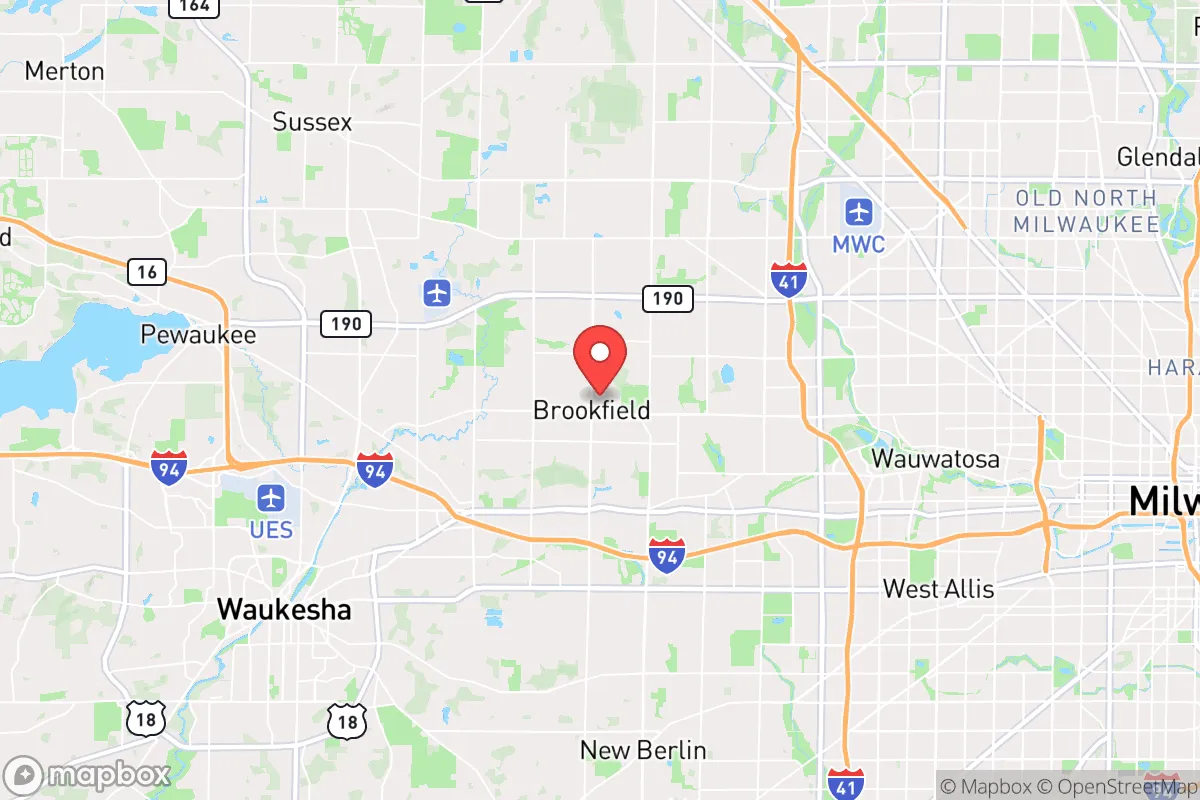
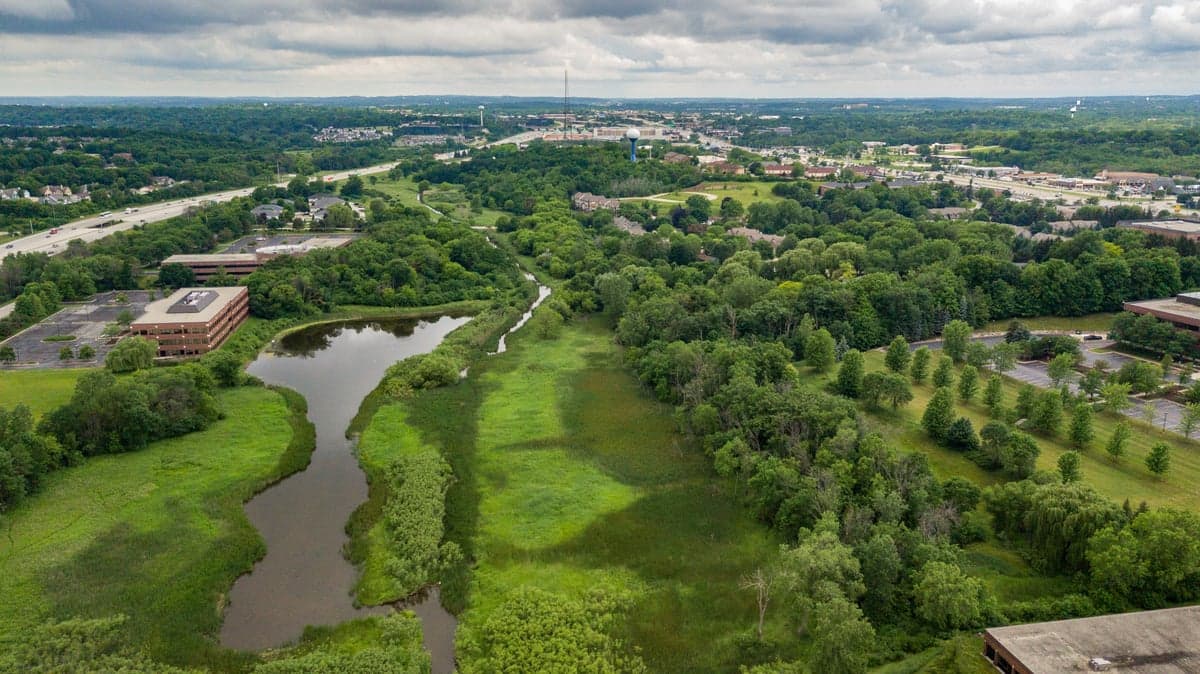
Photo: Wikipedia
Political ClimatePolitical Climate in Brookfield, WI
District shown is the primary district for this city’s centroid. Cities may span multiple districts.
Local Political AnalysisPolitical Analysis of Brookfield, WI
Brookfield, Wisconsin, has long been a reliably conservative stronghold in Waukesha County, with a Cook Partisan Voting Index of R+11 that reflects its deep-rooted Republican lean. This isn't a recent development; it's a tradition that goes back decades, where folks here have consistently valued limited government, lower taxes, and a hands-off approach to personal freedoms. The political trajectory has been remarkably stable, though you can sense a subtle unease among long-time residents as they watch nearby Milwaukee and even some closer suburbs like Wauwatosa drift leftward on issues like zoning, school curriculum, and public safety funding. For now, Brookfield remains a place where conservative values aren't just tolerated—they're the baseline expectation.
How it compares
If you look at the political map of Waukesha County, Brookfield sits right in the heart of the reddest territory in Wisconsin. Compare it to Milwaukee, just 15 miles east, which votes overwhelmingly Democratic and has seen a sharp rise in progressive policies on policing and taxes. Even closer, the city of Waukesha itself is more purple than Brookfield, with a noticeable progressive push in its downtown and school board races over the last few cycles. Brookfield, by contrast, has held the line. Its R+11 PVI is a full 10 points more conservative than the national average, and it consistently delivers double-digit margins for Republican candidates in state and federal races. The surrounding towns of Elm Grove and New Berlin share a similar outlook, but Brookfield's sheer size and affluence make it the political anchor of the region—a place where conservative candidates come to rally support, not to persuade undecided voters.
What this means for residents
For someone living here, the political climate translates into a daily life that feels less encumbered by government overreach. You won't see the kind of heavy-handed mandates or progressive social experiments that have become common in Madison or Milwaukee. Property taxes, while not low, are kept in check by a city council that prioritizes fiscal restraint over expanding public programs. The schools, part of the Elmbrook School District, have resisted the more controversial curriculum shifts seen elsewhere, sticking closer to traditional academics and parental rights. That said, there's a growing concern among residents that the cultural winds are shifting. The 2020 election saw a slight uptick in Democratic votes in some precincts, and there's chatter about younger families moving in from the city bringing different priorities. If that trend continues, the next decade could see Brookfield's political identity tested in ways it hasn't been since the 1990s.
One of the biggest cultural distinctions here is the strong sense of local control. Brookfield residents are fiercely protective of their property rights and personal liberties—whether that means pushing back against state-mandated mask orders during the pandemic or opposing regional transit authorities that could dictate land use. The city's leadership has historically been skeptical of any policy that smacks of top-down control, which is why you see a lot of support for school choice, concealed carry, and minimal business regulation. It's not a flashy or activist conservatism; it's the quiet, practical kind that just wants to be left alone to live, work, and raise a family without the government breathing down your neck. That's the Brookfield way, and for now, it's holding strong.

State Political ClimatePolitical Climate in Wisconsin
State Political AnalysisPolitical Environment in the State
Wisconsin has long been a classic swing state, but over the past decade it has shifted from a true battleground to a state where Republicans hold a narrow but durable edge in statewide elections, driven by a deep urban-rural divide. The state voted for Donald Trump in 2016 and 2024, while Joe Biden narrowly won it in 2020, reflecting a 50-50 split that has become the new normal. The dominant coalitions are a conservative, exurban and rural base concentrated outside the Milwaukee and Madison metros, versus a progressive, union-heavy base in the cities themselves. Over the last 20 years, the state has moved from a purple toss-up to a place where Republicans consistently win legislative supermajorities despite close presidential races, thanks to gerrymandered maps and population shifts toward red-leaning exurbs like Waukesha and Washington County.
Urban vs. rural divide
The political map of Wisconsin is a textbook case of the urban-rural chasm. Milwaukee and Madison are deep-blue strongholds, with Dane County (Madison) delivering margins of 75%+ for Democrats in recent cycles. Milwaukee County, despite population loss, still provides a massive Democratic vote bank. Meanwhile, the WOW counties (Waukesha, Ozaukee, Washington) surrounding Milwaukee are among the most Republican suburban areas in the Midwest, often voting 60-65% for GOP candidates. The rural northwoods counties like Vilas and Oneida have trended sharply red as well, while the Driftless region in the southwest, including Lafayette County, has become a competitive mix. The key battleground is the Fox Valley—cities like Appleton, Green Bay, and Oshkosh—where working-class voters have swung from blue to red over the past decade, driven by cultural and economic concerns. The 2024 election saw Brown County (Green Bay) flip back to Trump after narrowly backing Biden in 2020, cementing the region as a GOP stronghold.
Policy environment
Wisconsin’s policy environment is a mixed bag for conservatives. The state has a flat income tax of 4.4% (down from 7.65% in 2011), and Republicans have passed multiple tax cuts since 2021, including a reduction in the top rate and an expansion of the child tax credit. Property taxes are relatively high, averaging about 1.6% of home value, but are capped by state law. The regulatory posture is generally business-friendly, with a right-to-work law passed in 2015 and a tort reform system that limits lawsuit abuse. On education, the state has a robust school choice program—the oldest in the nation—with vouchers available in Milwaukee, Racine, and statewide through the Wisconsin Parental Choice Program. However, the state also has a universal background check law for firearms (passed in 2023) and a red-flag law that allows temporary seizure of guns from individuals deemed a risk, which many conservatives view as an infringement on Second Amendment rights. Election laws are a flashpoint: Wisconsin has no-excuse absentee voting and same-day voter registration, but also strict voter ID requirements. The 2020 election saw massive mail-in voting, leading to ongoing distrust among conservatives, though audits found no widespread fraud.
Trajectory & freedom
Wisconsin’s trajectory on personal freedom is a tug-of-war. On the positive side, the state passed constitutional carry in 2011 and has not rolled it back. In 2023, Republicans passed a parental bill of rights that requires schools to notify parents about curriculum changes and medical services, though it was vetoed by Democratic Governor Tony Evers. The state also has a school choice system that gives parents control over their children’s education. On the negative side, the 2023 red-flag law and universal background checks represent a significant expansion of government overreach into gun ownership. The state also has a mask mandate history (Evers imposed one in 2020, later struck down by the courts) and a vaccine passport ban that was passed but vetoed. Medical freedom is a concern: Wisconsin has no religious or philosophical exemption for vaccine mandates in schools, though a 2024 bill to add one failed. Property rights are generally strong, with no statewide rent control and limited zoning restrictions outside of Madison and Milwaukee. The biggest freedom concern is the gerrymandered legislative maps—while they favor Republicans, they also create a sense of political disenfranchisement among Democrats, leading to constant legal battles and a perception that the system is rigged.
Civil unrest & political movements
Wisconsin has a history of intense political activism. The 2011 Act 10 protests against Governor Scott Walker’s union reforms drew 100,000 people to the Capitol and sparked a recall effort, though Walker survived. The 2020 Kenosha unrest following the Jacob Blake shooting saw riots, arson, and the killing of two protesters by Kyle Rittenhouse, who was later acquitted on self-defense grounds. This event remains a deep cultural wound, with conservatives viewing it as a case of lawlessness and left-wing violence, while progressives see it as a miscarriage of justice. The state has seen a rise in election integrity activism since 2020, with groups like the Wisconsin Election Integrity Project pushing for stricter laws. Immigration politics are less heated than in border states, but the issue flared in 2024 when Evers vetoed a bill to require local law enforcement to cooperate with ICE. There is no sanctuary city policy in Wisconsin, though Milwaukee and Madison have declared themselves “welcoming cities.” The Waukesha Christmas parade attack in 2021, where a man drove through a parade killing six, further polarized the state, with conservatives pointing to the suspect’s criminal history and bail reform as a failure of progressive policies.
Projection
Over the next 5-10 years, Wisconsin is likely to remain a purple state with a red tilt, but demographic shifts could push it further right. The population is aging and white, with the fastest growth in exurban counties like St. Croix (near the Twin Cities) and Jefferson, which lean conservative. In-migration from Illinois, particularly from Chicago-area conservatives, is boosting red counties. However, Madison and Milwaukee are growing slowly, and the state’s college towns are becoming more progressive. The key wildcard is the 2026 gubernatorial election—if a Republican wins, the state could see a wave of conservative legislation on school choice expansion, tax cuts, and election reforms. If Evers is re-elected, the gridlock will continue. The 2024 redistricting battle is ongoing, with the state Supreme Court flipping to a 4-3 liberal majority in 2023, which could lead to fairer maps and more competitive legislative races. For a conservative moving in now, expect a state where your vote matters, but where cultural battles over education, guns, and COVID-era policies will remain front and center.
Bottom line for a new resident: Wisconsin offers a relatively low-tax, business-friendly environment with strong school choice and gun rights, but you’ll need to navigate a deeply polarized political landscape. If you live in the WOW counties or the Fox Valley, you’ll find a community that shares your values. If you move to Madison or Milwaukee, expect to be in the minority. The state’s future depends on whether the red-leaning exurbs continue to grow faster than the blue cities, and whether the next governor can break the legislative gridlock. For now, it’s a place where your vote truly counts—but so does your choice of neighborhood.
* Values derived from national, state, county, city and local statistics and may differ in a specific area. Last updated: 2026-04-21T10:12:09.000Z
Narrative content on this page is AI-generated and may contain mistakes. Verify any details that matter before acting on them.
ReloMaps may earn a commission from affiliate links at no extra cost to you.

