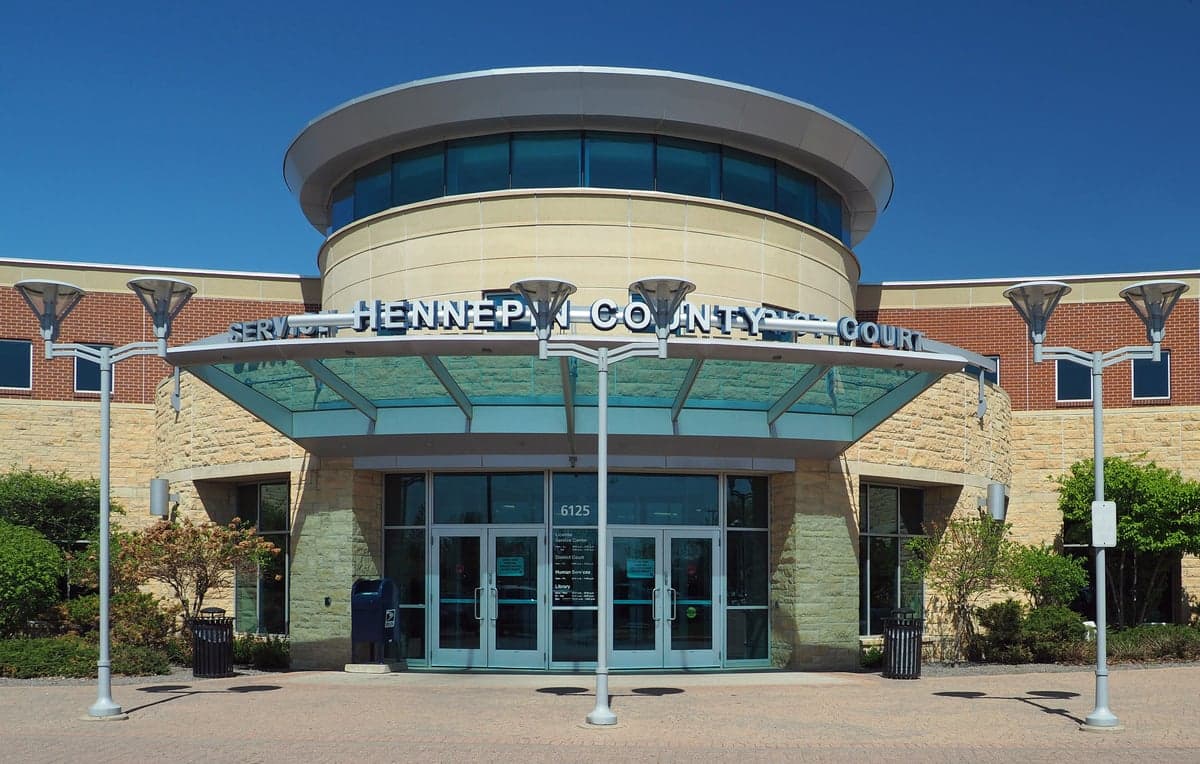
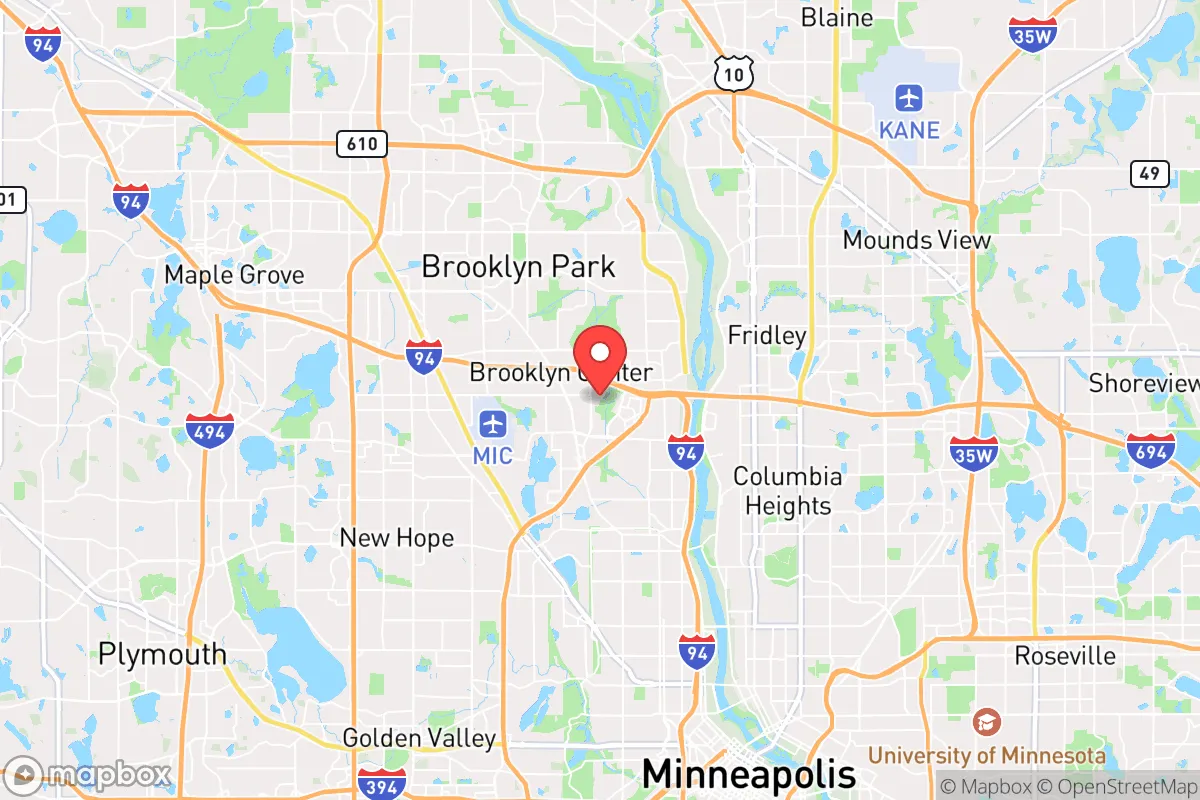
Photo: Wikipedia
Personal Sovereignty in Brooklyn Center, MN
Viable for self-reliance. Generally workable, though some barriers may limit total independence.
What does Personal Sovereignty tell us?
Personal Sovereignty measures your capacity for self-reliance and independence with minimal government friction. Higher scores mean fewer barriers between you and the way you want to live... but it assumes you have the space you need and good neighbors.
What does this tell us?
Personal Sovereignty measures your capacity for self-reliance and independence with minimal government friction. Higher scores mean fewer barriers between you and the way you want to live... but it assumes you have the space you need and good neighbors.
State Policy
Energy independence: Importer (20% of energy produced in-state)
Personal Liberty
Homesteading

Personal Liberty Analysis
Brooklyn Center, Minnesota, presents a challenging environment for personal sovereignty, particularly for those with a survivalist or prepper mindset who prioritize autonomy from government overreach. As a first-ring suburb of Minneapolis, it operates under the full weight of Minnesota state law, which has increasingly centralized power and restricted individual freedoms in recent years. For a conservative-leaning individual or family evaluating relocation, the city’s proximity to urban resources is offset by a regulatory and tax climate that actively limits self-reliance, gun rights, and parental control. This analysis examines the specific constraints on personal sovereignty in Brooklyn Center, focusing on the practical realities of living in a state that has moved decisively toward progressive governance.
Tax burden and regulatory posture: How Minnesota state policy impacts your wallet and freedom
Minnesota’s tax burden is among the highest in the nation, and Brooklyn Center residents feel this acutely. The state imposes a progressive income tax with a top marginal rate of 9.85%, one of the steepest in the country, and a statewide sales tax of 6.875% that local jurisdictions can add to. Brooklyn Center itself levies a city sales tax of 0.5%, bringing the combined rate to 7.375%. Property taxes in Hennepin County are also elevated, with effective rates around 1.1% of market value, meaning a $300,000 home carries an annual tax bill of roughly $3,300. For a prepper or survivalist, this tax burden directly reduces capital available for land, supplies, and self-sufficiency investments. The regulatory posture is equally restrictive: Minnesota has adopted stringent building codes, environmental regulations, and business licensing requirements that make it difficult to operate a small-scale homestead or home-based enterprise without navigating layers of bureaucracy. The state’s energy code, for example, mandates specific insulation and HVAC standards that can complicate off-grid or alternative energy setups. For those seeking to minimize government entanglement, this is a significant deterrent.
Self-defense and gun law specifics: What you need to know about carrying and storing firearms
Minnesota’s gun laws have tightened considerably, and Brooklyn Center residents must comply with state-level restrictions that erode the right to self-defense. The state requires a permit to carry a handgun in public, which involves a background check, a training course, and a fee. While Minnesota is a “shall-issue” state for permits, meaning the government cannot arbitrarily deny them, the process still creates a bureaucratic hurdle. More concerning for preppers: Minnesota has a “red flag” law (Extreme Risk Protection Order) that allows law enforcement or family members to petition a court to temporarily seize firearms from an individual deemed a risk. This law can be triggered by vague criteria and does not require a criminal conviction, raising serious due process concerns. Additionally, the state bans private firearm transfers without a background check through a licensed dealer, effectively creating a universal background check system. There is no state preemption for local gun ordinances, so Brooklyn Center could theoretically impose its own restrictions, though it currently follows state law. For long-term storage and preparedness, Minnesota law does not restrict the possession of rifles, shotguns, or ammunition, but the legal climate is increasingly hostile to the spirit of the Second Amendment. Anyone serious about self-defense should factor in the potential for further restrictions as state politics shift leftward.
Self-reliance and homesteading viability: Lot sizes, zoning, and off-grid feasibility in Brooklyn Center
Brooklyn Center is a densely developed suburb with a median lot size of about 0.2 acres, typical of post-war suburban neighborhoods. Zoning is predominantly single-family residential, but the city’s code imposes strict limits on accessory structures, livestock, and agricultural activities. Raising chickens, keeping bees, or maintaining a substantial garden is technically possible but requires permits and adherence to setback and noise ordinances. Off-grid living is not feasible within city limits: the city requires connection to municipal water and sewer systems, and building codes mandate grid-tied electrical service for new construction. Solar panels are allowed but must be interconnected with the utility grid, and battery storage systems face fire code restrictions. For a prepper seeking true self-reliance, Brooklyn Center offers little room for expansion. The average lot cannot support a substantial food forest, rainwater catchment is limited by state water rights laws, and composting toilets are prohibited. The closest areas with larger parcels and more permissive zoning are exurban townships in Wright or Sherburne counties, 30-45 minutes northwest, where 5-10 acre lots are common and agricultural uses are allowed by right. For those committed to the metro area, Brooklyn Center’s constraints mean self-reliance must be pursued through urban homesteading techniques—container gardening, indoor food production, and community networking—rather than land-based independence.
Personal liberties: Parental rights, medical autonomy, speech, and property protections
Minnesota has moved aggressively to centralize authority over personal decisions, and Brooklyn Center residents are subject to these state-level policies. Parental rights have been weakened by laws that allow minors to consent to certain medical treatments without parental notification, including mental health services and substance abuse treatment. The state also mandates comprehensive sex education in public schools, which may conflict with conservative family values. Medical autonomy is further constrained by Minnesota’s vaccine mandates for school attendance—though exemptions exist for medical and conscientious reasons, the process is cumbersome. During the COVID-19 pandemic, the state imposed mask mandates and business closures that were enforced in Brooklyn Center, demonstrating the government’s willingness to override individual choice during emergencies. Free speech is protected under the First Amendment, but Minnesota has hate speech statutes that can be used to prosecute certain types of expression, and the state’s public accommodations laws have been interpreted broadly to restrict speech in commercial settings. Property rights are relatively strong for existing homeowners, but the city’s zoning authority means that any significant modification to your property—from building a shed to adding a fence—requires a permit and inspection. Eminent domain is a concern, as Hennepin County has used it for redevelopment projects. Overall, personal liberties in Brooklyn Center are constrained by a state government that prioritizes collective welfare over individual autonomy, making it a poor fit for those who value maximum personal sovereignty.
In the broader context of the United States, Brooklyn Center ranks low for personal sovereignty compared to rural areas in states like Texas, Idaho, or Montana, where tax burdens are lower, gun laws are more permissive, and zoning is less restrictive. Even within Minnesota, exurban counties like Chisago or Kanabec offer more room for self-reliance and less regulatory oversight. For a conservative-leaning prepper or survivalist, Brooklyn Center is a location to approach with caution—its urban amenities come at the cost of significant government intrusion into daily life. If relocation to the Twin Cities metro is unavoidable, consider the outer-ring suburbs or nearby small towns where state policies are still in effect but local enforcement is less aggressive. The bottom line: personal sovereignty in Brooklyn Center is heavily circumscribed by state law, and those seeking to maximize autonomy should look elsewhere.

* Values derived from national, state, county, city and local statistics and may differ in a specific area. Last updated: 2026-04-24T14:34:53.000Z
Narrative content on this page is AI-generated and may contain mistakes. Verify any details that matter before acting on them.
ReloMaps may earn a commission from affiliate links at no extra cost to you.

