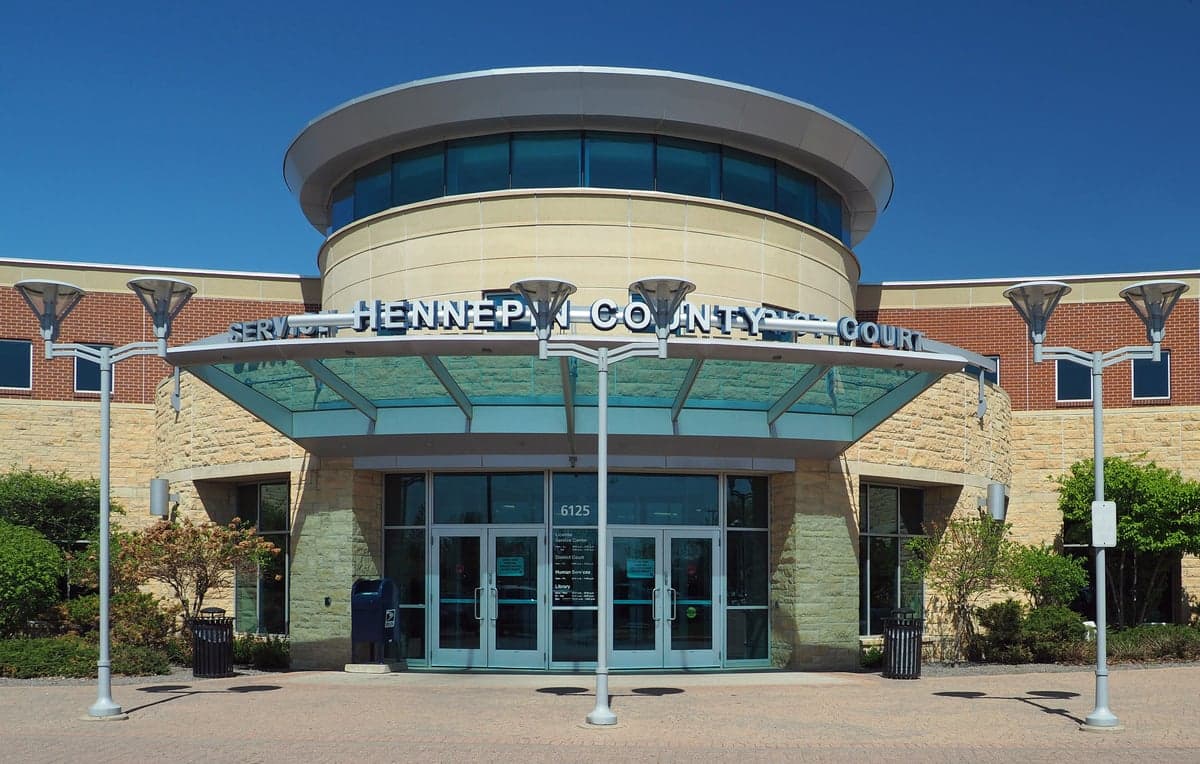
Photo: Wikipedia
Political ClimatePolitical Climate in Brooklyn Center, MN
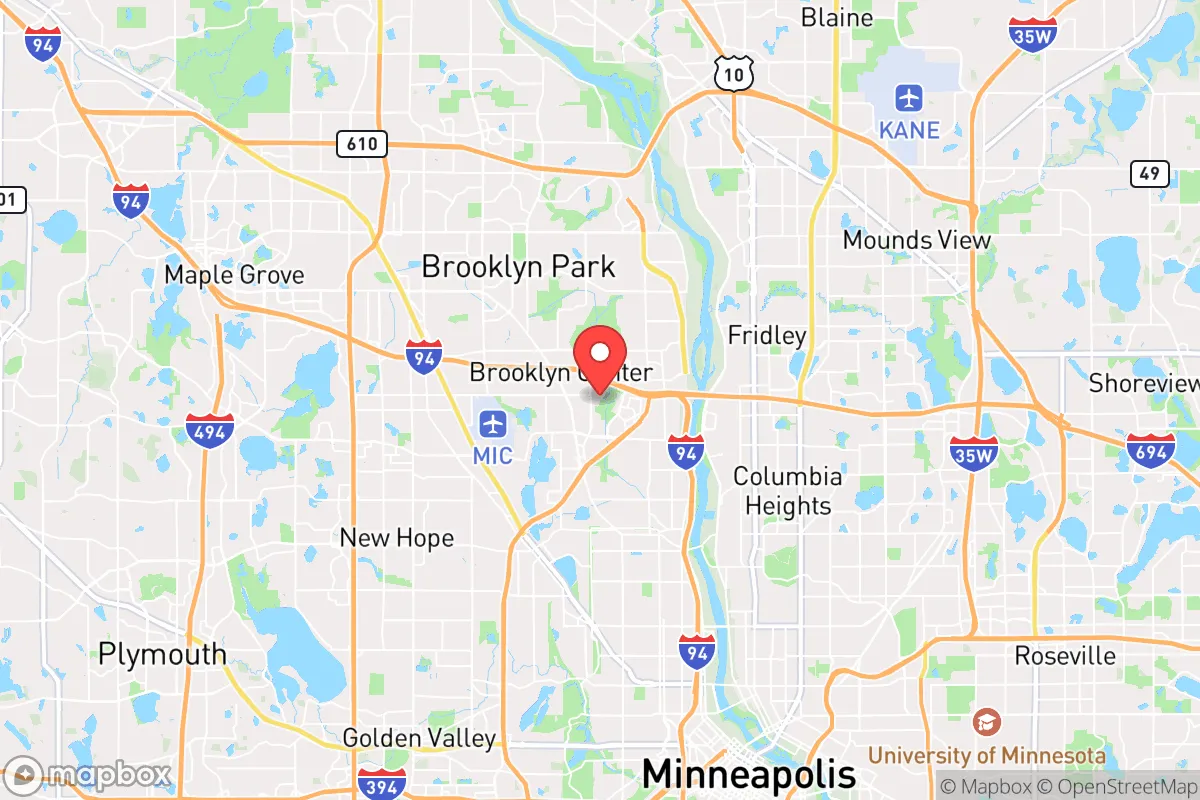
District shown is the primary district for this city’s centroid. Cities may span multiple districts.
Local Political AnalysisPolitical Analysis of Brooklyn Center, MN
Brooklyn Center is about as blue as it gets in Minnesota, with a Cook PVI of D+32, meaning it votes more than thirty points more Democratic than the national average. That wasn't always the case—this used to be a quiet, middle-class suburb where folks kept to themselves and the city council didn't meddle much. But over the last decade, the political shift has been dramatic, and it's not just about voting patterns. The local government has embraced progressive policies that many long-time residents see as government overreach, from policing reforms to zoning changes that prioritize density over single-family homes. If you're looking for a place where your personal freedoms and property rights are respected, this isn't the Brooklyn Center of the 1990s anymore.
How it compares
To understand just how far left Brooklyn Center has gone, look at the towns around it. Neighboring Brooklyn Park is also reliably Democratic, but its PVI is closer to D+20—still liberal, but with a more moderate streak. Head a few miles north to Champlin or Anoka, and you'll find communities that lean Republican or are at least competitive, with PVIs around R+5 to R+10. Even Maple Grove, just west of Brooklyn Center, is a purple suburb that often votes within a few points of the national average. The contrast is stark: Brooklyn Center has become an island of hard-left politics in a region that still has plenty of conservative and independent-minded suburbs. That D+32 rating isn't an accident—it reflects a city where progressive activists have taken over the local Democratic party machinery, and moderate voices have been pushed out.
What this means for residents
For someone who values limited government and personal autonomy, living in Brooklyn Center means constant friction. The city council has passed ordinances that feel like they're designed to control daily life rather than protect it. Rent control measures and strict landlord regulations make it harder for property owners to manage their investments. The police department has been defunded and restructured multiple times since 2020, leading to slower response times and a noticeable uptick in property crime. If you own a business, you'll face a maze of new licensing requirements and labor mandates that make it tough to operate without a lawyer on retainer. The school board has embraced critical race theory and gender ideology curricula, leaving parents with little recourse if they want their kids to get a traditional education. In the long term, this trajectory is unsustainable—taxes are rising to fund new social programs, and the tax base is shrinking as families and small businesses leave for nearby suburbs like Dayton or Ramsey where government stays out of your way.
Culturally, Brooklyn Center has lost the independent, self-reliant spirit it once had. The city now markets itself as a "sanctuary" for immigrants and a hub for progressive activism, which sounds noble but has practical consequences. Public safety is the biggest concern—after the 2021 police restructuring, violent crime spiked, and many residents I know now keep their doors locked even during the day. The city's response has been to fund more social workers and mental health teams, which sounds good on paper but doesn't replace a patrol officer when someone breaks into your garage. If you're considering moving here, I'd advise you to look at the voting records of local candidates and ask yourself if you're comfortable with a government that sees your property rights and personal freedoms as obstacles to their utopian vision. The political climate here isn't just liberal—it's actively hostile to the kind of live-and-let-live conservatism that built the suburbs in the first place.

State Political ClimatePolitical Climate in Minnesota
State Political AnalysisPolitical Environment in the State
Minnesota has shifted from a classic purple battleground to a reliably blue state over the past two decades, with Democrats now controlling the governorship, both legislative chambers, and the entire federal delegation. The state voted for Hillary Clinton by 1.5 points in 2016, Joe Biden by 7 points in 2020, and Kamala Harris by roughly 4 points in 2024, but that top-line number hides a deeply polarized map. The Twin Cities metro area—specifically Hennepin and Ramsey counties—now generates enough Democratic votes to overwhelm the rest of the state, while Greater Minnesota has swung hard right, with many rural counties voting 70-80% Republican in recent cycles.
Urban vs. rural divide
The political map of Minnesota is essentially a donut: the Minneapolis-St. Paul core is deep blue, the inner-ring suburbs are trending blue, and everything else is red or getting redder. Hennepin County alone cast nearly 600,000 votes for Biden in 2020, more than the entire population of many rural counties. The Iron Range, once a Democratic stronghold, flipped hard—St. Louis County (Duluth) went from reliably blue to narrowly Democratic, while neighboring Lake and Cook counties are now competitive. Outstate counties like Otter Tail, Stearns, and Wright are now solidly Republican, with Wright County voting +35 points for Trump in 2024. The suburbs tell a mixed story: Anoka County is a true swing county that narrowly went for Trump in 2024, while Dakota and Washington counties are trending left as professionals move in. The only reliably red metro area is Rochester, which votes Republican but is slowly shifting as Mayo Clinic expands its workforce.
Policy environment
Minnesota’s policy environment has become aggressively progressive since Democrats took full control in 2023. The state now has a progressive income tax with a top rate of 9.85% on income over $200,000 (single filers), one of the highest in the nation. Property taxes are above average, and the state sales tax is 6.875% with local add-ons. In 2023, the legislature passed a clean energy mandate requiring 100% carbon-free electricity by 2040, a paid family and medical leave program funded by a new payroll tax, and a massive expansion of state government spending—the budget grew by roughly 40% in two years. Education policy is dominated by the teachers’ union, with per-pupil spending among the highest in the nation but stagnant test scores. Healthcare is heavily regulated, with a state-run insurance exchange and a Medicaid expansion that covers roughly 25% of residents. Election laws are among the most liberal: same-day voter registration, no-excuse absentee voting, and automatic voter registration at DMVs. There is no voter ID requirement, which remains a flashpoint for conservatives.
Trajectory & freedom
On the freedom index, Minnesota is clearly trending downward for conservatives. The 2023 legislative session was a blitz of new restrictions: a red flag law (extreme risk protection order) that allows courts to temporarily seize firearms from individuals deemed a threat, a universal background check law for private gun sales, and a repeal of the state’s preemption law that had allowed counties to set their own gun rules. Parental rights took a hit with the passage of a transgender “refuge” law that shields minors receiving gender-affirming care from out-of-state legal actions and allows the state to intervene in custody disputes if a parent opposes such care. Medical autonomy was further constrained by a law requiring insurance coverage for abortion and gender transition procedures, with no gestational limits on abortion. Property rights are under pressure from a new climate-focused building code that mandates electric heat pumps in new construction, effectively banning natural gas hookups in many jurisdictions. On the plus side, Minnesota has no state income tax on Social Security benefits, and the estate tax exemption was raised to $3 million in 2024—a small win for wealth preservation.
Civil unrest & political movements
The George Floyd protests in 2020 were a watershed moment, with Minneapolis and St. Paul experiencing days of rioting, arson, and looting that caused over $500 million in damage. The aftermath saw a push to defund the police, which was partially successful—the Minneapolis City Council voted to disband the police department (later blocked by a court), and the city has struggled with officer retention. The “autonomous zone” in south Minneapolis lasted several weeks before being cleared. Since then, organized conservative movements have grown: the Minnesota Gun Owners Caucus is a powerful grassroots force that has successfully primaried moderate Republicans, and the Minnesota Parents Alliance has mobilized around school board races and curriculum transparency. Immigration politics are tense: Minnesota is a sanctuary state with a 2023 law that limits local law enforcement cooperation with ICE, and the state has seen a surge in Somali and Hmong populations, particularly in the Twin Cities. Election integrity remains a hot-button issue—the 2020 election was certified without major fraud findings, but many conservatives remain skeptical of the state’s mail-in voting system and lack of voter ID.
Projection
Over the next 5-10 years, Minnesota is likely to become more solidly Democratic at the state level, driven by continued urbanization and in-migration of professionals to the Twin Cities. The rural vote is maxed out—there are simply not enough conservative voters left in Greater Minnesota to overcome the metro’s growth. However, the state’s high taxes and regulatory burden are pushing some businesses and families to neighboring states like South Dakota and Wisconsin, which are seeing net in-migration from Minnesota. The 2026 governor’s race will be a key test: if a moderate Republican can’t win in a midterm environment, the state may be locked blue for a generation. Expect continued battles over parental rights, school choice (Minnesota has no voucher program), and gun laws. The state’s budget is structurally dependent on high-income earners, so any economic downturn could trigger a fiscal crisis. For a conservative moving in now, the realistic outlook is that you’ll be living in a state where your vote for president and Senate is likely to be in the minority, but local races—especially county commissions and school boards—remain competitive in the suburbs and exurbs.
Bottom line for a new resident: If you’re a conservative considering Minnesota, you’re moving into a state where the political tide is against you at the state level, but where you can still find like-minded communities in the outer suburbs and rural areas. The trade-off is access to world-class healthcare (Mayo Clinic), strong public schools in certain districts, and a robust economy—but you’ll pay for it with high taxes and a regulatory environment that increasingly prioritizes progressive social goals over personal freedom. Your best bet is to target counties like Wright, Sherburne, or Stearns, where local government is still conservative, and be prepared to fight for your values at the school board and city council level. The state is not lost, but it’s in a defensive crouch.
* Values derived from national, state, county, city and local statistics and may differ in a specific area. Last updated: 2026-04-24T14:34:53.000Z
Narrative content on this page is AI-generated and may contain mistakes. Verify any details that matter before acting on them.
ReloMaps may earn a commission from affiliate links at no extra cost to you.

