 Popular
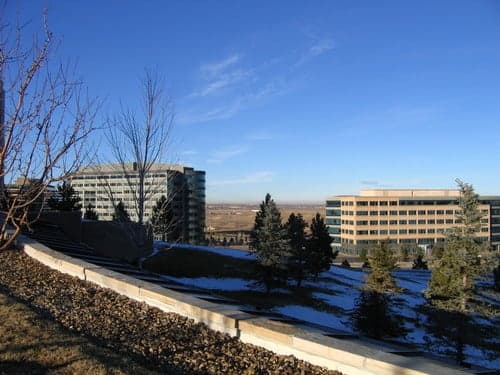
Photo: Wikipedia
Personal Sovereignty in Broomfield, CO
Viable for self-reliance. Generally workable, though some barriers may limit total independence.
What does Personal Sovereignty tell us?
Personal Sovereignty measures your capacity for self-reliance and independence with minimal government friction. Higher scores mean fewer barriers between you and the way you want to live... but it assumes you have the space you need and good neighbors.
What does this tell us?
Personal Sovereignty measures your capacity for self-reliance and independence with minimal government friction. Higher scores mean fewer barriers between you and the way you want to live... but it assumes you have the space you need and good neighbors.
State Policy
Energy independence: Net exporter (110% of energy produced in-state)
Personal Liberty
Homesteading

Personal Liberty Analysis
Broomfield, Colorado, presents a mixed picture for those prioritizing personal sovereignty, offering a notably lower tax burden than many Front Range alternatives but operating within a state framework that has increasingly constrained individual liberties in recent years. As a home-rule city straddling four counties, Broomfield has carved out some local autonomy, yet it remains subject to Colorado’s expanding regulatory apparatus on firearms, energy, and land use. For the survivalist or prepper weighing relocation, the key question is whether the city’s practical advantages—affordable lot sizes, decent water access, and a relatively business-friendly climate—outweigh the creeping state-level overreach that has accelerated since 2020. The answer depends heavily on which freedoms you prioritize and how much buffer you can build into your property and lifestyle.
Tax burden and regulatory climate: how Broomfield compares to surrounding areas
Broomfield’s tax structure is a genuine bright spot for sovereignty-minded individuals. The city levies a combined sales tax rate of 8.85% (3.85% state, 4.0% city, 1.0% RTD for transit), which is competitive for the Denver metro—lower than Denver’s 8.81% but higher than unincorporated areas of Weld County. Crucially, Colorado’s flat state income tax of 4.4% (down from 4.55% in 2024) and a property tax rate averaging 0.49% of assessed value keep the overall burden well below coastal states. Broomfield’s city government has maintained a moderate regulatory posture: zoning is less restrictive than Boulder or Denver, and the city has resisted some of the more aggressive land-use mandates seen elsewhere. However, state-level regulations are the real concern. Colorado’s 2021 oil and gas reform law (SB 19-181) gave local governments broad authority to restrict drilling, and while Broomfield has not banned it outright, the regulatory uncertainty discourages energy independence on private land. For the prepper, this means you cannot assume the right to drill a well or install a large solar array without navigating a permitting process that has grown more cumbersome since 2020. The state’s renewable energy mandate (100% clean electricity by 2040) also pressures homeowners toward grid-tied solar rather than off-grid systems, though Broomfield’s building codes still allow battery storage and backup generators without excessive red tape.
Self-defense and gun law specifics: what Colorado’s restrictions mean for Broomfield residents
This is the most contentious area for sovereignty in Colorado. Since 2020, the state has passed a series of firearm restrictions that directly impact Broomfield residents. Colorado’s 2023 “red flag” law (HB 19-1177) allows family members or law enforcement to petition for temporary firearm removal without a criminal conviction—a provision many conservatives view as a due-process violation. Broomfield’s police department has been an active participant in these orders, with over 50 petitions filed in the city since 2020, according to state court data. Additionally, Colorado’s 2024 ban on “large-capacity” magazines (over 15 rounds) and the 2025 universal background check expansion (covering private sales) have made it harder to acquire or transfer firearms without government oversight. The state also raised the minimum purchase age for all firearms to 21 in 2023, a move that affects young adults living independently. For the prepper, the practical takeaway is stark: Colorado is no longer a “shall-issue” state for concealed carry—it is “may-issue” in practice, with Broomfield’s sheriff requiring a demonstrated need for a permit. Open carry is legal without a permit, but local ordinances restrict it in city buildings and parks. If self-defense autonomy is your top priority, Broomfield sits in a state that has moved decisively toward restriction, and neighboring Wyoming or eastern Colorado counties offer far fewer legal barriers.
Self-reliance and homesteading viability: lot sizes, zoning, and off-grid feasibility
Broomfield offers more room for self-reliance than most Denver suburbs, but it is not a homesteading paradise. The city’s zoning code allows minimum lot sizes of 6,000 square feet in most residential zones, with some rural-residential parcels (zoned RR) permitting up to 2.5-acre lots in the northern reaches near the Boulder County line. This is enough for a substantial garden, a small chicken coop (allowed with a permit), and a backup generator shed. However, off-grid living is effectively illegal within city limits: Broomfield requires connection to municipal water and sewer for any habitable structure, and solar-only systems must still be grid-tied to meet building code. Rainwater collection is legal but capped at 110 gallons per property under state law (HB 16-1005), and well drilling is prohibited on lots under 35 acres in most of the city. For the serious prepper, the best option is to buy in the unincorporated areas of Weld or Adams counties just east of Broomfield, where lot sizes of 5-10 acres are common and county zoning is far more permissive. Within Broomfield proper, the focus should be on food production and energy resilience rather than full self-sufficiency: raised beds, fruit trees, a propane generator, and a deep pantry are all feasible, but you will remain tied to municipal infrastructure and subject to state water regulations.
Personal liberties: parental rights, medical autonomy, speech, and property
Colorado’s state-level policies have eroded several traditional liberties that matter to conservative families. On parental rights, the state’s 2023 law (HB 23-1101) requires school districts to adopt policies that “affirm” a student’s gender identity without parental notification—a direct challenge to family sovereignty. Broomfield’s school district (BVSD) has implemented these policies, and parents have reported difficulty accessing their children’s records on sensitive topics. On medical autonomy, Colorado’s 2022 “right to abortion” law (HB 22-1279) removed nearly all restrictions, and the state has actively shielded providers from out-of-state investigations—a stance that may conflict with families seeking to opt out of certain vaccines or treatments. Property rights are relatively strong in Broomfield compared to Boulder or Denver: the city has not enacted rent control, and short-term rentals (Airbnb) are allowed with a license. However, the state’s 2024 “just cause” eviction law limits a landlord’s ability to non-renew leases, which could complicate property management for those renting out a second unit. Free speech protections are robust under the Colorado Constitution, but local ordinances restrict political signage on public property and limit leafleting in residential areas. For the prepper, the biggest concern is government data collection: Broomfield participates in the state’s “Clean Energy” building performance program, which requires energy audits and disclosure of utility data—a small but real erosion of privacy.
Overall, Broomfield offers a moderate sovereignty profile that is better than Denver or Boulder but significantly weaker than rural Colorado, Wyoming, or the Dakotas. The tax burden is low, property rights are decent, and the city’s regulatory posture is not hostile to self-reliance within the bounds of municipal infrastructure. However, the state-level erosion of gun rights, parental authority, and medical autonomy is real and accelerating. For the survivalist who wants to stay within commuting distance of Front Range jobs while maintaining a degree of personal buffer, Broomfield works—provided you accept that you are operating within a state that has shifted left on nearly every liberty metric since 2020. If your priority is maximum sovereignty with minimal government interference, look east to Weld County or north to Wyoming. But if you need a balance of economic opportunity and practical self-reliance, Broomfield remains a viable, if imperfect, choice.

* Values derived from national, state, county, city and local statistics and may differ in a specific area. Last updated: 2026-04-25T04:19:47.000Z
Narrative content on this page is AI-generated and may contain mistakes. Verify any details that matter before acting on them.
ReloMaps may earn a commission from affiliate links at no extra cost to you.

