 Popular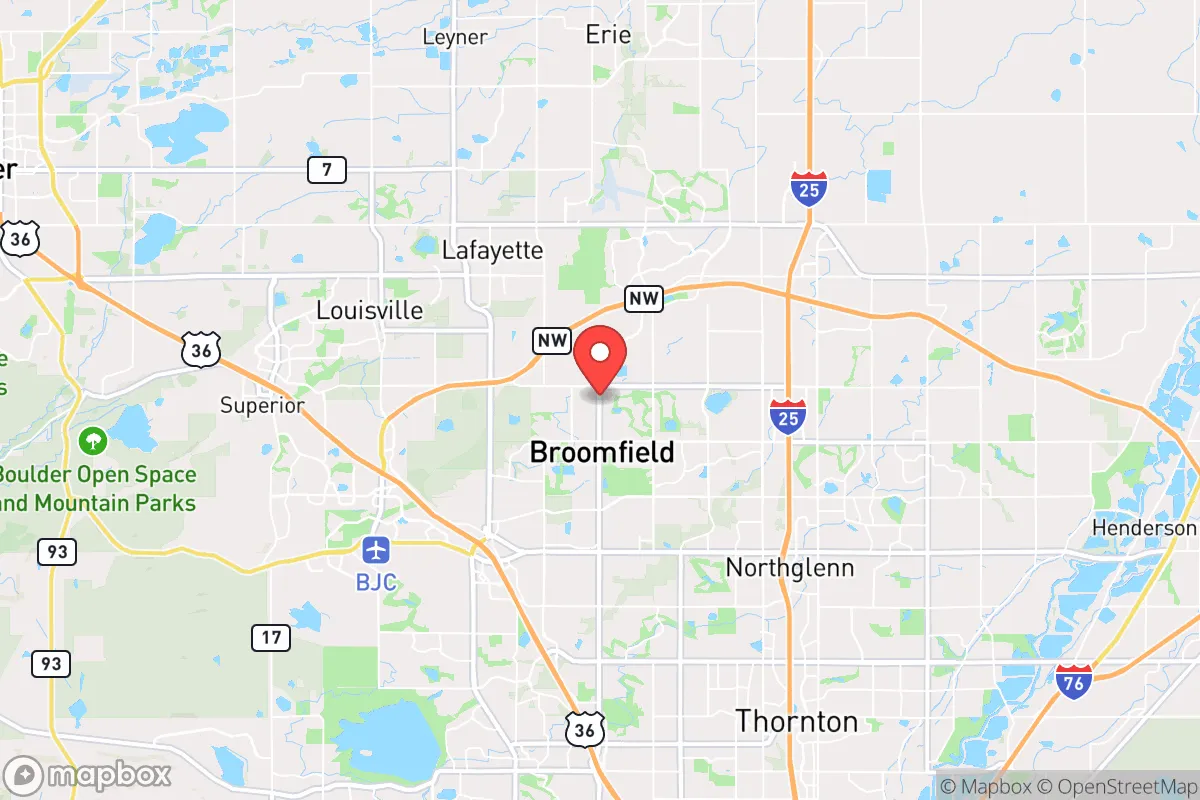
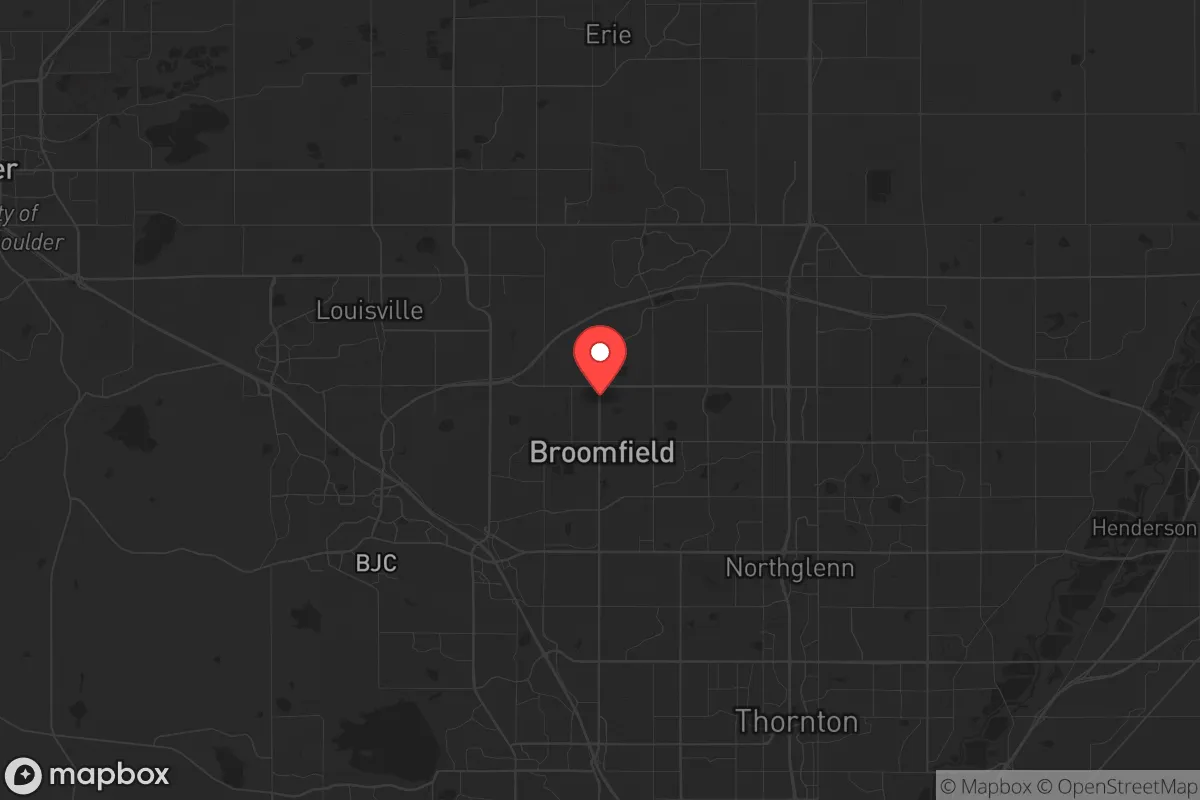
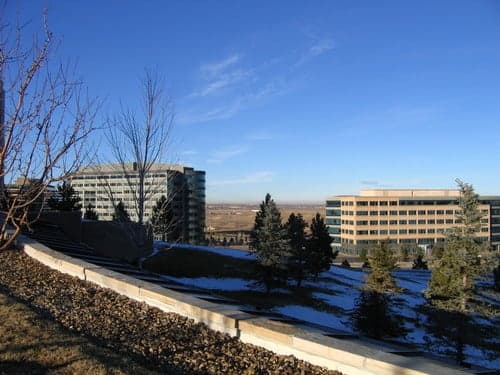
Photo: Wikipedia
Political ClimatePolitical Climate in Broomfield, CO
District shown is the primary district for this city’s centroid. Cities may span multiple districts.
Local Political AnalysisPolitical Analysis of Broomfield, CO
Broomfield’s political lean has shifted noticeably leftward over the past decade, and the numbers back it up. The city now carries a Cook Partisan Voting Index of D+8, meaning it votes about eight points more Democratic than the national average. That’s a far cry from the more balanced, purple-leaning community I remember when I first moved here in the early 2000s. Back then, you could have a reasonable conversation about taxes or property rights without someone accusing you of being a radical. Today, the local government and many of the newer transplants seem to be pushing a progressive agenda that feels increasingly out of step with the traditional, live-and-let-live values that made this area attractive in the first place.
How it compares
To understand Broomfield’s shift, you have to look at the neighbors. Drive ten minutes north to Longmont, and you’ll find a similar D+8 vibe—lots of bike lanes, plastic bag bans, and city council meetings where the loudest voices are demanding more regulations. Head east to Thornton or Northglenn, and the politics are more mixed, with a working-class streak that keeps things from going full progressive. But the real contrast is west and south. Just a few miles west, Boulder County is a solid D+20 or worse, a place where the city council seems to view personal freedom as an inconvenience. Go south to Westminster or Arvada, and you’ll find a more moderate, slightly conservative tilt—places where people still grumble about property taxes and zoning rules without being shouted down. Broomfield used to be that kind of middle ground. Now, it’s starting to look more like a Boulder-lite, and that’s a concern for anyone who values keeping government out of their backyard.
What this means for residents
For the average resident, the political shift translates into real-world headaches. The city council has been pushing denser housing mandates and transit-oriented development, which sounds good on paper but often means less parking, more traffic, and higher HOA fees in new builds. There’s also a growing appetite for "climate action" plans that could eventually restrict what kind of car you drive or how you heat your home. The school board, too, has leaned into progressive curriculum changes that prioritize social-emotional learning over core academics—something that has parents on both sides of the aisle worried. If you’re a homeowner, you’ve probably noticed that property taxes keep climbing to fund these new initiatives, even as basic services like road maintenance and snow removal feel slower than they used to. The bottom line: if you value local control and minimal government interference, Broomfield is becoming a tougher place to feel at home.
One thing that still sets Broomfield apart from its neighbors is its unique city-and-county structure, which gives it more autonomy than a typical suburb. That’s a double-edged sword. On one hand, it means local decisions can be made without as much meddling from the state capitol in Denver. On the other hand, it also means the city council has a freer hand to impose its will on residents without much pushback. I’ve seen a few grassroots efforts to slow down the progressive train—like the fight over the 2021 oil and gas moratorium—but they’ve mostly fizzled. The long-term trajectory seems clear: more regulations, higher costs, and a growing sense that if you don’t fit the new mold, you might want to look at moving to Weld County or out toward the plains. For now, Broomfield is still a decent place to raise a family, but you’ll want to keep an eye on the ballot box and show up at those city council meetings if you want to keep it that way.

State Political ClimatePolitical Climate in Colorado
State Political AnalysisPolitical Environment in the State
Colorado’s political climate has shifted dramatically over the past two decades, transforming from a classic purple swing state into a solidly blue stronghold at the state level, though with deep internal fractures. The Democratic Party now controls every statewide office, both U.S. Senate seats, and both chambers of the legislature, a dominance that was unthinkable in the early 2000s when the state was reliably competitive. The 2024 presidential election saw the Democratic candidate win Colorado by roughly 12 points, a margin that has widened from about 5 points in 2012, driven almost entirely by explosive growth in the Denver metro and the Front Range corridor. For a conservative considering relocation, the state’s trajectory is a mixed bag: the rural and exurban areas remain deeply red, but the levers of power in Denver have been firmly in progressive hands for over a decade, and that grip is tightening.
Urban vs. rural divide
The political map of Colorado is a tale of two states. The Front Range urban corridor—Denver, Boulder, Aurora, and the suburbs of Jefferson and Arapahoe counties—is the engine of Democratic power. Denver County itself votes about 80% Democratic, and Boulder County is even more lopsided. These areas are home to a highly educated, transplant-heavy population that has fueled the state’s leftward shift. In contrast, the Eastern Plains, Western Slope, and mountain resort counties like El Paso County (Colorado Springs) and Mesa County (Grand Junction) are reliably Republican. El Paso County, home to the state’s second-largest city, Colorado Springs, voted +14 Republican in 2024, but its population growth is a fraction of Denver’s. The real story is the suburban counties that flipped: Arapahoe and Jefferson counties, once swing areas, now lean Democratic by 8-10 points. The only bright spot for conservatives is the exurban fringe—Douglas County (south of Denver) and Weld County (north of Denver) remain Republican strongholds, with Weld voting +22 R in 2024. But these areas are being slowly encroached upon by Denver’s sprawl, and their political margins are shrinking.
Policy environment
Colorado’s policy environment is a textbook example of progressive governance, and it’s a major concern for anyone valuing limited government. The state income tax is a flat 4.4%, which is moderate, but the overall tax burden is rising due to property tax increases and a slew of new fees. The Gallagher Amendment, which capped residential property tax rates, was repealed by voters in 2020, opening the door for future hikes. On regulation, Colorado is among the most aggressive states in the nation on environmental policy, with a strict clean-air rule (SB 21-260) that effectively mandates a transition to electric vehicles by 2032cars. Education policy is dominated by the teachers’ union, and school choice is under constant attack—the state’s voucher program was struck down by the courts in 2020. Healthcare is heavily regulated, with a state-run reinsurance program that has stabilized premiums but done little to lower costs. Election laws have been loosened significantly: Colorado was one of the first states to implement universal mail-in voting (2013), and same-day voter registration is the norm. For a conservative, the policy environment feels like a slow-motion erosion of local control and fiscal restraint.
Trajectory & freedom
The trajectory of personal freedom in Colorado is concerning, particularly on gun rights and parental rights. The state has passed some of the strictest gun laws in the nation since 2013, including a 15-round magazine limit (HB 13-1224), universal background checks, and a 2023 “red flag” law (HB 23-1219) that allows courts to temporarily seize firearms without a criminal conviction. In 2024, the legislature passed a ban on the sale of certain semi-automatic firearms (SB 24-003), which is currently being challenged in court. On parental rights, Colorado’s 2019 “comprehensive human sexuality” law (HB 19-1032) mandates sex education that includes LGBTQ+ content, and a 2023 law (SB 23-024) prohibits school districts from notifying parents if a child changes their gender identity or pronouns—a direct assault on parental authority. Medical autonomy took a hit with the 2021 passage of a vaccine mandate for healthcare workers (HB 21-1238), though it was later weakened. Property rights are under pressure from a 2023 law (HB 23-1251) that allows local governments to impose rent control, a policy that historically reduces housing supply. On the positive side, Colorado has no state-level income tax on Social Security benefits, and the Taxpayer’s Bill of Rights (TABOR) still provides a check on state spending, though it has been eroded by court rulings and ballot measures.
Civil unrest & political movements
Colorado has seen its share of political flashpoints. The 2020 George Floyd protests in Denver turned violent, with property damage and clashes with police that led to a controversial “defund the police” movement, though it was ultimately rejected by voters. The state’s sanctuary policies are a major point of contention: Colorado is a “sanctuary state” under a 2019 law (SB 19-097) that limits cooperation between local law enforcement and federal immigration authorities. This has led to tensions in rural counties like El Paso and Weld, where sheriffs have publicly refused to comply. The secession movement in the Eastern Plains—the “State of Jefferson” proposal—has fizzled but reflects deep frustration. Election integrity remains a hot-button issue: Colorado’s universal mail-in system has been praised by Democrats but criticized by conservatives for lacking voter ID requirements at the ballot drop box. In 2022, a controversy erupted over the state’s use of private funding for election administration, which was later banned. The most visible political movement on the right is the “Moms for Liberty” chapter in Douglas County, which has successfully pushed for school board candidates who oppose critical race theory and gender ideology in classrooms.
Projection
Looking ahead 5-10 years, the trend lines are not favorable for conservatives. In-migration from blue states like California and Illinois continues to fuel the Front Range’s growth, and these new residents tend to vote Democratic. The state’s population is projected to grow by about 1% annually, with most of that concentrated in Denver and its suburbs. The rural counties are losing population, which means their political influence will continue to wane. The state legislature is likely to pass further gun restrictions, a statewide rent control law, and possibly a wealth tax. The only potential check is TABOR, but it’s being chipped away. The 2026 gubernatorial election could be a bellwether: if a moderate Republican wins, it might slow the leftward march, but the odds are long. For a conservative moving in now, expect to live in a state where your vote for president or Senate will be irrelevant, but where local elections in red counties like Douglas or Weld still matter. The cultural environment will feel increasingly hostile to traditional values, especially in the Denver metro.
Bottom line for a new resident: Colorado offers stunning natural beauty and a strong economy, but the political climate is a serious trade-off. If you’re a conservative, you’ll want to settle in a red enclave like Colorado Springs, Grand Junction, or the exurbs of Douglas County, where you can still find like-minded neighbors and local control. Be prepared for a state government that is actively hostile to gun rights, parental authority, and fiscal conservatism. The freedom you’ll find here is mostly outdoor recreation—not political liberty. If you can live with that tension, Colorado is a great place to raise a family. If not, you might want to look at Wyoming or Texas.
* Values derived from national, state, county, city and local statistics and may differ in a specific area. Last updated: 2026-04-25T04:19:47.000Z
Narrative content on this page is AI-generated and may contain mistakes. Verify any details that matter before acting on them.
ReloMaps may earn a commission from affiliate links at no extra cost to you.

