Photo: Wikipedia
Demographics of Bryant, AR
Affluence Level in Bryant, AR
A middle-class area roughly in line with national averages across income, home values, education, and employment.
People of Bryant, AR
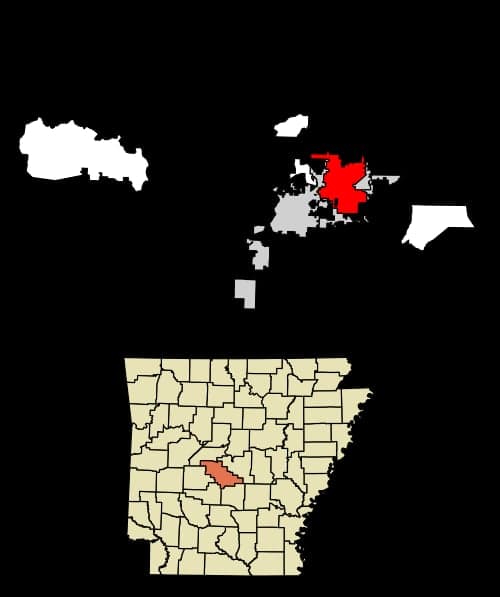
Bryant, Arkansas, is a rapidly growing suburban city of 21,125 residents that has transformed from a quiet railroad stop into a family-oriented bedroom community for the Little Rock metro area. The population is predominantly White (73.2%) with a significant Black minority (13.1%) and a growing Hispanic community (7.4%), creating a demographic profile that is more diverse than surrounding Saline County but still less diverse than Little Rock itself. The city’s identity is shaped by its strong public schools, low crime rates, and a conservative-leaning political culture that attracts families seeking a safe, affordable alternative to urban life. With only 1.5% foreign-born residents, Bryant remains overwhelmingly native-born, though its ethnic composition is slowly shifting as new domestic migrants arrive from other parts of Arkansas and the South.
How the city was settled and grew
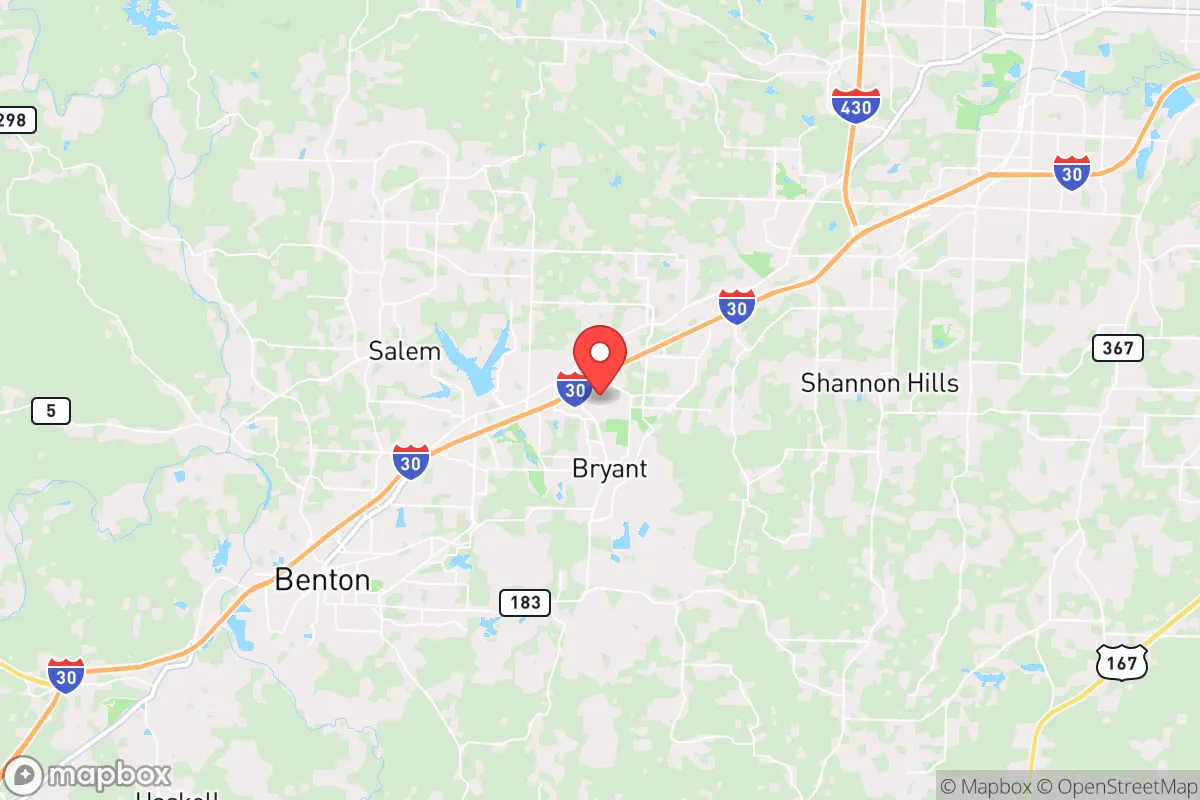
Bryant’s origins trace to the late 19th century as a stop on the Cairo and Fulton Railroad, later part of the Missouri Pacific line. The original settlers were mostly White farmers and railroad workers from the Ozarks and adjacent Arkansas counties, drawn by cheap land and the promise of rail access to markets. The historic downtown Bryant district along Reynolds Road was the original commercial and residential core, where these early families built modest wood-frame homes and small businesses. A second wave arrived during the 1940s and 1950s, when the nearby Alcoa aluminum plant in Bauxite and the Little Rock Air Force Base in Jacksonville created steady industrial and military jobs. These workers settled in the Springhill Road corridor, an area of mid-century ranch homes and small subdivisions that still retains a working-class character. The city remained a small, predominantly White farming and railroad community through the 1960s, with a population under 2,000 and little ethnic diversity.
Modern era (post-1965)
Bryant’s explosive growth began in the 1970s and accelerated through the 1990s as the Little Rock metropolitan area expanded southward across the Arkansas River. The construction of Interstate 30 and the opening of the Bishop Park and Hill Farm subdivisions in the 1980s and 1990s drew middle-class White families from Little Rock seeking newer, larger homes and the highly rated Bryant School District. This wave of domestic in-migration—primarily from within Arkansas and neighboring states—drove the population from roughly 3,000 in 1980 to over 16,000 by 2010. The Black population began to grow during this period, rising from a negligible share to 13.1% today, concentrated in the Woodland Hills and Shady Grove neighborhoods near the city’s southern edge. Hispanic residents, now 7.4% of the population, began arriving in the 2000s, drawn by construction and service-sector jobs; they are most visible in the Alcoa Road area, where several Hispanic-owned businesses and a Catholic mission church serve the community. The East/Southeast Asian population (0.9%) and Indian-subcontinent population (0.8%) remain small but have grown slightly, with families settling in newer subdivisions like Stonebridge and Lakewood near the high school.
The future
Bryant’s population trajectory points toward continued growth and gradual diversification, though the city is likely to remain a predominantly White, native-born suburb for the foreseeable future. The Hispanic share is the fastest-growing segment, projected to reach 10-12% by 2035 as families follow construction and service jobs and as second-generation residents have children. The Black population appears stable at around 13%, with little new in-migration from outside the region. The Asian and Indian populations are growing slowly but remain small, concentrated among professionals in healthcare and technology who commute to Little Rock. The city is not tribalizing into distinct ethnic enclaves—neighborhoods remain largely integrated by income rather than ethnicity—but the Alcoa Road corridor is emerging as a de facto Hispanic commercial district. The most significant demographic trend is the continued influx of White families from Little Rock and other parts of Arkansas, drawn by the school district and lower crime rates, which reinforces the city’s suburban, family-oriented character.
For a conservative-leaning family or individual considering relocation, Bryant offers a stable, growing community where the population is overwhelmingly native-born, English-speaking, and family-focused. The city is becoming slightly more diverse but not dramatically so, and its political and cultural character remains conservative and suburban. The key trade-off is between the safety and school quality of a growing suburb and the limited ethnic and cultural diversity that comes with a 1.5% foreign-born population. Bryant is not becoming a melting pot—it is becoming a larger, more prosperous version of its 1990s self, with modest Hispanic growth as the main demographic change on the horizon.

* Values derived from national, state, county, city and local statistics and may differ in a specific area. Last updated: 2026-04-30T07:21:29.000Z
Narrative content on this page is AI-generated and may contain mistakes. Verify any details that matter before acting on them.
ReloMaps may earn a commission from affiliate links at no extra cost to you.

