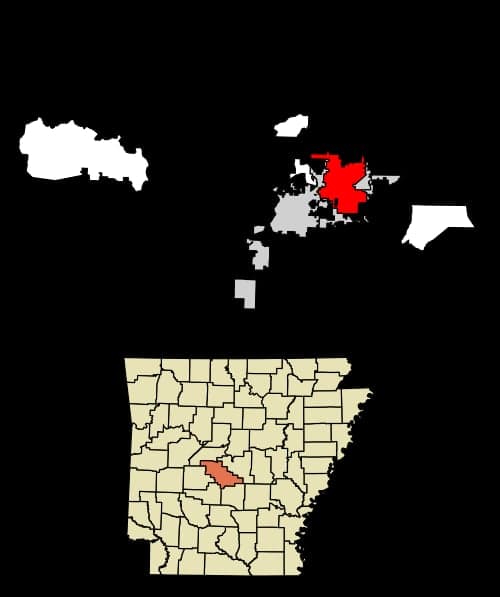
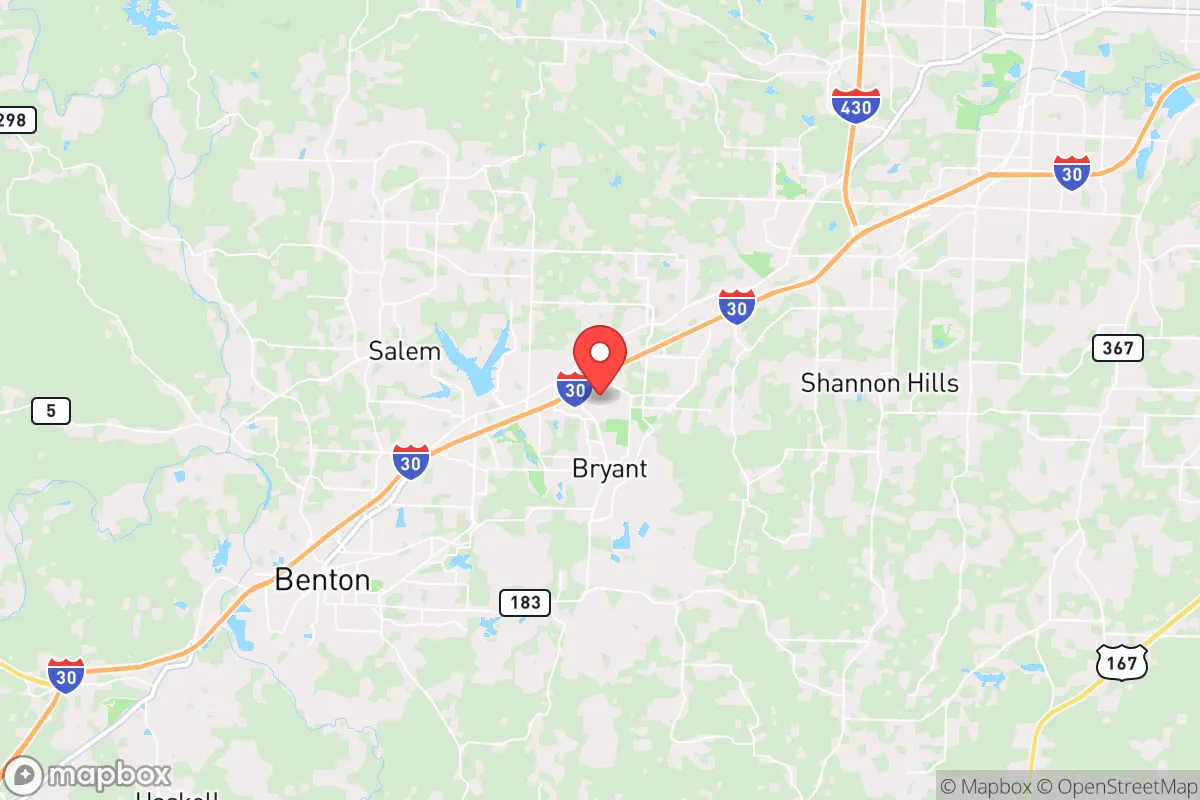
Photo: Wikipedia
Political ClimatePolitical Climate in Bryant, AR
District shown is the primary district for this city’s centroid. Cities may span multiple districts.
Local Political AnalysisPolitical Analysis of Bryant, AR
Bryant, Arkansas, is about as solidly conservative as it gets, and that’s not changing anytime soon. The Cook PVI of R+8 tells you the baseline, but living here, you feel it in the everyday—folks around here still believe in personal responsibility, limited government, and the Second Amendment. We’ve seen a few waves of new folks moving in from places like Little Rock and even out-of-state, but the core values haven’t budged. If anything, the growth has reinforced the local commitment to keeping government out of our lives, especially on things like property rights and school choice.
How it compares
Drive 15 minutes north into Little Rock, and you’re in a different world—Pulaski County leans left, with a Cook PVI of D+9. That contrast is stark. Bryant, part of Saline County, has stayed reliably red even as the metro area has grown. Surrounding towns like Benton and Alexander share our conservative lean, but Bryant has become a bit of a magnet for families who want good schools without the urban politics. We’ve watched Little Rock’s city council push progressive policies on zoning and policing, and it’s made a lot of us grateful for our local leadership that still respects the idea that you know what’s best for your own home and business.
What this means for residents
For someone moving here, the political climate means you won’t see the kind of government overreach that’s creeping into other parts of the country. Our city council and school board meetings aren’t dominated by debates over critical race theory or mask mandates—those fights have largely been shut down before they could take root. Property taxes are reasonable, and there’s no talk of implementing a city income tax or heavy-handed land-use regulations. The local police department focuses on community safety without the defund rhetoric you hear elsewhere. That said, we’re not naive—some of the newer subdivisions have brought in folks who vote more moderately, and there’s been a quiet push for more “diversity initiatives” in the schools. Most of us see that as a slippery slope toward the kind of progressive ideology that erodes local control and parental rights. So far, the old guard has held the line, but it’s something to keep an eye on.
One cultural distinction that stands out is how deeply the local church community is woven into civic life. You’ll see pastors at city council meetings, and the school board often opens with a prayer. That’s not something you find in every suburb anymore. For a long-time resident like me, that’s a comfort—it means the community still operates on a shared moral framework. But if you’re coming from a place where that kind of thing makes you uneasy, just know it’s part of the deal here. The trajectory I see is more of the same: steady growth, but a fierce resistance to any outside pressure to change what works. We’re not a flashy town, but we’re free, and that’s worth more than any progressive promise.

State Political ClimatePolitical Climate in Arkansas
State Political AnalysisPolitical Environment in the State
Arkansas has been a reliably red state for decades, but the political climate here is more layered than a simple "Republican" label suggests. The state leans solidly Republican in presidential elections — Donald Trump won it by over 27 points in 2024 — but the real story is a slow, steady shift from a moderate, Democrat-heavy past to a deeply conservative present, driven largely by the northwest corner of the state and a rural-urban divide that’s sharper than ever. If you’re moving here for freedom from government overreach, you’ll find a state that’s largely on your side, but with some notable exceptions in the cities and a few policy areas that still feel stuck in the past.
Urban vs. rural divide
The political map of Arkansas is a tale of two regions. The northwest corridor — Fayetteville, Springdale, Rogers, and Bentonville — is the economic engine and the most reliably Republican area in the state. This is Walmart country, and the corporate culture, combined with a heavy influx of out-of-state transplants (many from California and Texas), has created a conservative stronghold that’s also increasingly educated and affluent. In contrast, Little Rock and its suburbs like West Little Rock and Maumelle are the state’s only real blue dot, with Pulaski County voting for Joe Biden in 2020 and Kamala Harris in 2024 by about 15 points. The rest of the state — the Delta counties like Lee and Phillips, the Ouachita Mountains, and the southern timberlands — are deeply red, but with a populist, anti-establishment streak that sometimes clashes with the more corporate conservatism of the northwest. The rural areas are where you’ll find the strongest support for gun rights, school choice, and local control, and they’re also where the old Democratic legacy still lingers in local offices, though that’s fading fast.
Policy environment
Arkansas’s policy environment is a mixed bag for a conservative relocating here. On the plus side, the state has a flat income tax of 4.4% (down from 7% a decade ago), no estate tax, and a sales tax that averages around 9.5% but is lower in rural areas. The regulatory posture is generally light — no state-level occupational licensing for many trades, and a right-to-work law that keeps unions weak. Education policy is a bright spot: the state has a robust school choice program, including the Arkansas LEARNS Act of 2023, which created universal Education Savings Accounts (ESAs) worth about $6,600 per student, usable for private school, homeschooling, or tutoring. That’s a big win for parental rights. On the downside, healthcare is a mess — the state expanded Medicaid under Obamacare (the “Arkansas Works” program), and while that’s helped rural hospitals, it’s also created a dependency that some conservatives find troubling. Election laws are solid: voter ID is required, and the state has no-excuse absentee voting, but it’s not as restrictive as some other red states. The Arkansas Voter ID Act of 2013 was strengthened in 2021, and there’s no widespread concern about election integrity here — the system is trusted by both parties.
Trajectory & freedom
Arkansas is becoming more free in many areas, but the trajectory isn’t a straight line. The biggest expansion of personal liberty came with the Arkansas LEARNS Act, which effectively ended the government monopoly on education and gave parents real control. On gun rights, the state is a constitutional carry state since 2021 (Act 777), meaning no permit is needed to carry a concealed firearm. That’s a clear win. On medical autonomy, the state passed the Arkansas Medical Marijuana Amendment in 2016, but it’s a tightly controlled program — no home grow, no smokable flower for a while, and a limited number of dispensaries. It’s not the free market approach some want. On property rights, the state has strong protections against eminent domain abuse, but there’s been a recent push for more local control over zoning, which is a mixed bag. The concerning trend is the Arkansas Abortion Amendment of 2024, which voters rejected — that’s a win for life, but the state’s near-total ban (with exceptions for rape, incest, and life of the mother) is still being litigated, and the federal courts could override it. Overall, the state is trending toward more personal freedom, but the pace is slower than some would like, especially on economic liberty and healthcare choice.
Civil unrest & political movements
Arkansas isn’t a hotbed of civil unrest, but there have been flashpoints. The Black Lives Matter protests in Little Rock in 2020 were relatively small and peaceful compared to other cities, but they did lead to some property damage and a lingering tension between city leaders and state law enforcement. The Confederate monument controversy in the state capitol grounds — a statue of a Confederate soldier — was removed in 2020 after a court battle, but the issue still divides locals. On the right, the Arkansas Sovereignty Act (a nullification bill) has been introduced multiple times but never passed, though the sentiment is strong in rural areas. Immigration politics are relatively quiet — the state has a small immigrant population, and there’s no sanctuary city policy anywhere. The biggest political movement in recent years has been the parental rights movement, which successfully pushed for the LEARNS Act and the Arkansas Save Adolescents From Experimentation (SAFE) Act of 2021, which bans gender transition procedures for minors. That’s a clear win for traditional values. Election integrity controversies are minimal — the 2020 and 2024 elections were smooth, and there’s no widespread distrust of the system here.
Projection
Over the next 5-10 years, Arkansas is likely to become more conservative, but also more polarized. The northwest corridor will continue to grow, attracting more conservative-leaning transplants from high-tax states, which will deepen the red tilt. But that growth also brings more diversity and a younger, more educated population that may push for more moderate policies on issues like marijuana legalization (full recreational use is likely on the ballot soon) and criminal justice reform. The rural areas will continue to lose population, which could weaken their political influence over time. The biggest wildcard is the Democratic shift in the Delta — those counties are becoming more black and more Democratic, but they’re also shrinking. Expect the state to remain solidly red in presidential elections, but with more competitive races for governor and legislature as the urban-rural divide widens. A new resident moving in now should expect a state that’s generally friendly to conservative values, but with a growing tension between the corporate, suburban conservatism of the northwest and the populist, rural conservatism of the rest of the state.
Bottom line for a new resident: Arkansas is a good bet if you value low taxes, gun rights, and school choice, but don’t expect a libertarian paradise. The state government is still active in healthcare and education, and the cities — especially Little Rock — have a more progressive vibe that can feel out of step with the rest of the state. If you’re moving here for freedom, focus on the northwest or the rural areas, and keep an eye on the legislature for any new overreach. The state is trending in the right direction, but it’s a slow, steady march, not a revolution.
* Values derived from national, state, county, city and local statistics and may differ in a specific area. Last updated: 2026-04-30T07:21:29.000Z
Narrative content on this page is AI-generated and may contain mistakes. Verify any details that matter before acting on them.
ReloMaps may earn a commission from affiliate links at no extra cost to you.

