
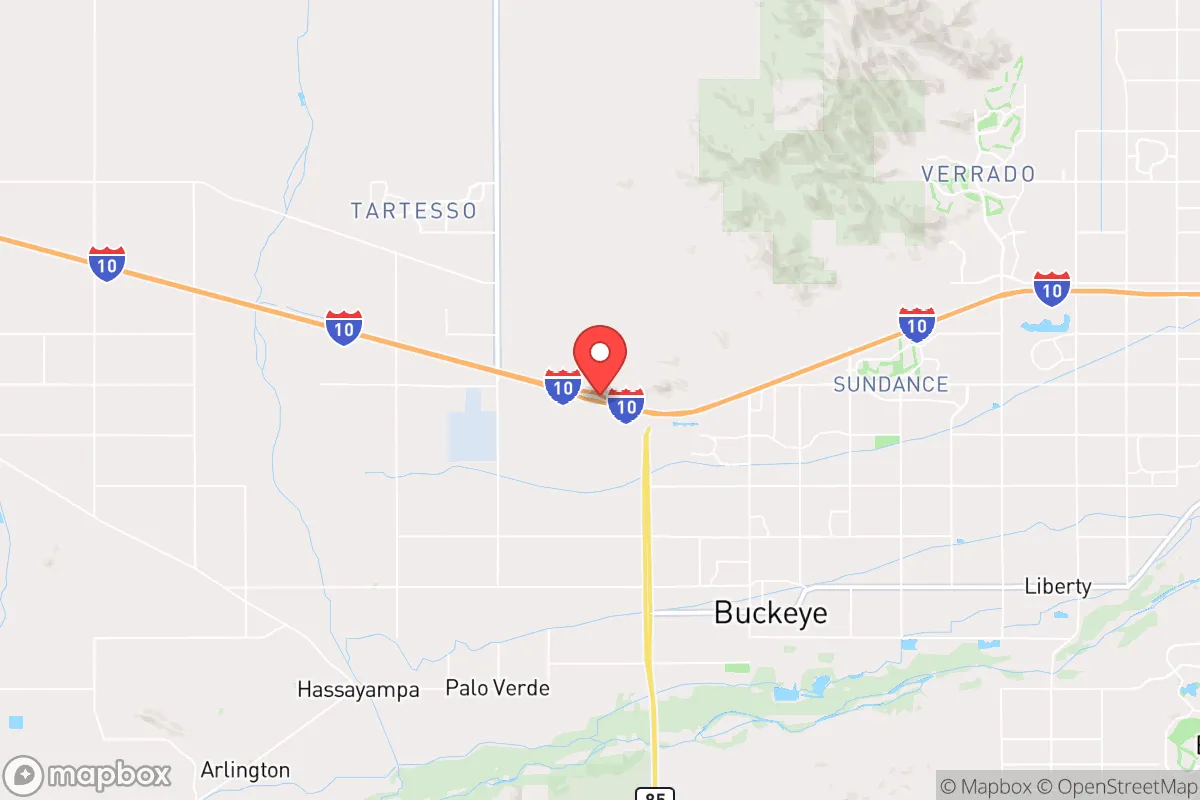
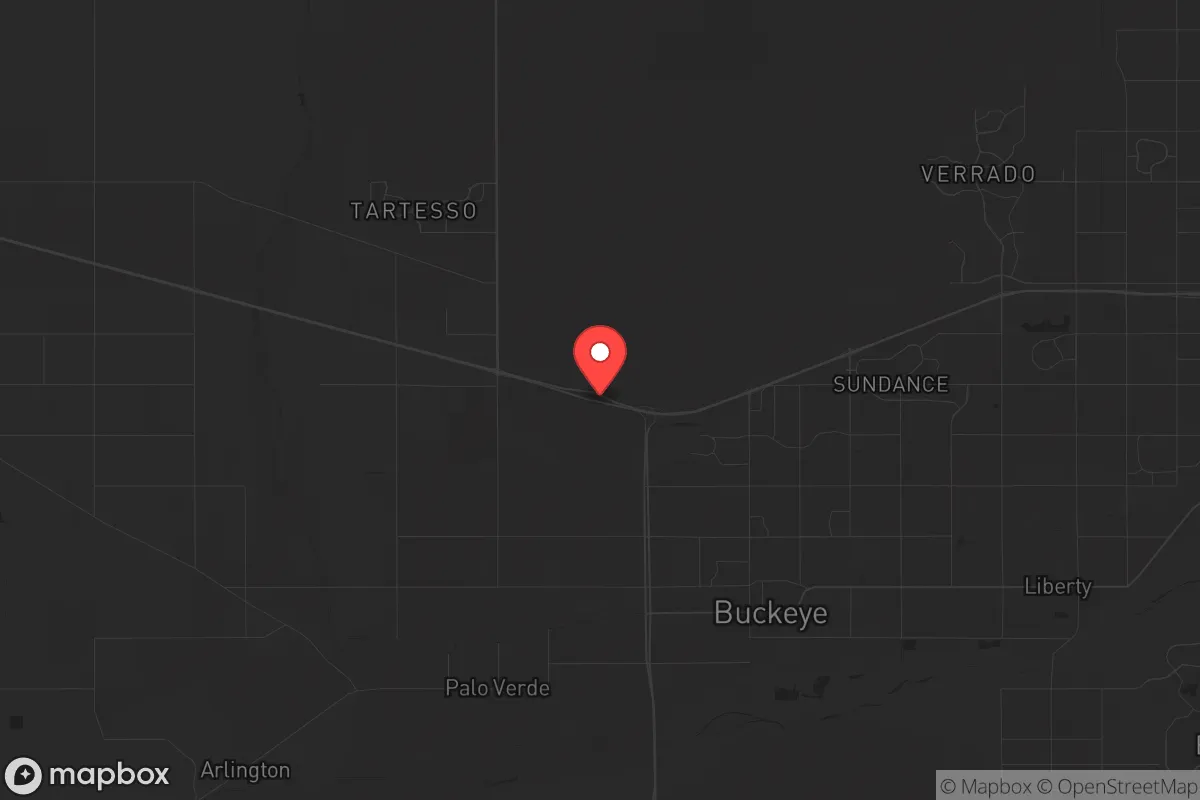
Photo by Emily Whitten on Unsplash
Demographics of Buckeye, AZ
Affluence Level in Buckeye, AZ
A middle-class area roughly in line with national averages across income, home values, education, and employment.
People of Buckeye, AZ
The people of Buckeye, Arizona, today number roughly 99,844, forming a rapidly growing, majority-minority city where White (44.5%) and Hispanic (43.0%) populations are nearly equal in size, with a small but notable Black community (6.4%) and a modest East/Southeast Asian presence (1.4%). The city is characterized by a young, family-oriented demographic—only 24.1% of adults hold a college degree—and a distinctly suburban, conservative-leaning identity rooted in its agricultural past and recent master-planned expansion. Buckeye’s population is one of the fastest-growing in the Phoenix metro, driven by affordable housing and large-scale developments that are reshaping its historic small-town character.
How the city was settled and grew
Buckeye was founded in 1888 as a farming community along the Gila River, named after the buckeye tree. The original population was a mix of Anglo-American homesteaders drawn by the 1862 Homestead Act and Mexican laborers who built the irrigation canals that made cotton, alfalfa, and citrus farming viable. The historic Downtown Buckeye area, centered on Monroe Avenue, became the commercial and social hub for these early settlers, with Anglo farmers owning the land and Mexican families forming the workforce in adjacent barrios like Old Town Buckeye (the area roughly bounded by 1st and 3rd Streets). By the 1920s, the railroad arrived, cementing Buckeye as a shipping point for agricultural goods and attracting a small Black population—mostly railroad workers and farmhands—who settled in the South Buckeye corridor near the tracks. Through the mid-20th century, the city remained a small, insular farming town of fewer than 5,000 residents, with little in-migration beyond seasonal farm labor.
Modern era (post-1965)
The 1965 Immigration and Nationality Act had a limited direct effect on Buckeye, as the city remained rural and agricultural through the 1980s. The real demographic shift began in the 1990s and accelerated after 2000, when Phoenix’s suburban sprawl reached Buckeye. Master-planned communities like Verrado (opened 2004) and Sundance (opened 2006) drew White, middle-class families from California and other states seeking cheaper housing and larger lots, dramatically increasing the White population share. Meanwhile, the Hispanic population grew through both domestic migration from other Arizona towns and continued immigration from Mexico, concentrating in older neighborhoods like West Buckeye (west of the railroad tracks) and the Belen area near the Gila River. The Black population, while small, has grown steadily since 2010, drawn by affordable housing in newer subdivisions like Sun City Festival (a 55+ community) and the Tartesso master plan. The East/Southeast Asian population (1.4%) is a very recent arrival, mostly professionals and small-business owners settling in Verrado and Sundance. The Indian-subcontinent population remains negligible at 0.1%.
The future
Buckeye’s population is projected to exceed 150,000 by 2035, driven by continued master-planned development and annexation of unincorporated land. The city is not homogenizing but rather tribalizing into distinct enclaves: Verrado and Sundance will remain predominantly White and affluent; West Buckeye and Belen will stay heavily Hispanic and working-class; and newer developments like Douglas Ranch (a 37,000-home planned community approved in 2021) will likely attract a mixed demographic of young families, including a growing share of Black and East/Southeast Asian residents. The foreign-born share (5.4%) is low relative to the state average (8.4%) and is plateauing, as most Hispanic growth now comes from U.S.-born children of earlier immigrants. The college-educated share (24.1%) will rise slowly as more professionals move into the master-planned areas, but Buckeye will remain a predominantly blue-collar, family-oriented suburb for the foreseeable future.
For someone moving in now, Buckeye is becoming a sprawling, economically diverse city where your experience will depend heavily on which neighborhood you choose. The historic agricultural identity is fading, replaced by a patchwork of planned communities and older barrios that remain socially distinct. It is a place of rapid growth and modest opportunity, best suited for those seeking affordable housing and a conservative, family-centric lifestyle rather than urban amenities or high educational attainment.

* Values derived from national, state, county, city and local statistics and may differ in a specific area. Last updated: 2026-05-04T00:16:11.000Z
Narrative content on this page is AI-generated and may contain mistakes. Verify any details that matter before acting on them.
ReloMaps may earn a commission from affiliate links at no extra cost to you.

