
Photo by Emily Whitten on Unsplash
Political ClimatePolitical Climate in Buckeye, AZ
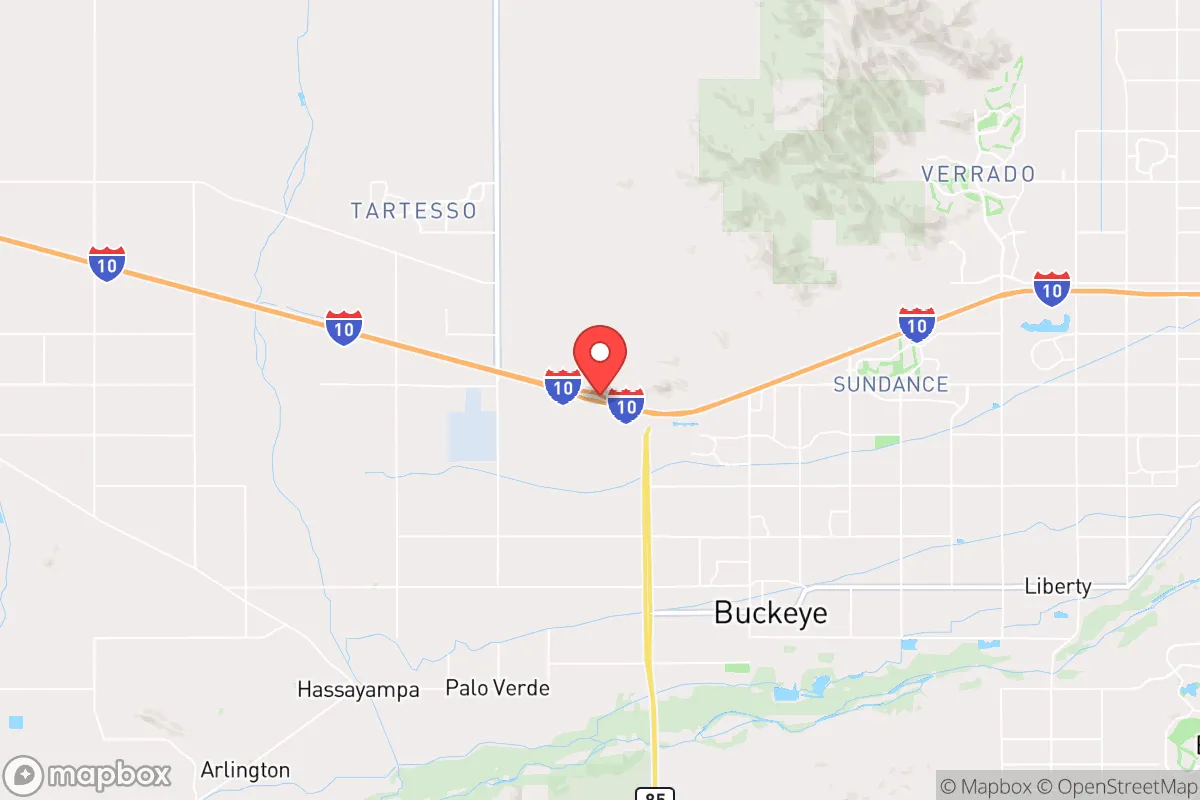
District shown is the primary district for this city’s centroid. Cities may span multiple districts.
Local Political AnalysisPolitical Analysis of Buckeye, AZ
Buckeye, Arizona, is about as solidly conservative as it gets in the Grand Canyon State, with a Cook Partisan Voting Index of R+15. That’s not just a number on a map—it’s a reflection of a community that has long valued limited government, personal responsibility, and the right to live life without a bunch of bureaucratic red tape. While the rest of Maricopa County has seen some purple creep in recent years, Buckeye has held the line, and if anything, the political trajectory here is still leaning right. You see it in local elections, in the school board races, and in the way folks talk about property rights and taxes. It’s a place where the old-school Arizona spirit—the one that says “leave me alone and let me work”—still has a strong pulse.
How it compares
Now, compare that to the state of Arizona as a whole, which sits at a Cook PVI of EVEN. That’s a world of difference. The state has become a battleground, swinging back and forth like a screen door in a dust storm. Maricopa County as a whole is trending more moderate, and places like Phoenix, Tempe, and even parts of Mesa have shifted noticeably left on issues like taxes, zoning, and public spending. Buckeye, though? It’s a different animal. Drive out here from the city, and you’ll feel the change in the air. Neighboring towns like Goodyear and Avondale have seen more of that suburban shift, but Buckeye has stayed closer to its roots. The contrast is stark: while the state legislature in Phoenix debates things like expanding government healthcare or loosening land-use restrictions, Buckeye’s local council is still focused on keeping the bureaucracy out of your garage and your backyard. It’s one of the few places left in the Valley where you can still feel like the government trusts you to make your own decisions.
What this means for residents
For the folks living here, this political climate means a few concrete things. First, property rights are taken seriously. You’re not going to get a bunch of overreaching HOA-style rules from the county telling you what color you can paint your fence or how many vehicles you can park on your own land. Second, taxes stay relatively low compared to the rest of the Phoenix metro area. Buckeye doesn’t have the appetite for the kind of bond measures and spending increases you see in Scottsdale or Chandler. Third, school choice is a given. The local charter and private school options are strong, and there’s no push to centralize everything under a single district that answers to the state. You get to decide what’s best for your kids, not a committee in Phoenix. That’s a big deal, and it’s something that’s under constant threat in more progressive parts of the state.
There’s also a cultural distinction here that’s hard to put a number on. Buckeye still has that small-town, rural feel where neighbors know each other and the local feed store is as busy as the grocery store. You don’t see the same kind of activist energy you’d find in Tucson or Flagstaff. There’s no push for “equity” zoning or new taxes on everything that moves. Instead, you get a community that’s focused on keeping the government out of your life and letting you build what you want, how you want. That said, keep an eye on the growth. As more people move out from the city, there’s always a risk that some of that progressive ideology follows them. For now, though, Buckeye remains a stronghold for anyone who values freedom over being managed. It’s the kind of place where you can still breathe easy, and that’s getting harder to find in Arizona.

State Political ClimatePolitical Climate in Arizona
State Political AnalysisPolitical Environment in the State
Arizona is a political battleground state with a Cook PVI of EVEN, meaning it is perfectly split between the two major parties after decades of reliable Republican control. The state has shifted from a solid red stronghold in the 1990s and 2000s to a true swing state over the last 10-15 years, driven primarily by explosive growth in Maricopa County (Phoenix metro) and an influx of voters from blue states like California and Illinois. While the GOP still holds a registration edge and controls the governorship and legislature as of 2026, the margins have narrowed dramatically, and Democrats have won the presidential vote in 2020 and 2024 by razor-thin margins, making Arizona one of the most closely watched states in the country.
Urban vs. rural divide
The political map of Arizona is a classic story of urban vs. rural, but with a twist: the urban core itself is deeply divided. Maricopa County, home to Phoenix, Mesa, Chandler, and Scottsdale, contains roughly 60% of the state's population and has flipped from reliably red to a purple battleground. The city of Phoenix leans Democratic, while its sprawling suburbs like Gilbert and Queen Creek remain conservative strongholds. Tucson (Pima County) is the other major Democratic anchor, consistently voting blue by double digits. In contrast, the vast rural counties—Yavapai (Prescott), Mohave (Lake Havasu City), and Cochise (Sierra Vista)—vote Republican by 30-40 point margins. The swing counties that decide elections are Pinal County (between Phoenix and Tucson), which has trended right but is growing fast with new subdivisions, and Yuma County, a border region with a large Hispanic population that has moved toward Democrats in recent cycles. The urban-rural split is stark: drive 30 minutes outside any metro area, and you'll find Trump flags, open carry, and a very different political culture.
Policy environment
Arizona's policy environment is a mixed bag for conservatives. On the plus side, the state has a flat income tax rate of 2.5% (passed in 2021 under Governor Doug Ducey), which is among the lowest in the nation. Property taxes are also relatively low, and there is no estate tax. The legislature is Republican-controlled and has passed school choice expansion (Empowerment Scholarship Accounts) that lets parents use public funds for private or homeschool expenses—a major win for parental rights. However, the state also has a robust citizen initiative process, which has led to progressive policies that the legislature would never pass, including Medicaid expansion (2013), recreational marijuana legalization (2020), and a minimum wage hike to over $14/hour. Election laws have been a flashpoint: the 2021 audit of Maricopa County ballots (the "Cyber Ninjas" audit) was a national story, and the legislature has since passed voter ID requirements and restrictions on mail-in ballot drop boxes. Education policy is a battleground: the state has seen teacher walkouts (2018) and ongoing fights over CRT and library books, with the legislature passing a law banning "divisive concepts" in schools. Healthcare is largely market-driven, but the state did expand Medicaid under the Affordable Care Act, which remains controversial among conservatives.
Trajectory & freedom
The trajectory of freedom in Arizona is a tug-of-war. On one hand, the state has expanded Second Amendment rights significantly: constitutional carry (permitless carry) was signed into law in 2024, and there are no magazine capacity limits or "assault weapon" bans. Parental rights were strengthened with the 2022 law requiring schools to notify parents if their child requests a name or pronoun change, and the Empowerment Scholarship Accounts give families real educational choice. Property rights are generally strong, with no statewide rent control and relatively light zoning in rural areas. On the other hand, medical autonomy took a hit during COVID: Governor Ducey imposed lockdowns and mask mandates in 2020, though he later reversed course and banned vaccine passports. The state also has a strict "sanctuary cities" ban (SB 1070 legacy), but local governments in Tucson and Phoenix have passed "welcoming city" ordinances that limit cooperation with ICE. The biggest freedom concern for conservatives is the citizen initiative process, which allows out-of-state money to bypass the legislature and impose progressive policies like higher taxes and expanded government healthcare. Recent efforts to make it harder to amend the state constitution via initiative have failed, meaning this threat remains.
Civil unrest & political movements
Arizona has been a hotbed of political activism on both sides. The 2020 election audit in Maricopa County drew national attention and energized the election integrity movement, with ongoing lawsuits and legislative battles over voting machines and ballot security. Immigration is the most visible flashpoint: the border crisis is a daily reality in Cochise and Santa Cruz counties, with ranchers reporting constant crossings and the state sending National Guard troops to the border. Governor Katie Hobbs (a Democrat) has taken a more moderate stance than her predecessor, but the legislature has passed bills to fund border security operations. Protest activity has been intense: the 2020 George Floyd protests in Phoenix turned violent, with looting and fires, and the "Stop the Steal" movement held massive rallies at the state capitol in 2020-2021. On the left, groups like LUCHA (Living United for Change in Arizona) organize for driver's licenses for illegal immigrants and higher minimum wages. On the right, the Arizona Freedom Caucus is a powerful force in the legislature, pushing for election integrity, border security, and school choice. A new resident will notice the ubiquitous political signage along major roads, the heated letters to the editor in local papers, and the fact that almost everyone has a strong opinion on the border.
Projection
Over the next 5-10 years, Arizona is likely to remain a swing state, but the trend lines are concerning for conservatives. In-migration from California is the wild card: many of these newcomers are fleeing high taxes and crime, but they also bring voting habits that lean Democratic, especially on social issues. The Hispanic population, which is about 30% of the state, is growing and trending more Democratic, though not uniformly—many Hispanic voters in rural areas and among small business owners are socially conservative. The suburbs of Phoenix are the key battleground: places like Chandler, Gilbert, and Peoria are growing fast with young families who care about schools and housing costs. If Republicans can keep these voters focused on economic freedom and parental rights, they can hold the line. If the national Democratic brand moderates on immigration and crime, Arizona could flip permanently blue. The citizen initiative process will be a major battleground: expect attempts to raise taxes, expand Medicaid further, and impose rent control. A new resident should expect the political climate to remain highly competitive, with constant campaigning, close elections, and a polarized media environment.
For a conservative moving to Arizona, the bottom line is this: you are moving to a state where your vote matters, where the culture is still more free-market and individualistic than most of the country, but where the political future is uncertain. You'll find like-minded communities in the suburbs and rural areas, but you'll also encounter progressive activism in the cities and a constant battle over the direction of the state. The policy wins on taxes, school choice, and gun rights are real and worth protecting, but they are not guaranteed to last. If you value low taxes, strong Second Amendment protections, and a state that still respects local control, Arizona is a good bet—but you'll need to stay engaged in the fight to keep it that way.
* Values derived from national, state, county, city and local statistics and may differ in a specific area. Last updated: 2026-05-04T00:16:11.000Z
Narrative content on this page is AI-generated and may contain mistakes. Verify any details that matter before acting on them.
ReloMaps may earn a commission from affiliate links at no extra cost to you.

