Photo: Wikipedia
Personal Sovereignty in Burlington, NC
Viable for self-reliance. Generally workable, though some barriers may limit total independence.
What does Personal Sovereignty tell us?
Personal Sovereignty measures your capacity for self-reliance and independence with minimal government friction. Higher scores mean fewer barriers between you and the way you want to live... but it assumes you have the space you need and good neighbors.
What does this tell us?
Personal Sovereignty measures your capacity for self-reliance and independence with minimal government friction. Higher scores mean fewer barriers between you and the way you want to live... but it assumes you have the space you need and good neighbors.
State Policy
Energy independence: Importer (15% of energy produced in-state)
Personal Liberty
Homesteading

Personal Liberty Analysis
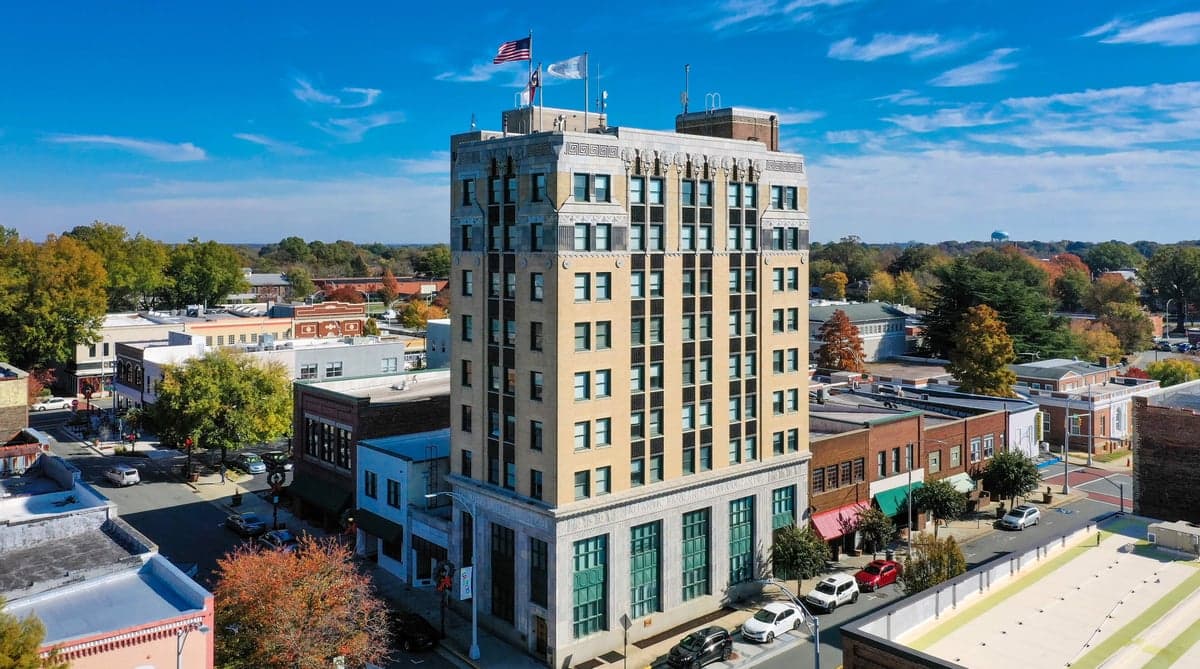
For the relocation researcher who values personal sovereignty above all else, Burlington, North Carolina offers a mixed but promising picture. Nestled in the heart of the Piedmont Triad, this mid-sized city of roughly 60,000 residents sits in a state that has moved decisively toward protecting individual rights in recent years, yet it remains subject to the creeping influence of federal and local overreach that defines the modern American landscape. The key question for the liberty-minded individual or family is whether Burlington provides enough breathing room to live free from excessive government intrusion, or whether the compromises of suburban life and state-level control outweigh the benefits. This analysis cuts through the marketing fluff to examine the real sovereignty environment—tax burden, self-defense laws, homesteading viability, and personal liberties—so you can decide if this Alamance County hub is a sanctuary or just another place to weather the storm.
Tax burden and regulatory posture: How much of your income and freedom does the state take?
North Carolina’s tax structure is a double-edged sword for the sovereignty-minded. On the positive side, the state has aggressively flattened its income tax, dropping to a flat 4.5% rate in 2025 with a path toward 3.99% by 2027—a clear win for those who want to keep more of what they earn. Property taxes in Burlington are relatively moderate, with Alamance County levying a rate of roughly $0.61 per $100 of assessed value, which is below the national average and significantly lower than neighboring Orange County (home to Chapel Hill). However, the state’s sales tax sits at 6.75% (including local add-ons), and there is no exemption for groceries, which hits families hard. The regulatory posture is where the picture dims: North Carolina maintains a robust state preemption law that prevents local governments from enacting their own gun control ordinances, a critical safeguard for Second Amendment advocates. But the state also imposes a privilege license tax on certain businesses, and Alamance County has its own set of zoning and building codes that can frustrate those looking to operate a home-based enterprise or modify property without permits. For the prepper, the lack of a state income tax on retirement income is a plus, but the overall regulatory burden is still heavier than in truly low-tax states like Tennessee or New Hampshire. Burlington itself is not a high-tax island, but it is not a tax haven either—expect to pay your fair share, with the state taking a notable cut of your labor.
Self-defense and gun law specifics: Can you legally defend your home and family without government permission?
North Carolina is a shall-issue state for concealed carry permits, meaning that if you meet the statutory requirements—including a background check and an 8-hour training course—the sheriff must issue the permit. This is a solid foundation for personal sovereignty, but it is not without bureaucratic friction. Burlington residents must apply through the Alamance County Sheriff’s Office, which has a reputation for processing permits within the 45-day statutory window, though delays are not unheard of. The state also has a stand-your-ground law with no duty to retreat, a critical protection for anyone who believes in the right to self-defense without being second-guessed by prosecutors. However, there are caveats: North Carolina does not recognize constitutional carry for residents (though it does for out-of-state visitors with permits from reciprocal states), meaning you must still pay the fee and take the class to carry concealed. Open carry is legal without a permit, but in practice, this can attract unwanted attention from law enforcement in more urban areas like Burlington. For the survivalist, the state’s firearm preemption law is a vital shield—Burlington cannot pass its own magazine bans or waiting periods, unlike cities in blue states. But the state does have a gun violence restraining order law (red flag law) on the books, which allows courts to temporarily seize firearms based on a complaint—a clear overreach that should concern anyone who values due process. Overall, Burlington offers a workable environment for the armed citizen, but the red flag law is a persistent threat that requires vigilance.
Self-reliance and homesteading viability: Lot sizes, zoning, and off-grid feasibility
For those looking to reduce dependence on the grid and government services, Burlington’s suburban character presents both opportunities and obstacles. Within the city limits, typical residential lot sizes range from 0.25 to 0.5 acres, which is enough for a substantial garden and perhaps a few chickens, but not for larger livestock or significant off-grid infrastructure. The city’s zoning code is fairly restrictive: raising pigs or goats is generally prohibited in residential zones, and even chickens are limited to a small number with a permit. Water rights are controlled by the city, and rainwater collection is legal but subject to state guidelines that limit its use for potable purposes. For the serious homesteader, the real opportunity lies in the unincorporated areas of Alamance County, just outside Burlington, where lot sizes of 1 to 5 acres are common and zoning is far more permissive. Here, you can install solar panels, dig a well, and build a root cellar without the city’s interference. The county does not have a building code for agricultural structures under a certain size, which is a boon for those who want to erect a workshop or storage shed without permits. However, the state’s connection to the electrical grid is effectively mandatory for new construction in most areas, as off-grid living is not explicitly recognized in the building code—a subtle but real infringement on autonomy. For the prepper, the best strategy is to buy land in the county’s rural pockets, where you can practice self-reliance with minimal oversight, while using Burlington as a supply hub for hardware, medical supplies, and bulk goods.
Personal liberties: Parental rights, medical autonomy, speech, and property
North Carolina has become a battleground for personal liberties, and Burlington sits in a county that leans conservative but is not immune to progressive pressure. On parental rights, the state has passed laws requiring parental consent for medical procedures on minors, including gender-related care, and has banned the teaching of certain concepts in public schools—a clear win for families who believe they, not the state, should guide their children’s upbringing. Alamance County schools are generally responsive to parental concerns, though the district is large and bureaucratic. Medical autonomy is a mixed bag: the state did not expand Medicaid under the Affordable Care Act until 2023, which limits options for low-income individuals, but it also has relatively loose licensing for alternative practitioners like naturopaths. The COVID-19 era saw significant government overreach in North Carolina, with mask mandates and business closures that were enforced in Burlington, and the state still has broad emergency powers that could be used again. Speech protections are strong under the state constitution, and Burlington has no local hate speech ordinances that could chill political expression. Property rights are generally respected, but the state’s eminent domain laws are broad, and Alamance County has used them for economic development projects in the past—a reminder that your land is never truly yours when the government wants it. For the liberty-minded, the key is to stay engaged with local politics and support candidates who prioritize individual rights over collective mandates.
In the broader landscape of American sovereignty, Burlington offers a workable but imperfect environment. It is not a free state like New Hampshire or Alaska, where the ethos of personal responsibility is baked into the culture and laws. But compared to the regulatory nightmares of the Northeast or West Coast, Burlington provides a relatively high degree of autonomy for those willing to navigate its quirks. The tax burden is moderate, the gun laws are protective (with one glaring exception), and the rural outskirts offer real potential for self-reliance. The threats are real—red flag laws, emergency powers, and zoning restrictions—but they are not insurmountable for the prepared individual. For the conservative-leaning prepper or survivalist, Burlington is a viable base of operations, provided you stay informed, stay armed, and stay ready to push back against the next wave of government overreach. It is not a sanctuary, but it is a place where a determined family can carve out a life of relative freedom—if they are willing to fight for it.

* Values derived from national, state, county, city and local statistics and may differ in a specific area. Last updated: 2026-09-21T19:02:19.000Z
Narrative content on this page is AI-generated and may contain mistakes. Verify any details that matter before acting on them.
ReloMaps may earn a commission from affiliate links at no extra cost to you.

