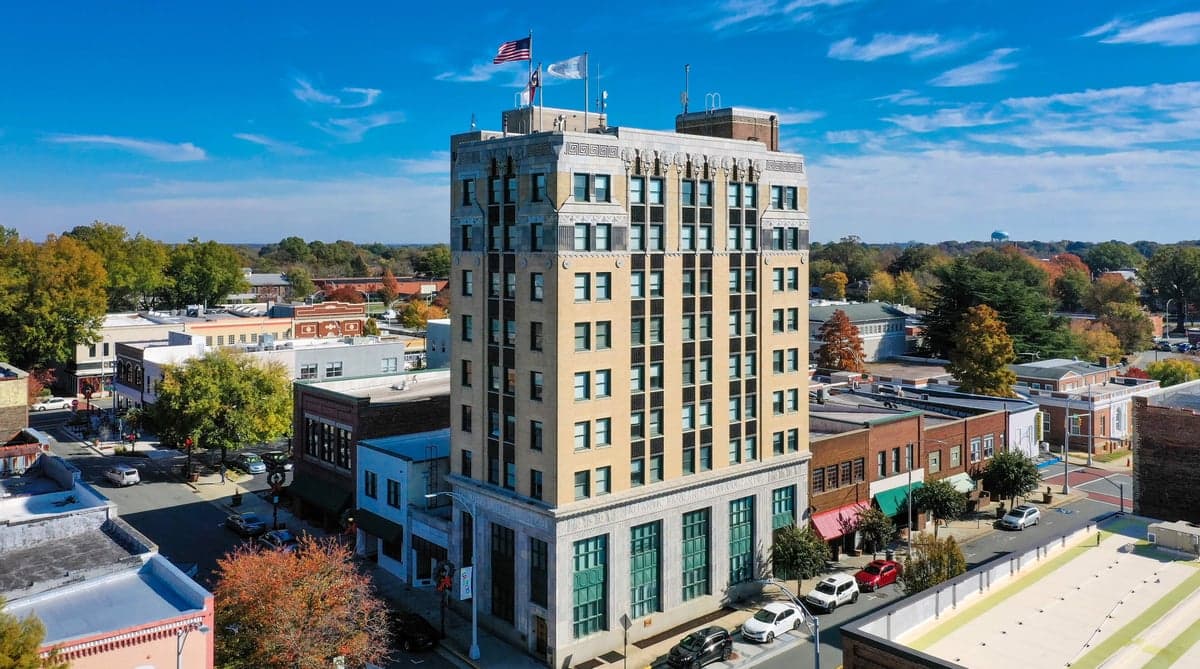
Photo: Wikipedia
Quality of Life in Burlington, NC
A high quality of life with strong walkability, manageable living costs, healthy neighborhood signals, and solid amenity access.
What does Quality of Life tell us?
Quality of Life blends cost of living, nearby amenities, socioeconomic signals, and neighborhood character. City-level scores represent the whole municipality; individual neighborhoods can differ.
What does this tell us?
Quality of Life blends cost of living, nearby amenities, socioeconomic signals, and neighborhood character. City-level scores represent the whole municipality; individual neighborhoods can differ.
Cost of Living
20% below national average
The Real Cost of Living in Burlington, NC for 2026
| Tier | Individual | Family (4) |
|---|---|---|
| Survival | $16k | $31k |
| Comfortable | $37k | $54k |
| Luxury | $99k+ | $154k+ |
| Elite (Top 5%) | $117k+ | $181k+ |
102%
The Area Signal
A metric tracking the socioeconomic signals of the area.
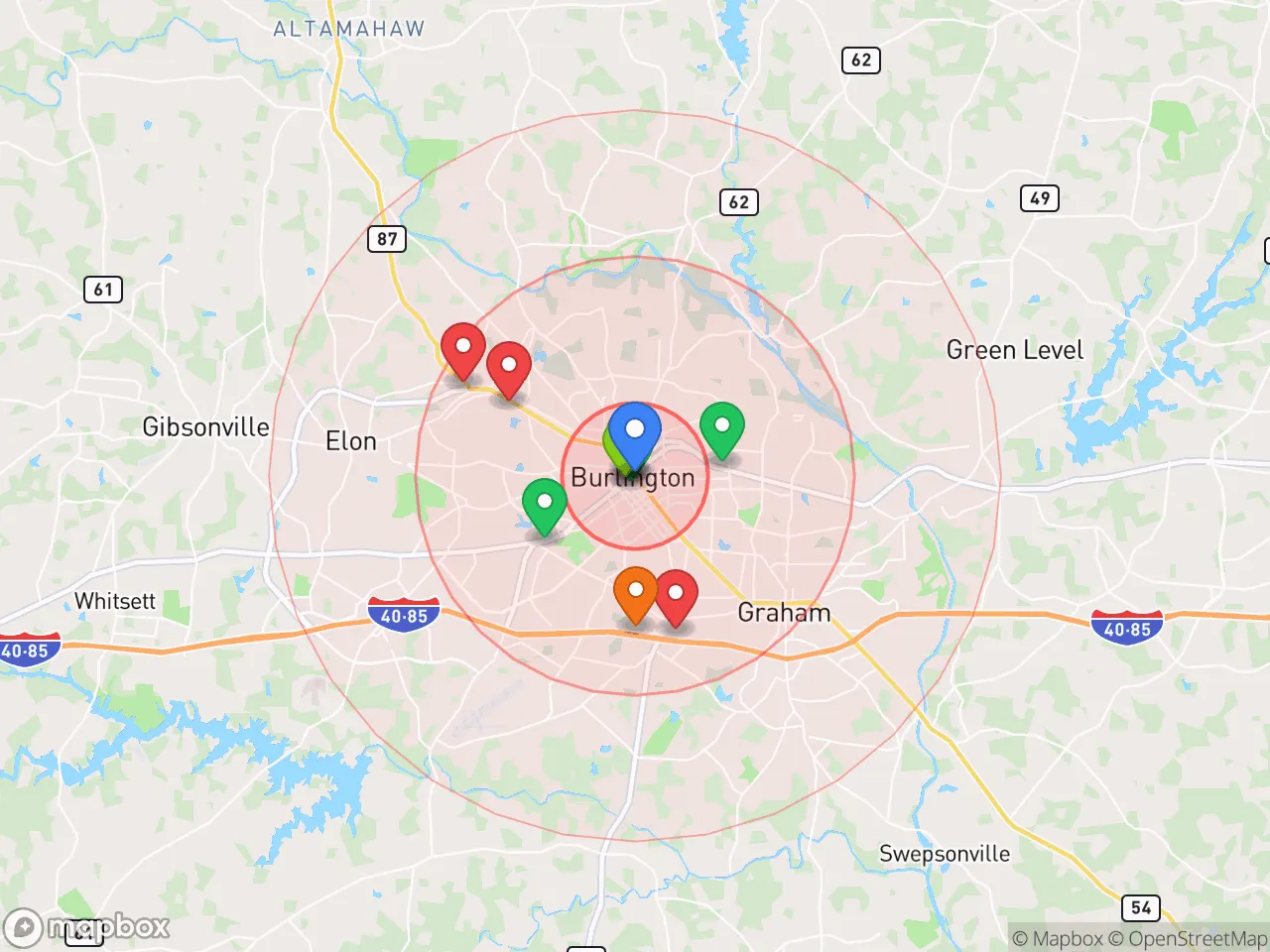
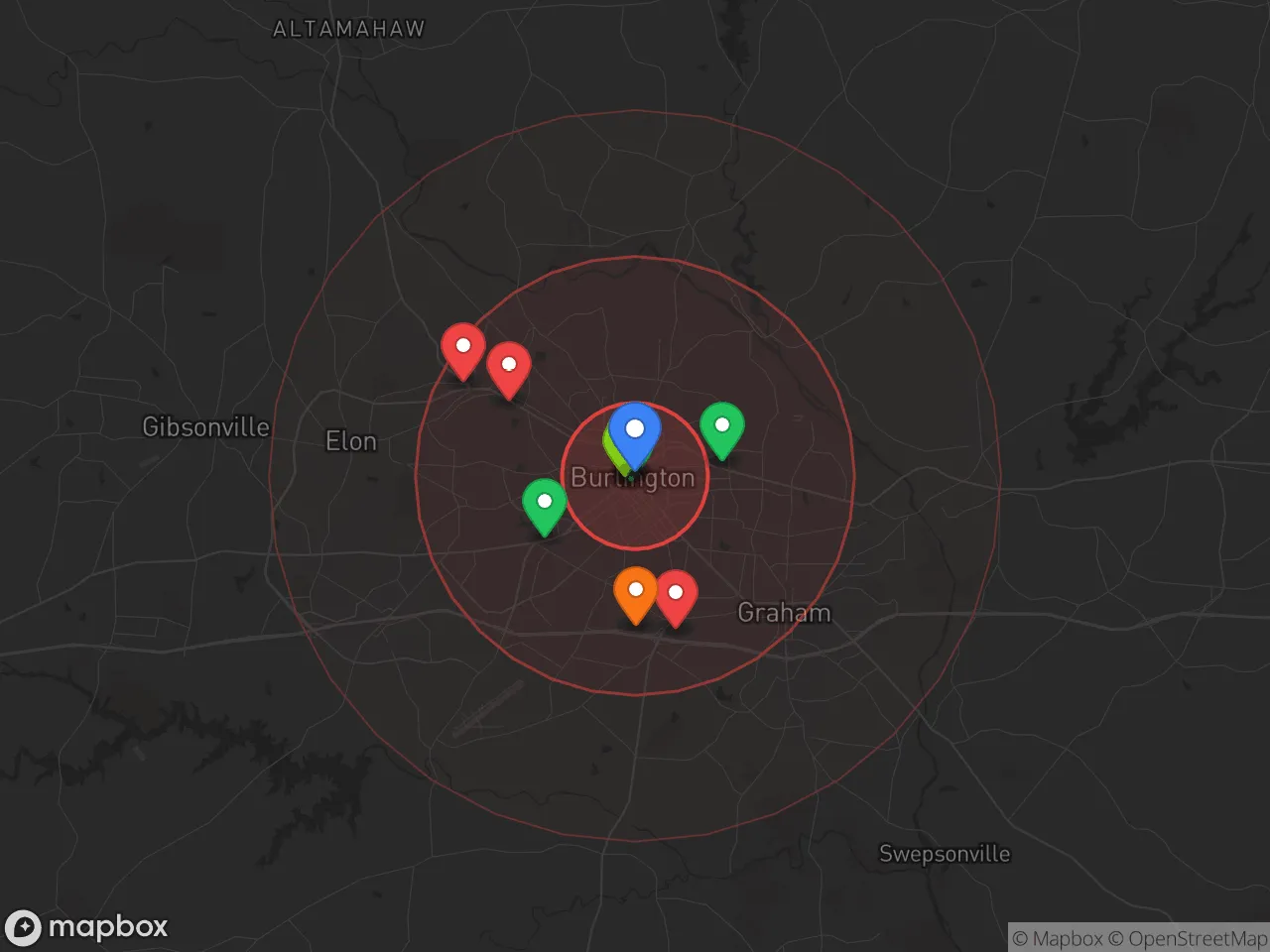
Hobbies
Explore the areaGroceries
7 within 10 miles
Gas
20 within 10 miles
Hospital
6 within 20 miles
Airport
RDU — Raleigh–Durham International
Post Office
USPS — Burlington, NC
Critical Amenities
Quality-of-Life Analysis
Burlington, North Carolina, offers a quality of life defined by its affordability and steady, middle-class character, with a cost of living index of 80—20% below the national average—that attracts families, early-career professionals, and retirees seeking value without sacrificing access to urban amenities. The city's median home value of $188,700 and median rent of $1,030 place it as a practical alternative to the pricier Research Triangle cities of Raleigh and Durham, which sit roughly 45 minutes to the east. Residents here tend to be a mix of long-time Alamance County locals and newcomers drawn by the balance of lower expenses and proximity to the Triad's job centers, creating a community that values practicality over pretense.
Cost of living, housing affordability, and how Burlington compares to nearby cities
Burlington's cost of living index of 80 makes it one of the more affordable options in the Piedmont Triad region, significantly undercutting the national benchmark of 100 and offering a stark contrast to the higher costs found in the Triangle. The median home value of $188,700 is roughly half that of Raleigh's median (around $400,000) and well below Durham's, allowing first-time buyers to enter the market with a conventional mortgage. Renters also benefit, with a median rent of $1,030—about 30% less than comparable units in Chapel Hill or Cary. While property taxes in Alamance County are moderate, the trade-off is a longer average commute of 24.3 minutes, which reflects the many residents who drive to jobs in Greensboro (20 minutes west) or the Research Triangle Park (40 minutes east). For those willing to trade a slightly longer drive for lower housing costs, Burlington delivers a clear financial advantage over its more expensive neighbors.
Local amenities, schools, and the daily rhythm of life in Burlington
Daily life in Burlington centers on a mix of historic downtown anchors and practical suburban conveniences. The city's public schools, part of the Alamance-Burlington School System, include several magnet and early college programs, though families often compare performance data with nearby charter options like River Mill Academy. For everyday needs, the city offers a full range of grocery stores, retail at Holly Hill Mall, and healthcare through Cone Health Alamance Regional Medical Center. The daily rhythm is quieter than in larger cities: residents frequent the Burlington City Park for its historic carousel and sports leagues, while the nearby Haw River provides hiking and paddling opportunities. Dining leans toward family-owned Mexican and Southern restaurants, with a growing number of craft breweries like Red Oak Brewery drawing weekend crowds. The average commute of just over 24 minutes means most workers can be home in time for evening activities, reinforcing a lifestyle that prioritizes time over traffic.
Who thrives in Burlington and what to consider before moving
Burlington is best suited for people who want a lower-cost, slower-paced alternative to the Triangle without giving up all urban access—particularly families seeking affordable homeownership, remote workers who need only occasional trips to an office, and retirees on fixed incomes. The city's affordability and central location between Greensboro and Durham make it a practical base for commuters, though those seeking vibrant nightlife, top-tier public school rankings, or walkable urban density may find it lacking. Newcomers should also note that while the cost of living is low, wages in Alamance County tend to lag behind those in Wake and Durham counties, so the financial equation works best for those who can bring a higher income from elsewhere or work remotely. For the right person, Burlington offers a solid, unflashy quality of life where a dollar stretches further and daily stress is lower than in the region's pricier hubs.

Crime in Burlington, NC
Higher crime rates than 66% of comparable U.S. locations.
Violent CrimeViolent Crime Analysis
Property CrimeProperty Crime Analysis
Crime Analysis
Burlington, North Carolina, reports a violent crime rate of 635 incidents per 100,000 residents and a property crime rate of 2,655.5 per 100,000, placing it above both state and national averages for public safety risk. These figures indicate that residents face a heightened likelihood of experiencing crime compared to the typical U.S. city, a concern amplified by the area's proximity to the larger Greensboro–Winston-Salem–High Point metropolitan region. The influence of progressive judicial policies in surrounding urban centers, including elected district attorneys and judges who prioritize diversion and reduced sentencing, contributes to a revolving-door justice system that can undermine deterrence and public safety.
Crime in context
Burlington's violent crime rate of 635 per 100,000 is roughly 70% higher than the national average of about 380 per 100,000 and significantly exceeds North Carolina's statewide rate of approximately 450 per 100,000. Property crime, at 2,655.5 per 100,000, also outpaces the national benchmark of roughly 1,950 per 100,000. These elevated numbers place Burlington among the more dangerous small cities in the Piedmont Triad region. The city's crime index is driven by a combination of property offenses—particularly larceny and burglary—and violent incidents including aggravated assault and robbery. When compared to similar-sized municipalities in Alamance County, Burlington's rates are notably higher than those in nearby Graham or Mebane, suggesting localized risk factors.
What residents experience
For daily life, the data translates into a tangible sense of caution. Residents report that property crime, especially vehicle break-ins and package theft, is a routine concern in many neighborhoods. Violent crime, while less frequent, tends to cluster in specific areas and often involves individuals known to one another, but random incidents do occur. The presence of a progressive district attorney in Alamance County, who has implemented policies such as presumptive dismissal for certain low-level offenses and reduced cash bail, has been criticized by local law enforcement for emboldening repeat offenders. This judicial philosophy, while intended to reduce incarceration, can result in faster release of individuals charged with property and violent crimes, directly increasing the risk to victims and the broader public. Residents should be aware that the justice system's leniency may not fully hold offenders accountable, making personal security measures—like home alarm systems, neighborhood watch participation, and situational awareness—more critical than in jurisdictions with stricter prosecution and sentencing.
Neighborhood-level variation is significant. Areas west of I-40/85, including the Elon College area and parts of the historic downtown, tend to report lower crime rates, while eastern neighborhoods near the city's industrial corridors and sections along Huffman Mill Road see higher concentrations of incidents. Prospective residents should examine block-level crime maps and consult local police department reports, as the city's overall averages mask pockets of relative safety and heightened risk. Given the broader metropolitan context of progressive criminal justice reforms, Burlington demands a more vigilant approach to personal and property safety than its size might suggest.
* Values derived from national, state, county, city and local statistics and may differ in a specific area. Last updated: 2026-09-21T19:02:19.000Z
Narrative content on this page is AI-generated and may contain mistakes. Verify any details that matter before acting on them.
ReloMaps may earn a commission from affiliate links at no extra cost to you.

