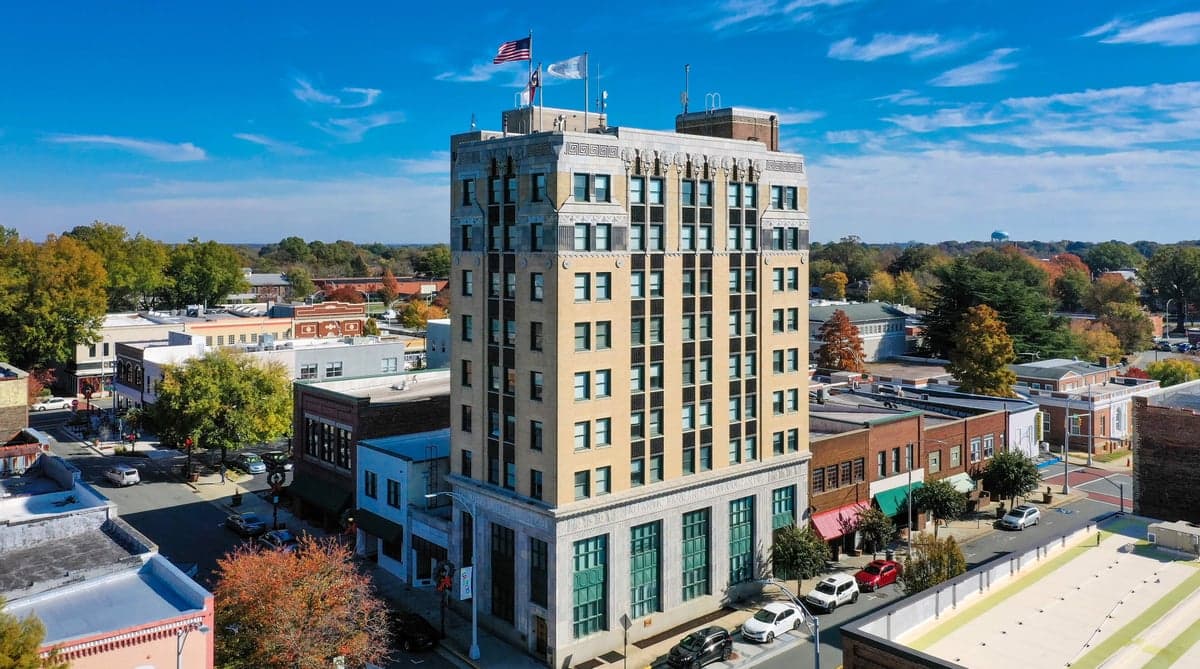
Photo: Wikipedia
Political ClimatePolitical Climate in Burlington, NC
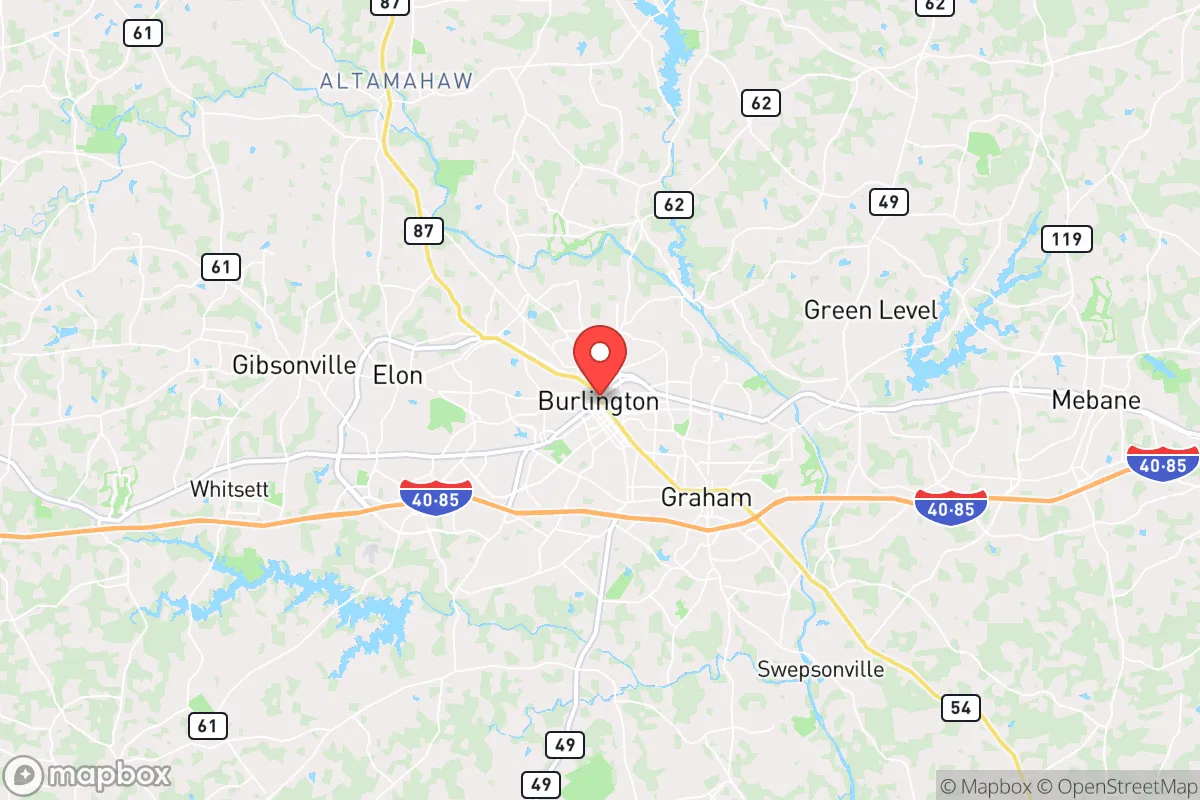
District shown is the primary district for this city’s centroid. Cities may span multiple districts.
Local Political AnalysisPolitical Analysis of Burlington, NC
Burlington, North Carolina, has long been a reliably conservative community, and the numbers back that up with a Cook PVI of R+8, meaning the district votes about eight points more Republican than the national average. But if you’ve lived here as long as I have, you’ve watched that lean get tested by rapid growth spilling over from the Triad and Triangle. The political climate here is still solidly red at the local level, but you can feel the pressure from transplants bringing more progressive ideas, especially in Alamance County’s more suburban pockets. It’s not a blue wave yet, but it’s a slow shift that has folks like me keeping a close eye on local elections and school board races.
How it compares
Drive 20 minutes east to Greensboro or 30 minutes south to Chapel Hill, and you’re in a completely different political world—those areas lean blue, with Chapel Hill being a deep blue stronghold. Burlington sits right in the middle, acting as a conservative anchor in a region that’s otherwise trending left. Compare us to nearby towns like Graham or Mebane, and you’ll find they share our conservative values, but even Mebane is seeing new developments that bring in folks from the Triangle who vote differently. The contrast is stark: while Burlington’s city council and county commission have historically resisted heavy-handed government overreach, you can see the tension when issues like zoning restrictions or mask mandates come up. We’re not Asheville or Raleigh, but the cultural divide is real, and it’s growing.
What this means for residents
For those of us who value personal freedoms and limited government, Burlington still feels like a safe bet, but it’s not immune to the creeping influence of progressive policies. The biggest concern I hear from neighbors is about government overreach into local schools and property rights. The Alamance-Burlington School System has seen debates over curriculum and parental control, and there’s a real fear that state-level mandates could override local voices. On the plus side, property taxes here remain lower than in Guilford or Orange counties, and the city hasn’t gone down the road of heavy-handed housing regulations or business mandates that you see in more liberal areas. But if you’re looking for a place where your Second Amendment rights are respected and your small business won’t be buried in red tape, Burlington is still solid—just don’t expect that to last forever if the political winds keep shifting.
Culturally, Burlington holds onto its Southern, blue-collar roots, with a strong manufacturing history and a slower pace of life that resists the “progressive” makeover. You won’t find the same push for bike lanes, density zoning, or climate action plans that dominate city councils in Chapel Hill or Carrboro. Instead, local policy tends to focus on infrastructure, public safety, and keeping taxes low. The biggest red flag for me is the recent uptick in out-of-state money flowing into local elections, pushing candidates who favor more government control. If you’re considering a move here, know that the political climate is still friendly to conservative values, but it’s a place where you need to stay engaged—because the next few election cycles could decide whether Burlington stays Burlington or becomes just another suburb of the progressive Triangle.

State Political ClimatePolitical Climate in North Carolina
State Political AnalysisPolitical Environment in the State
North Carolina has long been considered a quintessential swing state, but over the past decade, it has settled into a reliably red-leaning posture in most statewide elections, while still hosting competitive races that keep it on the national map. The state’s dominant coalition is a mix of rural conservatives, suburban moderates, and a growing exurban population that leans right, but the rapid influx of out-of-state transplants—especially into the Research Triangle and Charlotte metro—has begun to shift the political center of gravity. Over the last 10-20 years, North Carolina has gone from a solidly conservative Southern state to a purple battleground, but the GOP has maintained control of the legislature and the governorship has flipped between parties, with the current Democratic governor operating under a Republican supermajority that can override his vetoes. For a conservative-leaning relocator, the state still offers a strong foundation of traditional values, but the cracks are showing in the urban corridors.
Urban vs. rural divide
The political map of North Carolina is a textbook case of the urban-rural split that defines American politics today. The major metros—Charlotte, Raleigh, Durham, and Greensboro—are the engines of Democratic growth, driven by tech transplants, university faculty, and a younger, more diverse workforce. Mecklenburg County (Charlotte) and Wake County (Raleigh) have become reliably blue, often delivering 60%+ margins for Democratic candidates. Meanwhile, the rural counties in the eastern part of the state—places like Robeson, Columbus, and Bladen—remain deeply conservative, as do the mountain counties in the west like Watauga and Buncombe (though Asheville itself is a blue island). The real battleground is the exurban ring: counties like Union (south of Charlotte), Johnston (east of Raleigh), and Cabarrus (north of Charlotte) have been flipping from purple to red as families flee the cities for more space and lower taxes. In 2024, Donald Trump won North Carolina by roughly 3 points, but the margin was carried entirely by these exurban and rural areas, while the urban cores voted overwhelmingly for Kamala Harris. If you’re moving to a place like Wilmington or Fayetteville, you’ll find a more balanced mix, but the political energy is clearly split along the I-85 and I-40 corridors.
Policy environment
North Carolina’s policy environment is a mixed bag for conservatives, but the legislature has been a bulwark against progressive overreach. The state has a flat income tax rate of 4.5% (down from 5.25% in 2023), with a path to 3.99% by 2027, making it one of the more tax-friendly states in the Southeast. There is no state tax on Social Security benefits, and the standard deduction is generous. On education, the state has a robust school choice program, including the Opportunity Scholarship Program, which provides vouchers for low- and middle-income families to attend private schools—a major win for parental rights. However, the state’s healthcare landscape is a sore spot: the Republican legislature has refused to expand Medicaid under the Affordable Care Act, which keeps premiums high for the working poor but also prevents a massive federal entitlement expansion. Election laws have been a flashpoint: the state requires voter ID (a 2018 law that survived court challenges), and early voting is generous, but the legislature has drawn congressional maps that have been repeatedly struck down by courts for partisan gerrymandering. For a conservative, the policy environment is generally favorable, but the constant legal battles over maps and voting laws create a sense of instability.
Trajectory & freedom
On the trajectory of personal freedom, North Carolina has been a mixed story. The good news: the state passed a constitutional amendment in 2018 requiring voter ID, which was a win for election integrity. In 2023, the legislature passed a law expanding gun rights by eliminating the requirement for a permit to purchase a handgun (the “permitless carry” law), which went into effect in 2024. This was a significant expansion of Second Amendment rights. On parental rights, the state passed the “Parents’ Bill of Rights” in 2023, which requires schools to notify parents about changes in a child’s health or well-being and prohibits instruction on gender identity and sexuality in K-4 classrooms. However, the state has also seen concerning trends: the Democratic governor, Roy Cooper, has used executive orders to push environmental regulations and COVID-era mandates, though the legislature has pushed back. The biggest red flag is the rapid growth of the urban areas, which are importing progressive voters from California, New York, and other blue states. These newcomers are driving up housing costs and pushing for higher density zoning, which erodes property rights. The state’s freedom index is still high relative to the Northeast or West Coast, but the cultural drift in the cities is unmistakable.
Civil unrest & political movements
North Carolina has seen its share of political flashpoints. The 2020 protests in Charlotte and Raleigh over George Floyd’s death were large and occasionally violent, with property damage in the Uptown area. The state has a strong activist presence on both sides: the left has groups like the NC NAACP and the progressive advocacy group Democracy NC, which have fought against voter ID and gerrymandering. On the right, the state has a robust grassroots network, including the NC GOP and the conservative advocacy group Civitas Institute. Immigration politics are a simmering issue: while the state has no sanctuary city policies, Durham and Orange County have declared themselves “welcoming cities,” which conservatives view as a backdoor to sanctuary status. The most visible flashpoint in recent years was the “bathroom bill” controversy in 2016 (HB2), which required transgender individuals to use bathrooms matching their birth sex. The law was repealed in 2017 after massive economic backlash, but it left a lasting scar on the state’s political culture. For a new resident, you’ll notice that political conversations are more heated in the cities, while rural areas remain more civil and traditional.
Projection
Looking ahead 5-10 years, North Carolina is on a knife’s edge. The in-migration from blue states is accelerating: the state added over 400,000 new residents between 2020 and 2024, with the majority settling in the Charlotte and Raleigh metros. These newcomers tend to be younger, more educated, and more liberal, which will gradually shift the state’s political center. However, the rural and exurban areas are also growing, and the GOP has shown an ability to adapt by focusing on school choice, tax cuts, and cultural issues like parental rights. The wild card is the 2026 gubernatorial election, which will be an open seat (Cooper is term-limited). If a Republican wins the governorship, the state could move further right on policy. If a Democrat wins, expect more veto battles and executive overreach. The legislature is likely to remain in GOP hands due to gerrymandering, but the maps will be redrawn after the 2030 census, which could shift the balance. For a conservative moving in now, the state will likely remain a purple-to-red state for the next decade, but the cultural and political influence of the urban areas will continue to grow. The key is to choose your county wisely: Union, Johnston, and Stokes counties are safe bets for a conservative environment, while Durham and Orange counties are best avoided.
For a new resident, the bottom line is this: North Carolina offers a strong foundation of low taxes, school choice, and gun rights, but the urban corridors are rapidly becoming blue enclaves that will shape the state’s future. If you’re a conservative looking to relocate, you’ll find a welcoming environment in the exurbs and rural areas, but you should expect the political climate to become more contentious as the state’s demographics shift. The state is still a net positive for freedom compared to most of the country, but it’s no longer the solidly conservative bastion it was 20 years ago. Choose your community carefully, and you’ll find a place where your values are respected and your rights are protected.
* Values derived from national, state, county, city and local statistics and may differ in a specific area. Last updated: 2026-09-21T19:02:19.000Z
Narrative content on this page is AI-generated and may contain mistakes. Verify any details that matter before acting on them.
ReloMaps may earn a commission from affiliate links at no extra cost to you.

