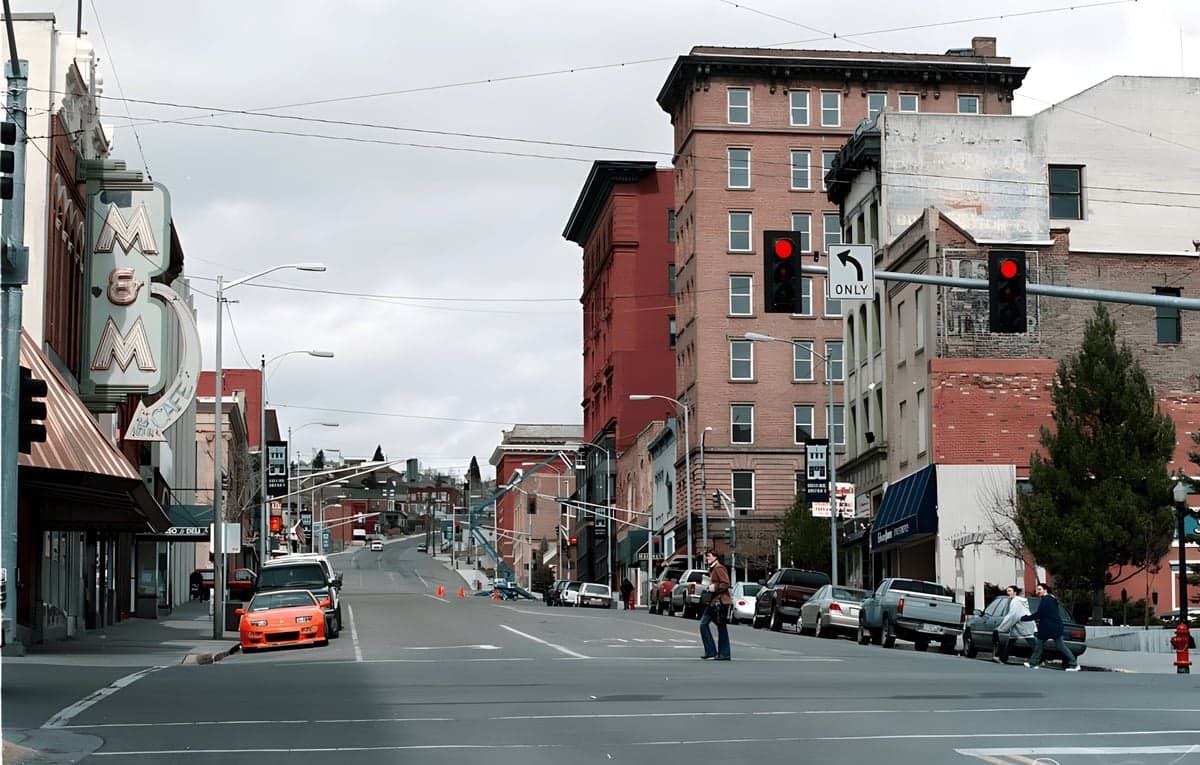
Photo: Wikipedia
Strategic Assessment of Butte, MT
Strong survivability profile. Good buffer from population centers, with manageable environmental and tactical risks.
What does the Strategic Assessment tell us?
Our Strategic Assessment grades tactical survivability of an area. Major population centers, military targets, fallout zones, natural disasters, and border exposure all drive risk — lower exposure means a more defensible position in a crisis.
This is heavily inspired by Joel Skousen's Strategic Relocation book. Highly recommended you checkout the book ($)What does this tell us?
Our Strategic Assessment grades tactical survivability of an area. Major population centers, military targets, fallout zones, natural disasters, and border exposure all drive risk — lower exposure means a more defensible position in a crisis.
This is heavily inspired by Joel Skousen's Strategic Relocation book. Highly recommended you checkout the book ($)Strategic Pillars

Key Distances
Regional Safe Places
Below is our recommended "safe zones" in Montana and the surrounding area based on our strategic heuristics. For most people, it's unrealistic to live in a “safe zone” full-time due to work, family or other personal reasons. They tend to be more rural. However, many of these areas are perfect for second homes and retreat properties that double as a vacation home or even a short-term rental.
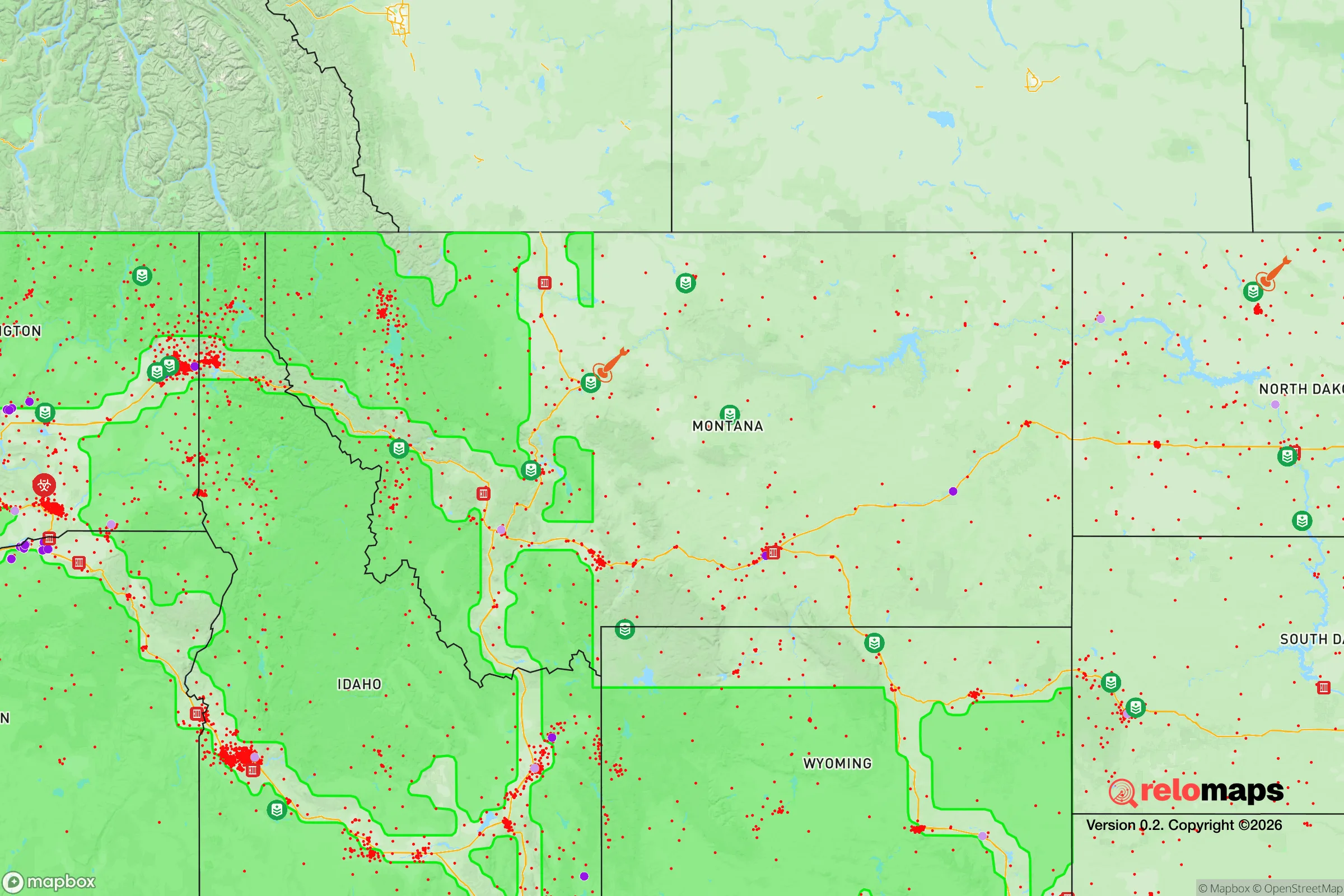


Important Note: For informational purposes only. This does not mean nothing bad ever happens in the green zones. Please use common sense. This is based on public data and modeled with AI. We tried to take a conservative approach but mistakes happen. We update this regularly as new information becomes available.
Solar Generator Recommendations
Backup power matters more here than in safer locations. We've picked three solar generators across budgets and capacity tiers — start with the budget unit if you only need a few essentials, or step up if you want to run a fridge and HVAC for days at a time.

Jackery Portable Power Station Explorer 300
Budget OptionPower on the Go: Weighing only 11 lbs, it's convenient to set up and store with book-sized foldable solar panels

BLUETTI Portable Power Station AC180
Designed for both indoor and outdoor scenarios, AC180 is highly capable as it has a robost capacity and continuous output power.

EF ECOFLOW DELTA Pro Ultra Power Station
Upgraded PickEcoFlow DELTA Pro Ultra is a whole-home energy system designed to grow with your family. Integrated with the Smart Home Panel 2, it scales to meet your evolving energy needs — keeping your home powered, intelligent, and secure through every stage of life.
We earn a commission, at no additional cost to you.
Strategic Assessment Analysis
Butte, Montana offers a compelling strategic position for those prioritizing resilience and self-sufficiency, largely due to its location in the mountainous southwest of the state, far from the major population corridors of the West Coast and the Eastern Seaboard. The city sits at a high elevation (over 5,500 feet) in the Rocky Mountains, which provides a natural buffer against many of the cascading failures that could affect coastal and urban centers. Its history as a mining boomtown has left behind a hardened infrastructure—think robust water systems, heavy-duty power grids, and a population accustomed to harsh winters and economic volatility—that gives it a distinct edge over softer, more suburban locales. For a relocator looking to weather civic unrest, supply chain disruptions, or even larger-scale disasters, Butte represents a place where the physical and cultural landscape is already tilted toward survival, not convenience.
Geographic position and natural advantages for long-term security
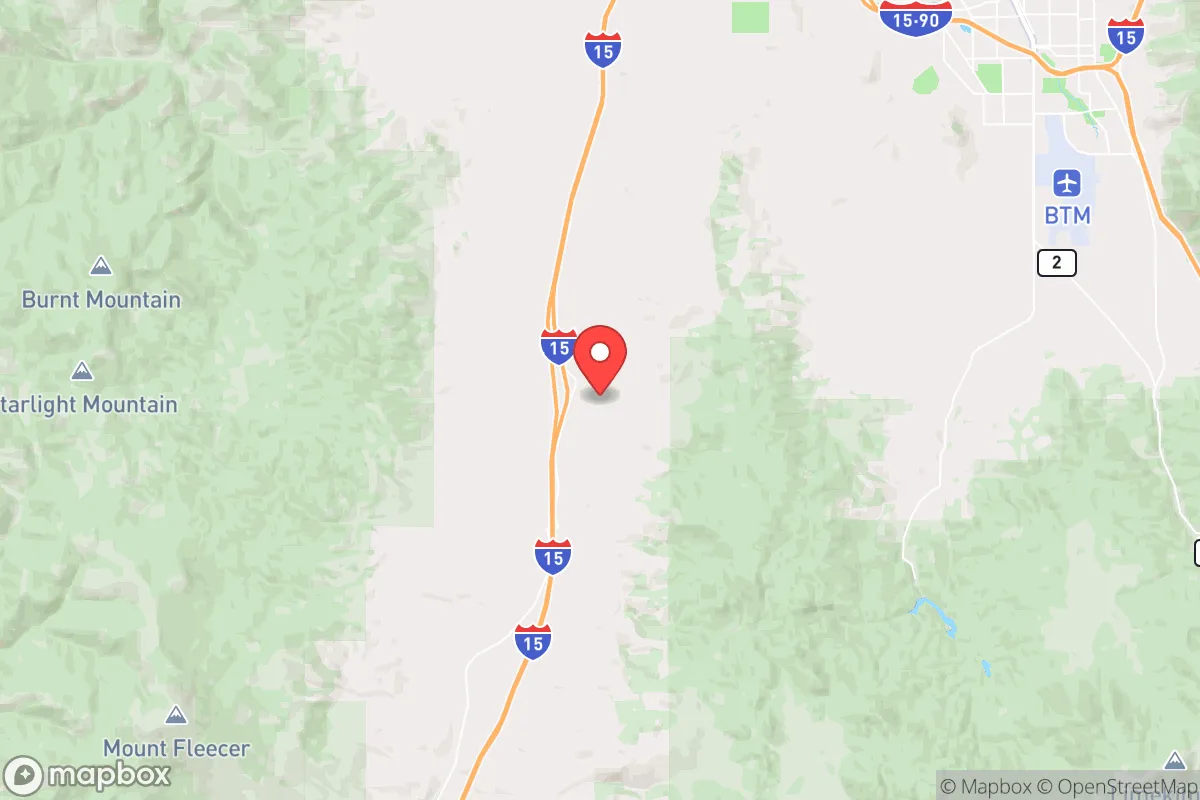
Butte’s geography is its first and strongest card. It sits in a valley surrounded by the Continental Divide, which means it’s not on any major fault line, is far from hurricane-prone coasts, and is insulated from the worst of wildfire corridors (though fire risk exists, it’s lower than in the dry plains east of the Rockies). The elevation gives it a cooler, drier climate that reduces the risk of crop-killing heat waves and makes water storage more viable—snowpack in the nearby Pintler and Anaconda ranges provides a reliable meltwater source into late spring. The city is also positioned near Interstate 90, which runs east-west across the state, but it’s not a chokepoint like Bozeman or Billings; traffic is light, and the surrounding roads (like Montana 2 and 41) offer multiple escape routes into the Beaverhead-Deerlodge National Forest or the Big Hole Valley. For a prepper, this means you can bug in with relative safety or bug out into some of the most remote, defensible terrain in the lower 48. The nearest major metro is Salt Lake City, over 400 miles away, and Seattle is nearly 600 miles distant—so the risk of fallout from a nuclear event targeting a major city is dramatically reduced. Butte’s own history with mining means there are also abandoned mine shafts and tunnels in the hills, which, while not recommended for habitation, offer a conceptual layer of underground shelter potential that few other towns can claim.
Risks, exposures, and proximity to fallout-relevant landmarks
No location is perfect, and Butte has its own set of strategic liabilities. The most obvious is the Berkeley Pit, a former open-pit copper mine that is now a Superfund site filled with acidic, heavy-metal-laden water. While the pit itself is contained and monitored, a major earthquake or deliberate sabotage could theoretically breach the containment system, contaminating the Silver Bow Creek watershed—which flows into the Clark Fork River. That’s a real concern for anyone relying on local surface water. Additionally, Butte is about 120 miles from the Malmstrom Air Force Base in Great Falls, which is a primary hub for the U.S. nuclear missile silos. In a conflict where ICBM fields are targeted, Butte is within the blast radius of a direct hit on Malmstrom, though it’s far enough to avoid the worst of a ground burst. More realistically, the city’s proximity to the Interstate 90 corridor means it could see refugee flows from the West Coast during a collapse scenario, though the harsh winters and limited housing stock would naturally slow that. The biggest day-to-day risk is probably the severe winter weather—blizzards, ice storms, and subzero temperatures can isolate the city for days, which is a resilience feature if you’re prepared, but a lethal hazard if you’re not. For a conservative relocator, the key takeaway is that Butte’s risks are mostly manageable with proper planning, unlike the existential threats of coastal cities or the vulnerability of the Eastern Seaboard to EMP or cyber attacks.
Practical resilience for a relocator: food, water, energy, and defensibility
Butte’s practical resilience is where it really shines for the survivalist mindset. Water is abundant: the city draws from the Big Hole River and the Deer Lodge Valley aquifer, and most homes have access to well water if you buy outside the immediate urban core. The local climate supports short-season crops like potatoes, carrots, and hardy greens, and the surrounding valleys are ranch country, meaning beef, bison, and lamb are available from local producers. The Butte Farmers Market and co-ops like the Community Food Co-op provide direct access to growers, and the area’s hunting culture is strong—elk, deer, and upland birds are plentiful in the national forests. Energy is a mixed bag: the grid is served by NorthWestern Energy, which relies on a mix of coal, hydro, and natural gas, but the region’s wind and solar potential is decent, and many off-grid properties already use solar panels with battery backup. The city’s mining heritage means there’s a skilled workforce for mechanical repairs, welding, and heavy equipment—skills that become gold in a post-collapse scenario. Defensibility is excellent: Butte is built on a hillside, with natural chokepoints at the entrances to the valley (I-90 and Montana 2), and the surrounding mountains provide observation points and cover. The local population is heavily armed, with a gun culture that’s practical rather than performative—hunting and self-defense are normalized. The downside is that Butte is not a food-growing paradise; the growing season is short (about 90 days), and soil in the immediate area is contaminated from mining, so you’ll need raised beds or a property outside the Superfund zone. But for a relocator willing to invest in a greenhouse, root cellar, and a good water filtration system, Butte offers a base that can be made largely self-sufficient within a few years.
The overall strategic picture for Butte is one of high potential with moderate trade-offs. It’s not a bug-out location for the faint of heart—the winters are brutal, the economy is limited, and the mining legacy means you have to be careful about where you put down roots. But for a conservative individual or family who values distance from coastal chaos, a strong local community of like-minded people, and a landscape that rewards preparation over convenience, Butte is a serious contender. It’s a place where you can realistically build a resilient life without the paranoia of being in a redoubt that’s already on the government’s radar. The key is to buy land outside the Superfund zone, secure a reliable water source, and get comfortable with snow. If you can do that, Butte gives you a fighting chance to ride out whatever comes next.

* Values derived from national, state, county, city and local statistics and may differ in a specific area. Last updated: 2026-09-21T19:36:38.000Z
Narrative content on this page is AI-generated and may contain mistakes. Verify any details that matter before acting on them.
ReloMaps may earn a commission from affiliate links at no extra cost to you.

