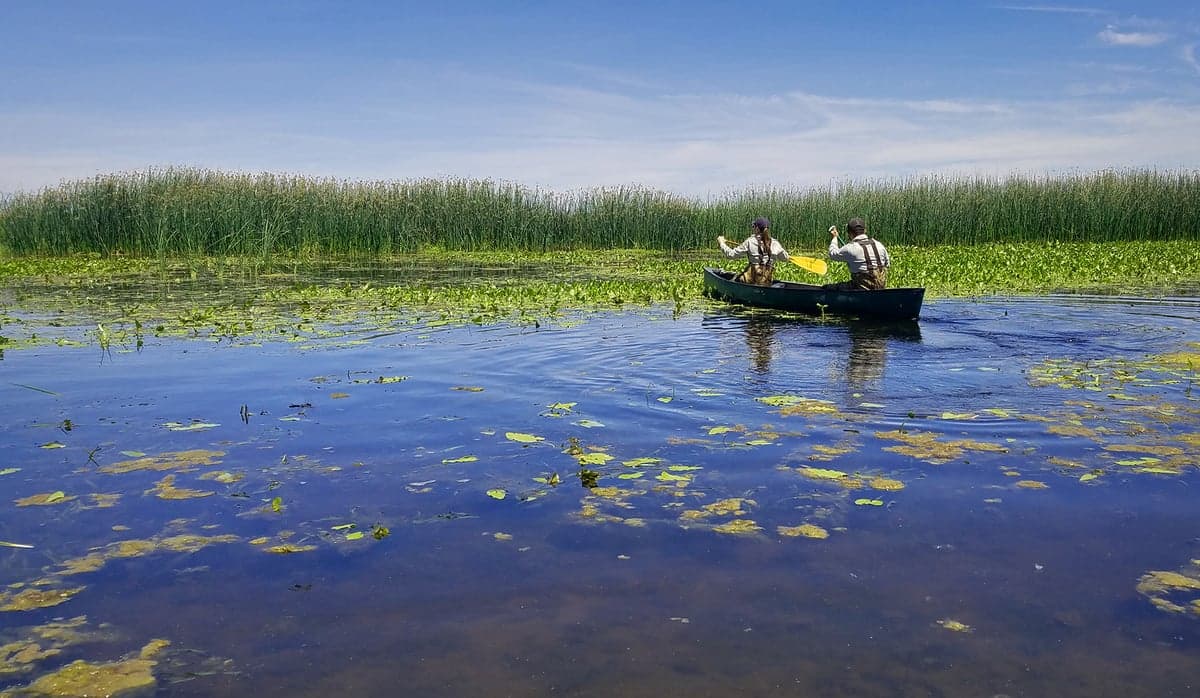
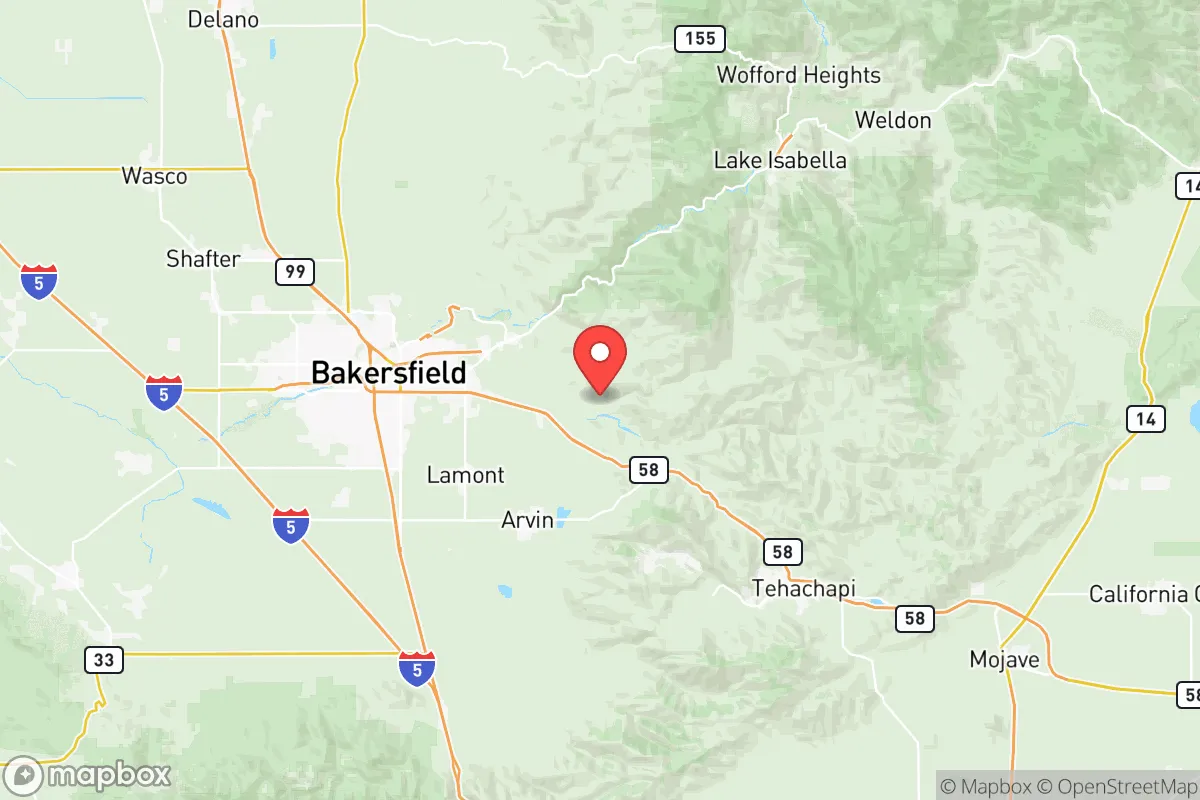
Photo: Wikipedia
Personal Sovereignty in Kern County
Moderate friction. Expect trade-offs in some aspect of personal liberty and independence.
What does Personal Sovereignty tell us?
Personal Sovereignty measures your capacity for self-reliance and independence with minimal government friction. Higher scores mean fewer barriers between you and the way you want to live... but it assumes you have the space you need and good neighbors.
What does this tell us?
Personal Sovereignty measures your capacity for self-reliance and independence with minimal government friction. Higher scores mean fewer barriers between you and the way you want to live... but it assumes you have the space you need and good neighbors.
State Policy
Energy independence: Importer (33% of energy produced in-state)
Personal Liberty
Homesteading

Personal Liberty Analysis
Kern County offers a notably higher degree of personal sovereignty than California’s coastal urban centers, driven by a local political culture that prioritizes individual autonomy, a relatively light regulatory touch in unincorporated areas, and a strong tradition of self-reliance. While still subject to California’s statewide tax and regulatory framework, the county’s vast geography and conservative governance create meaningful pockets where residents can exercise greater control over their property, self-defense, and daily lives. For single individuals and families seeking to maximize personal freedom within the state, Kern County stands out as a practical alternative to the more restrictive environments found in Los Angeles, San Francisco, or Sacramento.
Tax burden and regulatory posture in Kern County vs. California’s coastal cities
California’s statewide income tax (top marginal rate of 13.3%) and sales tax (base 7.25%) apply uniformly, but Kern County’s local governance significantly reduces the regulatory friction felt by residents. The county’s Board of Supervisors has consistently opposed new business mandates and land-use restrictions, particularly in unincorporated areas like Frazier Park, Lake Isabella, and Ridgecrest, where zoning is far more permissive than in incorporated cities like Bakersfield. Property tax rates in Kern County average around 0.77% of assessed value, slightly below the state average of 0.79%, and the county has not adopted the more aggressive local tax measures seen in the Bay Area or Los Angeles County. For small business owners and independent contractors, the county’s streamlined permitting process for home-based enterprises—especially in rural zones—contrasts sharply with the multi-agency approvals required in urban jurisdictions. The regulatory posture is best described as “hands-off until a problem arises,” which appeals to those who value operational freedom over preemptive oversight.
Self-defense and gun law specifics in Kern County’s permitting environment
California’s statewide gun laws—including the roster of approved handguns, ammunition purchase background checks, and the 10-day waiting period—apply everywhere, but Kern County’s local implementation is among the most permissive in the state. The Kern County Sheriff’s Office, under Sheriff Donny Youngblood, has historically issued concealed carry weapon (CCW) permits on a “shall-issue” basis in practice, with approval rates exceeding 90% for qualified applicants. This contrasts with “may-issue” counties like Santa Clara or San Francisco, where permits are rarely granted. In Tehachapi and California City, gun ownership is a routine part of daily life, with local gun shops and shooting ranges integrated into the community. Open carry of unloaded firearms is legal in unincorporated areas, and the county’s vast desert and mountain terrain provide ample space for lawful target shooting on public land. For families prioritizing self-defense rights, Kern County offers the most accessible CCW environment in Southern California, though applicants must still complete a 16-hour training course and pass a background check.
Self-reliance and homesteading viability: lot sizes, zoning, and off-grid feasibility
Kern County is one of the most homestead-friendly regions in California, particularly in its unincorporated areas where minimum lot sizes of 1 to 5 acres are common. In Wofford Heights and Onyx, properties with existing wells and septic systems are available for under $100,000, making off-grid living financially accessible. The county’s zoning code explicitly allows for “agricultural and rural residential” uses on parcels zoned A (Agriculture) or E (Estate), which cover most of the eastern and northern parts of the county. Off-grid solar installations are permitted without the complex permitting hurdles seen in coastal counties, and rainwater catchment is legal for non-potable uses. However, residents should note that California’s building code still requires a permit for habitable structures, and the Kern County Fire Department enforces defensible space requirements in high-fire-risk zones like Glennville and Pine Mountain Club. For those willing to navigate these modest requirements, the county offers a genuine opportunity to achieve a high degree of self-reliance—raising livestock, growing food, and generating power—without the prohibitive costs and regulations of urban areas.
Personal liberties: parental rights, medical autonomy, speech, and property
Kern County’s conservative majority on the Board of Supervisors has taken a strong stance on parental rights, passing resolutions in 2023 and 2024 opposing state mandates on school curriculum and gender identity notification policies. Local school districts in Shafter and Arvin have adopted policies that require parental notification for any changes in a student’s mental or physical health, aligning with the county’s emphasis on family authority. Medical autonomy is more limited due to state-level vaccine mandates and healthcare regulations, but Kern County has resisted enforcing some state health orders—for example, during the COVID-19 pandemic, the county did not impose its own mask or vaccine mandates, leaving decisions to individuals and businesses. Free speech is robustly protected in public forums, and the county’s Board of Supervisors meetings are known for allowing extensive public comment, even on controversial topics. Property rights are relatively strong: the county has not adopted rent control, and eminent domain actions are rare outside of major infrastructure projects. For families who value the ability to make decisions about their children’s education, medical choices, and property use without heavy state interference, Kern County provides a more favorable environment than most of California.
Overall, Kern County offers a level of personal sovereignty that is exceptional for California, rivaling the autonomy found in parts of Texas or Arizona. While residents cannot escape the state’s income tax, gun laws, or building codes, the county’s local governance consistently leans toward individual freedom, particularly in unincorporated areas like Ridgecrest, Tehachapi, and Lake Isabella. For those who prioritize self-defense, homesteading, and parental rights, Kern County represents the most viable option within California for maintaining a high degree of personal independence without leaving the state entirely.

* Values derived from national, state, county, city and local statistics and may differ in a specific area. Last updated: 2026-08-08T14:40:28.000Z
Narrative content on this page is AI-generated and may contain mistakes. Verify any details that matter before acting on them.
ReloMaps may earn a commission from affiliate links at no extra cost to you.

