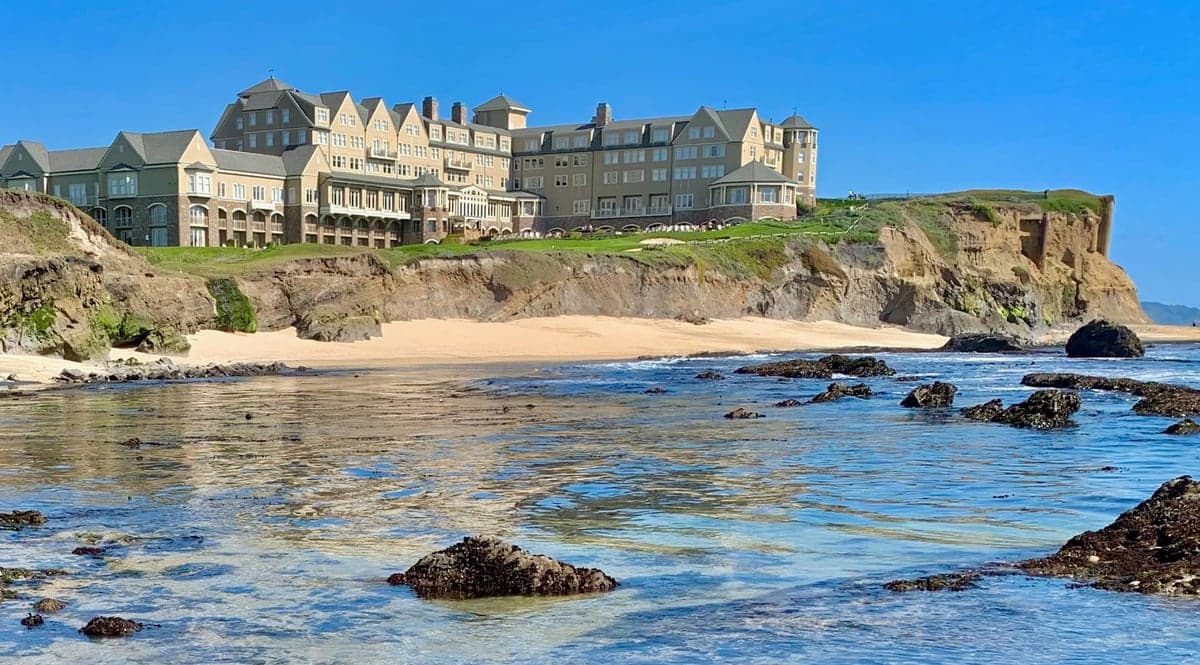
Photo: Wikipedia
Personal Sovereignty in San Mateo County
Viable for self-reliance. Generally workable, though some barriers may limit total independence.
What does Personal Sovereignty tell us?
Personal Sovereignty measures your capacity for self-reliance and independence with minimal government friction. Higher scores mean fewer barriers between you and the way you want to live... but it assumes you have the space you need and good neighbors.
What does this tell us?
Personal Sovereignty measures your capacity for self-reliance and independence with minimal government friction. Higher scores mean fewer barriers between you and the way you want to live... but it assumes you have the space you need and good neighbors.
State Policy
Energy independence: Importer (33% of energy produced in-state)
Personal Liberty
Homesteading

Personal Liberty Analysis
For conservative-leaning individuals and families evaluating San Mateo County, personal sovereignty is heavily constrained by California’s statewide regulatory apparatus, though the county’s specific geography and local ordinances create meaningful variation between its coastal, suburban, and rural pockets. The county’s 2024 population of roughly 730,000 is concentrated in a narrow corridor between San Francisco and Silicon Valley, meaning most residents live under dense zoning, high taxes, and progressive governance that limits autonomy in self-defense, property use, and medical choice. However, the southern and western edges—places like Pescadero, La Honda, and the unincorporated areas near Half Moon Bay—offer a markedly different reality, where larger lots, fewer code enforcement officers, and a more libertarian-leaning rural culture provide breathing room for those willing to trade commute times for sovereignty.
Tax burden and regulatory posture: what you pay and what you can’t do
San Mateo County’s tax burden is among the highest in the nation, driven by California’s progressive income tax (top marginal rate of 13.3% as of 2025), a state sales tax of 7.25% plus local add-ons that push the rate to 9.625% in most cities, and property taxes that, despite Proposition 13’s 1% base rate, are effectively higher due to voter-approved parcel taxes and Mello-Roos districts common in newer developments. The county’s own sales tax rate is 0.25% for general purposes, but cities like San Mateo and Redwood City add another 0.5% for transportation and infrastructure. Regulatory posture is equally restrictive: the county’s 2023 Climate Action Plan mandates net-zero emissions by 2045, which translates to bans on new gas hookups in unincorporated areas, strict water-use limits, and a building code that effectively prohibits off-grid energy systems without extensive permitting. For a prepper or survivalist, the cost of compliance alone—permits for rainwater catchment, solar arrays, or backup generators—can run $5,000–$15,000 before installation, and the county’s planning department routinely denies variances for alternative waste systems like composting toilets. In contrast, Pescadero and La Honda, both unincorporated, have fewer code enforcement resources, meaning some residents quietly operate off-grid systems without formal approval, though the risk of a complaint-driven inspection remains.
Self-defense and gun law specifics: what you can carry and where
California’s firearm laws are among the most restrictive in the nation, and San Mateo County enforces them with little local variation. The state’s 2024 “sensitive places” law bans concealed carry in virtually all public spaces—parks, libraries, hospitals, transit, and any business that posts a sign—leaving only private property and a narrow band of “unposted” commercial zones as legal carry areas. The county’s sheriff, Carlos Bolanos, has not issued a “good cause” statement that would ease permit issuance; as of 2025, the county’s concealed carry permit (CCW) issuance rate is below 0.2% of the adult population, one of the lowest in the state. Magazine capacity is capped at 10 rounds, and all firearm purchases require a 10-day waiting period, a background check through the California Department of Justice, and a Firearm Safety Certificate. For those considering relocation, Half Moon Bay and Pacifica have no local ordinances that further restrict state law, but the practical effect is the same: carrying a firearm for self-defense outside the home is legally risky. The only meaningful workaround is living on a large enough parcel—typically 5+ acres in unincorporated areas—where you can train and store firearms without neighbor complaints triggering law enforcement visits. Woodside and Portola Valley, with their horse-property zoning and wealthy libertarian enclaves, have a slightly more tolerant culture toward firearms, but the law remains identical.
Self-reliance and homesteading viability: lot sizes, zoning, and off-grid feasibility
Homesteading in San Mateo County is a study in contrasts. The urbanized eastern half—cities like San Bruno, South San Francisco, and Daly City—features lot sizes averaging 5,000–7,000 square feet, with zoning that prohibits livestock, restricts accessory dwelling units (ADUs) to one per lot, and requires connection to municipal water and sewer. The county’s 2023 ADU ordinance allows a 1,200-square-foot unit on single-family lots, but permitting costs and fees average $15,000–$25,000, and the process takes 6–12 months. For off-grid living, the western half is the only viable option. Pescadero and La Honda have parcels ranging from 1 to 40 acres, with many properties relying on wells and septic systems. However, the county’s 2024 Groundwater Sustainability Plan imposes pumping limits in the Pescadero Basin, and new well permits require a hydrogeologic study costing $3,000–$8,000. Solar panels are legal but must comply with the California Energy Code, which mandates specific fire setbacks and interconnection agreements with PG&E—a utility notorious for long wait times and high fees. Rainwater catchment is allowed for non-potable uses (irrigation, livestock) without a permit if the system is under 5,000 gallons, but potable systems require a county health department permit and annual water testing. For a serious prepper, the best bet is unincorporated land near the San Mateo-Santa Cruz county line, where zoning is minimal, enforcement is rare, and neighbors are accustomed to self-sufficient lifestyles.
Personal liberties: parental rights, medical autonomy, speech, and property
Parental rights in San Mateo County are shaped by California’s progressive education and health policies. The county’s 23 school districts, including the large San Mateo-Foster City School District, have adopted “comprehensive sexual health education” under the California Healthy Youth Act, which mandates instruction on gender identity, sexual orientation, and contraception starting in 7th grade, with no parental opt-out for the curriculum itself (only for specific lessons). Medical autonomy is similarly constrained: California’s 2022 law requires minors 12 and older to consent to mental health treatment and vaccinations without parental notification, and the county’s health department actively promotes this through school-based clinics. For speech, the county has a “hate speech” ordinance (San Mateo County Code Section 2.96) that allows the sheriff to investigate “bias-motivated” incidents, though it has not been used to prosecute political speech as of 2025. Property rights are the most concerning for conservatives: the county’s 2024 “tenant protection” ordinance in unincorporated areas limits rent increases to 5% plus inflation, and the state’s Costa-Hawkins Act repeal (proposed for 2026) could eliminate vacancy decontrol, effectively locking in rent-controlled tenants indefinitely. For homeowners, the county’s tree preservation ordinance (Chapter 4.84) requires a permit to remove any tree with a diameter over 6 inches on properties over 1 acre, a direct limit on land use autonomy.
Overall, personal sovereignty in San Mateo County ranks among the lowest in the United States for conservative-leaning individuals, comparable to other Bay Area counties like Santa Clara and Alameda, but with a crucial exception: the rural western corridor from Half Moon Bay down to Pescadero offers a degree of de facto autonomy that the county’s urban core cannot match. For a prepper or survivalist, the calculus is simple: if you can afford a 5+ acre parcel in unincorporated La Honda or Pescadero, you can carve out a self-reliant lifestyle with minimal government interference—provided you stay off the grid for energy and water, keep a low profile on firearms, and accept the 45-minute drive to the nearest hardware store. For anyone in the eastern suburbs, the combination of high taxes, restrictive gun laws, and progressive social policies makes the area a poor fit for those prioritizing personal liberty. Compared to rural counties in Idaho, Montana, or even eastern Oregon, San Mateo County is a net negative for sovereignty, but within California’s coastal bubble, the western edge is the only viable refuge.

* Values derived from national, state, county, city and local statistics and may differ in a specific area. Last updated: 2026-05-11T22:27:20.000Z
Narrative content on this page is AI-generated and may contain mistakes. Verify any details that matter before acting on them.
ReloMaps may earn a commission from affiliate links at no extra cost to you.

