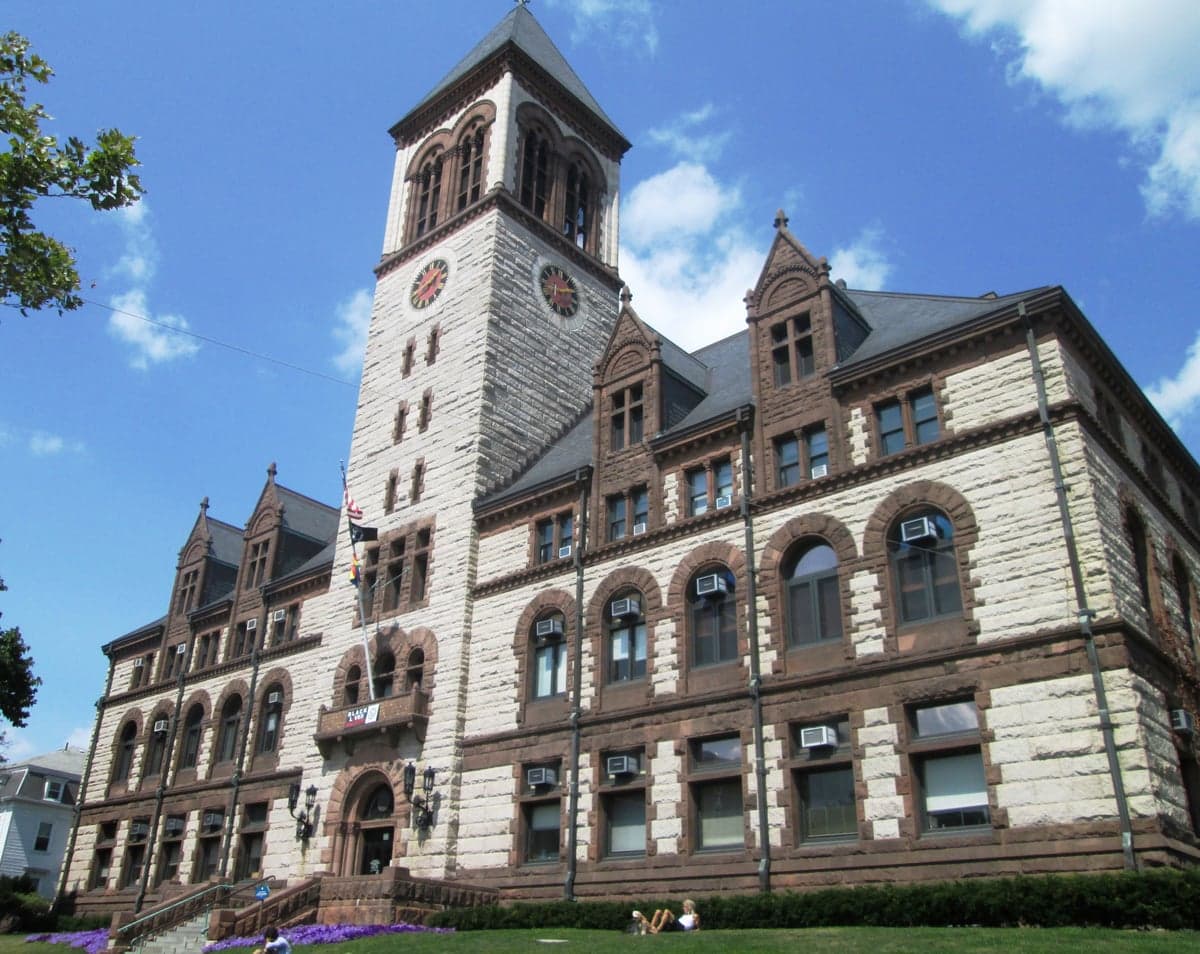
Photo: Wikipedia
Personal Sovereignty in Cambridge, MA
Viable for self-reliance. Generally workable, though some barriers may limit total independence.
What does Personal Sovereignty tell us?
Personal Sovereignty measures your capacity for self-reliance and independence with minimal government friction. Higher scores mean fewer barriers between you and the way you want to live... but it assumes you have the space you need and good neighbors.
What does this tell us?
Personal Sovereignty measures your capacity for self-reliance and independence with minimal government friction. Higher scores mean fewer barriers between you and the way you want to live... but it assumes you have the space you need and good neighbors.
State Policy
Energy independence: Importer (5% of energy produced in-state)
Personal Liberty
Homesteading

Personal Liberty Analysis
Cambridge, Massachusetts, presents a challenging environment for personal sovereignty, where progressive governance and dense urban regulations significantly constrain individual autonomy. For those prioritizing self-reliance, minimal government interference, and the ability to make independent life decisions—particularly from a survivalist or prepper perspective—this city ranks low on the freedom scale. The local political culture actively prioritizes collective outcomes over individual rights, creating a landscape where personal choices in housing, education, healthcare, and self-defense are heavily shaped by municipal and state authority. This analysis examines the specific regulatory and cultural barriers that limit personal sovereignty in Cambridge, offering a sobering assessment for conservative-leaning individuals and families considering relocation.
Tax burden and regulatory posture: How Cambridge’s fiscal and zoning policies constrain autonomy
Cambridge’s tax and regulatory environment is a primary obstacle to personal sovereignty. The city imposes a property tax rate of approximately $7.80 per $1,000 of assessed value (2025-2026 fiscal year), which, combined with high real estate valuations, results in some of the highest effective property tax bills in the state—often exceeding $15,000 annually for a modest single-family home. Massachusetts’ state income tax, a flat 5.0% rate, adds another layer of fiscal burden, and the state’s sales tax of 6.25% applies to most goods, including preparedness supplies. Beyond taxes, Cambridge’s regulatory posture is aggressively interventionist. The city’s zoning code is among the most restrictive in the region, with strict height limits, density requirements, and a lengthy permitting process that can take 12-18 months for even minor renovations. This regulatory thicket effectively blocks any attempt at self-sufficient living—such as adding a workshop, installing solar panels without city approval, or keeping livestock—by requiring multiple layers of bureaucratic sign-off. For a prepper, this means that even basic modifications to increase resilience (e.g., reinforcing a basement, installing a backup generator) can trigger permit fees, inspections, and potential neighbor complaints under the city’s nuisance ordinances. The cumulative effect is a system that discourages individual initiative and funnels all property decisions through a slow, expensive, and politically influenced approval process.
Self-defense and gun law specifics: Restrictions on the right to keep and bear arms
For those who view personal defense as a cornerstone of sovereignty, Cambridge is a particularly restrictive jurisdiction. Massachusetts is a “may-issue” state for licenses to carry (LTC), and Cambridge’s police department is known for its stringent interpretation of state law. Applicants must demonstrate a “good reason” to carry a firearm—a standard that is rarely met for simple self-defense, especially within city limits. The state’s 2024 gun law further tightened restrictions, banning “assault weapons” (defined broadly), limiting magazine capacity to 10 rounds, and requiring all firearm transfers to go through a licensed dealer with a background check. In Cambridge, the wait time for an LTC can exceed six months, and denials are common for applicants without a documented threat or professional security role. Additionally, open carry is effectively prohibited, and concealed carry is subject to the same “good reason” hurdle. For a survivalist, this means that even a basic handgun for home defense requires navigating a byzantine licensing system, and any attempt to stockpile ammunition or maintain a defensive rifle is legally risky. The city’s culture is deeply anti-gun, with local ordinances restricting where firearms can be stored (e.g., locked containers, separate from ammunition) and prohibiting discharge within city limits entirely. This regulatory environment effectively disarms law-abiding citizens, leaving personal safety dependent on a police force that, like many urban departments, faces response time delays of 10-15 minutes for non-emergency calls.
Self-reliance and homesteading viability: Lot sizes, zoning, and off-grid feasibility
Cambridge’s urban density and zoning laws make any form of homesteading or off-grid living nearly impossible. The typical single-family lot in Cambridge is 3,000 to 5,000 square feet, with most homes built on zero-lot lines or shared driveways. Zoning regulations prohibit keeping chickens, bees, or any livestock within city limits, and even vegetable gardens are subject to setback rules and height restrictions for fences. Off-grid systems—such as solar panels with battery storage, rainwater collection, or composting toilets—face multiple regulatory barriers. Solar installations require a building permit and must comply with the city’s historic district guidelines (if applicable), which can mandate specific panel placements and colors. Rainwater collection is technically allowed but limited to 50 gallons per property, and any system must be approved by the city’s water department. Composting toilets are not permitted as a primary sanitation method; all homes must connect to the municipal sewer system. For a prepper seeking to reduce dependency on grid infrastructure, these rules create a Catch-22: you cannot legally disconnect from city utilities, and any attempt to do so invites fines and potential condemnation of the property. The city’s dense, walkable layout also means that noise ordinances, light pollution restrictions, and neighbor complaints can shut down any visible self-reliance activity, from woodworking to food drying. In short, Cambridge is designed for interdependence, not independence—a fundamental mismatch for the homesteading mindset.
Personal liberties: Parental rights, medical autonomy, speech, and property
Cambridge’s approach to personal liberties reflects a progressive consensus that often prioritizes state authority over individual choice. Parental rights are significantly curtailed by the city’s school district, which mandates comprehensive sex education starting in elementary school, including lessons on gender identity and sexual orientation, without an opt-out provision for parents who object. The district also requires all students to participate in social-emotional learning programs that some parents view as ideological. Medical autonomy is similarly constrained: Massachusetts has strict vaccine mandates for school attendance, and Cambridge’s public health department actively enforces these, with no religious or philosophical exemptions allowed for K-12 students. During the COVID-19 pandemic, Cambridge imposed some of the longest-lasting mask and vaccine mandates in the country, and the city council has signaled willingness to reimpose such measures in future health emergencies. Free speech is protected under the First Amendment, but the city’s “hate speech” ordinances and social media policies create a chilling effect on certain political expressions, particularly around immigration, gender, and race. Property rights are the weakest link: Cambridge’s rent control policies (reinstated in 2023 via the state’s new law) cap annual rent increases at 10% for older buildings, but this also restricts landlords’ ability to evict tenants or reclaim property for personal use. For homeowners, the city’s historic preservation commission can veto exterior changes to any building over 50 years old—covering roughly 60% of the city’s housing stock. This means you may not be able to replace windows, change siding, or add a porch without months of review and potential denial.
In the broader landscape of American personal sovereignty, Cambridge ranks near the bottom for those seeking maximum individual control over their lives, property, and safety. The city’s high taxes, restrictive gun laws, anti-homesteading zoning, and intrusive social policies create an environment where government oversight touches nearly every aspect of daily existence. For a survivalist or prepper, the trade-offs are stark: you gain access to world-class infrastructure and a dense social safety net, but you surrender the ability to make independent decisions about your home, your family’s education, your medical choices, and your self-defense. Compared to rural New England towns or even suburban communities in New Hampshire or Maine, Cambridge offers little room for the kind of self-reliant, low-interference lifestyle that many conservatives and preppers value. If personal sovereignty is your primary relocation criterion, this city is best viewed as a strategic outpost for professional opportunity—not a place to build a long-term, independent life.

* Values derived from national, state, county, city and local statistics and may differ in a specific area. Last updated: 2026-04-15T23:38:45.000Z
Narrative content on this page is AI-generated and may contain mistakes. Verify any details that matter before acting on them.
ReloMaps may earn a commission from affiliate links at no extra cost to you.

