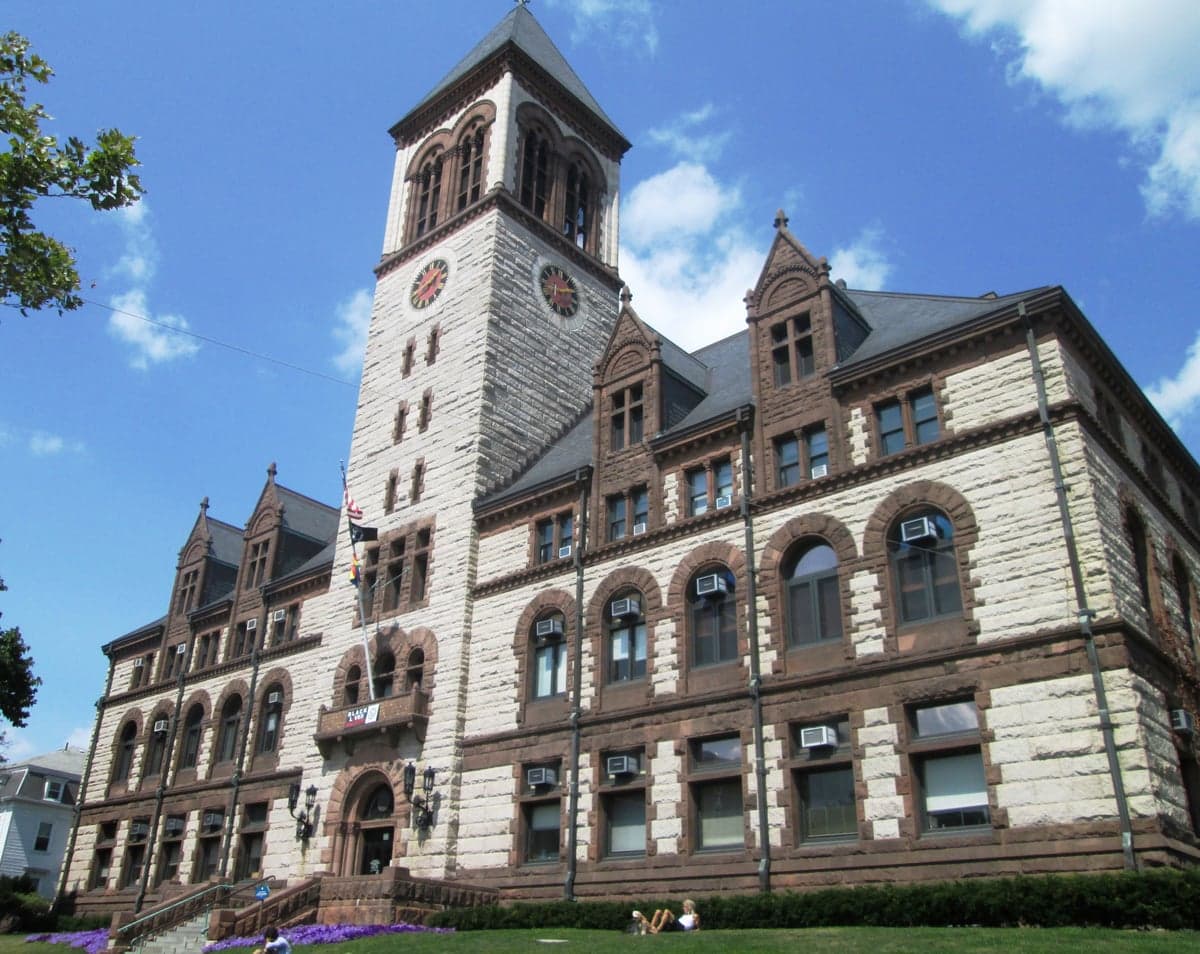
Photo: Wikipedia
Political ClimatePolitical Climate in Cambridge, MA
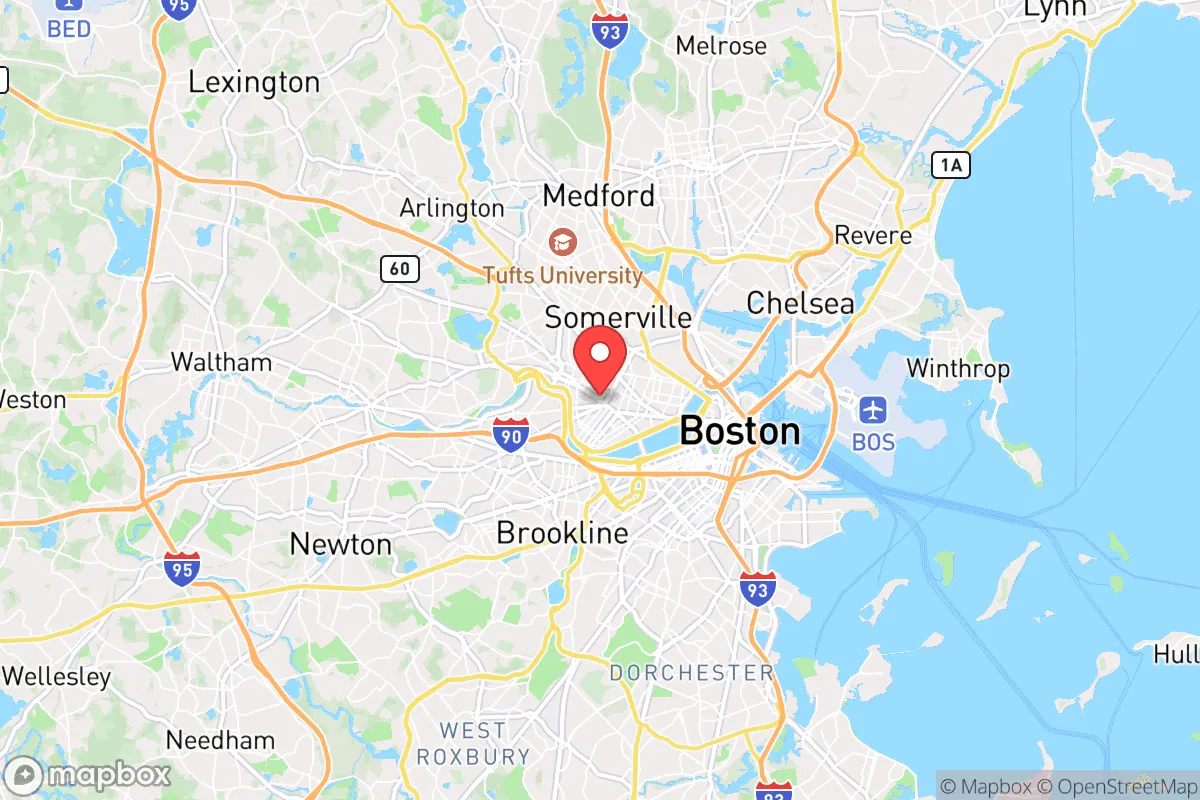
District shown is the primary district for this city’s centroid. Cities may span multiple districts.
Local Political AnalysisPolitical Analysis of Cambridge, MA
Cambridge is about as deep blue as it gets in Massachusetts, with a Cook PVI of D+24, meaning it votes nearly 25 points more Democratic than the national average. But that number barely scratches the surface of what’s actually happening here. The political climate isn’t just liberal—it’s aggressively progressive, and it’s been shifting further left for the last decade. If you’re someone who values personal freedoms, local control, and a government that stays out of your daily life, Cambridge is a place where those ideals are increasingly under pressure. The city council and school committee are dominated by a faction that sees government as the primary tool for social engineering, and they’re not shy about using it.
How it compares
Drive ten minutes west to Arlington or Belmont, and you’ll find a more moderate, fiscally cautious brand of liberalism—places where people still vote blue but grumble about property taxes and zoning overreach. Head south to Somerville, and you’ll see a similar progressive trend, but Cambridge is the epicenter. The contrast is stark when you look at surrounding towns like Watertown or Medford, where the politics are still recognizably Democratic but with a pragmatic streak. In Cambridge, the city council has passed measures like rent control expansions, strict tenant protections that tie landlords’ hands, and a “sanctuary city” ordinance that limits cooperation with federal immigration enforcement. The school committee has pushed for racial equity audits and curriculum changes that prioritize activism over academics. It’s not just about voting patterns—it’s about a governing philosophy that sees no area of life as off-limits for regulation.
What this means for residents
For the average person, this translates into a lot of rules and a lot of bureaucracy. Want to renovate your home? Prepare for a permitting process that can take months and cost thousands, thanks to historic preservation overlays and environmental review boards. Thinking about starting a small business? The city’s licensing requirements, minimum wage hikes, and paid leave mandates make it a grind. The public schools are excellent on paper, but the curriculum is increasingly focused on social justice themes, which can be a turn-off for families who want a more traditional education. And if you’re a property owner, the tax burden is heavy, with the city consistently raising rates to fund new social programs. The long-term trajectory is concerning: as the city becomes more expensive and more regulated, the middle class is being squeezed out, replaced by either wealthy academics or subsidized housing tenants. The political class doesn’t seem to mind, as long as the progressive agenda keeps moving forward.
One of the biggest cultural distinctions here is the sheer intensity of the political discourse. It’s not uncommon to see neighbors arguing over zoning bylaws at a community meeting or to have your landlord’s political affiliations become a topic of conversation. The city has a long history of activism, from the anti-war protests of the 1960s to the Occupy movement, but today it feels more like a permanent campaign. The local paper, the Cambridge Day, is filled with stories about city council debates over everything from bike lane placement to the wording of a resolution on Gaza. If you’re the kind of person who just wants to live your life without constant political drama, Cambridge can be exhausting. The sense I get from talking to old-timers is that the city used to be a place where you could disagree without being labeled an enemy. Now, it feels like every issue is a moral test, and the government is always ready to step in and enforce the right answer.

State Political ClimatePolitical Climate in Massachusetts
State Political AnalysisPolitical Environment in the State
Massachusetts has long been one of the most reliably Democratic states in the nation, but the picture is more complicated than a simple blue label. The state hasn't voted for a Republican presidential candidate since 1984, and Democrats hold supermajorities in both legislative chambers. However, the real story is the growing urban-rural chasm and a creeping sense among many long-time residents that the state's progressive leadership is pushing policies that erode personal freedoms, particularly for families and gun owners. Over the last 20 years, the state has shifted from a moderate, "Massachusetts Republican" tradition to a place where the political center has moved sharply left, leaving many conservatives feeling like an increasingly vocal minority.
Urban vs. rural divide
The political map of Massachusetts is a tale of two worlds. The Boston metro area, including Cambridge, Somerville, and Brookline, is the engine of the state's progressive politics. These dense, educated, and affluent suburbs reliably deliver 80-90% of the vote for Democrats. The western part of the state, particularly Berkshire County, is also deeply blue, but for different reasons—it's more economically distressed and union-heavy. The real conservative strongholds are in the central and southeastern regions. Plymouth County and Bristol County have become battlegrounds, with towns like Taunton, Middleborough, and Carver consistently voting Republican. The Cape Cod area, especially Barnstable, has a significant Republican-leaning retiree population. The most telling shift is in Worcester County, where the city of Worcester itself is reliably Democratic, but the surrounding towns like Holden, Paxton, and Rutland have become deeply red. This divide isn't just about presidential elections; it plays out in local school board races and zoning battles, where rural towns fight against state-imposed housing mandates they see as an attack on local control.
Policy environment
The policy environment in Massachusetts is a mixed bag that often feels like a slow squeeze on personal liberty. The state has a flat income tax rate of 5% (recently reduced from 5.15% via a 2000 ballot initiative), but a 2022 "millionaire's tax" added a 4% surcharge on income over $1 million, which is a clear signal of the state's appetite for redistribution. Property taxes are high, averaging around 1.2% of home value, but vary wildly by town. The regulatory posture is heavy: the state has some of the strictest environmental and building codes in the country, which drives up housing costs. On education, Massachusetts consistently ranks #1 in the nation for K-12, but that comes with a price—parents have limited school choice, and the state's powerful teachers' unions have successfully resisted most charter school expansion and voucher programs. Healthcare is dominated by the state's near-universal coverage system, which includes an individual mandate that predates the ACA. Election laws are among the most liberal: no-excuse mail-in voting, same-day registration, and early voting are all permanent fixtures. For a conservative, the policy environment feels like a one-party state where the legislature routinely overrides local zoning and gun laws with little pushback.
Trajectory & freedom
The trajectory of freedom in Massachusetts is decidedly downward, especially for gun owners and parents. The state already had some of the strictest gun laws in the nation, but in 2024, the legislature passed the H.4885 "Safe Act", which banned the sale of many semi-automatic rifles, imposed a "ghost gun" registry, and expanded the state's "red flag" law to allow family members to petition for gun removal without a criminal conviction. This law was pushed through despite a massive grassroots outcry and a lawsuit from the NRA. On parental rights, the state passed a 2023 law that prohibits school districts from notifying parents if a child changes their gender identity or pronouns, effectively creating a "don't say parent" policy. Medical autonomy has also taken a hit: the state's 2020 "ROE Act" expanded abortion access to the point of allowing late-term procedures, and a 2024 law mandated that all private insurance plans cover abortion and gender transition procedures with no cost-sharing. Property rights are under constant assault from the state's MBTA Communities Act, which forces towns near transit to rezone for high-density housing, overriding local zoning boards. The trend is clear: the state government is centralizing power in Boston, and individual liberty—whether it's the right to keep a firearm, direct your child's education, or control your own property—is being steadily eroded.
Civil unrest & political movements
Civil unrest in Massachusetts is less about street violence and more about organized, persistent political movements. The state has been a flashpoint for the "defund the police" movement, with Boston and Cambridge seeing significant protests in 2020 that led to cuts in police budgets, though many were later restored. The sanctuary state status is a major issue: Massachusetts has a 2017 "Safe Communities Act" that limits local law enforcement cooperation with ICE, and a 2023 law explicitly prohibits state police from detaining individuals based on immigration status. This has led to tensions in towns like Framingham and Lowell, where immigrant populations have grown rapidly. On the right, the "Massachusetts Republican Party" is a shell of its former self, but grassroots groups like the "Massachusetts Gun Rights" coalition and "MassFiscal" have become more active. The most visible flashpoint is the annual "Second Amendment Rally" at the State House, which draws thousands but is dwarfed by the counter-protests. Election integrity is a simmering issue: the state's mail-in voting system, while popular, has raised concerns about ballot harvesting and signature verification, though no major scandals have emerged. A new resident would notice that political activism here is less about rallies and more about school board meetings and town hall fights over zoning and curriculum.
Projection
Looking ahead 5-10 years, the trajectory is not encouraging for conservatives. Demographic trends are working against them: Massachusetts has one of the lowest birth rates in the nation, and the population is aging. The state is heavily dependent on international immigration to maintain its workforce, and those new arrivals tend to vote Democratic. The in-migration from other states is actually negative—more people are leaving Massachusetts than moving in, and those leaving are disproportionately middle-class families and retirees who are fed up with the cost of living and taxes. The state's economy is still strong, driven by biotech, education, and healthcare, but the housing crisis is pushing young families to New Hampshire and Rhode Island. The political reality is that the Democratic supermajority is likely to hold, and the state will continue to pass progressive legislation on guns, housing, and education. The only wild card is the growing suburban revolt against the MBTA Communities Act, which could lead to a backlash in local elections. But for a conservative moving in now, the expectation should be that the state will be more blue, more regulated, and less free in a decade than it is today.
Bottom line for a new resident: If you're a conservative considering Massachusetts, you need to go in with eyes wide open. The state offers world-class schools, top-tier healthcare, and beautiful natural landscapes, but it comes at the cost of high taxes, heavy regulation, and a political culture that is actively hostile to gun ownership, parental rights, and local control. You'll find like-minded communities in the central and southeastern towns, but you'll be fighting an uphill battle against a state government that sees your values as obstacles to be overcome. If you value personal freedom and limited government, you might be happier looking at New Hampshire just over the border. But if you're willing to be a voice in the wilderness, Massachusetts has its pockets of resistance—and they're worth fighting for.
* Values derived from national, state, county, city and local statistics and may differ in a specific area. Last updated: 2026-04-15T23:38:45.000Z
Narrative content on this page is AI-generated and may contain mistakes. Verify any details that matter before acting on them.
ReloMaps may earn a commission from affiliate links at no extra cost to you.

