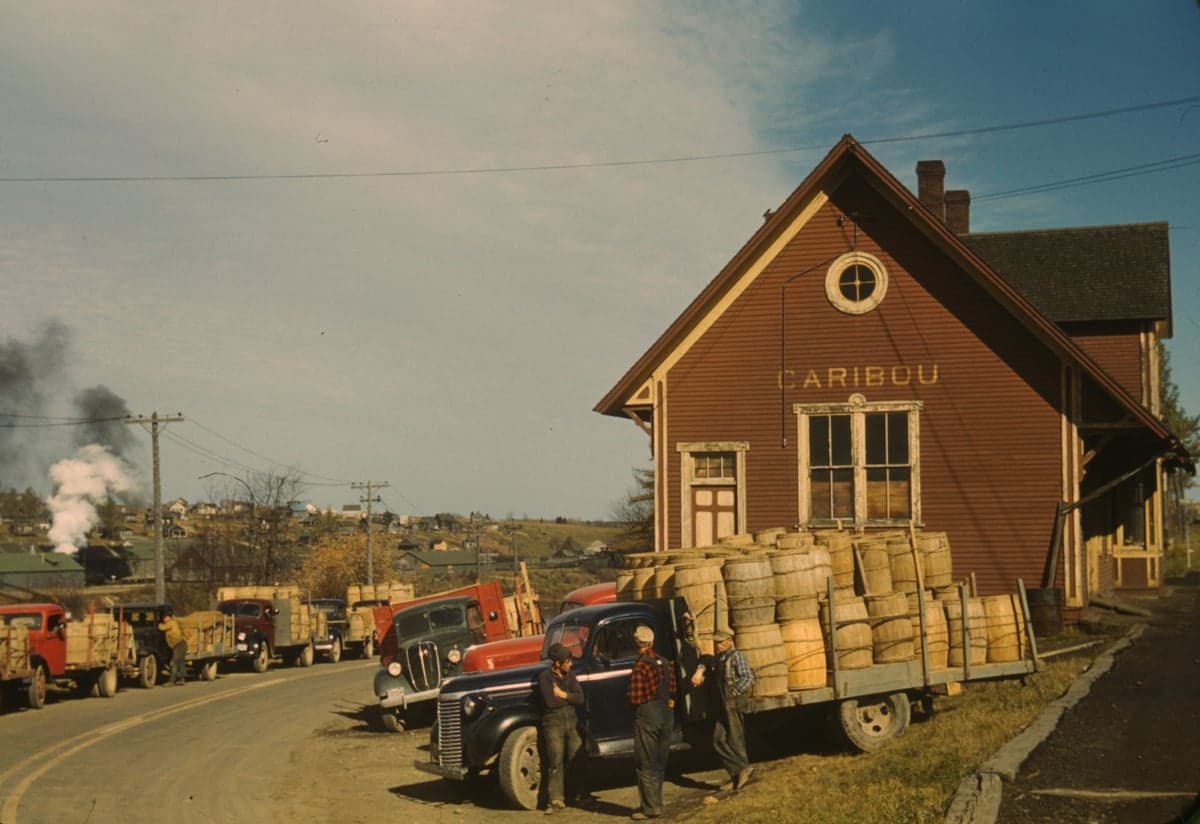
Photo: Wikipedia
Personal Sovereignty in Caribou, ME
Viable for self-reliance. Generally workable, though some barriers may limit total independence.
What does Personal Sovereignty tell us?
Personal Sovereignty measures your capacity for self-reliance and independence with minimal government friction. Higher scores mean fewer barriers between you and the way you want to live... but it assumes you have the space you need and good neighbors.
What does this tell us?
Personal Sovereignty measures your capacity for self-reliance and independence with minimal government friction. Higher scores mean fewer barriers between you and the way you want to live... but it assumes you have the space you need and good neighbors.
State Policy
Energy independence: Importer (30% of energy produced in-state)
Personal Liberty
Homesteading

Personal Liberty Analysis
For the liberty-minded individual or family evaluating Caribou, Maine, as a potential relocation destination, the personal sovereignty environment presents a complex picture. While the state of Maine carries a reputation for progressive governance, Aroostook County—and Caribou specifically—offers a distinct cultural and practical autonomy that diverges sharply from Portland or Augusta. The area’s low population density, strong tradition of self-reliance, and relatively affordable land create a foundation for personal freedom, but state-level regulatory frameworks on taxation, firearms, and property use require careful scrutiny. For those with a survivalist or prepper mindset, Caribou represents a trade-off: significant day-to-day independence in a remote, rural setting, tempered by a state government that can, at times, reach into local affairs in ways that may chafe against a conservative, limited-government worldview.
Tax burden and regulatory posture in Aroostook County
Maine’s overall tax burden is among the highest in the nation, and Caribou residents are not immune. The state levies a progressive income tax with rates up to 7.15%, and the sales tax sits at 5.5%—though groceries and prescription drugs are exempt. Property taxes in Caribou are a more immediate concern: the mill rate hovers around 20.0, meaning a home valued at $150,000 carries an annual tax bill of roughly $3,000. This is moderate by Maine standards but high relative to many southern or midwestern states. On the regulatory front, Maine imposes strict environmental and land-use rules, including the Site Location of Development Act, which can complicate larger construction or off-grid projects. However, Aroostook County benefits from a more pragmatic local enforcement culture. County commissioners and town officials in Caribou tend to be less aggressive than their southern counterparts, and many rural properties operate with a "don't ask, don't tell" approach to minor code violations. For the prepper, the key takeaway is that state-level taxes and regulations are a real cost, but local enforcement is often lenient—especially if you keep a low profile and avoid drawing attention from state agencies.
Self-defense and gun law specifics for Caribou residents
Maine is a "shall-issue" state for concealed carry permits, and since 2015, it has allowed permitless (constitutional) carry for anyone 21 or older who is legally allowed to possess a firearm. This is a strong point for personal sovereignty. No state-level registration, no magazine capacity limits, and no "assault weapon" ban exist. In Caribou, gun culture is deeply embedded; you will find local gun shops, shooting ranges, and a general acceptance of firearms for self-defense, hunting, and preparedness. The state does have a "red flag" law (enacted in 2019) that allows law enforcement to petition for temporary firearm seizure based on a complaint—a provision that concerns many liberty-minded individuals. However, in Aroostook County, such orders are rarely sought or enforced compared to Portland or Lewiston. The practical reality is that a responsible gun owner in Caribou faces minimal interference. For those prioritizing self-defense, the legal environment is favorable, but the "red flag" law remains a statutory vulnerability that could be exploited under a less friendly administration. Stand-your-ground laws are not explicitly codified in Maine statute, but the state’s "castle doctrine" provides strong protections for use of force in the home.
Self-reliance and homesteading viability: lot sizes, zoning, and off-grid feasibility
This is where Caribou truly shines for the prepper and homesteader. Land is affordable and available: you can purchase a 5- to 10-acre parcel for $15,000 to $30,000, and larger tracts (20–50 acres) are common at prices well below the national average. Zoning in unincorporated areas of Aroostook County is minimal; many properties are in "rural" or "farm" zones that permit livestock, gardens, workshops, and even small-scale commercial operations without special permits. Off-grid living is entirely feasible. Wells and septic systems are standard, and solar panels are increasingly common—though the long, cloudy winters mean you will need a robust battery bank or a backup generator. Wood heat is the norm, not a novelty, and many homes already have wood stoves or boilers. The growing season is short (roughly 100 days), but cold-hardy crops, root vegetables, and greenhouse growing are well-established. For those serious about self-sufficiency, Caribou offers a rare combination of low land costs, lax local zoning, and a community that understands and respects independent living. The main challenge is the climate: winter temperatures regularly drop below -20°F, and snow accumulation can exceed 100 inches annually. This demands serious preparation—insulated housing, reliable heating, and a vehicle suited for deep snow—but for the determined individual, it is a manageable trade-off for genuine autonomy.
Personal liberties: parental rights, medical autonomy, speech, and property
Maine’s state-level policies on parental rights and medical freedom are a mixed bag. The state has mandatory vaccination requirements for school attendance (with limited exemptions), and during the COVID-19 pandemic, Maine imposed some of the strictest mandates in the Northeast, including vaccine requirements for healthcare workers and school staff. This history raises caution flags for those who prioritize medical autonomy. Parental rights are generally respected in day-to-day life, but the state has a strong child protective services apparatus that can intervene in cases of perceived neglect—including educational neglect if children are not enrolled in an approved homeschooling program. Homeschooling is legal but requires annual notification and submission of an instructional plan; it is more regulated than in states like Idaho or Texas. On speech and property rights, the local environment is favorable. Caribou is a tight-knit, largely conservative community where political expression—including open discussion of firearms, preparedness, and skepticism of government—is met with agreement, not hostility. Property rights are strong in practice, though the state’s "bundle of rights" can be limited by environmental regulations, particularly near wetlands or waterways. For the liberty-minded individual, the biggest threat to personal sovereignty in Caribou is not the local sheriff or town council—it is the potential for state-level overreach, especially in health mandates and education policy.
In the broader landscape of personal sovereignty, Caribou offers a rare balance: the day-to-day freedom of a remote, rural, self-reliant community, with the practical ability to own land, carry firearms, and live off-grid without constant government interference. The trade-offs are real—high state taxes, a "red flag" law on the books, and a regulatory environment that could tighten under future administrations. But compared to the urban corridors of the Northeast or the heavily regulated West Coast, Caribou provides a sanctuary for those who value independence and are willing to endure harsh winters and limited amenities. For the strategic relocator with a prepper mindset, it is a strong contender—provided you keep one eye on Augusta and the other on your woodpile.

* Values derived from national, state, county, city and local statistics and may differ in a specific area. Last updated: 2026-04-22T22:23:04.000Z
Narrative content on this page is AI-generated and may contain mistakes. Verify any details that matter before acting on them.
ReloMaps may earn a commission from affiliate links at no extra cost to you.

