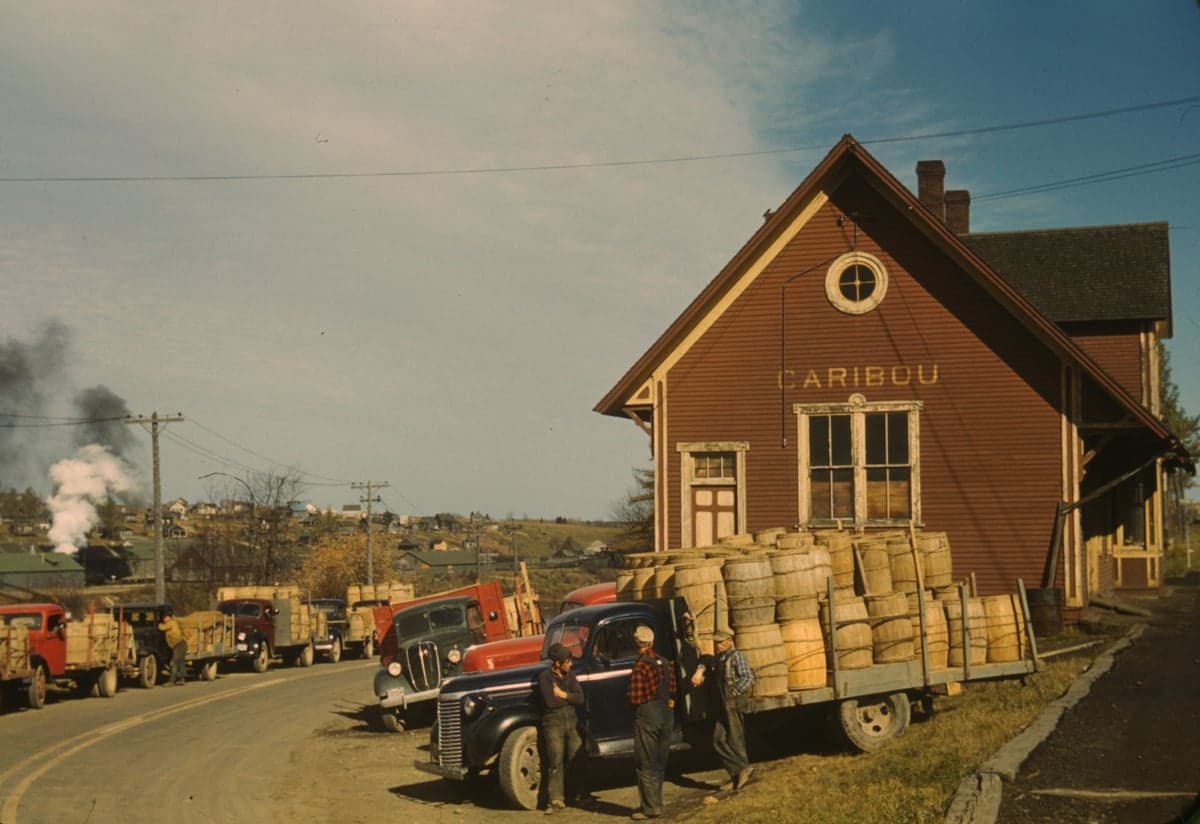
Photo: Wikipedia
Political ClimatePolitical Climate in Caribou, ME
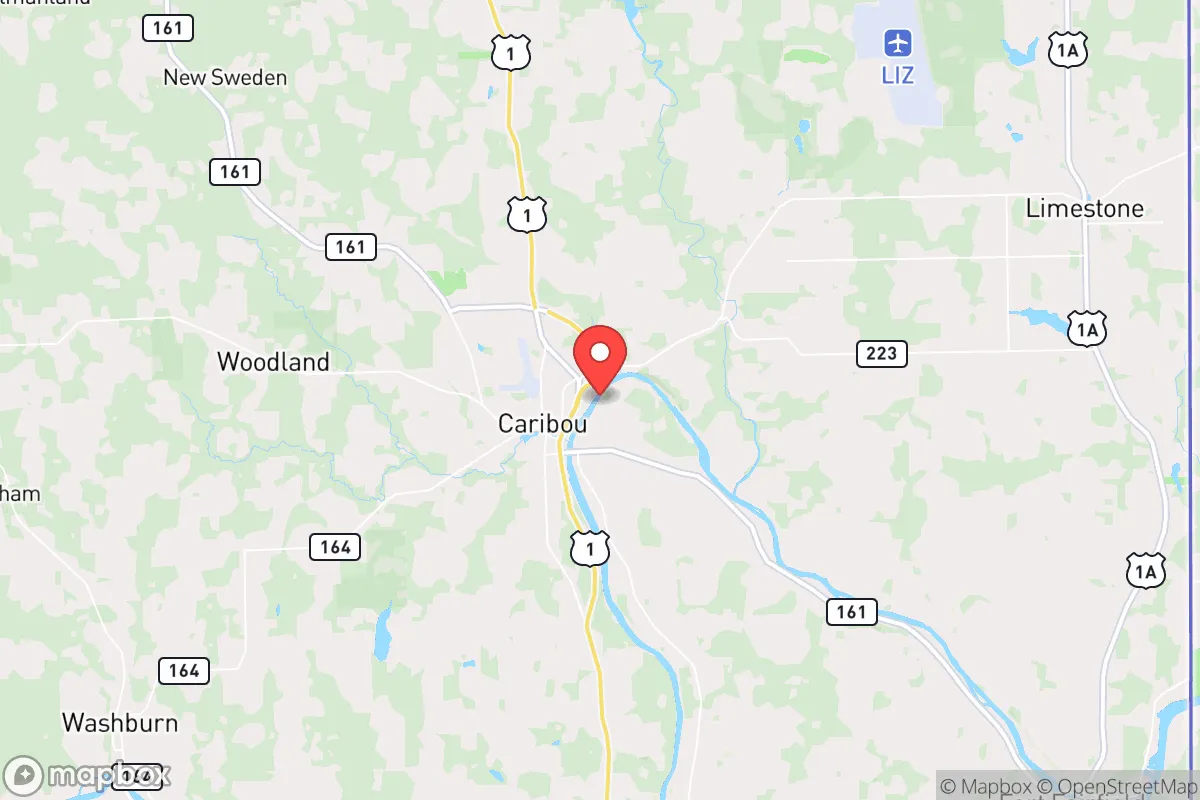
District shown is the primary district for this city’s centroid. Cities may span multiple districts.
Local Political AnalysisPolitical Analysis of Caribou, ME
Caribou, Maine, has long been a solidly conservative community, and that hasn't changed much despite the national trends. The Cook PVI of R+4 tells you the baseline, but it doesn't capture the local feel—this is a place where folks still believe in minding their own business and letting the government stay out of your backyard. You’ll find a lot of old-school Yankee independence here, and while the county has shifted a bit over the decades, the core values of personal responsibility and limited government interference are still the norm.
How it compares
Drive thirty minutes south to Presque Isle, and you’ll notice a slightly more moderate vibe, thanks to the university and a few more service-industry transplants. But head west to the unorganized territories or down to Houlton, and you’re back in the same conservative territory. The real contrast is with Portland or even Bangor—those places feel like a different country. In Caribou, the local paper still runs letters to the editor about property taxes and school budgets, not social justice crusades. The surrounding Aroostook County is one of the last strongholds where a Republican can win a local race without having to apologize for it, and the R+4 rating actually feels a little soft compared to the lived reality of most folks I know.
What this means for residents
For daily life, the conservative tilt means you’re not constantly dealing with new regulations or zoning overlays that tell you what you can do with your own land. The local government is lean, and there’s a general reluctance to raise taxes or expand programs unless absolutely necessary. That’s a relief if you value keeping more of what you earn. The downside is that services can be thin—if you need something from the county, you’d better be patient. But for most people here, that’s a fair trade-off for not having a bureaucrat in your business. The school board and town council are still dominated by folks who remember when the potato industry was king, and they’re skeptical of any “progressive” curriculum or DEI initiatives that might trickle down from Augusta. That’s a comfort if you’re worried about government overreach in your kids’ education.
What this means for residents
Politically, Caribou is a place where your vote actually counts in a primary, but the general election is usually a foregone conclusion locally. The real concern for the future is whether the state-level push for green energy mandates and stricter environmental rules will start to choke the farming and forestry that still keep the area alive. There’s a quiet worry that the folks in Portland don’t understand how a snowmobile trail or a woodlot actually works, and that’s where the tension lies. The local culture prizes self-reliance, so any hint of a state or federal mandate—whether it’s on heating fuel, land use, or vehicle emissions—is met with a lot of side-eye. The long-term trend is that younger people who stay are often the ones who want to keep things as they are, while those who leave for college sometimes come back with different ideas. So far, the old guard has held the line, but it’s something to keep an eye on.
One thing that sets Caribou apart is the strong sense of community that doesn’t need a government program to function. Neighbors still help each other with snow removal and haying, and the local churches and snowmobile clubs are the real social safety net. There’s a cultural resistance to being told what to do, whether it’s about mask mandates or building permits. If you’re looking for a place where you can live your life without a lot of interference, and where the political climate reflects that, Caribou is about as good as it gets in New England. Just don’t expect the local diner to have oat milk—and that’s exactly how most folks like it.

State Political ClimatePolitical Climate in Maine
State Political AnalysisPolitical Environment in the State
Maine has long been a political paradox—a state that votes reliably blue in presidential elections but elects a mix of moderate Republicans and independents at the state level. Over the past 20 years, the state has shifted from a classic New England swing state to a solidly Democratic lean in federal races, though its state legislature and governor’s mansion have seesawed between parties. The 2020 and 2024 elections saw Maine’s 2nd Congressional District (the vast, rural northern half) vote for Trump, while the 1st District (the southern coast and Portland metro) went heavily for Biden and Harris, making Maine one of only two states that split its electoral votes by district. For a conservative considering relocation, the key takeaway is that Maine’s political future hinges on a tug-of-war between a growing, progressive southern coast and a shrinking, conservative rural interior.
Urban vs. rural divide
The political map of Maine is a study in contrasts. The Portland metro area—including Portland, South Portland, and Brunswick—drives the state’s Democratic lean, with precincts routinely voting 70-80% for Democratic candidates. This region has seen an influx of out-of-state transplants, many from Massachusetts and New York, who bring progressive voting habits and push for higher taxes and stricter regulations. In contrast, the vast 2nd Congressional District, anchored by Bangor, Presque Isle, and Lewiston, is a Republican stronghold. Lewiston, once a Democratic mill town, has flipped sharply right in recent cycles, voting for Trump by double digits in 2024. The rural counties of Aroostook, Piscataquis, and Somerset are among the most conservative in New England, with many precincts voting 65-75% Republican. The divide isn’t just geographic—it’s cultural. Portland’s economy is driven by tech, tourism, and services, while the north relies on logging, farming, and small manufacturing. This split means that state-level policy often feels like a compromise between two very different worlds.
Policy environment
Maine’s policy environment is a mixed bag for conservatives. The state has a progressive income tax system with rates up to 7.15%, and property taxes are among the highest in the nation—averaging 1.3% of home value, which hits rural landowners hard. The regulatory posture is generally business-friendly compared to neighboring Massachusetts, but environmental regulations are strict, especially around coastal development and forestry. Education policy is dominated by the teachers’ union, with school choice limited to a handful of charter schools and no voucher program. Healthcare is heavily regulated, with the state expanding Medicaid under the Affordable Care Act and maintaining a state-run insurance exchange. Election laws are relatively open: same-day voter registration is allowed, and no-excuse absentee voting was made permanent in 2021. However, Maine uses ranked-choice voting for federal elections, which some conservatives argue dilutes the impact of single-party voting. The state also has a “clean elections” public financing system that many see as a way to limit outside influence, though critics say it favors incumbents.
Trajectory & freedom
Over the past decade, Maine has moved in a direction that many conservatives find concerning. The 2021 passage of LD 639, a strict gun control law requiring a 72-hour waiting period for all firearm purchases and expanding background checks to private sales, was a major flashpoint. This came on top of a 2019 “red flag” law (LD 1640) that allows family members or police to petition a court to temporarily remove firearms from someone deemed a threat. On parental rights, the state has moved left: in 2023, the legislature passed LD 1735, which prohibits schools from requiring parental notification when a student changes their gender identity or pronouns—a direct blow to parental authority. Medical autonomy has also been curtailed; Maine’s vaccine mandate for healthcare workers remains in place, and the state has one of the strictest COVID-era public health powers still on the books. Property rights are under pressure from a 2022 law (LD 2003) that allows municipalities to impose rent control and tenant protections, which some landowners see as an infringement. On the positive side for conservatives, Maine has no sales tax on groceries or clothing, and the state’s “right to farm” law offers some protection for agricultural landowners. But the overall trajectory is toward more government involvement in daily life.
Civil unrest & political movements
Maine has seen relatively little civil unrest compared to larger states, but tensions are simmering. In 2020, Portland saw several weeks of Black Lives Matter protests, with some turning violent—storefronts were smashed and a statue of a Civil War soldier was toppled. The state’s sanctuary status (Maine is a “sanctuary state” under a 2019 executive order by Governor Janet Mills) has been a flashpoint, particularly in smaller towns like Sanford and Biddeford, where residents have clashed with local officials over housing and services for asylum seekers. The 2023 mass shooting in Lewiston, where a gunman killed 18 people, reignited the gun control debate and led to a temporary surge in support for further restrictions. On the right, the “Maine 2nd” movement—a loose coalition of Second Amendment advocates and county sovereignty groups—has gained traction in rural areas, with some towns passing resolutions declaring themselves “Second Amendment sanctuaries.” Election integrity remains a hot topic; the 2020 and 2024 elections saw no major scandals, but many conservatives remain skeptical of the state’s use of drop boxes and universal absentee voting. The most visible flashpoint for a new resident would likely be the culture war playing out in school board meetings, particularly in suburbs like Falmouth and Cape Elizabeth, where debates over critical race theory and LGBTQ curriculum have become heated.
Projection
Looking ahead 5-10 years, Maine’s political trajectory is likely to continue its slow leftward drift, driven by demographic change. The southern coast is growing faster than the north, with Portland’s metro area expected to add another 50,000 residents by 2035, many of them from out of state. This will likely solidify Democratic control of the governorship and the 1st Congressional District. However, the 2nd District is likely to remain Republican, as rural populations decline but become more politically active. The state’s independent streak—Maine has a long history of electing independents like Angus King and Eliot Cutler—could produce surprises, but the overall trend is toward a more progressive policy environment. For a conservative moving in now, expect to see continued expansion of gun control, further erosion of parental rights in schools, and higher taxes to fund social programs. The one wildcard is the state’s aging population; Maine is the oldest state by median age, and as older, more conservative residents die off, the electorate will become younger and more liberal. Someone moving in today should plan for a state that will feel noticeably less free in a decade than it does now.
For a conservative considering Maine, the bottom line is this: you can find a welcoming community in the rural north or in small towns like Belfast or Ellsworth, but you’ll be fighting a losing battle at the state level. The state’s tax burden, regulatory environment, and cultural trajectory are all moving in a direction that prioritizes government control over individual liberty. If you value low taxes, gun rights, and local control, Maine is not a safe bet for the long term. But if you’re willing to engage in the fight—and you don’t mind cold winters—there are still pockets where conservative values thrive. Just don’t expect the state to stay that way.
* Values derived from national, state, county, city and local statistics and may differ in a specific area. Last updated: 2026-04-22T22:23:04.000Z
Narrative content on this page is AI-generated and may contain mistakes. Verify any details that matter before acting on them.
ReloMaps may earn a commission from affiliate links at no extra cost to you.

