Personal Sovereignty in Carmichael, CA
Viable for self-reliance. Generally workable, though some barriers may limit total independence.
What does Personal Sovereignty tell us?
Personal Sovereignty measures your capacity for self-reliance and independence with minimal government friction. Higher scores mean fewer barriers between you and the way you want to live... but it assumes you have the space you need and good neighbors.
What does this tell us?
Personal Sovereignty measures your capacity for self-reliance and independence with minimal government friction. Higher scores mean fewer barriers between you and the way you want to live... but it assumes you have the space you need and good neighbors.
State Policy
Energy independence: Importer (33% of energy produced in-state)
Personal Liberty
Homesteading

Personal Liberty Analysis
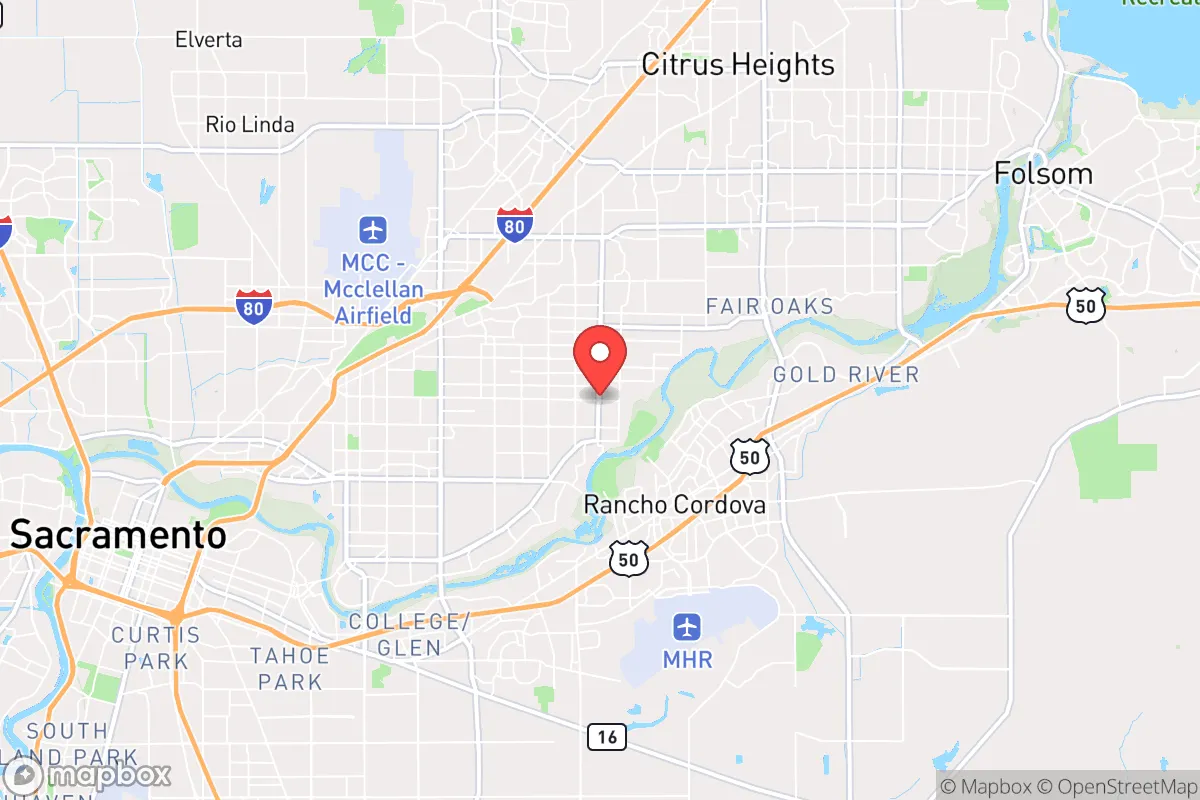
Carmichael, California, offers a nuanced personal sovereignty environment that balances the structural constraints of a deep-blue state with the practical autonomy of a suburban Sacramento County community. While California’s statewide tax burden, regulatory density, and firearm laws impose significant limits on individual discretion, Carmichael’s specific zoning patterns, relatively lower crime rates compared to nearby Sacramento, and established single-family housing stock provide meaningful room for self-reliant living. For a relocation audience that prioritizes personal freedom, the key question is not whether Carmichael is a libertarian enclave—it is not—but whether the area’s specific trade-offs between state-level control and local flexibility align with a family’s or individual’s tolerance for regulation.
Tax burden and regulatory posture in Carmichael compared to other California suburbs
California’s overall tax burden ranks among the highest in the nation, and Carmichael residents are fully subject to that framework. The state’s progressive income tax tops out at 13.3% on incomes over $1 million, and the base state sales tax of 7.25% rises to 8.75% in Sacramento County after local add-ons. Property taxes, however, are a relative bright spot due to Proposition 13: annual assessments are capped at 1% of the purchase price, with increases limited to 2% per year. For a buyer acquiring a home in Carmichael today, that means a predictable, non-escalating property tax bill—a meaningful advantage over states without such caps. On the regulatory side, Carmichael operates under Sacramento County’s zoning and building codes, which are moderately stringent. Permitting for home additions or accessory dwelling units (ADUs) follows state-mandated streamlining, but county-level environmental review can add time and cost for larger projects. The regulatory posture is best described as moderate-to-heavy at the state level, moderate at the county level, with no additional city-level overlay since Carmichael is unincorporated. For a self-reliant homeowner, the main friction points are state energy codes and California Environmental Quality Act (CEQA) triggers on significant construction, not local overreach.
Self-defense and gun law specifics for Carmichael residents
California’s firearm laws are among the most restrictive in the United States, and Carmichael residents must navigate them carefully. The state requires a 10-day waiting period, a Firearm Safety Certificate (FSC) test, and a background check through the California Department of Justice for all firearm purchases. The roster of handguns approved for sale is limited, and magazines over 10 rounds are banned for possession, even if acquired legally out of state. Concealed carry permits (CCWs) are issued by the Sacramento County Sheriff’s Office, which operates under a “may-issue” framework. In practice, Sacramento County has become more permissive in recent years following the Bruen decision, but applicants must still demonstrate “good cause” beyond mere self-defense, complete a training course, and pay fees totaling several hundred dollars. The approval rate has risen, but the process remains more burdensome than in shall-issue counties in other states. For home defense, California’s “castle doctrine” applies, but there is no stand-your-ground law; a duty to retreat exists in public spaces. Self-defense in Carmichael is legally viable but administratively costly, and the regulatory environment strongly favors defensive tools like pepper spray and home security systems over firearms for those unwilling to navigate the licensing process.
Self-reliance and homesteading viability: lot sizes, zoning, and off-grid feasibility
Carmichael’s residential character is defined by mid-century single-family homes on lots typically ranging from one-quarter to one-half acre, a legacy of its post-war development pattern. This lot size is larger than the typical Sacramento infill parcel, providing genuine space for vegetable gardens, small orchards, and backyard poultry. Sacramento County zoning allows up to 25 chickens on lots of one acre or less (with no roosters in residential zones), and beekeeping is permitted with registration. Goats, sheep, and other small livestock are generally restricted to parcels of one acre or more, which excludes many Carmichael properties. Off-grid living is effectively infeasible: California law requires connection to the electrical grid for new construction, and the county enforces building codes that mandate modern plumbing, septic, and electrical systems. Rainwater collection is legal but limited to two 50-gallon barrels per property without a permit, and graywater systems must comply with state plumbing codes. Solar panels are widely adopted and incentivized, but net metering rules have become less favorable. For a homesteading-oriented family, Carmichael offers a moderate foundation for suburban self-sufficiency—good soil, decent lot sizes, and a mild growing season—but the regulatory framework prohibits the kind of rural independence found in California’s Sierra foothills or far northern counties.
Personal liberties: parental rights, medical autonomy, speech, and property
California’s legal environment strongly shapes personal liberties in Carmichael. Parental rights in education are a contested area: the state mandates LGBTQ-inclusive curriculum and prohibits schools from notifying parents when a child changes their gender identity or pronouns, a policy that has drawn significant opposition from conservative families. School choice exists through charter schools and inter-district transfers, but the state’s education code gives parents less explicit authority than in states with parental rights statutes. Medical autonomy is similarly constrained: California has strict vaccine mandates for school attendance, and the state’s public health infrastructure can impose masking or isolation orders during health emergencies. On the other hand, California’s property rights are relatively strong for existing homeowners due to Proposition 13’s tax protections, and the state’s anti-SLAPP laws provide robust protection against frivolous lawsuits aimed at silencing speech. Political speech is fully protected, and Carmichael’s location in a politically mixed county means that conservative viewpoints are expressed openly in local civic life, even if state policy leans left. For a family prioritizing parental control over education and medical decisions, Carmichael’s environment will feel restrictive; for someone focused on property tax stability and free expression, it offers solid protections.
Overall, personal sovereignty in Carmichael is a study in trade-offs. The area provides genuine advantages in property tax predictability, moderate lot sizes for suburban homesteading, and a functional if burdensome concealed carry process. It falls short for those seeking low state taxes, permissive gun laws, off-grid independence, or strong parental rights in education. Compared to conservative-leaning states like Texas or Arizona, Carmichael’s regulatory environment is heavier; compared to coastal California metros like San Francisco or Los Angeles, it is notably lighter. For the relocation reader who values personal freedom but is tethered to California by family, career, or climate, Carmichael represents one of the more viable compromises within the state—a place where state-level constraints are real but local conditions still allow for a meaningful degree of self-reliant living.

* Values derived from national, state, county, city and local statistics and may differ in a specific area. Last updated: 2026-08-22T09:41:09.000Z
Narrative content on this page is AI-generated and may contain mistakes. Verify any details that matter before acting on them.
ReloMaps may earn a commission from affiliate links at no extra cost to you.

