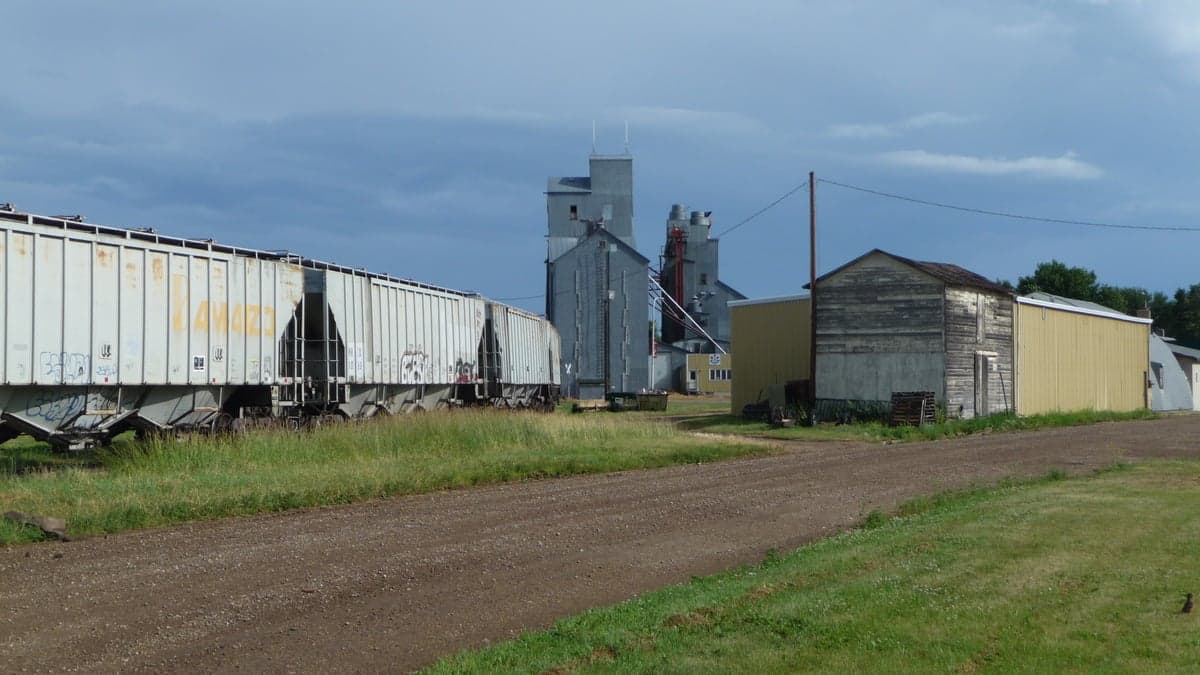
Photo: Wikipedia
Demographics of Carrington, ND
Affluence Level in Carrington, ND
A middle-class area roughly in line with national averages across income, home values, education, and employment.
People of Carrington, ND
The people of Carrington, North Dakota today form a tight-knit, predominantly white community of 2,171 residents, characterized by a strong agricultural and energy-sector work ethic and a notably high proportion of Indian-subcontinent professionals relative to its small size. With 91.1% of the population identifying as white and 2.1% as Indian (subcontinent), the city presents a demographic profile that is both deeply rooted in its Scandinavian and German settlement history and quietly diversifying through specialized professional migration. The city’s identity remains anchored in its role as a regional trade and healthcare hub for Foster County, with a college attainment rate of 30.9% reflecting the presence of skilled workers at local institutions like the Carrington Health Center and Dakota College at Bottineau’s Carrington campus.
How the city was settled and grew
Carrington’s founding population arrived in the early 1880s, drawn by the Northern Pacific Railway’s expansion and the promise of cheap, fertile land under the Homestead Act. The first wave consisted primarily of Norwegian and German immigrants, who established farms and small businesses along the rail line. These settlers built the original core of the city in what is now the Downtown Carrington Historic District, centered around Main Street, where grain elevators, banks, and general stores sprang up to serve the surrounding agricultural hinterland. A second wave of German-Russian immigrants arrived in the 1890s and early 1900s, settling in the South Side neighborhood near the railroad tracks, where they established a distinct community with its own churches and social halls. By 1910, the population had reached roughly 1,500, and the city’s character as a conservative, agrarian, and ethnically homogeneous community was firmly set. The North Hill area, developed in the 1920s and 1930s, became home to the children and grandchildren of these original settlers, many of whom worked at the local creamery and the Carrington Milling Company.
Modern era (post-1965)
The post-1965 period brought modest but significant demographic shifts. The Immigration and Nationality Act of 1965 did not immediately change Carrington’s population, but the city’s economic base began to diversify beyond agriculture. The opening of the Carrington Health Center in the 1970s and the expansion of the Dakota College at Bottineau campus in the 1980s attracted a small number of professionals from outside the region. The most notable modern change has been the arrival of Indian-subcontinent professionals, primarily physicians and engineers, who began settling in Carrington in the 2000s to work at the health center and at local agribusiness firms like CHS and Dakota Growers Pasta. These families have concentrated in the Westwood Estates subdivision, a newer residential area developed in the 2010s on the city’s western edge, characterized by larger single-family homes. The East End neighborhood, historically home to railroad workers and lower-income families, has seen a slight increase in Hispanic and Black residents (0.8% and 0.6% of the population, respectively), many employed in seasonal agricultural labor and at the local turkey processing plant. The white population remains dominant across all neighborhoods, but the Indian-subcontinent community, though small in absolute numbers, is highly visible in professional roles and has established a small cultural presence, including a Hindu prayer group that meets at the Carrington Community Center.
The future
Carrington’s population is projected to remain stable or decline slightly over the next decade, mirroring broader rural North Dakota trends. The city is not homogenizing further; rather, it is experiencing a slow, selective diversification driven by professional recruitment. The Indian-subcontinent community, currently 2.1% of the population, is likely to grow modestly as the health center and regional agribusiness continue to recruit specialized talent. This group shows signs of assimilation, with children attending Carrington Public Schools and families participating in community events, but they also maintain distinct social networks centered on the Westwood Estates neighborhood. The East/Southeast Asian population remains negligible at 0.0%, and no significant growth is expected. The Hispanic and Black populations are likely to plateau at current levels, as seasonal labor demand is met by existing workers and automation reduces the need for manual agricultural labor. The white population, while still dominant, is aging, and out-migration of young adults to larger cities like Fargo and Bismarck will continue to shrink the overall population base. The Downtown area is seeing some reinvestment, with new apartment units above storefronts attracting a mix of young professionals and retirees, but the city’s residential geography is not tribalizing into distinct ethnic enclaves—rather, it remains largely integrated by income and housing type.
For someone moving to Carrington now, the city offers a stable, safe, and deeply rooted community where professional opportunity exists alongside a traditional rural lifestyle. The population is becoming slightly more diverse in professional terms, but the social fabric remains overwhelmingly white and conservative, with a strong emphasis on church, school, and local sports. Newcomers, particularly those from the Indian-subcontinent, will find a welcoming but insular environment where integration requires active participation in community institutions. The city is not transforming into a multicultural hub; it is a place where a small, skilled immigrant workforce is gradually being absorbed into a predominantly homogeneous society, with little change expected in the next 10 to 20 years.

* Values derived from national, state, county, city and local statistics and may differ in a specific area. Last updated: 2026-10-10T16:27:02.000Z
Narrative content on this page is AI-generated and may contain mistakes. Verify any details that matter before acting on them.
ReloMaps may earn a commission from affiliate links at no extra cost to you.

