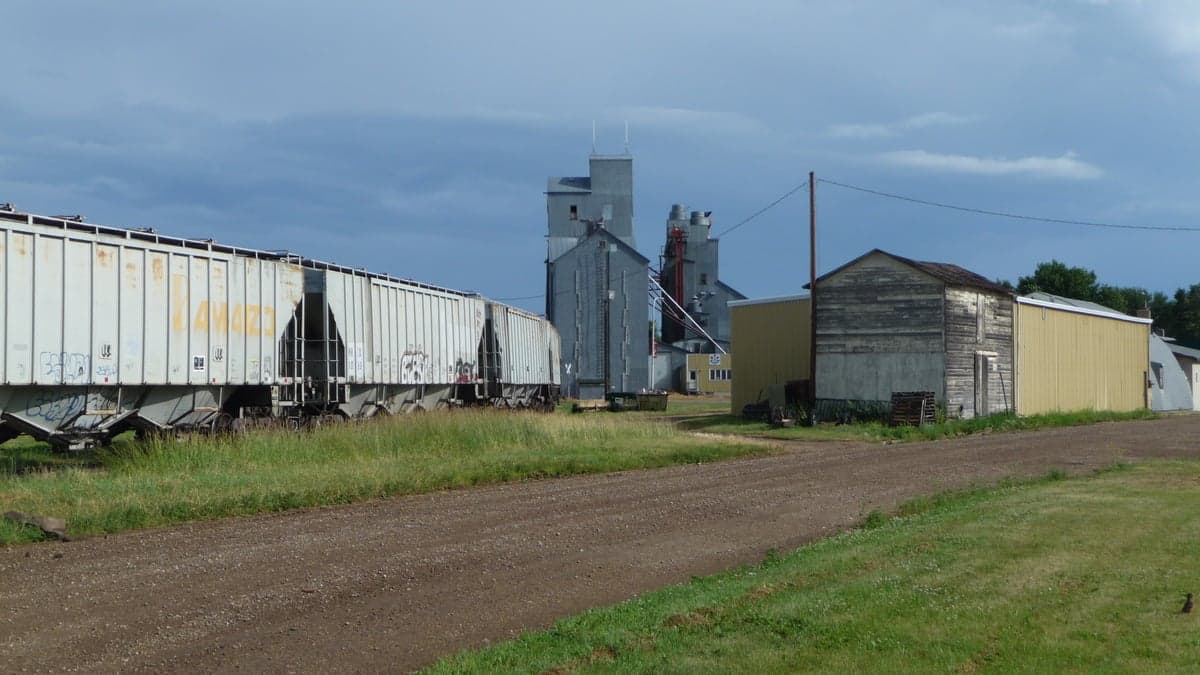
Photo: Wikipedia
Political ClimatePolitical Climate in Carrington, ND
District shown is the primary district for this city’s centroid. Cities may span multiple districts.
Inherited from parent state — no local data available.
Local Political AnalysisPolitical Analysis of Carrington, ND
Carrington, North Dakota, is about as solidly conservative as they come, with a Cook PVI of R+18 that tells you exactly where things stand. This isn't a purple area that flips back and forth—it's a place where traditional values and limited-government thinking are the baseline, not the exception. The political lean here has been steady for decades, and while you'll see the occasional national trend ripple through, the local trajectory remains firmly rooted in common-sense, rural conservatism. Folks here vote for candidates who promise to stay out of their lives, keep taxes low, and protect the Second Amendment, and they've been doing it consistently.
How it compares
If you drive an hour south to Jamestown, you'll find a similar conservative vibe, though it's a bit more tempered by the college crowd and some state government offices. Head west to Bismarck, and you're in the state capital—still conservative, but with a more polished, establishment feel. The real contrast is east to Fargo, where the influx of out-of-state transplants and corporate growth has nudged things slightly more moderate, especially in local races. Carrington, by comparison, feels like a time capsule of old-school North Dakota values: no-nonsense, self-reliant, and deeply skeptical of any government overreach. The surrounding Foster County is even more conservative than the city itself, so you're not getting any progressive drift from the rural areas—it's all pulling in the same direction.
What this means for residents
For someone living here, the political climate translates directly into daily life. You don't worry about your property rights being trampled by zoning boards or state mandates. The local government keeps its nose out of your business, and that's exactly how people want it. Taxes stay low because there's no appetite for bloated programs or social engineering. If you're a hunter, a gun owner, or just someone who values personal freedom, you're not fighting an uphill battle—your rights are respected, not questioned. The downside? If you lean progressive, you'll feel isolated. There's no real push for green energy mandates, diversity quotas, or woke policies in the schools. That's a feature, not a bug, for most residents, but it's worth knowing if you're considering a move.
Culturally, Carrington stands out for its strong sense of community self-reliance. There's no tolerance for government overreach into personal freedoms—whether that's vaccine mandates, business closures, or land-use restrictions. The local school board and city council are filled with people who remember when the government stayed small and stayed out. Looking ahead, the concern is that national trends could eventually trickle down, especially as younger generations get exposed to progressive ideas online. But for now, Carrington remains a place where you can live your life without someone in an office telling you how to do it. If that sounds like a breath of fresh air, you'll fit right in.

State Political ClimatePolitical Climate in North Dakota
State Political AnalysisPolitical Environment in the State
North Dakota is a deeply red state, but the kind of red that’s been shifting under your feet for the past decade. The state’s overall partisan lean is still reliably Republican—Donald Trump won it by 34 points in 2024—but the coalition that delivers those margins is changing. The old agricultural and energy-based conservatism is being challenged by a new wave of populist, liberty-minded voters, especially in the western oil patch and the suburban fringe of Fargo. Over the last 20 years, the GOP has only tightened its grip on the legislature, but the internal fights have gotten louder, and the state’s political culture is less about “leave us alone” and more about “who gets to decide what freedom looks like.”
Urban vs. rural divide
The political map of North Dakota is a study in contrasts. The eastern corridor—Fargo, Grand Forks, and West Fargo—is where the state’s population is concentrated, and it’s also where the political center of gravity is shifting. Fargo, home to North Dakota State University and a growing tech and healthcare sector, has become a blue dot in a red state. In 2024, Cass County (Fargo) voted for Trump by only 12 points, down from 18 points in 2020. The city itself is increasingly moderate-to-liberal on social issues, driven by younger professionals and university faculty. Grand Forks, with the University of North Dakota, follows a similar but less pronounced pattern. Meanwhile, the rural counties—McLean, Mercer, Dunn—routinely deliver 80-90% Republican margins. The western oil patch, centered on Williston and Watford City, is a different beast: it’s deeply conservative but with a libertarian streak, suspicious of both federal overreach and the state’s own regulatory apparatus. The divide isn’t just urban vs. rural; it’s between the settled, government-dependent eastern towns and the frontier, boom-bust culture of the west.
Policy environment
North Dakota’s policy environment is a mixed bag for a conservative. On taxes, it’s a standout: no state income tax (phased out in 2024), a low property tax burden, and a sales tax that tops out at 7.5% in some cities but is often lower. The state’s regulatory posture is generally light, especially for agriculture and energy, but the legacy of the Bakken boom means there’s still a thicket of oil and gas regulations that frustrate small operators. Education policy is a flashpoint: the state has a robust school choice movement, but it’s been slow to pass universal vouchers, and the public school lobby in Fargo and Bismarck is strong. Healthcare is a sore spot—North Dakota expanded Medicaid under the Affordable Care Act in 2013, a decision that still rankles many conservatives, though the state has resisted further federal encroachments. Election laws are solid: voter ID is required, no-excuse absentee voting is allowed, and the state has resisted mail-in ballot expansions. The legislature is firmly Republican, but the internal fights are over how much government should do, not whether it should exist.
Trajectory & freedom
The trajectory of freedom in North Dakota is a two-steps-forward, one-step-back story. On the positive side, the state passed Constitutional Carry in 2017, allowing permitless carry of firearms, and has resisted red flag laws. In 2023, the legislature passed a parental rights in education bill that requires schools to notify parents of any curriculum involving sexuality or gender identity—a win for family autonomy. Property rights got a boost with the 2016 Measure 2 (defeated, but the conversation continues) and ongoing efforts to limit eminent domain for pipelines. On the concerning side, the state’s COVID-19 response was a mixed bag: Governor Doug Burgum resisted lockdowns but imposed a mask mandate in 2020, which sparked a backlash that still echoes. More recently, the state has expanded telehealth and medical privacy protections, but there’s a creeping trend of using state power to enforce “public health” measures that feel like overreach. The biggest freedom concern is property taxes: while low, they’re still a burden, and the state’s reliance on oil revenue means that when the boom busts, the tax burden shifts back to homeowners. The 2024 legislative session saw a push for a flat income tax (passed) and a property tax cap (still pending), which would be a major win for personal liberty.
Civil unrest & political movements
North Dakota has seen its share of political flashpoints, and they’re not the kind you’d expect. The Standing Rock protests in 2016-2017 were the biggest civil unrest event in the state’s modern history, drawing thousands of activists from across the country to oppose the Dakota Access Pipeline. The protests were a mix of Native American sovereignty, environmental activism, and left-wing organizing, and they left a lasting scar on the state’s political culture. Many rural residents saw the protests as an invasion by outside agitators, and the state’s response—mass arrests, heavy police presence—was widely supported by conservatives. On the right, the North Dakota Republican Party has seen a populist insurgency, with the Bastiat Caucus (named after the French economist) pushing for smaller government, term limits, and a harder line on immigration. The state has no sanctuary cities, and the legislature passed a law in 2023 requiring local law enforcement to cooperate with federal immigration authorities. Election integrity is a live issue: the state’s voter ID law is strong, but there’s ongoing debate about mail-in ballot security, especially after the 2020 election saw a surge in absentee voting. You won’t see street protests in Bismarck or Fargo, but the political energy is real—it’s in the county commission meetings and the legislative hearings.
Projection
Over the next 5-10 years, North Dakota is likely to become more polarized, not less. The demographic trends are clear: the eastern metros (Fargo, Grand Forks) are growing faster than the rural west, and they’re bringing in younger, more diverse populations that lean left on social issues. The oil patch, meanwhile, is aging and volatile—when the next bust comes, the population could shrink, shifting the political center of gravity eastward. The state’s in-migration is mostly from other red states (Minnesota, Montana, South Dakota), but it’s also drawing from blue states like California and Washington, and those newcomers bring different values. The Republican Party will likely remain dominant, but the internal fights will intensify: the establishment wing (pro-business, pro-energy) vs. the populist wing (anti-tax, anti-regulation, pro-gun). The biggest wildcard is the state’s budget: if oil prices stay high, the state can keep taxes low and services decent. If they crash, expect a property tax revolt and a push for spending cuts. For a conservative moving in now, expect a state that’s still free but fighting to stay that way—the battles will be over school choice, property taxes, and the scope of local government.
For a new resident, the bottom line is this: North Dakota is a great place if you value low taxes, gun rights, and a strong sense of community, but it’s not a libertarian paradise. The state government is active in your life—through property taxes, school boards, and oil regulations—and the political fights are real. If you’re moving here, get involved in local politics, because that’s where the decisions that affect your freedom are made. The state’s trajectory is toward more internal conflict, but the overall direction is still conservative—just a more complicated, populist kind of conservative than the old farm-and-oil coalition. Keep an eye on Fargo, because that’s where the future of North Dakota politics is being written.
* Values derived from national, state, county, city and local statistics and may differ in a specific area. Last updated: 2026-10-10T16:27:02.000Z
Narrative content on this page is AI-generated and may contain mistakes. Verify any details that matter before acting on them.
ReloMaps may earn a commission from affiliate links at no extra cost to you.

