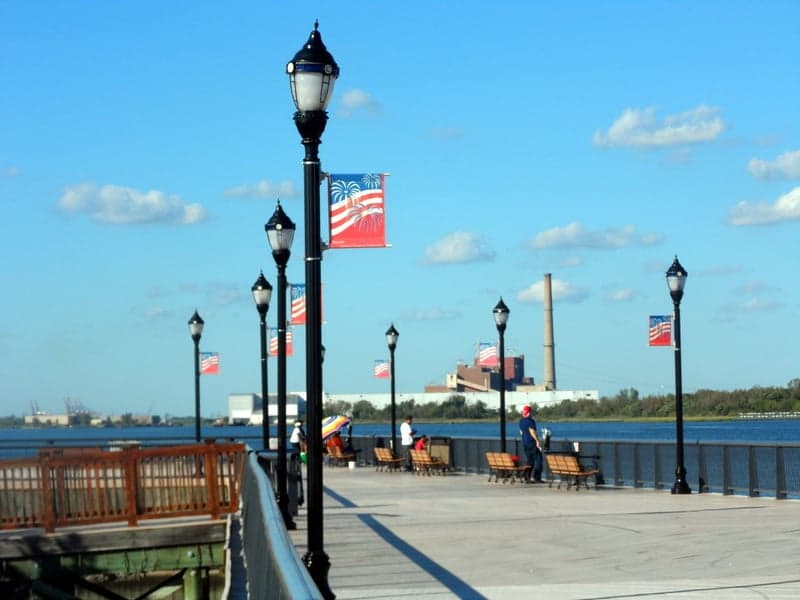
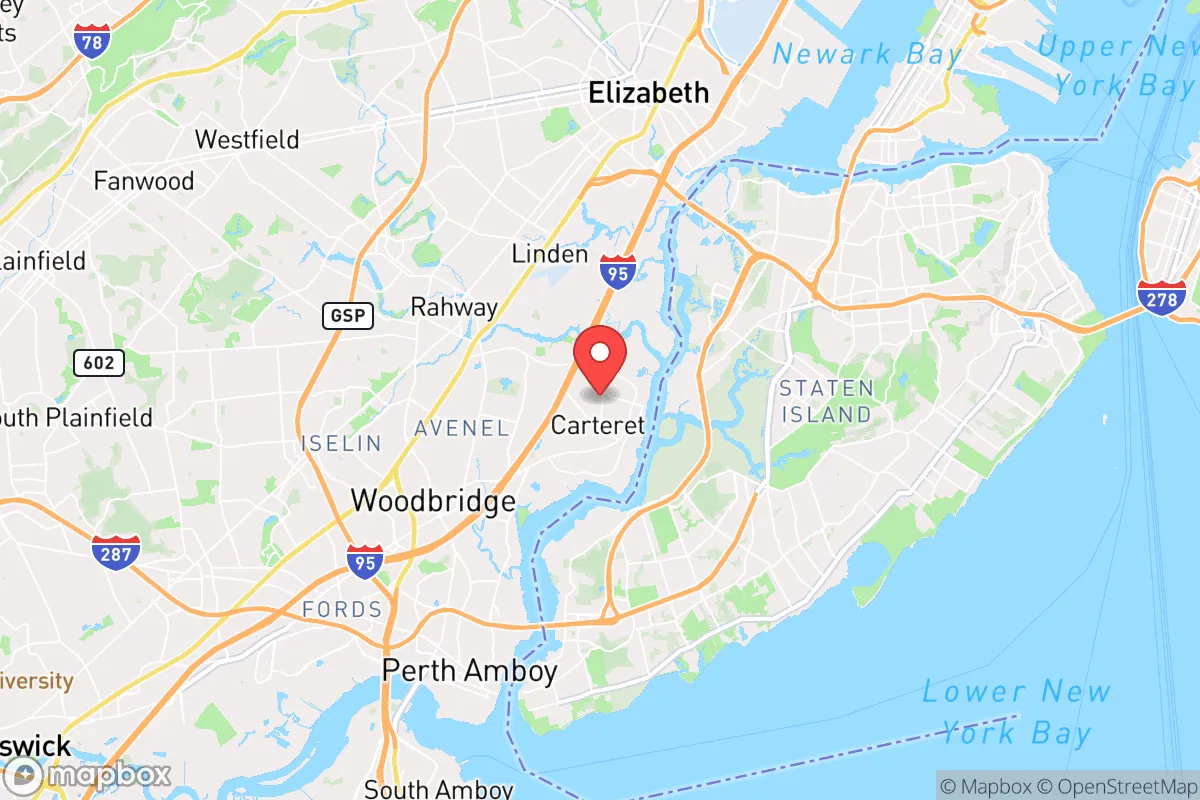
Photo: Wikipedia
Personal Sovereignty in Carteret, NJ
Viable for self-reliance. Generally workable, though some barriers may limit total independence.
What does Personal Sovereignty tell us?
Personal Sovereignty measures your capacity for self-reliance and independence with minimal government friction. Higher scores mean fewer barriers between you and the way you want to live... but it assumes you have the space you need and good neighbors.
What does this tell us?
Personal Sovereignty measures your capacity for self-reliance and independence with minimal government friction. Higher scores mean fewer barriers between you and the way you want to live... but it assumes you have the space you need and good neighbors.
State Policy
Energy independence: Importer (8% of energy produced in-state)
Personal Liberty
Homesteading

Personal Liberty Analysis
Carteret, New Jersey presents a challenging environment for personal sovereignty, where state-level overreach significantly constrains individual autonomy despite the town's working-class character. Located in Middlesex County within the dense Northeast Corridor, Carteret residents face a thicket of regulations, high taxation, and restrictive gun laws that make self-reliance difficult. For the survivalist or prepper-minded individual, this is not a jurisdiction that respects the buffer between citizen and state—it is one where government assumes the role of primary decision-maker on everything from property use to personal defense. The overall autonomy environment here is best described as managed, with the state holding the reins tightly.
Tax burden and regulatory posture: what you pay for limited freedom
New Jersey's tax burden is the highest in the nation, and Carteret residents feel it directly. The state's combined state and local tax burden hovers around 12-13% of income, with property taxes among the steepest in the country—Middlesex County averages roughly $8,000-$10,000 annually on a median home. This is not a place where you keep what you earn; the state takes a significant cut before you can allocate resources toward your own preparedness, land, or supplies. The regulatory posture is equally aggressive. New Jersey's Department of Environmental Protection (DEP) imposes strict land-use rules, wetland protections, and building codes that can stall or kill projects like adding a workshop, installing a rainwater catchment system, or building a root cellar. Zoning in Carteret is predominantly residential and industrial, with little tolerance for non-conforming uses. If you want to run a small repair business from your garage or keep a few chickens, you will likely need permits and face neighbor complaints. The state's Uniform Construction Code adds layers of inspection and approval for even minor structural changes. For the prepper, this means every step toward self-sufficiency—whether it's a backup generator installation or a greenhouse—requires navigating bureaucratic approval. The cost of compliance is high, and the message is clear: the state decides what you can do with your property.
Self-defense and gun law specifics: restricted carry and limited options
New Jersey has some of the most restrictive gun laws in the United States, and Carteret residents must operate within that framework. The state requires a Firearms Purchaser Identification Card (FPID) for long guns and a separate permit for each handgun purchase, with a 30-day waiting period between handgun purchases. Concealed carry was effectively impossible for most residents until the Bruen decision (2022) forced the state to adopt a "shall-issue" system, but New Jersey responded with a raft of "sensitive places" restrictions that ban carry in parks, public transit, restaurants serving alcohol, and many private businesses unless explicitly posted otherwise. The state also bans standard-capacity magazines (over 10 rounds) and has a strict ammunition purchasing background check system. For the survivalist, this means your defensive options are limited to what the state deems acceptable. Self-defense in the home is legally protected under the Castle Doctrine, but New Jersey does not have a "Stand Your Ground" law—you have a duty to retreat if safely possible before using deadly force outside the home. The legal landscape is hostile to armed self-defense, and even lawful gun owners face potential prosecution if they use force in ambiguous circumstances. For those prioritizing personal security, this is a significant liability. The state's political leadership actively opposes gun rights, and local law enforcement in Carteret generally enforces these laws without leniency.
Self-reliance and homesteading viability: lot sizes, zoning, and off-grid feasibility
Homesteading and off-grid living in Carteret are nearly impossible within the town's dense, suburban-industrial layout. Typical residential lots in Carteret range from 5,000 to 10,000 square feet—small by any standard for self-sufficiency. Zoning is strictly residential, with no agricultural or rural designations in most of the borough. Keeping chickens is allowed with a permit and specific coop requirements, but larger livestock is prohibited. Gardening is fine, but you will not have space for significant food production. Off-grid systems face major legal hurdles: New Jersey requires grid connection for new homes, and solar panel installations must be tied to the grid under net metering rules—you cannot legally disconnect. Rainwater harvesting is restricted; the state's DEP regulates water rights, and collecting significant amounts may require permits. Composting toilets are not recognized as primary sanitation in most residential zones. For the prepper seeking true self-reliance—growing food, storing water, generating power independently—Carteret is a poor fit. The regulatory environment is designed to keep residents dependent on municipal utilities and commercial supply chains. If you want to build a bunker, install a well, or live off-grid, you will need to look to rural areas of Pennsylvania or upstate New York. Carteret's density and state oversight make it a location for those who accept a managed lifestyle, not for those seeking independence.
Personal liberties: parental rights, medical autonomy, speech, and property
Personal liberties in Carteret are constrained by New Jersey's progressive legal framework. Parental rights have been a flashpoint: the state mandates comprehensive sex education in public schools, and parents cannot opt their children out of all content—only specific lessons. The state's Department of Education has pushed curriculum standards that some parents view as undermining traditional values. Medical autonomy is similarly limited. New Jersey has mandatory vaccination laws for school attendance with narrow religious exemptions and no philosophical exemption. During the COVID-19 pandemic, the state imposed some of the nation's strictest mandates, including vaccine requirements for healthcare workers and school staff. For those who prioritize medical choice, this is a red flag. Free speech is protected under the First Amendment, but New Jersey has laws against "harassment" and "intimidation" that have been used to prosecute speech deemed offensive, particularly on social media. Property rights are weak: the state's eminent domain powers are broad, and towns like Carteret have used them for redevelopment projects, displacing homeowners for commercial or industrial use. The New Jersey Supreme Court has upheld these takings even for private development, as long as it serves a "public purpose." For the property owner, this means your land is never truly yours—the state can take it if a developer comes calling with a plan the town likes. Overall, personal liberties in Carteret are conditional, subject to state priorities that often override individual choice.
In the broader context of the Northeast, Carteret offers a lower level of personal sovereignty than most of the country. Compared to states like Texas, Florida, or New Hampshire, where tax burdens are lower, gun laws are more permissive, and property rights are stronger, Carteret represents a high-regulation, high-tax environment that limits self-reliance. For the survivalist or prepper who values autonomy above all, this is not a destination—it is a place to leave. The town's proximity to New York City and major infrastructure offers economic opportunity, but that comes at the cost of constant government oversight. If you are willing to accept a managed existence with limited personal freedom, Carteret can work. If you want to live on your own terms, look elsewhere.

* Values derived from national, state, county, city and local statistics and may differ in a specific area. Last updated: 2026-04-24T20:23:10.000Z
Narrative content on this page is AI-generated and may contain mistakes. Verify any details that matter before acting on them.
ReloMaps may earn a commission from affiliate links at no extra cost to you.

