Photo: Wikipedia
Political ClimatePolitical Climate in Carteret, NJ
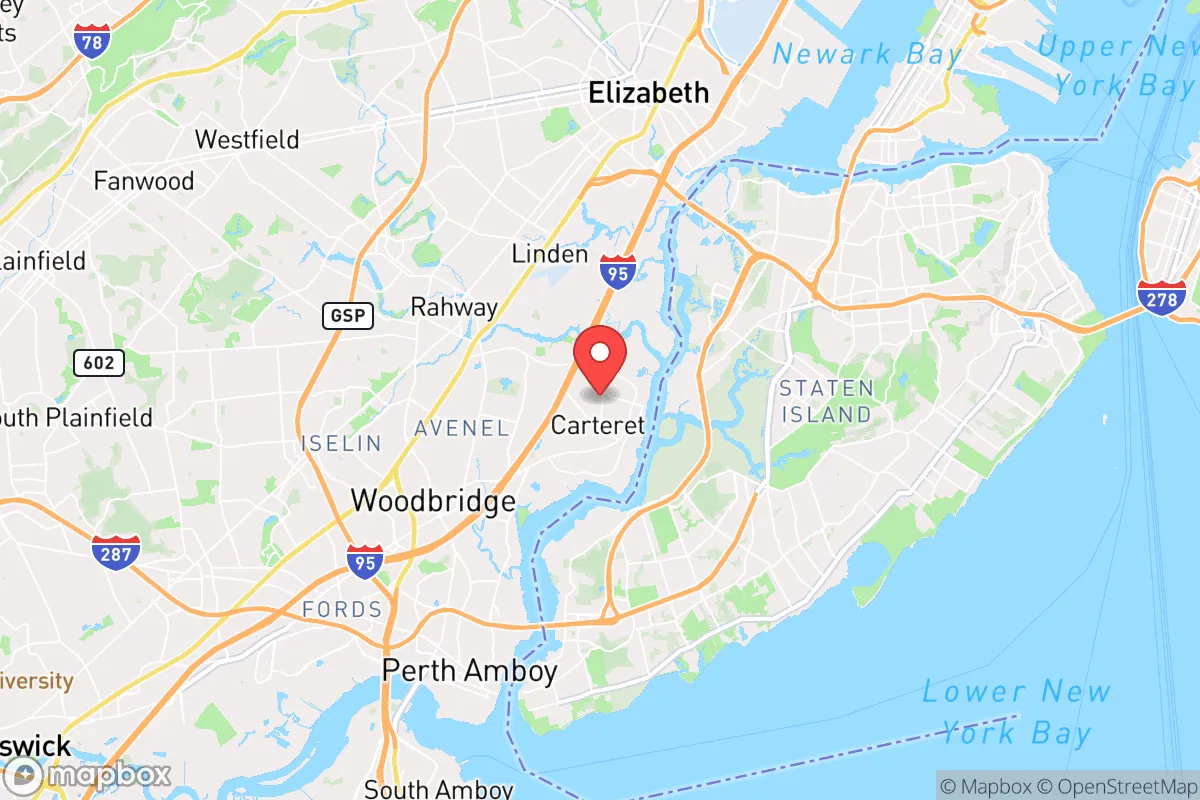
District shown is the primary district for this city’s centroid. Cities may span multiple districts.
Local Political AnalysisPolitical Analysis of Carteret, NJ
Look, I’ve lived in Carteret my whole life, and I’ve watched this town shift from a solid, blue-collar, common-sense community into something that feels a lot more like a political experiment. The Cook PVI here is D+5, which sounds moderate on paper, but in practice it means the local machine has been running on autopilot for years. We used to be the kind of place where you knew your neighbors and the mayor’s office left you alone. Now? It’s a steady march toward progressive policies that feel less like “helping” and more like controlling. The trajectory is clear: more regulations, more taxes, and less room for the individual freedoms that made this town worth living in.
How it compares
If you drive ten minutes west to Edison or fifteen minutes north to Woodbridge, you’ll see the same story—blue strongholds where the local government feels empowered to micromanage everything from your lawn to your business hours. But the real contrast is with towns like Clark or Linden, just a few miles away. Clark still has a Republican mayor and a council that actually pushes back on state overreach. Linden, while still blue, has a more pragmatic, pro-business streak. Carteret, though? We’re surrounded by folks who vote straight-ticket Democrat and then wonder why their property taxes keep climbing and their small businesses can’t catch a break. The difference isn’t just party registration—it’s the attitude. In Clark, you can still have a conversation about school choice or zoning reform without getting labeled. Here, that kind of talk gets you side-eyed at the PTA meeting.
What this means for residents
For the average family, the political climate here means you’re paying for a lot of things you never asked for. Property taxes in Carteret are among the highest in Middlesex County, and a big chunk of that goes to programs and mandates that come straight from Trenton—things like sanctuary city policies, renewable energy mandates that drive up utility costs, and school curricula that focus more on social justice than reading and math. If you run a small business, you’re dealing with a local government that’s quick to add fees and slow to cut red tape. The real kicker? Voter turnout in local elections is abysmal, usually under 25%, which means the same handful of insiders keep getting re-elected. So if you value personal freedom—like the right to decide how to heat your home, what your kids learn, or whether you want to carry a firearm for protection—you’re swimming against the current here.
One thing that still sets Carteret apart culturally is its strong immigrant roots, especially from Poland and Latin America. That used to mean a focus on family, hard work, and staying out of the government’s business. But lately, I’ve seen those same communities get pulled into identity politics and dependency programs. The local leadership loves to talk about “diversity” and “inclusion,” but what that really means is more bureaucracy and less accountability. If you’re looking for a place where the government respects your privacy and your wallet, I’d honestly steer you toward a town like Clark or even further out to Hunterdon County. Carteret’s still a decent place to live if you keep your head down, but the political winds are blowing hard in one direction, and it’s not toward freedom.

State Political ClimatePolitical Climate in New Jersey
State Political AnalysisPolitical Environment in the State
New Jersey has long been a blue state, but the reality on the ground is more complicated than the national headlines suggest. The state has voted Democratic in every presidential election since 1992, but the margins have tightened in recent cycles—from a 14-point Biden win in 2020 down to a 6-point margin for Harris in 2024. The dominant coalition is a mix of urban progressives, suburban moderates, and a powerful public-sector union bloc, but the state’s rural and exurban areas are increasingly pushing back. Over the past 10-20 years, the Garden State has shifted left on social issues while maintaining a surprisingly stubborn conservative streak on taxes and property rights—though that’s being tested.
Urban vs. rural divide
The political map of New Jersey is a tale of two states. The northern and central urban corridor—Newark, Jersey City, Paterson, and Elizabeth—drives the Democratic machine, powered by dense populations, strong union ties, and a heavy reliance on public transit and government services. These cities routinely deliver 70-80% Democratic margins. Meanwhile, the suburban ring around New York City, particularly Bergen and Essex counties, has trended left as well, with once-Republican towns like Montclair and Maplewood now solidly blue. But head south and west, and the picture flips. Ocean County, home to Toms River and Lakewood, is a Republican stronghold, voting +18 for Trump in 2024. The rural counties of Sussex, Warren, and Hunterdon are also deeply red, driven by gun rights, lower taxes, and a distrust of Trenton. The divide is stark: a resident of Cape May sees a completely different state than someone in Hoboken.
Policy environment
New Jersey’s policy environment is a mixed bag that leans heavily interventionist. The state has the highest property taxes in the nation—averaging over $9,500 annually—and a progressive income tax that tops out at 10.75% for earners over $1 million. The regulatory posture is dense: the state has its own environmental standards that often exceed federal ones, and the Department of Environmental Protection (DEP) is notorious for slow permitting. On education, New Jersey spends more per pupil than almost any other state, but the results are uneven—wealthy suburbs like Millburn and Princeton have top-tier schools, while urban districts like Camden and Trenton struggle. Healthcare is heavily regulated, with a state-run insurance exchange and Medicaid expansion. Election laws are relatively accessible: same-day voter registration, no-excuse mail-in voting, and automatic voter registration at the DMV. For a conservative, the tax burden and regulatory creep are the biggest red flags.
Trajectory & freedom
On personal freedom, New Jersey is moving in a concerning direction for conservatives. The state has some of the strictest gun laws in the country, including a 2018 "red flag" law and a 2022 carry-killer law that effectively ended public carry after the Bruen decision—though that law is currently tied up in federal court. On parental rights, the state passed a 2022 law requiring schools to adopt "inclusive" curricula on sexual orientation and gender identity, which has sparked fierce battles in school boards across Monmouth and Ocean counties. Medical autonomy took a hit with the state’s strict COVID-19 mandates, which included one of the longest-running school mask mandates in the nation. Property rights are under constant pressure from the state’s affordable housing mandates, which force towns to zone for high-density development. The 2024 "Sanctuary State" law, which limits local law enforcement cooperation with ICE, is another flashpoint. The trajectory is clear: more state control, less local discretion.
Civil unrest & political movements
New Jersey has seen its share of political turbulence. The 2020 Black Lives Matter protests in Newark and Trenton were large but mostly peaceful, though they did lead to calls for defunding the police—which went nowhere in most suburbs. The state’s sanctuary policies have created tension: in 2023, a viral incident in Elizabeth involved a local police department refusing to hold an illegal immigrant wanted for a violent crime, sparking outrage in conservative circles. On the right, the "NJ 2A" movement has been vocal, with large rallies at the Statehouse in Trenton opposing the carry-killer law. Election integrity remains a sore point: the 2020 and 2024 elections saw no major scandals, but the state’s widespread mail-in voting system—adopted permanently in 2021—has fueled distrust among conservatives. The most visible flashpoint for a new resident might be the school board meetings in places like Middletown and Howell, where battles over curriculum and library books have turned into standing-room-only affairs.
Projection
Looking ahead 5-10 years, New Jersey is likely to continue its leftward drift on social and cultural issues, but the economic pressures may force a reckoning. The state is losing population to lower-tax states like Florida and Texas, and the exodus is accelerating among younger families and retirees. The demographic shift is real: the state’s growth is driven by international immigration, which tends to lean Democratic, while domestic out-migration is disproportionately conservative. This means the political balance will likely stay blue, but the margins could narrow further as the remaining conservatives become more concentrated in the rural south and west. For a new resident, expect higher taxes, more state mandates on housing and education, and a political environment where local control is constantly under siege. The best bet for a conservative is to target the redder counties—Ocean, Sussex, Warren—where the local culture still pushes back against Trenton.
For a conservative moving to New Jersey, the bottom line is this: you’re getting a state with high taxes, heavy regulation, and a political culture that leans left, but you’re also getting strong property rights protections in the courts, excellent schools in the right towns, and a vibrant network of conservative communities in the exurbs. The key is picking your town carefully—avoid the urban core and the inner-ring suburbs, and focus on places like Toms River, Newton, or Flemington. You’ll pay more in taxes than you would in Texas or Florida, but you’ll also be close to the economic engine of New York City. Just know that the political winds are blowing against you, and the fight over local control is only going to intensify.
* Values derived from national, state, county, city and local statistics and may differ in a specific area. Last updated: 2026-04-24T20:23:10.000Z
Narrative content on this page is AI-generated and may contain mistakes. Verify any details that matter before acting on them.
ReloMaps may earn a commission from affiliate links at no extra cost to you.

