Photo: Wikipedia
Demographics of Castle Pines, CO
Affluence Level in Castle Pines, CO
A wealthy area with high-earning, well-educated households. Incomes, home values, and educational attainment meaningfully outpace national averages.
People of Castle Pines, CO
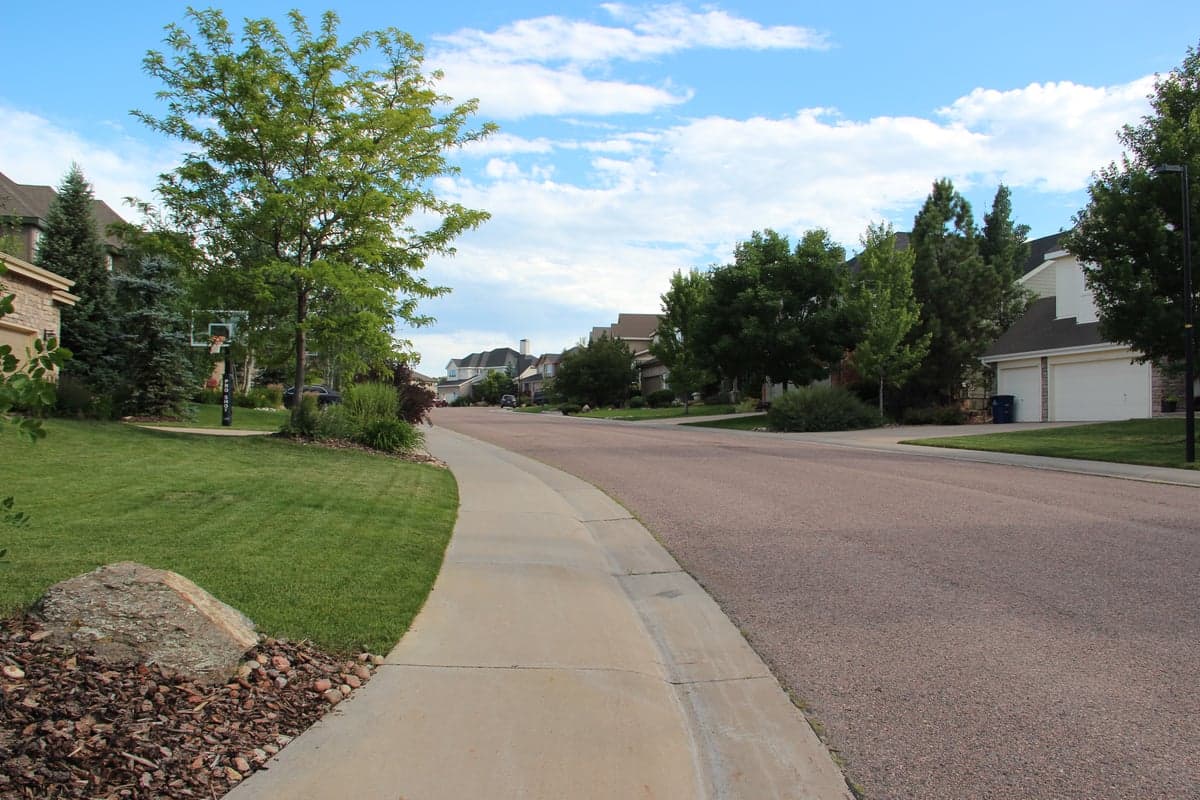
Today, Castle Pines, Colorado, is a city of 12,573 residents characterized by a notably high concentration of college-educated professionals (69.9%) and a predominantly White population (78.2%). The city’s identity is shaped by its master-planned communities, strong family orientation, and a demographic profile that leans conservative, with a relatively low foreign-born share of 6.5% compared to the Denver metro average. Distinct neighborhoods like The Village at Castle Pines and Castle Pines North anchor a landscape where single-family homes and golf-course living define the social fabric.
How the city was settled and grew
Castle Pines is a genuinely post-1900 community, with no colonial or pioneer-era founding. The area was originally ranchland and part of the larger Douglas County agricultural economy, with sparse settlement by homesteaders and cattle ranchers in the late 19th and early 20th centuries. The first significant population wave arrived in the 1970s and 1980s, driven by the development of The Village at Castle Pines, a master-planned golf-course community that attracted affluent families and executives relocating from the Denver tech and energy sectors. This initial wave was overwhelmingly White and upper-middle-class, drawn by large lots, scenic views, and the prestige of the Castle Pines Golf Club, which hosted the PGA Tour’s International tournament from 1986 to 2006. No historic ethnic enclaves formed during this period, as the development was explicitly marketed as an exclusive suburban retreat.
Modern era (post-1965)
The post-1965 era in Castle Pines is defined by domestic in-migration rather than international immigration. The city incorporated in 2007, but its modern growth spurt began in the 1990s with the expansion of Castle Pines North, a planned community that added thousands of homes and attracted a broader mix of professionals from the Denver-Boulder corridor. This wave included a small but growing number of Hispanic families (now 10.2% of the population) and Black residents (4.1%), many of whom moved from Aurora and Denver for better schools and lower crime rates. The Haviland Village and Cliffs at Castle Pines neighborhoods absorbed most of this newer influx, offering more moderately priced homes compared to the original Village. East/Southeast Asian residents (1.8%) and Indian-subcontinent residents (1.3%) arrived primarily in the 2000s and 2010s, drawn by tech and healthcare jobs in the Denver Tech Center and the nearby University of Colorado Anschutz Medical Campus. These groups settled in The Meadows at Castle Pines and Buffalo Ridge, where newer construction and larger floor plans appealed to multigenerational households. The foreign-born share remains low at 6.5%, reflecting the city’s character as a destination for domestic relocators rather than a gateway for international migration.
The future
Castle Pines is likely to continue homogenizing along socioeconomic lines rather than tribalizing into distinct ethnic enclaves. The city’s high housing costs—median home values exceed $800,000—will sustain its profile as a predominantly White, college-educated, and conservative-leaning suburb. The Hispanic and Black populations are expected to grow slowly, primarily through domestic moves from nearby Denver and Aurora, but will remain below 15% each. East/Southeast Asian and Indian-subcontinent communities are likely to plateau at current levels, as the city lacks the ethnic infrastructure (temples, ethnic grocery stores, language schools) that attracts larger immigrant populations to places like Centennial or Aurora. The next 10-20 years will see modest population growth, driven by infill development in Castle Pines Village and the build-out of remaining parcels in Haviland Village, but the demographic character will remain stable: affluent, family-oriented, and culturally homogeneous.
For a conservative-leaning individual or parent considering relocation, Castle Pines offers a predictable, low-diversity environment where property values are high, schools are top-rated, and the population is largely composed of domestic professionals. The city is becoming more settled and less dynamic, with little risk of rapid demographic change—but also limited exposure to the cultural variety and immigrant-driven energy found in larger metro suburbs.

* Values derived from national, state, county, city and local statistics and may differ in a specific area. Last updated: 2026-04-28T23:51:10.000Z
Narrative content on this page is AI-generated and may contain mistakes. Verify any details that matter before acting on them.
ReloMaps may earn a commission from affiliate links at no extra cost to you.

