Photo: Wikipedia
Strategic Assessment of Castle Pines, CO
Meaningful friction. Expect exposure to either population pressure, blast zones, or natural disaster risk. Consider buying a retreat property.
What does the Strategic Assessment tell us?
Our Strategic Assessment grades tactical survivability of an area. Major population centers, military targets, fallout zones, natural disasters, and border exposure all drive risk — lower exposure means a more defensible position in a crisis.
This is heavily inspired by Joel Skousen's Strategic Relocation book. Highly recommended you checkout the book ($)What does this tell us?
Our Strategic Assessment grades tactical survivability of an area. Major population centers, military targets, fallout zones, natural disasters, and border exposure all drive risk — lower exposure means a more defensible position in a crisis.
This is heavily inspired by Joel Skousen's Strategic Relocation book. Highly recommended you checkout the book ($)Strategic Pillars

Key Distances
Regional Safe Places
Below is our recommended "safe zones" in Colorado and the surrounding area based on our strategic heuristics. For most people, it's unrealistic to live in a “safe zone” full-time due to work, family or other personal reasons. They tend to be more rural. However, many of these areas are perfect for second homes and retreat properties that double as a vacation home or even a short-term rental.
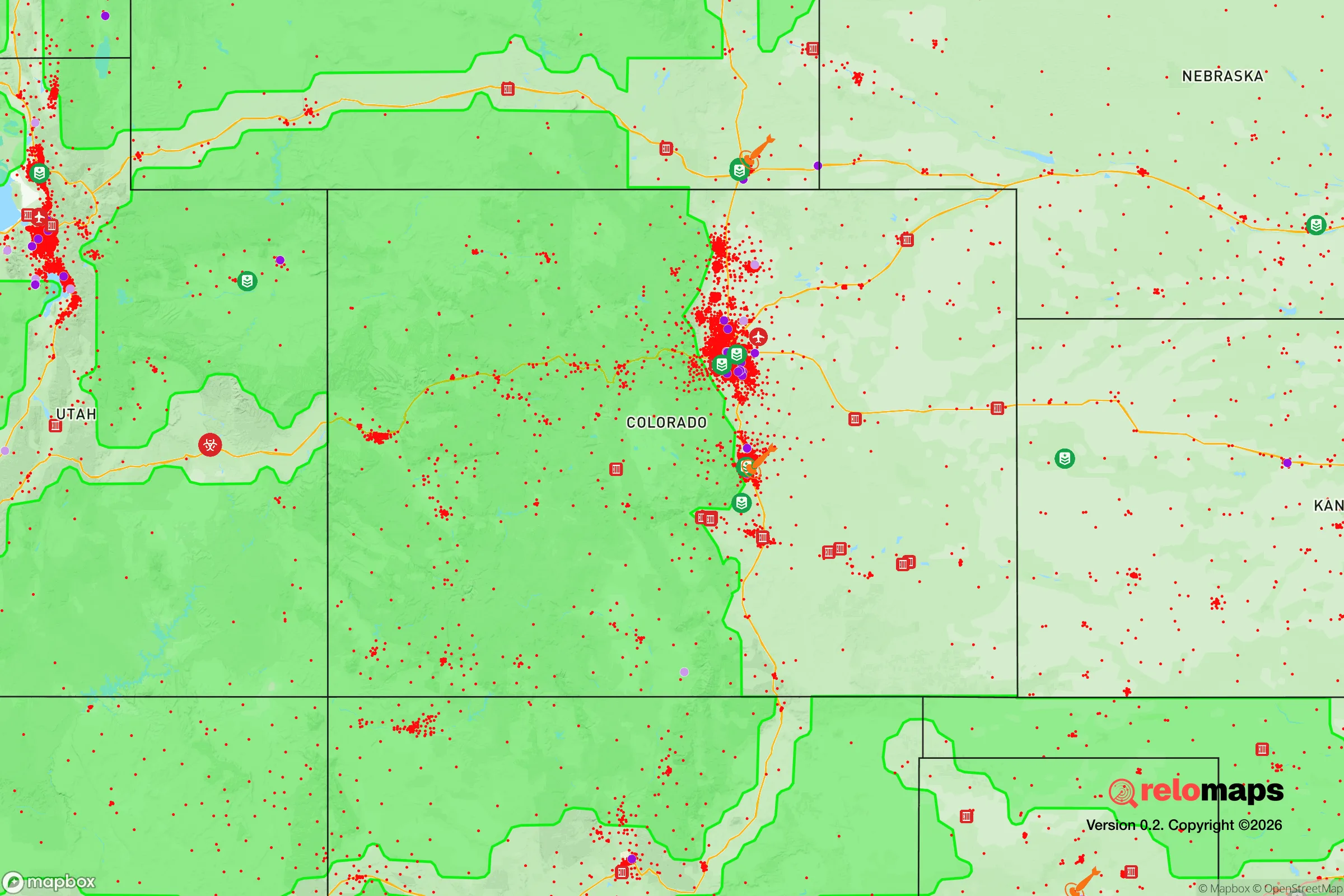
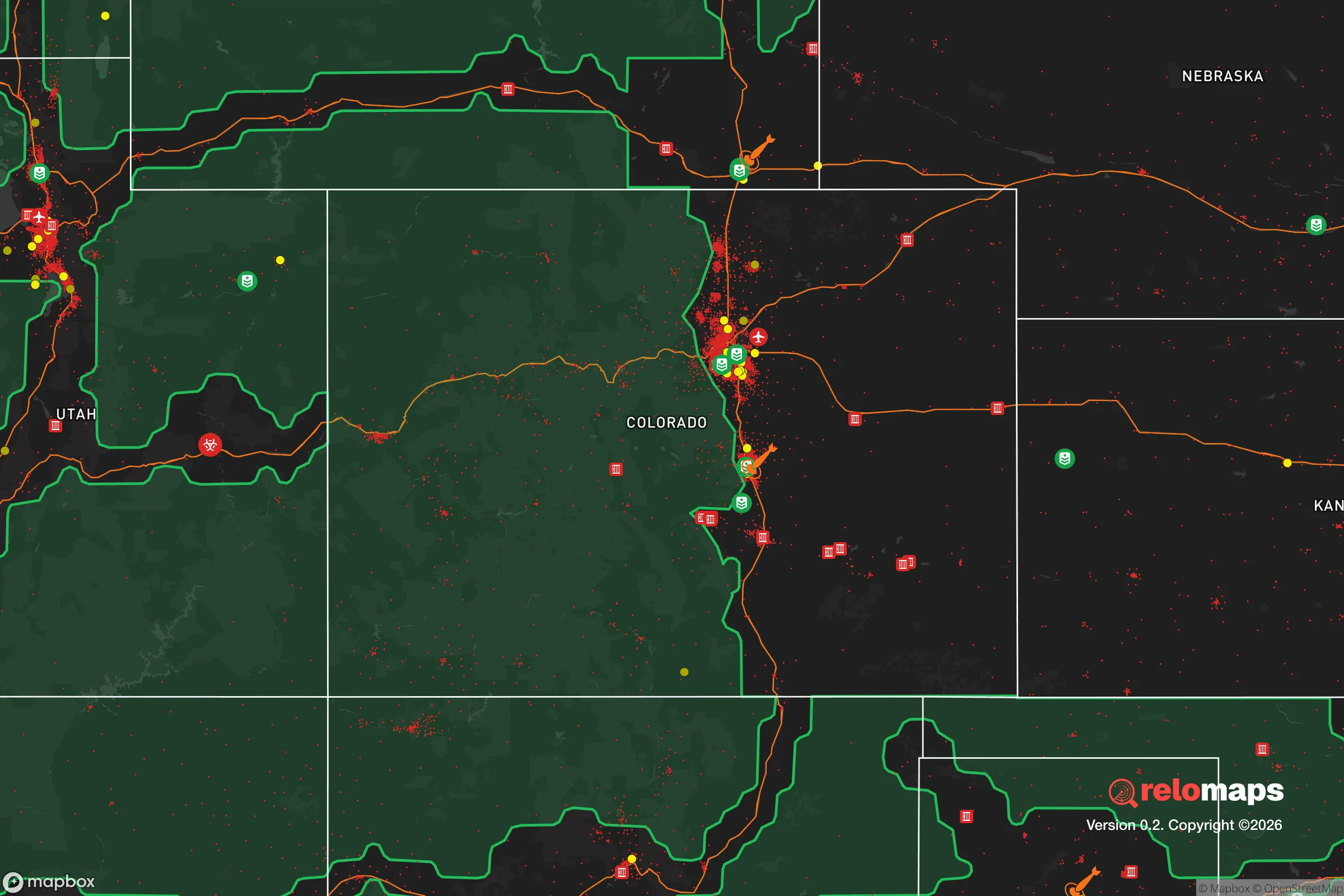


Important Note: For informational purposes only. This does not mean nothing bad ever happens in the green zones. Please use common sense. This is based on public data and modeled with AI. We tried to take a conservative approach but mistakes happen. We update this regularly as new information becomes available.
Solar Generator Recommendations
Backup power matters more here than in safer locations. We've picked three solar generators across budgets and capacity tiers — start with the budget unit if you only need a few essentials, or step up if you want to run a fridge and HVAC for days at a time.

Jackery Portable Power Station Explorer 300
Budget OptionPower on the Go: Weighing only 11 lbs, it's convenient to set up and store with book-sized foldable solar panels

BLUETTI Portable Power Station AC180
Designed for both indoor and outdoor scenarios, AC180 is highly capable as it has a robost capacity and continuous output power.

EF ECOFLOW DELTA Pro Ultra Power Station
Upgraded PickEcoFlow DELTA Pro Ultra is a whole-home energy system designed to grow with your family. Integrated with the Smart Home Panel 2, it scales to meet your evolving energy needs — keeping your home powered, intelligent, and secure through every stage of life.
We earn a commission, at no additional cost to you.
Strategic Assessment Analysis
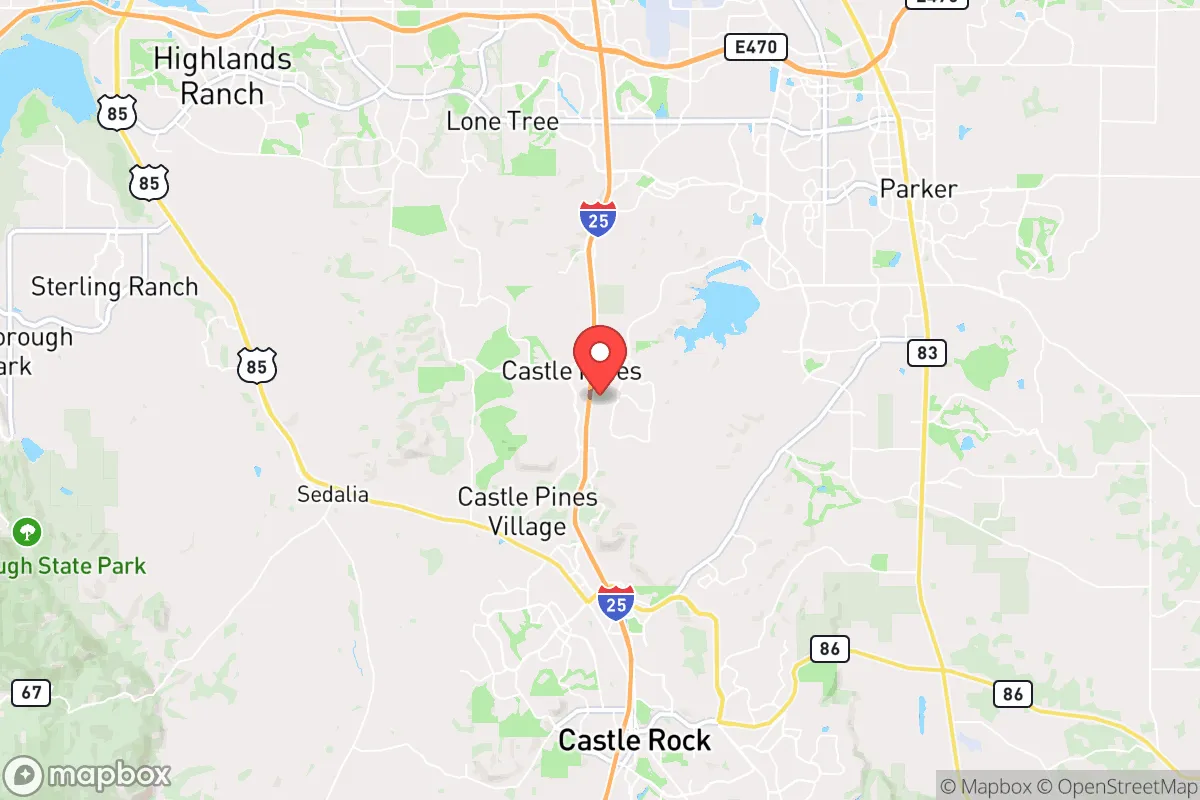
Castle Pines, Colorado, offers a compelling strategic position for those prioritizing resilience and self-sufficiency in an uncertain future. Perched on the I-25 corridor roughly 20 miles south of Denver, this affluent community sits at the edge of the Front Range urban sprawl, providing a buffer from the immediate chaos of a major metropolitan collapse while retaining access to critical supply routes and mountain escape corridors. Its elevation of roughly 6,000 feet, combined with a semi-arid climate and proximity to the Pike National Forest, creates a natural defensive posture that is hard to overstate for anyone serious about long-term preparedness.
Geographic position and natural defensive advantages
Castle Pines occupies a strategic high-ground position along the Palmer Divide, a ridge that separates the South Platte and Arkansas River watersheds. This elevation provides natural observation points and makes the area less susceptible to flooding than lower-lying communities along the Denver metro basin. The town is flanked by the Douglas County open space network to the west and the Pike National Forest to the southwest, offering immediate access to undeveloped land for hunting, foraging, and retreat if needed. The I-25 corridor runs directly through Castle Pines, but the town's layout—with its gated communities, winding roads, and limited entry points—creates a natural chokepoint for traffic control. The nearby Happy Canyon and Castlewood Canyon State Parks provide additional buffer zones and water sources, though the latter's intermittent creek is not a reliable year-round supply. For a relocator, the ability to monitor movement from the high points along Monarch Boulevard or the ridges near The Pines at Castle Pines golf course is a tangible tactical advantage.
Risks, exposures, and proximity to fallout-relevant landmarks
The primary strategic liability of Castle Pines is its proximity to Denver and Colorado Springs, both of which are high-value targets in any major conflict scenario. Denver International Airport, roughly 35 miles north, is a likely staging area for federal response or, in a worst-case scenario, a target for disruption. The Buckley Space Force Base in Aurora, about 25 miles northeast, is a legitimate military asset that could draw kinetic or cyber attacks. The Rocky Mountain Arsenal, a former chemical weapons facility now a wildlife refuge, sits 30 miles north and still contains buried contamination that could be problematic in a disaster. Closer to home, the Douglas County landfill and the I-25 freight corridor present secondary risks: a major trucking accident or hazmat spill could close the highway for days. Wildfire is the most immediate natural threat—the 2021 Marshall Fire demonstrated how quickly suburban-adjacent wildfires can spread, and Castle Pines' pine forests and dry grasses create similar fuel loads. The town's water supply, drawn from the South Platte River via Denver Water and local wells, is vulnerable to upstream contamination or infrastructure failure. Earthquake risk is low, but the area sits near the Cheraw fault line, which has produced minor seismic events historically.
Practical resilience for a relocator: food, water, energy, and defensibility
For a single individual or family serious about self-sufficiency, Castle Pines presents a mixed bag. The town's zoning allows for backyard gardens and small livestock in most areas, and the growing season (roughly 120 days) supports cold-hardy crops like potatoes, kale, and root vegetables. However, the clay-heavy soil requires significant amendment, and water rights are tightly regulated—rainwater collection is legal but limited to 5,000 gallons per property under Colorado law. The local water table is deep, making private wells expensive ($15,000–$30,000 to drill), but those who invest gain a critical independence from municipal supply. Solar energy is viable here: the area averages 300 sunny days per year, and net metering is available through Xcel Energy, though grid-tied systems are vulnerable to EMP or cyber attacks. Battery storage and a backup generator (propane or diesel) are strongly recommended. The community's defensibility is enhanced by its low crime rate—Castle Pines consistently ranks among the safest towns in Colorado—but this also means residents are less accustomed to security vigilance. The gated subdivisions offer perimeter control, but the open spaces and trail networks create multiple ingress points for determined actors. Stockpiling is straightforward: the town has no restrictions on bulk food storage, and the dry climate prevents mold issues. The nearest major grocery is a King Soopers in Castle Rock, 10 minutes north, but for serious preppers, a Costco in Lone Tree (15 minutes north) and a Walmart in Castle Rock provide bulk options. Medical care is adequate: the Castle Rock Adventist Hospital (10 minutes north) has an emergency room, but trauma cases are typically airlifted to Denver—a vulnerability if air transport is compromised. The local police force is small (roughly 20 officers), so response times in a widespread event could be hours or longer.
Overall, Castle Pines offers a strong strategic foundation for those who can afford the premium—home prices average well over $1 million—and who are willing to invest in the infrastructure needed to make it truly resilient. Its location provides a reasonable balance of isolation and access, with natural defensive features that can be enhanced through simple measures like reinforced fencing, security cameras, and community watch networks. The biggest unknowns are the same ones facing any Front Range community: water security in a prolonged drought, wildfire risk in a dry year, and the unpredictable behavior of a stressed Denver metro population during a crisis. For a relocator with the resources to harden their property and the discipline to build local networks, Castle Pines is a viable long-term base of operations. For anyone on a tighter budget or unwilling to invest in off-grid capabilities, the nearby town of Larkspur or the more remote areas of Park County might offer a better risk-reward profile. The key takeaway: Castle Pines is not a bug-out location—it's a live-in fortress that requires active maintenance and a clear-eyed understanding of its vulnerabilities.

* Values derived from national, state, county, city and local statistics and may differ in a specific area. Last updated: 2026-04-28T23:51:10.000Z
Narrative content on this page is AI-generated and may contain mistakes. Verify any details that matter before acting on them.
ReloMaps may earn a commission from affiliate links at no extra cost to you.

