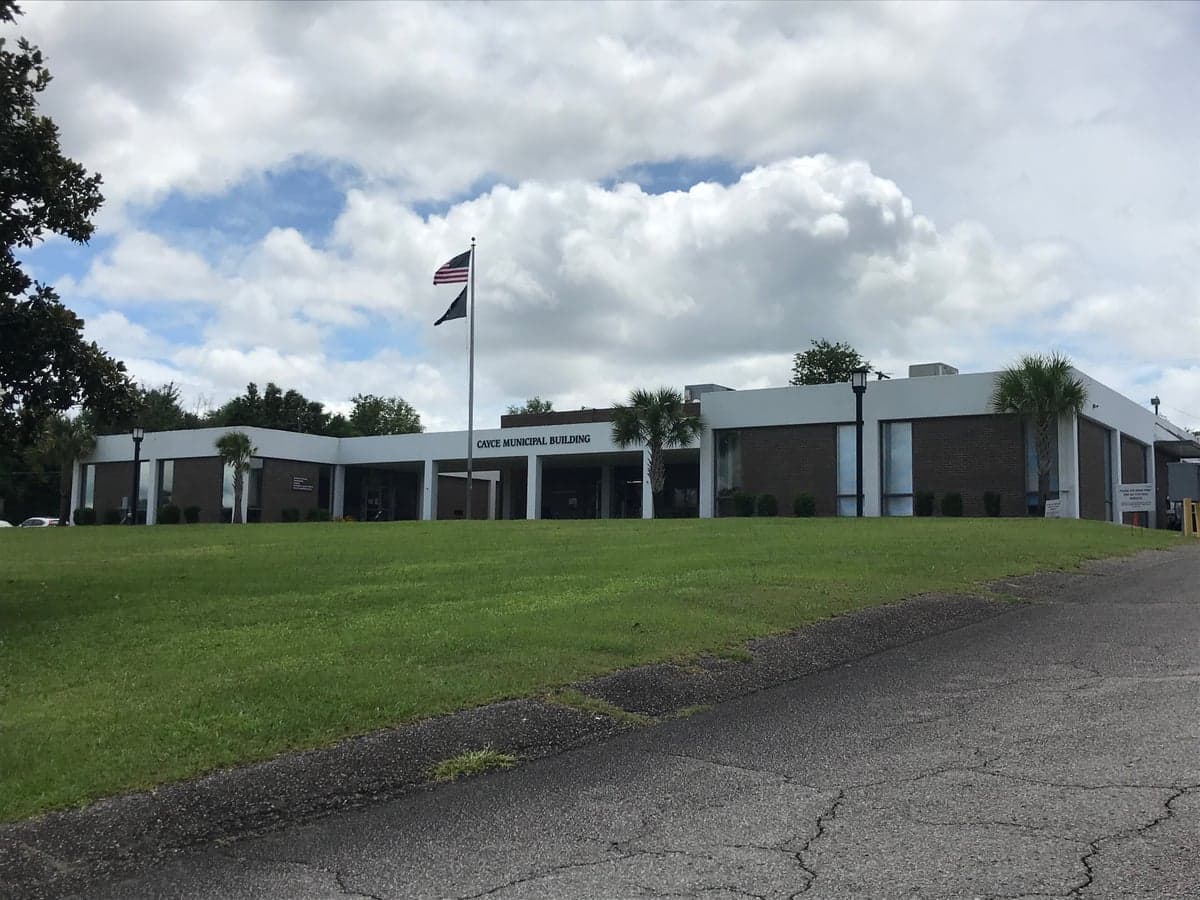
Photo: Wikipedia
Personal Sovereignty in Cayce, SC
Viable for self-reliance. Generally workable, though some barriers may limit total independence.
What does Personal Sovereignty tell us?
Personal Sovereignty measures your capacity for self-reliance and independence with minimal government friction. Higher scores mean fewer barriers between you and the way you want to live... but it assumes you have the space you need and good neighbors.
What does this tell us?
Personal Sovereignty measures your capacity for self-reliance and independence with minimal government friction. Higher scores mean fewer barriers between you and the way you want to live... but it assumes you have the space you need and good neighbors.
State Policy
Energy independence: Importer (25% of energy produced in-state)
Personal Liberty
Homesteading

Personal Liberty Analysis
Cayce, South Carolina, offers a notably high degree of personal sovereignty compared to many other parts of the country, particularly for those who prioritize minimal government interference in daily life. As a suburb of Columbia, it benefits from South Carolina’s generally light regulatory touch and a political culture that leans heavily toward individual liberty. For a survivalist or prepper mindset, the key question is whether this translates into real, actionable freedom—and the answer is largely yes, especially when you look at tax policy, gun laws, and the ability to live self-reliantly without constant bureaucratic oversight.
Tax burden and regulatory posture: How much the state leaves in your pocket
South Carolina’s tax structure is a major draw for those seeking to maximize personal financial sovereignty. The state has a flat income tax rate of 3% as of 2026, down from 6.5% in 2022, with a path to further reductions. This means you keep more of what you earn, and there’s no progressive bracket creep that punishes success. Property taxes in Lexington County, where Cayce sits, are among the lowest in the state—typically around 0.5% to 0.6% of assessed value. For a $250,000 home, that’s roughly $1,250 to $1,500 annually. There’s no state tax on Social Security benefits, and military pensions are fully exempt. The regulatory environment is equally favorable. South Carolina is a right-to-work state, meaning you can’t be forced to join a union as a condition of employment. Business licensing is straightforward, and there’s no state-level equivalent of California’s CEQA or New York’s strict environmental review processes. For someone wanting to start a small homesteading business or a home-based survival gear operation, the red tape is minimal. The state’s attitude is essentially: earn, keep, and build without the government taking a large cut or demanding endless permits.
Self-defense and gun law specifics: What you can carry and where
For the prepper or survivalist, South Carolina’s gun laws are a strong point. The state is a “shall issue” jurisdiction for concealed carry permits, meaning if you meet the basic requirements—background check, fingerprinting, and a training course—the state must issue the permit. There is no discretionary denial by a local sheriff. As of 2024, South Carolina also passed constitutional carry, allowing law-abiding adults 18 and older to carry a concealed firearm without a permit. This is a significant win for personal sovereignty, as it removes a bureaucratic hurdle and a potential point of government overreach. Stand-your-ground laws are in effect, with no duty to retreat if you are lawfully present and believe deadly force is necessary to prevent imminent death or great bodily harm. Castle doctrine protections extend to your home, vehicle, and place of business. Magazine capacity is not restricted, and there is no state-level assault weapons ban. Cayce itself is in Lexington County, which has a strong pro-Second Amendment culture. Local law enforcement generally respects gun rights, and you won’t face the hostile environment found in places like New York or California. The only notable restriction is that carrying in a church is prohibited unless the church gives explicit permission, but that’s a minor caveat in an otherwise very free landscape.
Self-reliance and homesteading viability: Lot sizes, zoning, and off-grid feasibility
If your goal is to reduce dependence on the grid and government services, Cayce has mixed but workable conditions. The city itself is a suburban area with typical zoning for single-family homes on lots ranging from 0.2 to 0.5 acres in most neighborhoods. That’s enough for a substantial vegetable garden, a few fruit trees, and maybe a small chicken coop—but not for larger livestock like goats or cattle. For true homesteading, you’ll want to look just outside city limits into unincorporated Lexington County, where lot sizes of 1 to 5 acres are common and zoning is far more permissive. There, you can keep horses, pigs, and other animals without needing a special permit. Off-grid feasibility is decent. South Carolina has no state law prohibiting rainwater collection, and many rural properties have wells and septic systems. Solar panels are allowed without excessive permitting, and net metering is available through local utilities, though the rates are not as generous as in some western states. The biggest hurdle is the lack of a strong “right to repair” or “right to farm” law that would protect you from nuisance lawsuits if your homesteading activities (like roosters crowing or compost smells) bother a neighbor. Still, compared to states like Oregon or Colorado, where zoning and environmental regulations can strangle self-reliance, Cayce and its surroundings are a breath of fresh air. You can realistically aim for 50-70% food and energy self-sufficiency without fighting the government.
Personal liberties: Parental rights, medical autonomy, speech, and property
On the broader front of personal liberties, South Carolina scores well for those wary of government overreach. Parental rights are strongly protected by state law. South Carolina Code Section 63-5-350 explicitly affirms that parents have the fundamental right to direct the upbringing, education, and health care of their children. This means no state-mandated vaccine requirements for school attendance—only the standard childhood immunizations are required, and medical and religious exemptions are available and generally honored. During the COVID-19 era, the state legislature passed laws prohibiting mask mandates in schools and vaccine passports, reflecting a deep skepticism of federal overreach. Medical autonomy is similarly respected. There is no state-level mandate for COVID-19 vaccines, and the state has not adopted any “right to die” or assisted suicide laws, which some conservatives view as a slippery slope. Freedom of speech is robust, with no hate speech laws that could be used to silence political dissent. Property rights are strong: South Carolina has a relatively low rate of eminent domain abuse, and the state’s “private property rights protection act” requires that any taking be for a truly public use and with just compensation. There is no state income tax on capital gains, which encourages investment and wealth building. The only area where some may feel constrained is the lack of a state-level “right to try” law for experimental treatments, though federal law covers that. Overall, the legal environment in Cayce and South Carolina is designed to let you live your life as you see fit, as long as you don’t harm others.
In the broader context of the United States, Cayce offers a level of personal sovereignty that is increasingly rare. Compared to the Pacific Northwest, the Northeast, or California, where taxes, regulations, and mandates can feel suffocating, South Carolina is a haven for those who value independence. The combination of low taxes, strong gun rights, permissive zoning outside city limits, and robust parental and medical autonomy creates a foundation for a self-reliant life. It’s not a libertarian utopia—there are still property taxes, building codes, and some zoning restrictions—but for a single individual or a family looking to minimize government interference while maintaining access to a decent job market and infrastructure, Cayce is a solid strategic choice. The state’s trajectory is toward more freedom, not less, and that’s a rare thing in 2026.

* Values derived from national, state, county, city and local statistics and may differ in a specific area. Last updated: 2026-04-30T02:17:30.000Z
Narrative content on this page is AI-generated and may contain mistakes. Verify any details that matter before acting on them.
ReloMaps may earn a commission from affiliate links at no extra cost to you.

