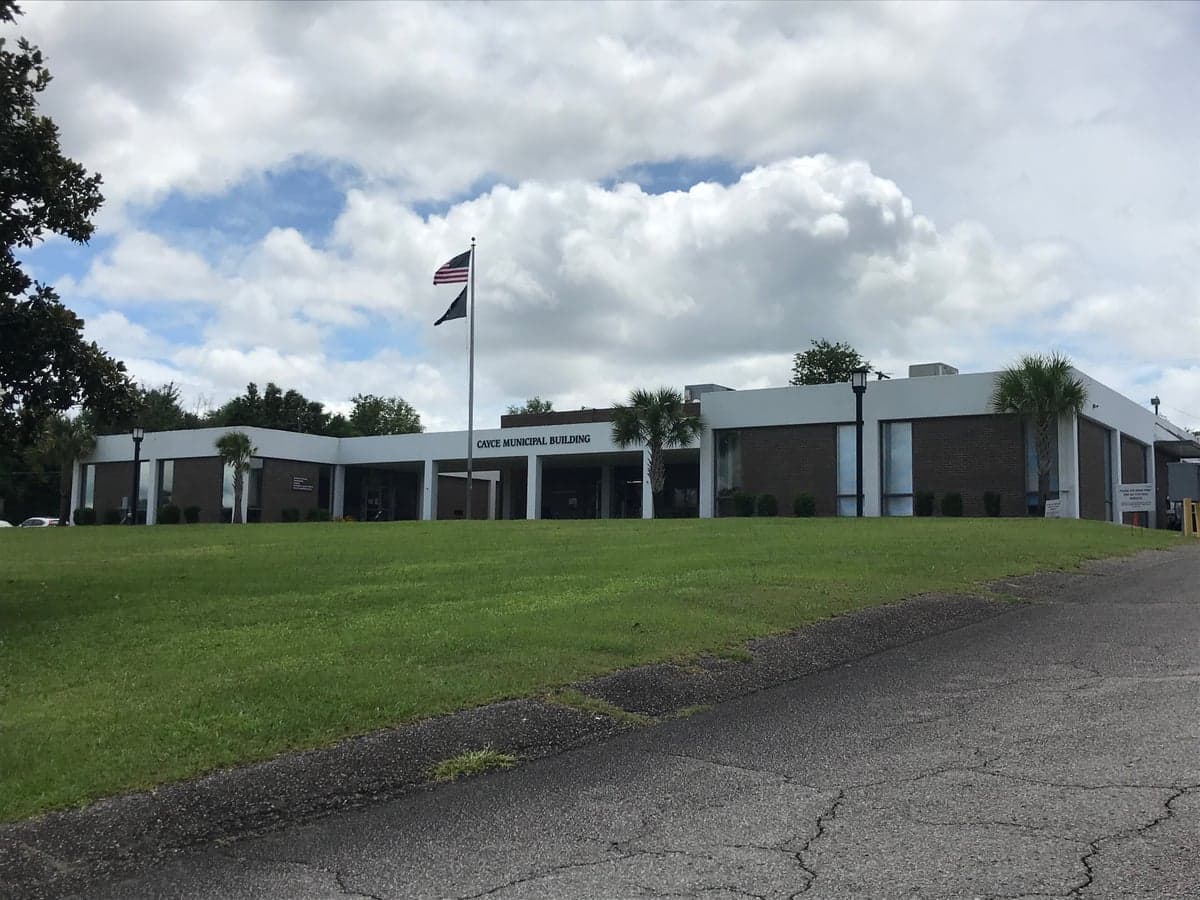

Photo: Wikipedia
Political ClimatePolitical Climate in Cayce, SC
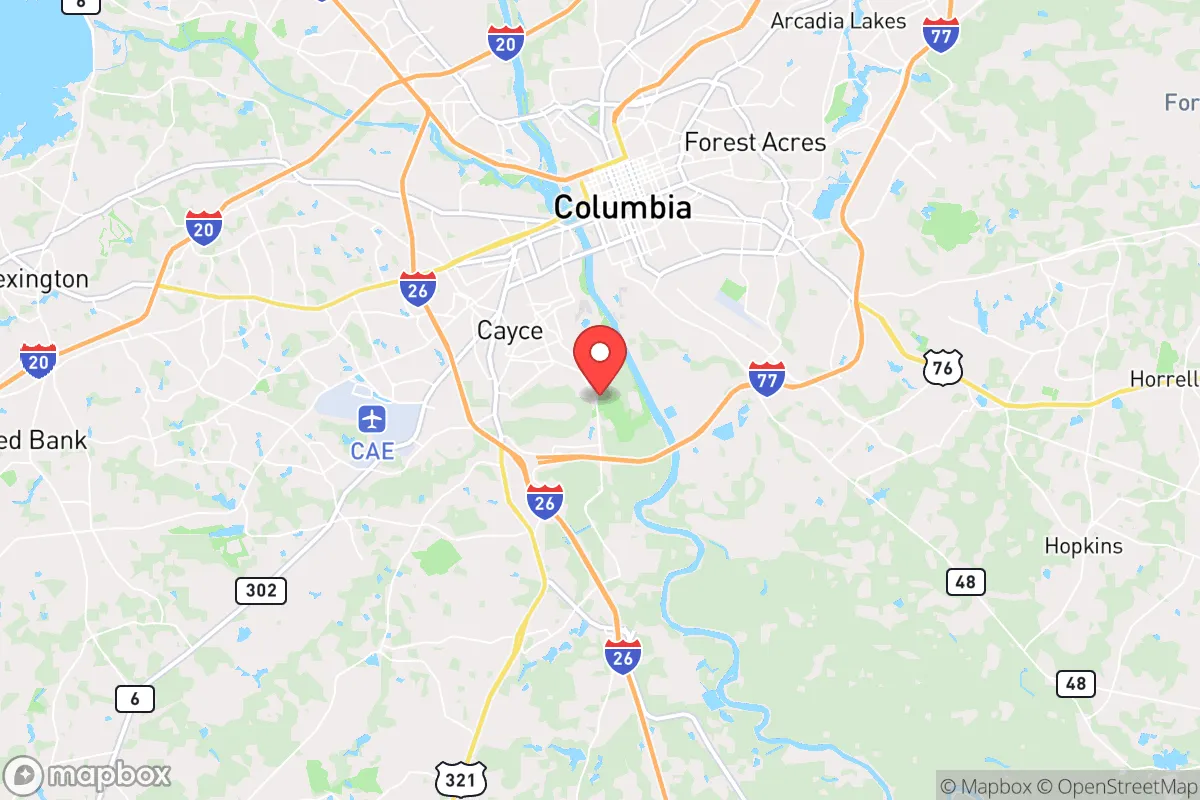
District shown is the primary district for this city’s centroid. Cities may span multiple districts.
Local Political AnalysisPolitical Analysis of Cayce, SC
Cayce, South Carolina, sits in a politically interesting pocket of the Midlands. While the city itself has a long history of moderate, community-focused governance, the broader area—Lexington County—leans solidly conservative, with a Cook PVI of R+7. That means the local political climate is generally one of fiscal restraint, traditional values, and a wariness of government overreach, though you can see the edges starting to fray as Columbia’s influence creeps across the river. The trajectory here is a slow, subtle shift: the old guard of small-government, keep-your-nose-out-of-my-business types is still the majority, but you’re seeing more progressive-leaning newcomers, especially in the newer subdivisions, who are pushing for things like more public transit and denser zoning. It’s not a revolution, but it’s a noticeable change from even ten years ago.
How it compares
To really understand Cayce, you have to look at its neighbors. Directly across the Congaree River is Columbia, a deep-blue city where the state government and the university drive a very different, more progressive agenda. Drive ten minutes west into the heart of Lexington County, and you hit places like Lexington town and Irmo, which are reliably red—think strong Second Amendment support, lower taxes, and a general distrust of Columbia’s big-city policies. Cayce sits right in the middle, a kind of buffer zone. It’s more conservative than West Columbia (which has its own quirky, slightly more liberal vibe near the riverfront), but it’s noticeably less conservative than the rural parts of Lexington County. The contrast is sharpest on issues like property rights and local business regulation: in Cayce, you still get a lot of “leave us alone” sentiment, while in Columbia, you get more layers of permitting and oversight. For a conservative-leaning resident, the concern is that Cayce’s proximity to Columbia’s government apparatus could slowly pull it toward more intrusive policies, especially on housing and land use.
What this means for residents
For someone who values personal freedoms and limited government, living in Cayce means you’re in a place where the default attitude is still “mind your own business.” You won’t see the kind of heavy-handed code enforcement or aggressive tax hikes that you might in a more progressive city. The local council tends to be pragmatic, not ideological—they’re more worried about keeping the water rates low and the roads paved than pushing a social agenda. That said, the warning signs are there. The push for “complete streets” and more bike lanes, while sounding nice, often comes with new regulations and spending that can feel like a foot in the door for bigger government. The real red flag for a conservative is the potential for zoning changes that could erode property rights. If the progressive transplants from Columbia start winning seats on the city council, you could see a shift toward more restrictive land-use policies, which is exactly the kind of overreach that makes a long-time resident nervous. For now, though, the culture is still one of personal responsibility and a healthy skepticism of anyone who wants to tell you what to do with your own property.
Culturally, Cayce has a few distinct policy quirks that set it apart. It’s one of the few cities in the area that still has a strong, independent police force—not contracted out to the county—which locals generally see as a good thing for accountability. There’s also a lingering, unspoken resistance to the kind of “visioning” and master-planning that Columbia loves. The city’s identity is still rooted in its old mill-town history, not in trendy urbanism. If you’re looking for a place where the government mostly stays out of your way and the neighbors don’t want to tell you how to live, Cayce is still a solid bet. But keep an eye on the council elections. The next few cycles will tell you whether this town stays true to its conservative, live-and-let-live roots or starts drifting toward the Columbia model of more rules, more taxes, and more oversight.

State Political ClimatePolitical Climate in South Carolina
State Political AnalysisPolitical Environment in the State
South Carolina has long been a reliably red state, but the flavor of that conservatism has shifted noticeably over the past two decades. The state’s overall partisan lean remains solidly Republican at the presidential level — Donald Trump carried it by 12 points in 2020 and by a similar margin in 2024 — but the coalition that delivers those wins has changed. The old-school, establishment GOP that dominated the 2000s has been gradually supplanted by a more populist, culturally conservative wing, driven by explosive growth in the coastal and upstate suburbs. At the same time, the Democratic vote has become increasingly concentrated in a few urban islands, meaning the state’s overall trajectory is redder in rural areas but more contested in the fast-growing metros. For a conservative relocating here, the big picture is encouraging: the state legislature is firmly in GOP hands, taxes are low, and the cultural winds generally blow right. But the details matter, and the political landscape varies dramatically depending on where you land.
Urban vs. rural divide
The political map of South Carolina is a study in stark contrasts. The state’s two major metros — Charleston and Greenville — are both growing fast, but they pull in opposite directions. Charleston County has been trending purple for years, with the city of Charleston itself becoming a Democratic stronghold thanks to an influx of out-of-state professionals, tech workers, and retirees from blue states. The surrounding suburbs like Mount Pleasant and Summerville are more mixed, but the county as a whole has voted Democratic in recent presidential cycles. Meanwhile, Greenville County remains a Republican bastion, though the city of Greenville has seen a modest leftward shift among younger, college-educated residents. The real engine of GOP dominance is the rural and exurban expanse: the Pee Dee region around Florence, the Lowcountry outside Charleston, and the Upstate counties like Spartanburg and Anderson all vote heavily Republican. The Columbia metro area, anchored by the state capital and the University of South Carolina, is a swing zone — Richland County leans Democratic, while Lexington County across the river is deeply red. The net effect is a state where Republicans hold supermajorities in both legislative chambers, but the margins are thinning in the coastal and midlands suburbs that are growing fastest.
Policy environment
South Carolina’s policy climate is broadly friendly to conservative priorities, with a few notable wrinkles. The state has a flat income tax rate of 6.2% (down from 7% in 2022, with further cuts scheduled), and no state-level property tax on vehicles or business inventory. Sales tax is 6% at the state level, with local options that can push it to 9% in some counties. The regulatory posture is generally light-touch, especially for manufacturing and agriculture, which remain the backbone of the economy. On education, the state has a robust school choice program — the Education Scholarship Trust Fund, expanded in 2023, provides vouchers for private school tuition, and charter schools are relatively easy to establish. However, the public school system remains underfunded by national standards, and teacher pay is below the regional average. Healthcare policy is a mixed bag: South Carolina did not expand Medicaid under the Affordable Care Act, leaving a coverage gap for low-income adults, but the state has a strong network of rural hospitals and a growing telehealth sector. Election laws have tightened in recent years: voter ID is required, early voting was expanded to two weeks in 2022, but absentee voting was restricted. The state also passed a six-week abortion ban in 2023, with no exceptions for rape or incest, which remains a flashpoint. For a conservative, the policy environment is largely aligned with limited-government principles, though the Medicaid gap and public school funding issues are persistent concerns.
Trajectory & freedom
Over the past five years, South Carolina has moved decisively in the direction of expanding personal liberty in several key areas, while tightening in others. On the freedom-friendly side, the state enacted constitutional carry (permitless carry of handguns) in 2024, making it the 29th state to do so. The same year, the legislature passed a Parents’ Bill of Rights, requiring school districts to notify parents about curriculum changes and medical services offered to minors. Property rights were strengthened with the passage of a “takings” law in 2023 that requires compensation for regulatory actions that reduce property value by more than 20%. On the taxation front, the income tax rate is scheduled to drop to 5.7% by 2026, with further cuts tied to revenue triggers. However, there are concerning trends. The state’s medical marijuana bill has stalled repeatedly, leaving South Carolina as one of the few remaining states with no legal cannabis access. The six-week abortion ban, while popular with the GOP base, has created a legal and medical gray zone that some conservatives find overly restrictive. And the state’s occupational licensing requirements remain among the most burdensome in the Southeast, particularly for trades like cosmetology and HVAC. Overall, the trajectory is toward more freedom on guns, education, and taxes, but with lingering overreach in healthcare licensing and drug policy.
Civil unrest & political movements
South Carolina has not seen the kind of large-scale civil unrest that has rocked other states, but there have been notable flashpoints. The 2020 racial justice protests in Charleston and Columbia were relatively peaceful compared to Portland or Seattle, but they did result in some property damage and a heavy police presence. The state’s Confederate monument debate has been mostly settled since the 2015 removal of the Confederate flag from the Statehouse grounds, but local controversies still flare — in 2023, Greenville removed a Confederate statue from a public park after years of legal battles. Immigration politics are less heated than in border states, but there is a growing grassroots movement in the Upstate to push for stricter enforcement, particularly around the meatpacking plants in Greenwood and Laurens. Election integrity remains a live issue: the 2020 and 2022 cycles saw no major scandals, but the state GOP has pushed for tighter ballot security measures, including a ban on ballot drop boxes (passed in 2023). On the left, activist groups like the South Carolina Progressive Network and Indivisible chapters in Charleston and Columbia are active but small. The most visible political movement in the state right now is the school choice and parental rights coalition, which has successfully mobilized to defend the voucher program against legal challenges. A new resident would notice that political activism here is more subdued than in swing states, but the culture war issues — abortion, guns, education — are never far from the surface.
Projection
Looking ahead five to ten years, South Carolina’s political trajectory is likely to remain conservative, but with increasing internal tension between the traditional business-friendly GOP and the newer populist, culturally conservative wing. The biggest wild card is demographic change. The state is growing faster than almost any other in the Southeast, driven by domestic migration from the Northeast and Midwest. Many of these newcomers are retirees and remote workers who lean Republican, but a significant minority — particularly in Charleston and Greenville — are younger, more secular, and more liberal. If that trend continues, the coastal and upstate suburbs could become competitive within a decade, much like the suburbs of Atlanta or Charlotte. The state’s rural areas will remain deeply red, but they are losing population, which means the GOP’s legislative supermajorities could shrink. On policy, expect further income tax cuts, continued expansion of school choice, and a push to loosen occupational licensing. The abortion issue will likely remain settled at the state level, but federal changes could reopen the debate. For a conservative moving in now, the next decade will probably feel like a slow-motion version of what Texas experienced in the 2010s: reliably red, but with growing pockets of blue in the cities and suburbs, and a Republican party that is increasingly populist and culturally combative.
For a conservative relocating to South Carolina, the bottom line is this: you’ll find a state that broadly respects your values on taxes, guns, education, and family, but you’ll need to pick your county carefully. If you want the most aligned political environment, look at the Upstate — Greenville, Spartanburg, and Anderson counties are reliably red and growing fast. If you prefer a more moderate, coastal vibe, Mount Pleasant or Summerville offer a mix of conservatism and convenience. Avoid the city limits of Charleston and Columbia if you want to stay out of progressive policy bubbles. The state’s political climate is stable, but not static — the next decade will test whether the conservative coalition can hold together as the population changes. For now, it’s one of the better bets in the Southeast for someone seeking limited government and cultural traditionalism.
* Values derived from national, state, county, city and local statistics and may differ in a specific area. Last updated: 2026-04-30T02:17:30.000Z
Narrative content on this page is AI-generated and may contain mistakes. Verify any details that matter before acting on them.
ReloMaps may earn a commission from affiliate links at no extra cost to you.

