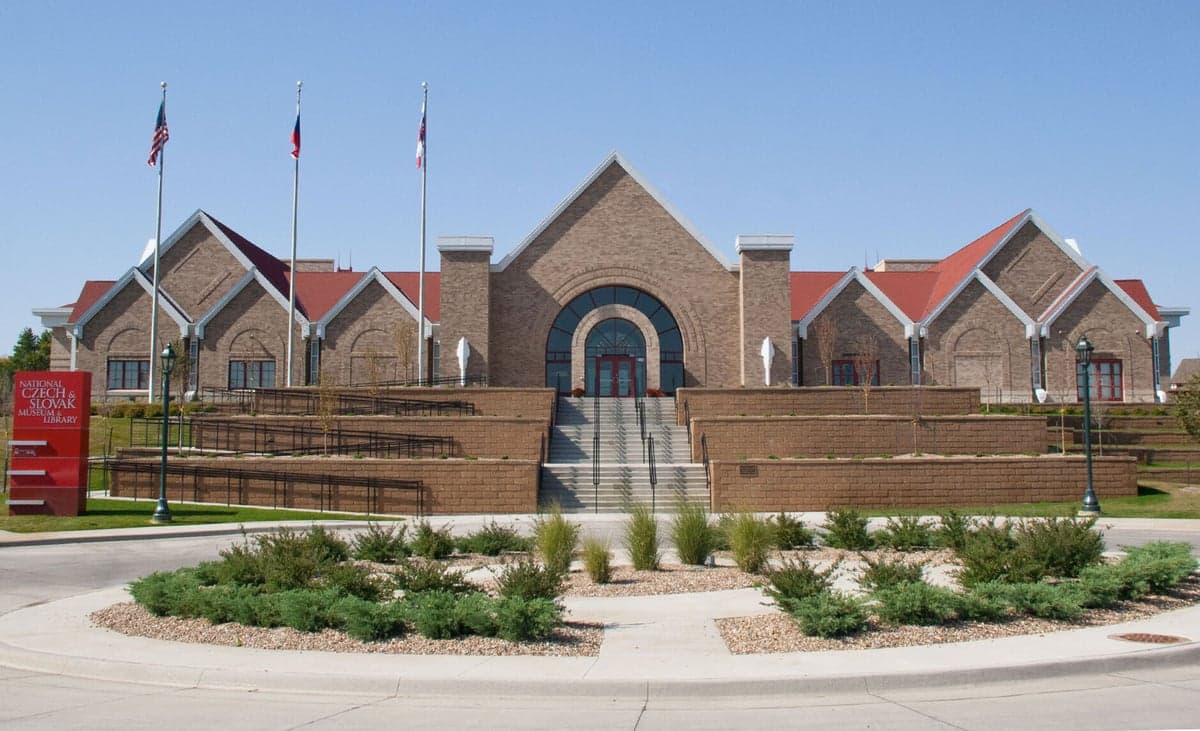
Photo: Wikipedia
Demographics of Cedar Rapids, IA
Affluence Level in Cedar Rapids, IA
A middle-class area roughly in line with national averages across income, home values, education, and employment.
People of Cedar Rapids, IA
The people of Cedar Rapids, Iowa, today number roughly 136,859, forming a community that is predominantly white (77.5%) but increasingly diverse, with a notable Black population (8.3%) and growing Hispanic (5.1%) and Asian (1.3%) communities. The city’s character is shaped by its industrial roots, a strong Czech and German heritage, and a steady influx of immigrants and domestic migrants seeking manufacturing and healthcare jobs. Distinctive identity markers include a high rate of homeownership, a robust network of Catholic and Lutheran churches, and a civic pride tied to the city’s recovery from the 2008 flood. The foreign-born share is low at 3.1%, but the population is slowly diversifying, with 32.9% holding a college degree.
How the city was settled and grew
Cedar Rapids was founded in the 1840s as a milling and railroad hub, drawing its first major wave of settlers from New England and upstate New York. The city’s growth exploded after the Civil War, fueled by the arrival of Czech and German immigrants who were recruited to work in the burgeoning meatpacking and grain industries. These groups settled in distinct neighborhoods: Czech immigrants concentrated in the Czech Village district along the Cedar River, building St. Wenceslaus Church and founding the National Czech & Slovak Museum & Library. German immigrants clustered in the Wellington Heights neighborhood, establishing breweries and Lutheran churches. A smaller wave of Irish immigrants settled in the Mound View area, working on the railroads and in the city’s early factories. By 1900, Cedar Rapids was a thriving industrial city, with a population of over 25,000 that was overwhelmingly white and European-born. The city’s growth continued through the mid-20th century, driven by the expansion of Quaker Oats (now PepsiCo) and Collins Radio (now Rockwell Collins), which drew workers from across the Midwest.
Modern era (post-1965)
The post-1965 era brought significant demographic shifts, though Cedar Rapids remained less diverse than many Midwestern peers. The 1965 Immigration and Nationality Act opened doors for new arrivals, but the city’s foreign-born population remained low, reaching just 3.1% by 2020. The most notable change was the growth of the Black population, which rose from under 2% in 1970 to 8.3% today, driven by domestic migration from Chicago and other Rust Belt cities seeking manufacturing jobs at Rockwell Collins and General Mills. Black families settled primarily in the Wellington Heights and Mound View neighborhoods, areas that had previously been home to German and Irish immigrants. The Hispanic population, now 5.1%, began growing in the 1990s, with many arriving from Mexico and Central America to work in the city’s meatpacking plants and construction sector. They concentrated in the Oakhill Jackson neighborhood, where a small but growing Latino commercial corridor has emerged. East and Southeast Asian communities (1.3%) arrived later, many as professionals in engineering and healthcare, settling in the Kenwood Park and Bowman Woods areas. The Indian subcontinent population (1.2%) is similarly professional, with families drawn to jobs at Rockwell Collins and Mercy Medical Center, and they have no single ethnic enclave but are dispersed across the city’s western suburbs.
The future
The population of Cedar Rapids is slowly diversifying, but the pace is modest compared to larger Midwestern cities. The white share is projected to decline gradually, from 77.5% to around 72-74% by 2040, as the Hispanic and Black populations grow through both domestic migration and higher birth rates. The Hispanic community is expected to become the largest minority group within 15 years, potentially reaching 8-10% of the population, with continued concentration in Oakhill Jackson and expansion into the Time Check neighborhood. The Black population is likely to plateau near 9-10%, as out-migration to larger cities like Atlanta and Minneapolis offsets new arrivals. East and Southeast Asian and Indian communities are expected to grow slowly, driven by professional recruitment, but will remain small (under 3% combined). The city is not tribalizing into stark ethnic enclaves; rather, it is experiencing a gradual blending, with most neighborhoods remaining predominantly white. The biggest demographic challenge is the aging population: the median age is 37.5, and the city is losing young adults to larger metros, a trend that could slow future diversification.
For someone moving in now, Cedar Rapids is becoming a more diverse but still overwhelmingly white Midwestern city, where ethnic change is incremental rather than transformative. The city offers a stable, family-oriented environment with a strong manufacturing and healthcare job base, but those seeking a truly multicultural experience will find it limited. The population is heading toward a slightly more Hispanic and Black future, but the core character—rooted in Czech and German heritage, with a pragmatic, hardworking ethos—is likely to persist for decades.

* Values derived from national, state, county, city and local statistics and may differ in a specific area. Last updated: 2026-04-30T03:30:48.000Z
Narrative content on this page is AI-generated and may contain mistakes. Verify any details that matter before acting on them.
ReloMaps may earn a commission from affiliate links at no extra cost to you.

